Here's the thing: that fly isn't lucky. It's biologically built to beat you. Houseflies process visual information through a flicker fusion rate around 270 Hz, compared to the human eye's roughly 50-90 Hz range under typical conditions. In plain terms, your slow, clumsy swing looks like slow motion to them.
This guide breaks down why flies are so hard to hit, the exact technique that improves your odds, the gear that matters, and the mistakes that sabotage almost every swing.
TL;DR
- Flies register motion far faster than humans do, so a slow approach followed by a fast strike beats speed-only tactics
- Aim slightly ahead of the fly's position to counter its escape jump, not where it's currently sitting
- A flexible, perforated swatter beats hands or rolled paper by reducing the air pressure that tips flies off before contact
- Approach angle, timing, and follow-through speed are the variables you actually control
How to Swat a Fly Successfully
Step 1: Approach Slowly and Quietly
Flies key in on sudden movement far more than gradual motion. Creep toward your target in small, deliberate steps.
- Avoid casting a shadow across the fly's resting surface
- Don't jostle the table or counter it's perched on
- Close the gap to 12-18 inches before making any fast movement Rushing this step is the single biggest reason swats fail before they even begin.
Step 2: Predict the Escape Trajectory
Flies don't wait around to see what happens. Research on fruit flies (a closely related species used as the standard model for insect escape behavior) found that postural adjustments for a jump begin roughly 200 milliseconds before takeoff. The full stimulus-to-flight response averages 215 ± 42 milliseconds, according to a 2008 Current Biology study. That's faster than you can consciously react. The same research found that escape direction depends on where the threat comes from:
- Frontal threats trigger a backward jump
- Rear threats push the fly forward
- Side threats send it somewhere in between Practical takeaway:
- Aim a few inches ahead of the fly's position, not directly at it
- Approach from the side or behind whenever the room lets you
- Never swing straight at the fly's face. That's where its escape reflex is fastest

Step 3: Execute a Fast, Committed Strike
Once you're in range, commit. A hesitant, slow-building swing gives the fly's nervous system time to catch up and launch.
- Swing in one fluid, fast motion with no wind-up and no chasing
- Strike downward or at an angle toward a flat, hard surface so there's no escape gap underneath
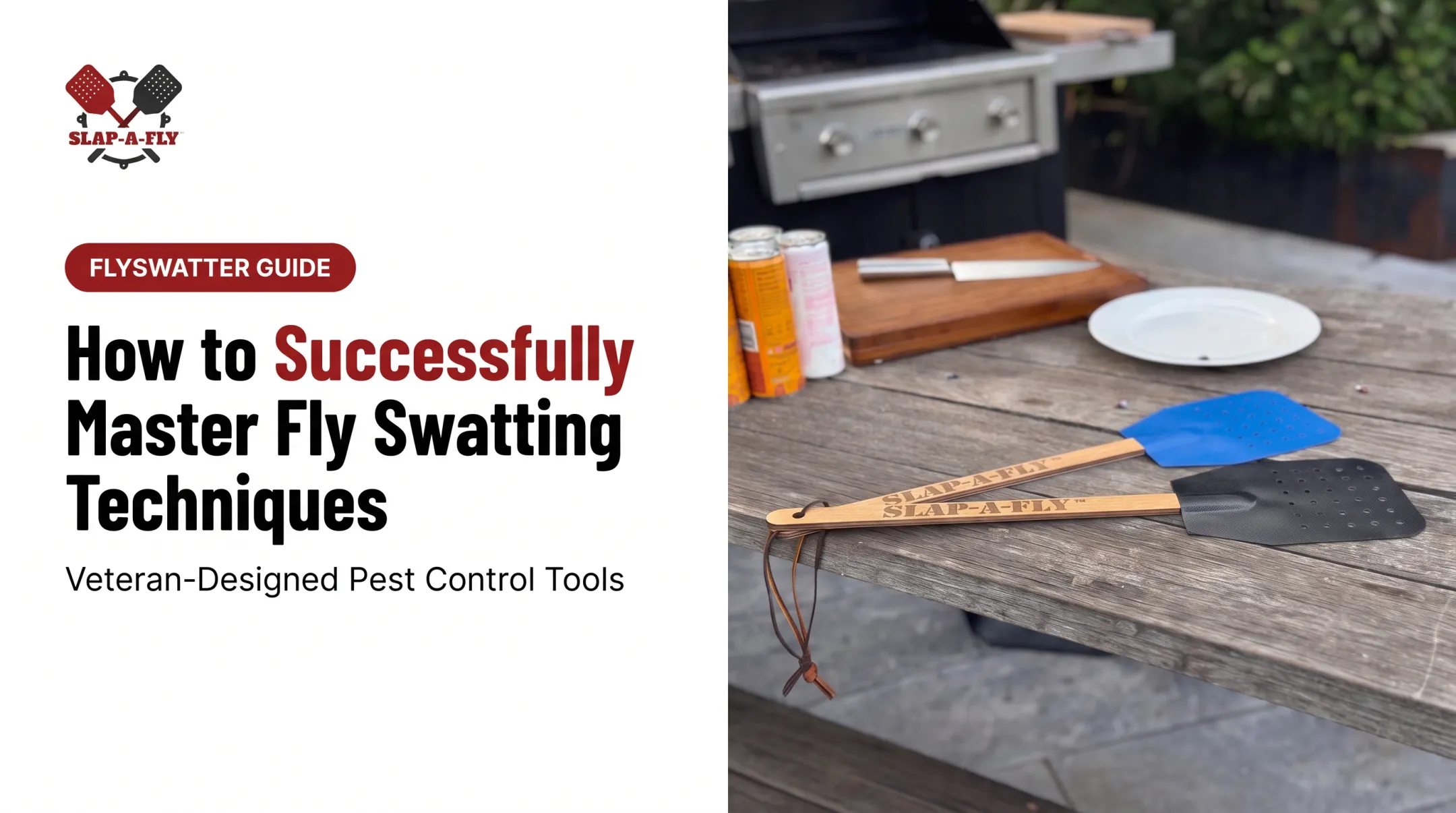
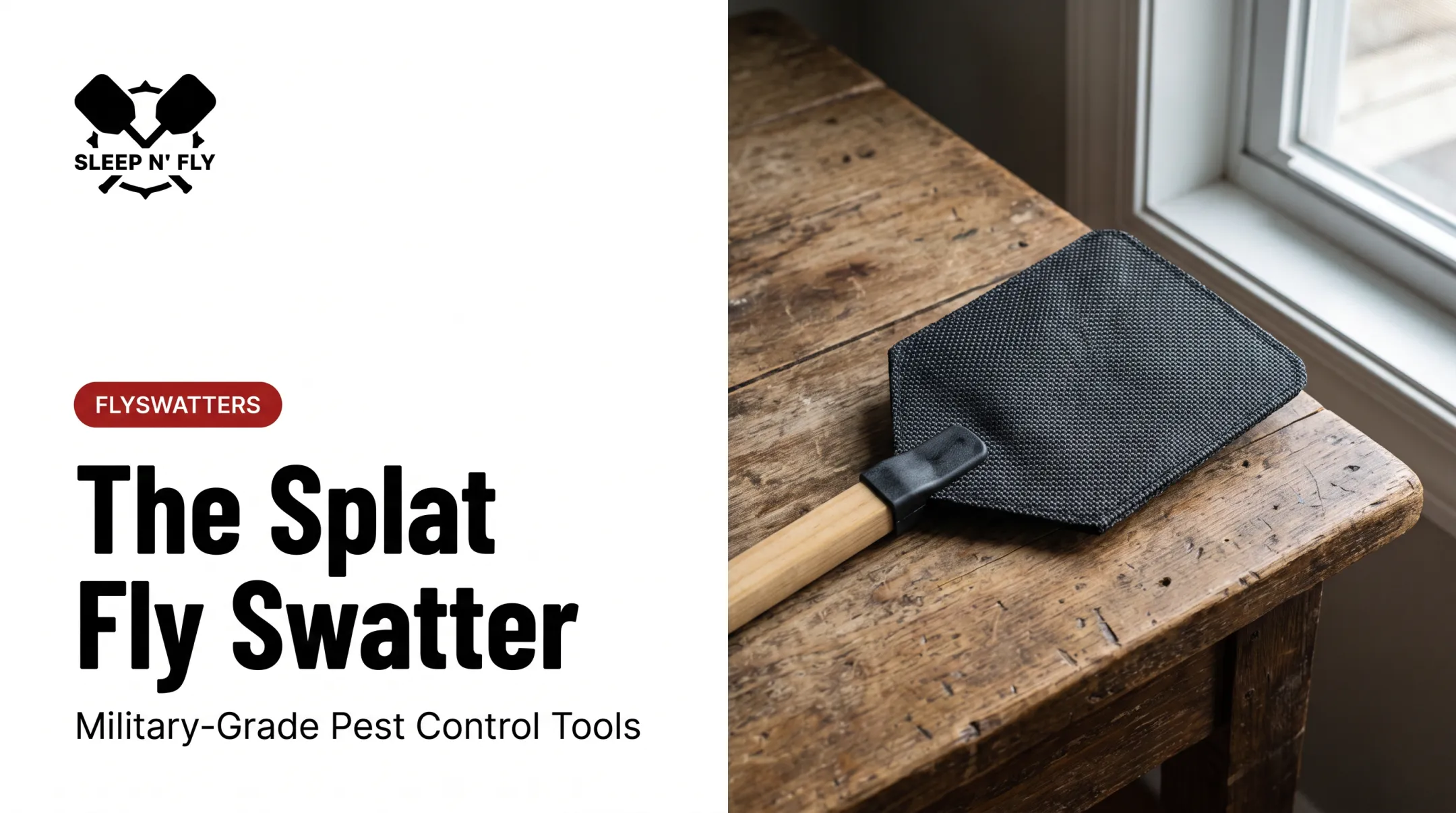
- Choose a perforated swatter so air passes through the head instead of building a pressure wave ahead of the strike That pressure wave is what alerts insects before contact. A 2024 Current Biology study on mosquitoes found swatter-generated airflow itself triggered escape responses. Solid, rigid objects push air ahead of them. A mesh surface, like the military-grade Herculite 80 on Slap-a-Fly's flyswatters engineered by U.S. Army veterans, doesn't give the fly that early warning.

Step 4: Confirm and Clean Up
Don't lift the swatter the instant you feel contact.
- Check the fly is fully immobilized before removing the swatter
- Dispose of it and sanitize the surface, especially in kitchens or food-prep zones
- Hang your swatter back up using its storage loop so it's ready for the next one
When Should You Use a Flyswatter vs. Other Methods?
Swatting works great for a single, visible fly. It still isn't always the right tool.
Choose a flyswatter when you need to:
- Knock down one or two flies in easy indoor spots like kitchens, dining rooms, or porches
- Keep extra distance from wasps or bees with an XL-reach swatter instead of a standard swatter or bare hand
- Skip the swatter for heavy infestations, high ceilings, or tight corners—traps or sprays are usually more efficient there
Match the tool to the situation instead of forcing a swatter into every scenario.
What You Need Before Swatting a Fly Effectively
Your setup matters before you even take a swing.
Equipment Considerations
- A flexible, perforated head reduces the air displacement that warns flies before impact. A rigid ruler or rolled newspaper can't do this
- A sturdy handle gives you reach and control. Slap-a-Fly models use a 5-ply aircraft spruce handle that resists snapping mid-swing
- For wasps, bees, or anything you'd rather not get close to, the XL model's extended handle keeps distance between you and the pest

Environmental Conditions
- Close doors to confine the fly to one room with flat, hard surfaces. Fewer escape routes means better odds
- Flies are more sluggish during cooler morning and evening hours. A 2020 study on housefly activity found that on hot days above 95°F, activity peaked early and dropped off fast
Key Factors That Affect Your Swatting Success
Swat outcomes aren't random. A handful of variables you control make the biggest difference.
Swatter Design and Material Rigid or solid objects push air ahead of the strike, tipping off the fly before contact. A perforated surface like Herculite 80, rated at 80 PSI of impact force - enough force for large tough bugs like cockroaches, wasps, and armored insects - not just flies - cuts that air resistance for a more surprising, effective hit.
Approach Angle Flies have a nearly panoramic visual field built from thousands of individual ommatidia, according to a 2022 compound-eye study. Frontal threats get noticed fastest, so approaching from the side or rear cuts their reaction window.
Strike Speed With a flicker fusion rate roughly three to five times higher than a human's, a fly's brain processes what it sees faster than most people can react. A fast, committed swing outruns its decision-making. A slow one doesn't.
Surface and Positioning Flies resting on a flat, hard surface with no gap to dive into are far easier to trap than ones hovering mid-air. Aim your swats toward walls, tables, or windowsills rather than chasing them in flight.

Common Mistakes When Swatting a Fly
Most missed swats trace back to the same few habits. Cut these out and clean hits get a lot easier:
- Approaching too fast, triggering the escape response before you're even in range
- Aiming at the fly's current position instead of where it's about to jump
- Using a flimsy swatter that flexes unpredictably or snaps after a handful of strikes
- Chasing the fly mid-swing instead of committing to one decisive strike
Tool quality matters on that third point: a swatter that flexes or warps telegraphs your swing and costs you the strike.
Alternatives to Swatting a Fly
Swatting isn't always practical, especially with multiple flies or hard-to-reach spots. Use these when you need passive or area-wide control instead of one quick strike:
| Method | Best For | Trade-Off |
|---|---|---|
| Sticky traps or fly paper | Passive, unattended control over hours or days | Slow results; messier cleanup |
| Vinegar/sugar traps | Fruit flies or small kitchen infestations | Setup time; won't catch flies already airborne |
| Electric zappers | Larger infestations, outdoor gatherings | Higher upfront and ongoing cost |
| Sprays | Fast knockdown in heavy indoor outbreaks | Chemical residue and reapplication |
For a single fly in the room right now, a sturdy swatter is still the fastest fix. Save traps and zappers for background control; reach for the swatter when you need an immediate kill.
Conclusion
Successful fly-swatting comes down to three things:
- A slow approach
- A fast, committed strike
- Anticipating where the fly will jump, not chasing where it sits
Master that sequence and your hit rate climbs fast.
A well-built tool removes a lot of the guesswork. A swatter with a perforated Herculite 80 surface and a 5-ply aircraft spruce handle, like the ones Slap-a-Fly builds, is engineered to reduce the warning signs that tip flies off before you strike.
Practice the technique. Invest in gear built for single-strike results. The next fly in your kitchen won't stand much of a chance.
Frequently Asked Questions
What does swatting a fly mean?
Swatting means physically striking a fly with your hand, an object, or a tool to kill or immobilize it on contact, usually against a flat surface like a wall or countertop.
Why is a fly so hard to swat?
Flies process visual information much faster than humans and can begin planning an escape route within milliseconds of noticing an approaching threat, giving them a head start on your swing.
What is the best angle to swat a fly from?
Approach from the side or behind whenever possible. Flies react fastest to frontal threats, so a lateral or rear approach shortens their reaction window.
Can flies see in slow motion compared to humans?
Effectively, yes. Their higher flicker fusion rate means they perceive human movement as slower than it actually is, giving them more time to react and escape.
Does the type of flyswatter matter for success?
Yes. Perforated, flexible swatters reduce the air pressure buildup that alerts flies before impact, making them more effective than solid or rigid objects.
What time of day is easiest to swat flies?
Flies tend to be more sluggish during cooler morning or evening hours, making them easier targets than during peak midday heat.