Introduction
Smart thermostats, robot vacuums, video doorbells: 2026's homes are wired for everything except one stubborn problem. A single housefly buzzing around the kitchen still turns a quiet evening into chaos, and the tool everyone reaches for is the same 100-year-old design.
The trouble? Most fly swatters sold today are flimsy. Handles snap mid-swing. Plastic mesh heads crack after a few weeks. And they're useless against the tough, armored bugs — cockroaches, wasps, and the like — that a warm kitchen or campsite attracts. Restaurant staff, campers, and homeowners alike end up chasing the same pest for five minutes because their swatter missed or fell apart.
This guide rounds up the best fly swatters of 2026 across four categories: heavy-duty, electric, budget, and catch-and-release. Each pick is judged on material quality, strike-surface design, and how well it holds up when you actually need it.
TL;DR: Best Fly Swatters of 2026
- Slap-a-Fly™ Military-Grade — Best overall: heavy-duty build that crushes flies, cockroaches, and wasps with single-strike power
- The Executioner — Top electric pick for no-contact zapping
- Pic Fly Swatter — Reliable budget classic for everyday indoor use
- BugZooka — Best catch-and-release option when you want no-kill control
We scored each swatter on durability, strike surface, handle balance, and safety. Match the tool to the job: a kitchen fly is not a patio wasp.
Overview of Fly Swatters in 2026
A fly swatter is about as simple as tools get: a vented head on a rigid handle. That basic shape hasn't changed much in over a century, and there's a reason for it.
Dr. Samuel J. Crumbine, secretary of the Kansas State Board of Health, adapted the "fly bat" into the modern flyswatter around 1905 as part of his "swat the fly" public health campaign, according to the Kansas Historical Society. The Board issued its first official "Fly" bulletin in 1907, and the swat-the-fly message spread across the country in the years that followed.
More than a century later, the winning formula still holds: a light, rigid handle paired with a vented head.
Other options have entered the market since then:
- Bug zappers
- Sticky traps
- UV insect killers
None of them solve the problem of a single fly landing on your counter right now. For instant, precise, no-mess results, manual and electric swatters remain the go-to tool. That's exactly why the picks below matter.
Best Fly Swatters of 2026
We compared each swatter on four things: how it holds up under repeated strikes, how the strike surface is designed and vented, handle balance and reach, and overall value for indoor or outdoor use.
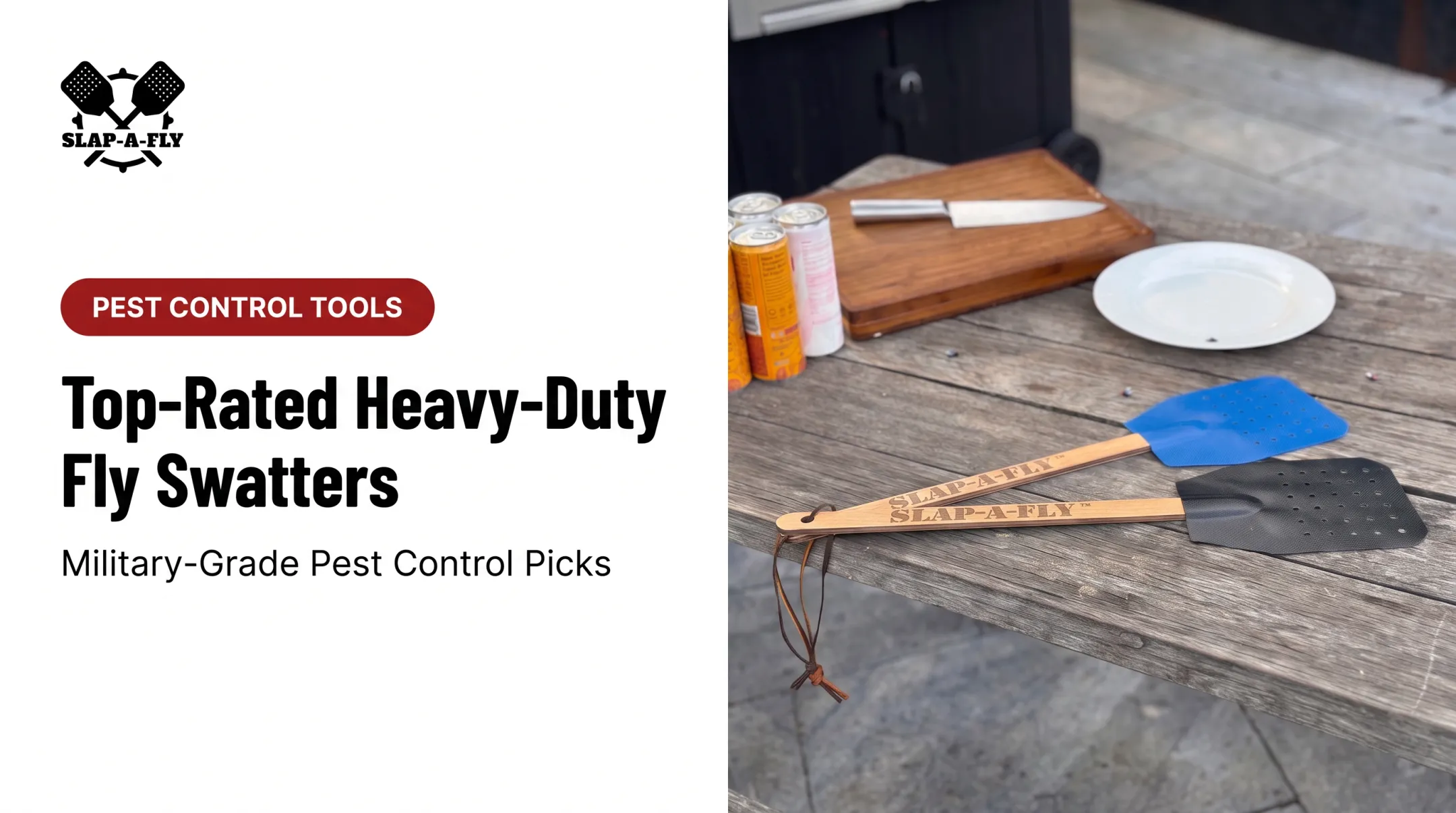
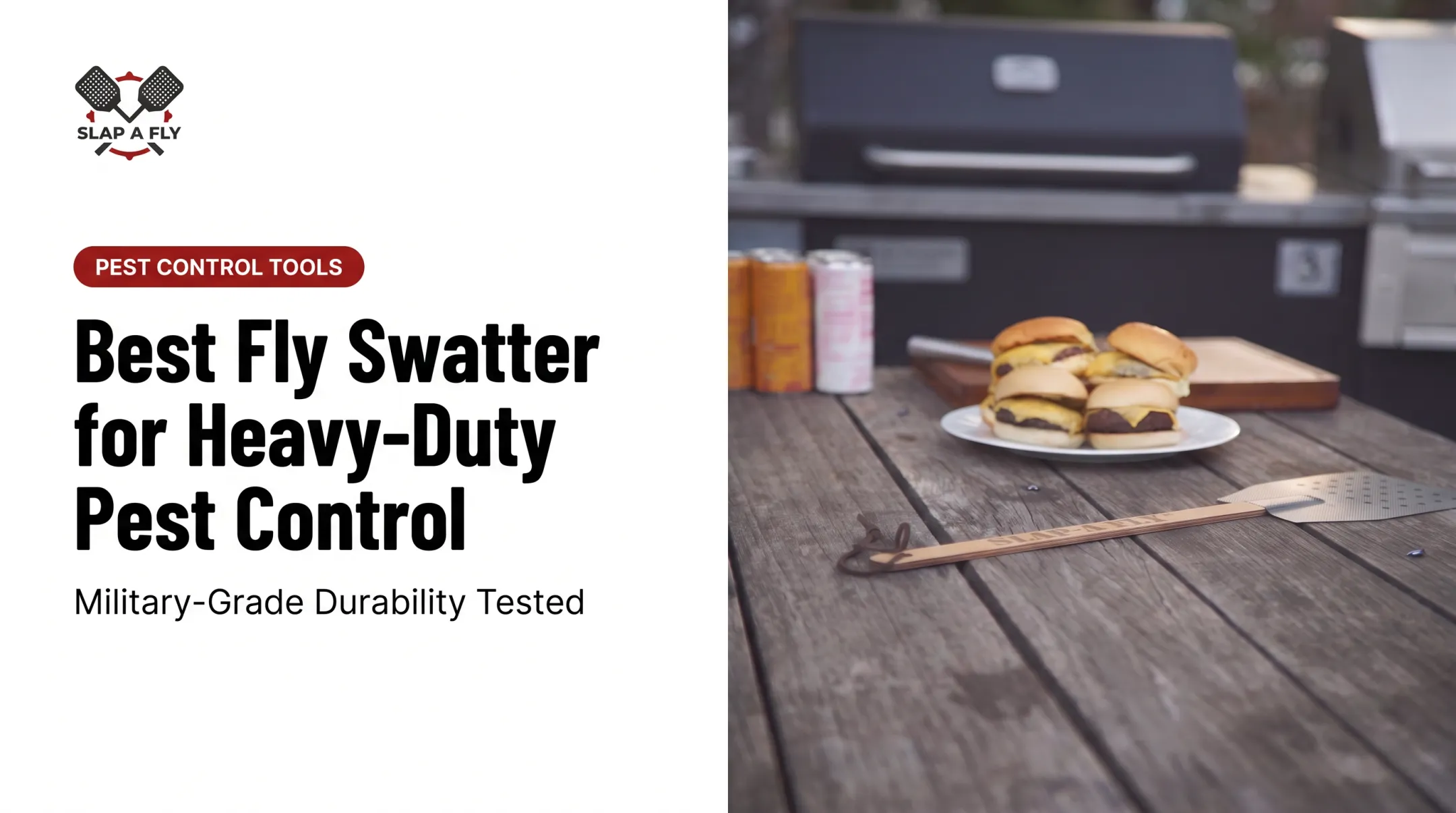
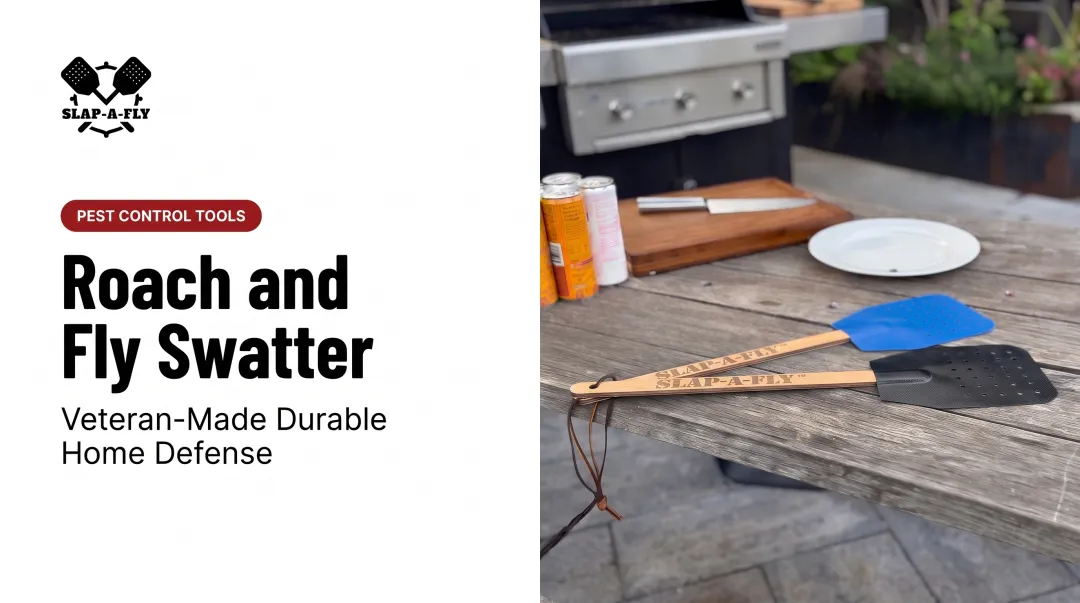
Slap-a-Fly™ Military-Grade Fly Swatter — Best Overall / Heavy-Duty Pick
Slap-a-Fly is a veteran-owned, American-made brand built by U.S. Army veterans who engineered a flyswatter with the same standards they used on mission-critical gear. It's built to be a heavy-duty bug killer for any bug — not just houseflies, but the armored, hard-to-kill pests like cockroaches and wasps that snap standard swatters. It comes in Standard and XL sizes.
What sets it apart:
- Herculite-80 MIL-SPEC synthetic fabric strike surface (the same material used in U.S. jet fighters) delivering 80 PSI of impact force — enough to take down not just houseflies but tough, armored bugs like cockroaches and wasps
- 5-ply aircraft spruce handle bonded with aviation adhesives for a strength-to-weight ratio that beats standard wood or plastic
- Perforated strike surface that cuts through the air on the swing
- Storage loop for hanging by the back door or grill
The XL model extends both the handle and the strike surface, giving you extra distance when you're dealing with wasps or bees instead of houseflies.
| Category | Details |
|---|---|
| Key Features | Perforated Herculite-80 strike surface, 5-ply aircraft-spruce handle, hanging loop; Standard ($19.99) and XL ($24.99) |
| Materials & Durability | MIL-SPEC fabric and aerospace-grade wood rated for thousands of strikes; primary materials are 100% vegan |
| Best For | Kitchens, patios, camping trips, and heavy-duty bugs — from cockroaches to wasps and bees — with the XL's added reach |
The Executioner — Best Electric Fly Swatter
The Executioner is a battery-powered, tennis-racket-shaped swatter with an electrified mesh grid. Swing it near a bug mid-flight and the grid stuns or kills it on contact — no chasing required.
That mid-air capability is the whole point. A manual swatter needs a stationary target. The Executioner handles swarms of mosquitoes, gnats, or fruit flies buzzing around a porch light, and there's no smear left behind on your wall or countertop.
The maker says it tested the electronics past 100,000 zaps. Independent lifespan data is thin, but Wirecutter reported one test unit lasting a couple of summers.
| Category | Details |
|---|---|
| Key Features | Tennis-racket shape, single-layer zinc-steel grid, push-button activation, AA battery-powered |
| Materials & Durability | Durable ABS plastic frame; holds up across repeated seasonal use |
| Best For | Backyard swarms, camping trips, and mid-air kills on mosquitoes and gnats |
Pic Fly Swatter — Best Budget/Classic Pick
The Pic is the swatter most people grew up with: a long, flexible wire handle and a plastic mesh head, usually sold in multi-packs for around $8. It's fast, whippy, and cheap enough to keep three in the house without thinking twice.
The trade-off is longevity. Wirecutter's testing found a Pic swatter lasted about one summer of hard use before it needed replacing — fine for occasional indoor flies, less so for heavy fly pressure.
| Category | Details |
|---|---|
| Key Features | Long wire handle, flexible plastic mesh head, lightweight build |
| Materials & Durability | Basic plastic-and-wire construction; typically lasts one season of regular use |
| Best For | Budget-conscious buyers and light, occasional indoor use |
BugZooka — Best Catch-and-Release Option
Not everyone wants to kill the bug — sometimes it's a spider or a ladybug you'd rather just remove. The BugZooka is a battery-free, pneumatic bug vacuum. Squeeze the bellows and it sucks the insect into a reusable capture chamber, unharmed.
A telescoping tube extends over a foot and a half, letting you reach high corners or ceiling spots without a step stool. Since it runs on compressed air rather than batteries, it's always ready to go.
| Category | Details |
|---|---|
| Key Features | Pneumatic bellows suction, telescoping tube, reusable capture chamber with one-way trap door |
| Materials & Durability | Durable plastic housing; no batteries required |
| Best For | Spiders, ladybugs, and households that prefer non-lethal removal |

How We Chose the Best Fly Swatters
We compared strike-surface design, handle balance, material durability under repeated impact, and safety features across each product category.
The most common buyer mistake? Picking based on price alone. A $2 plastic swatter and a $20 military-grade one might look similar, but strike-surface venting and handle rigidity are what actually determine whether you drop the bug or watch it dart away — and whether it survives a hit from a hard-shelled cockroach or wasp.
Here's why surface design outweighs price:
- Perforated surfaces cut air faster on the swing, shrinking the pressure wave a fly senses before impact
- A 2022 aerodynamics study on perforated plates found drag dropped as porosity increased, the same idea behind a vented swatter head
- Flies react to visual threats extremely fast, so swing speed and surface design beat raw arm strength
Indoor vs. outdoor use also changes what you need. A lightweight classic swatter is fine for the occasional fly at the dinner table. Heavier outdoor pressure — armored bugs like wasps and cockroaches, or a commercial kitchen with constant traffic — calls for tougher manual construction or an electric option.
Safety depends on the tool. Electric swatters should meet voltage and current-handling standards that limit shock risk. A manual swatter sidesteps that entirely: no batteries, no charge, no shock risk, just a handle and a strike surface. Durable builds like Slap-a-Fly's military-grade models show how far that simple formula can go.
Conclusion
There's no single "best" fly swatter for every situation: a farmhouse dealing with barn flies has different needs than an apartment kitchen or a campsite full of mosquitoes. What matters is weighing material quality, reach, and safety against price instead of grabbing whatever's cheapest at the store.
If you're tired of replacing a swatter every season — or watching it bounce off a cockroach or wasp — a military-grade build makes the math simple. Slap-a-Fly's veteran-engineered, American-made flyswatters are designed to be the last one you buy, with Herculite-80 fabric — the same material used in jet fighters — and an aircraft spruce handle built for thousands of strikes, not a single season.
Frequently Asked Questions
What is the best fly swatter?
For durability and single-strike effectiveness, military-grade options like Slap-a-Fly—with reinforced strike surfaces and rigid handles—outperform standard plastic swatters. Match size (standard vs. XL) to indoor or outdoor use.
What kills large flies instantly?
A swatter with a stiff, fast-accelerating handle and a wide, perforated strike surface delivers enough impact force to kill large flies — and even hard-shelled bugs like cockroaches and wasps — in one hit, unlike flimsy plastic swatters that often need two or three tries.
How long should a good fly swatter last?
Cheap plastic swatters typically last about one season of regular use. Premium military-grade synthetic fabric can hold up for years without losing effectiveness.
Are electric fly swatters safe to use?
Most electric swatters are built to meet electrical safety standards that limit stored charge and current, keeping them safe for humans while still effective on insects. Minor shocks can still happen with misuse.
Can you use a fly swatter on wasps or bees?
Yes—use an XL or extended-handle swatter so you keep more distance from the insect and lower your risk of getting stung versus a standard-length model.
What makes a fly swatter effective against fast-moving flies?
Venting or perforation reduces air resistance and cuts down on the air current a fly can detect before you strike. Pair that with a longer, rigid handle for faster swing speed to beat a fly’s reaction time.