There's no single fix. What works for a half-acre lot with a koi pond won't work for a small townhouse patio with kids and a dog running around. This guide ranks the best outdoor mosquito control options for 2025 based on how well they work, how safe they are, and how much upkeep they demand.
TL;DR
- Standing water removal is the #1 free defense — mosquitoes can breed in a half-inch of water
- Traps and spatial repellents deliver the best hands-off, long-term coverage
- Larvicide dunks treat ponds and rain barrels; sprays and fans cover short-term events
- No single method kills every mosquito, so layering multiple solutions works best
Understanding Mosquito Behavior in Your Yard
Mosquitoes hunt using your exhaled carbon dioxide, then close in on body heat and skin odor. That's why they find you within seconds of stepping outside, even in the dark.
Breeding is the other half of the equation. Female mosquitoes lay eggs in standing water, and even small amounts count:
- Birdbaths and clogged gutters
- Kiddie pools and forgotten flowerpots
- Soggy tarps and bottle caps
The CDC notes that larvae and pupae develop in water with little or no flow, which is why these spots turn into nurseries so fast.
Health risk is real. The CDC recorded 1,808 U.S. West Nile virus cases in 2024, with 75% classified as neuroinvasive and nearly 10% fatal, according to CDC surveillance data. Mosquito control matters for safety, not only comfort.

Timing matters too. Mosquito activity ramps up once temperatures consistently hit 50°F. Starting prevention in early spring beats scrambling to treat a full-blown infestation in July.
Top Outdoor Mosquito Control Solutions for Your Yard
Five approaches cover most yards. We compared each on coverage area, maintenance effort, and best-fit use—and noted safety around kids, pets, and pollinators in the write-ups.
Mosquito Traps
Devices like the Mosquito Magnet lure mosquitoes using CO2 and heat, then trap and kill them. No chemicals get sprayed across your lawn.
| Coverage Area | Maintenance | Best For |
|---|---|---|
| Up to 1 acre | Propane and attractant refills roughly every 21 days | Large yards, chemical-free control |
Place these units away from patios (manufacturers recommend 30-40 feet, in shade) since they're designed to pull mosquitoes toward the trap, not toward you.
Spatial Repellent Systems
Thermacell-style devices create a repellent zone around your seating area using EPA-reviewed active ingredients like allethrin or metofluthrin.
| Coverage Area | Maintenance | Best For |
|---|---|---|
| ~15-20 ft diameter per unit | Cartridge or mat swaps every several hours | Patios, decks, targeted zones |
Check the specific product label for exact runtime and coverage — the EPA registration for one common model lists 225 sq ft per unit, while newer rechargeable models advertise a 20-foot zone. Specs vary by model.

Mosquito Dunks & Larvicides
If you have a pond, bird bath, or rain barrel, this is where you start. Bti-based dunks kill larvae before they mature, stopping the problem at the source.
| Coverage Area | Maintenance | Best For |
|---|---|---|
| ~100 sq ft per dunk | Replace monthly, or when fully dissolved | Yards with standing water features |
The CDC confirms Bti larvicides don't harm people, pets, or the environment when used as labeled. Manufacturer claims also list them as safe around fish, frogs, and turtles.
Barrier/Yard Sprays
Applied to grass, shrubs, and shaded resting spots, these sprays kill adult mosquitoes on contact and leave residual protection.
| Coverage Area | Maintenance | Best For |
|---|---|---|
| Whole yard perimeter | Reapply every 2-4 weeks | Dense vegetation, tall grass areas |
Texas A&M Extension notes some pyrethroid products hold up for several weeks on siding, while shorter-lived pyrethrins may only last a few hours to a couple of days. Read labels closely, avoid windy days, and spray in the evening to protect bees and butterflies.
Fans & Physical Barriers
Simple but effective for a fixed seating area. A steady breeze disperses the CO2 trail mosquitoes follow and makes flight difficult.
| Coverage Area | Maintenance | Best For |
|---|---|---|
| Immediate seating area | None | Patio dining, events, budget option |
A Michigan wetland study found electric fans significantly reduced mosquito catches in CO2-baited traps, which backs scent-trail dilution as the main mechanism.

How to Choose the Right Mosquito Control for Your Yard
The biggest mistake? Betting everything on one weak method. Bug zappers are a classic example — Rutgers research found biting insects make up less than 1% of what zappers actually catch. Ultrasonic devices have similarly little evidence behind them.
Instead, weigh these factors:
- Yard size — acreage needs a trap; a patio needs a spatial repellent
- Standing water — ponds and rain barrels demand larvicide dunks
- Pets and kids — larvicides and fans carry the lowest risk profile
- Budget — fans and dunks are cheap; traps are a bigger upfront cost
- Zone vs. whole-yard — decide if you're protecting one deck or the entire property
Complementary Personal Protection for Breakthrough Mosquitoes
Even a well-layered yard defense won't stop every mosquito, especially during dusk and dawn when they're most active. That's when personal backup tools earn their place.
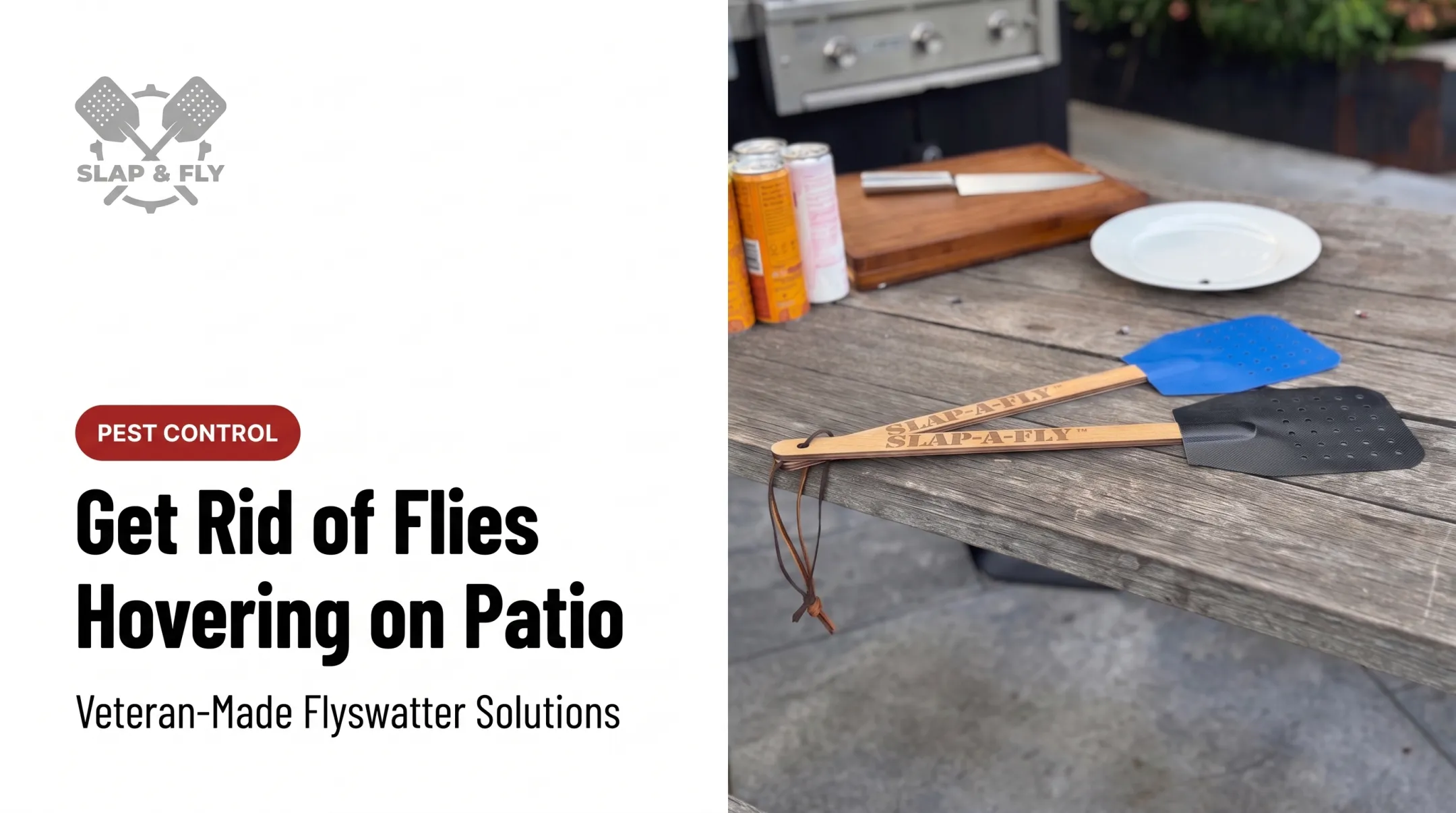
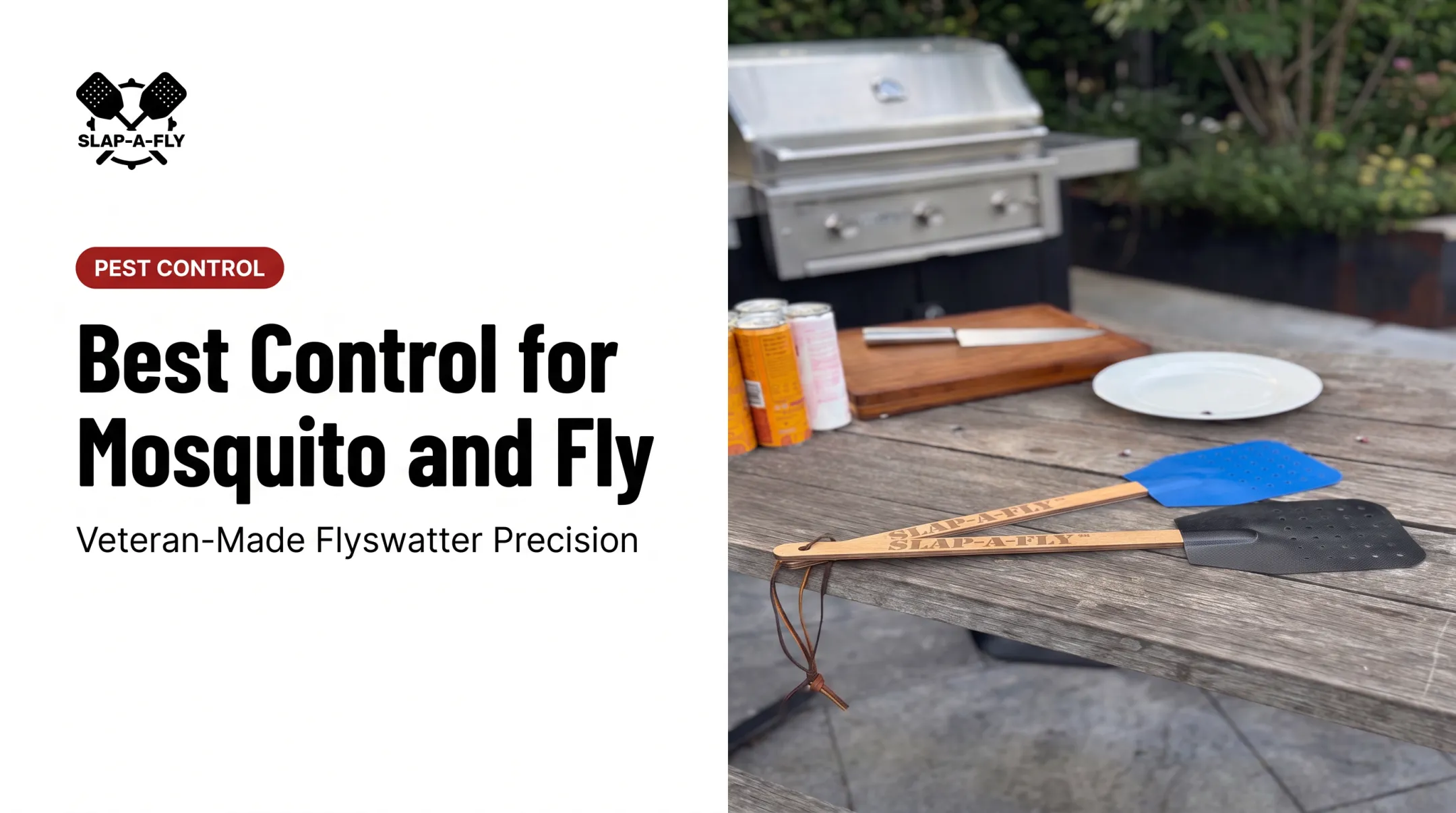
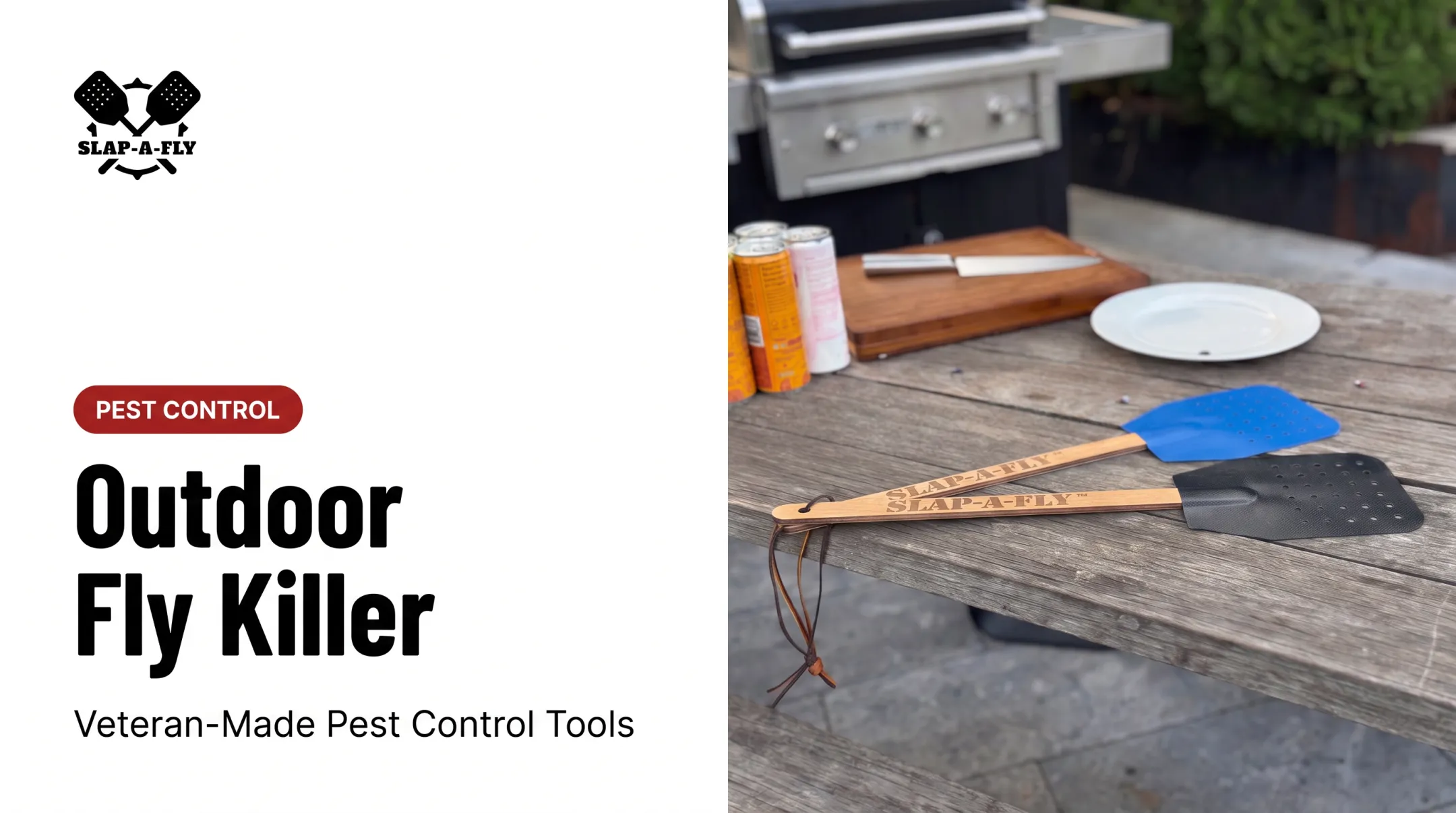
A heavy-duty flyswatter isn't a joke solution here. The Slap-a-Fly™ Standard model is built for smaller pests like mosquitoes, gnats, and flies, while the XL model handles bigger targets like wasps and beetles.
When you're tracking one small, erratic mosquito, these details matter:
- Herculite 80 MIL-SPEC fabric strike surface delivering up to 80 PSI of impact force - enough force for large tough bugs like cockroaches, wasps, and armored insects - not just flies
- Perforated head that cuts air resistance for a faster, controlled swing
- 5-ply aircraft spruce handle for balance and shock absorption on repeated swats
- 100% vegan materials, a non-spray option when you'd rather not wave chemicals around the dinner table

Conclusion
The best backyard mosquito control is a layered system, not a single product:
- Eliminate standing water first
- Add a trap or spatial repellent for ongoing coverage
- Use dunks for ponds or rain barrels
- Keep a fan or barrier spray ready for parties
Start early, then reassess as the season shifts. A wet spring means more breeding sites; a dry summer means fewer.
For the mosquitoes that still slip through, keep a solid last line of defense on hand. The Slap-a-Fly™ Standard ($19.99) handles close-range stragglers, the XL ($24.99) reaches bigger pests at a safer distance, and the Exterminator Bundle ($42.99) pairs both when you want full coverage.
Frequently Asked Questions
How can I permanently get rid of mosquitoes in my backyard?
Permanent elimination isn't realistic. Combining standing water removal, traps or repellents, and larvicide dunks cuts populations long-term, though some breakthrough mosquitoes will always show up.
Is it worth spraying your yard for mosquitoes?
Yard sprays work well for short-term relief before a party or event, but they require repeated application every 2-4 weeks and shouldn't be your only strategy.
What is the most effective outdoor mosquito control?
Mosquito traps and spatial repellent systems provide the most consistent, long-term reduction, especially when paired with standing water elimination.
How can I get rid of mosquitoes on my patio?
A spatial repellent device or oscillating fan gives immediate protection for that specific zone. Pair it with removing any nearby standing water for better results.
What do professionals use to spray a yard for mosquitoes?
Pest control pros typically apply pyrethrin or permethrin-based barrier sprays to foliage, shrubs, and shaded resting sites where adult mosquitoes hide during the day.
What is the safest mosquito repellent for a yard?
EPA-registered Bti larvicides and simple oscillating fans pose far less risk to people and pets than broad-spectrum insecticide sprays, so they’re the safer everyday choice.