Unlike mosquitoes, black flies bite in broad daylight. They swarm your head and neck relentlessly, which means the usual dusk-only defense plan won't cut it. You need layered protection: smart clothing, the right repellents, and physical tools for the flies that get through anyway.
This guide covers identification, natural and commercial repellent options, physical control methods, and how to treat bites once they happen.
Key Takeaways
- Black fly season peaks mid-May through early July, worst near clean, fast-moving streams
- Layered defense (clothing + repellents + physical tools) beats any single method
- A reliable swatter handles the flies that slip past your other defenses
- US black fly bites are itchy and painful, but not disease-carrying
What Are Black Flies and Why Are They So Aggressive?
Black flies (family Simuliidae) go by nicknames like buffalo gnats and turkey gnats, thanks to their small, humped-back bodies. Depending on the species, adults range from about 1/16 inch to over half an inch long, with dark bodies and noticeably short legs.
Where They Breed
Females lay eggs almost exclusively in clean, fast-running streams, not stagnant ponds. This is why swarms cluster near rivers and wooded water sources rather than swampy backyards. Eggs overwinter and hatch once water hits roughly 40-50°F, which is part of why timing varies by region and stream size.
Why They Target You
Black flies key in on:
- Carbon dioxide from your breath
- Dark clothing (green, brown, red are worse than light blue or yellow)
- Sweat and body odor
- Movement, temperature, and humidity cues
They favor the face, neck, and hairline because that's where CO2 concentration and exposed skin overlap. Once they lock on, they bite repeatedly and often crawl into hair, sleeves, and ears instead of flying off after one try.
According to Purdue Extension, black flies occur throughout most of the US. The most severe biting is reported in parts of the Upper Midwest and Northeast during late spring into early summer.
The good news: no black fly species in the US is known to transmit disease to humans, per the same Purdue source. Bites cause painful, itchy welts and, rarely, more serious allergic reactions, but they're not a river-blindness risk the way some tropical species are.

Natural and DIY Ways to Repel Black Flies
Dress Strategically
What you wear changes how often black flies land on you:
- Wear long sleeves and pants, tucked at cuffs and ankles
- Choose light colors like white, yellow, or light blue over dark green, brown, or red
- Add a head net for serious infestations near streams or woods
Black flies will crawl under loose clothing to reach skin, so tucking in cuffs and using a belt-line barrier actually helps.
Timing Is Everything
Black flies are most active on calm, cloudy days, especially just after sunrise and before sunset. Plan yard work or hikes for midday sun or breezy conditions to cut exposure.
Folk Remedies: Proceed with Realistic Expectations
Some people swear by apple cider vinegar, daily garlic, or crushed pine sap. These carry low risk, but there's no solid scientific evidence behind them for black flies specifically. Fine as extras—just don't count on them as your main defense.
Skip sweet perfumes, scented lotions, and sugary drinks outdoors. They make you more attractive to flies, not less.
Commercial Repellents and Chemical Treatments
Not all repellents perform equally against black flies. Research-backed options break down like this:
| Repellent | Black-fly-specific evidence | Verdict |
|---|---|---|
| Picaridin | 20% picaridin gave ~10 hours of complete protection in an EPA-reviewed field study | Strong option |
| DEET | A 2000 Adirondack field study found DEET alone gave less than 90% protection at 6 hours | Inconsistent |
| Oil of Lemon Eucalyptus | No black-fly-specific efficacy data located; mosquito results shouldn't be assumed to transfer | Uncertain |
| Permethrin | Clothing-only treatment; not applied to skin | Effective for gear |

Picaridin generally edges out DEET for black flies specifically, based on the EPA's 2010 field review.
If you use permethrin on clothing or gear, treat fabric only—never skin. It is highly toxic to fish, bees, and other beneficial insects, and cats are especially sensitive. Keep treated gear away from cats and water sources.
For larger infestations near livestock or farm buildings, a broad-spectrum insecticide on resting surfaces can cut populations. Check the product label for dosage, or consult a pest control professional before treating property.
Physical Control: Swatting, Netting, and Yard Prevention
Repellents reduce bites, but they won't stop every fly that lands on your arm, your kitchen counter, or your tent wall. That's where a reliable physical tool comes in.
Why a Good Swatter Still Matters
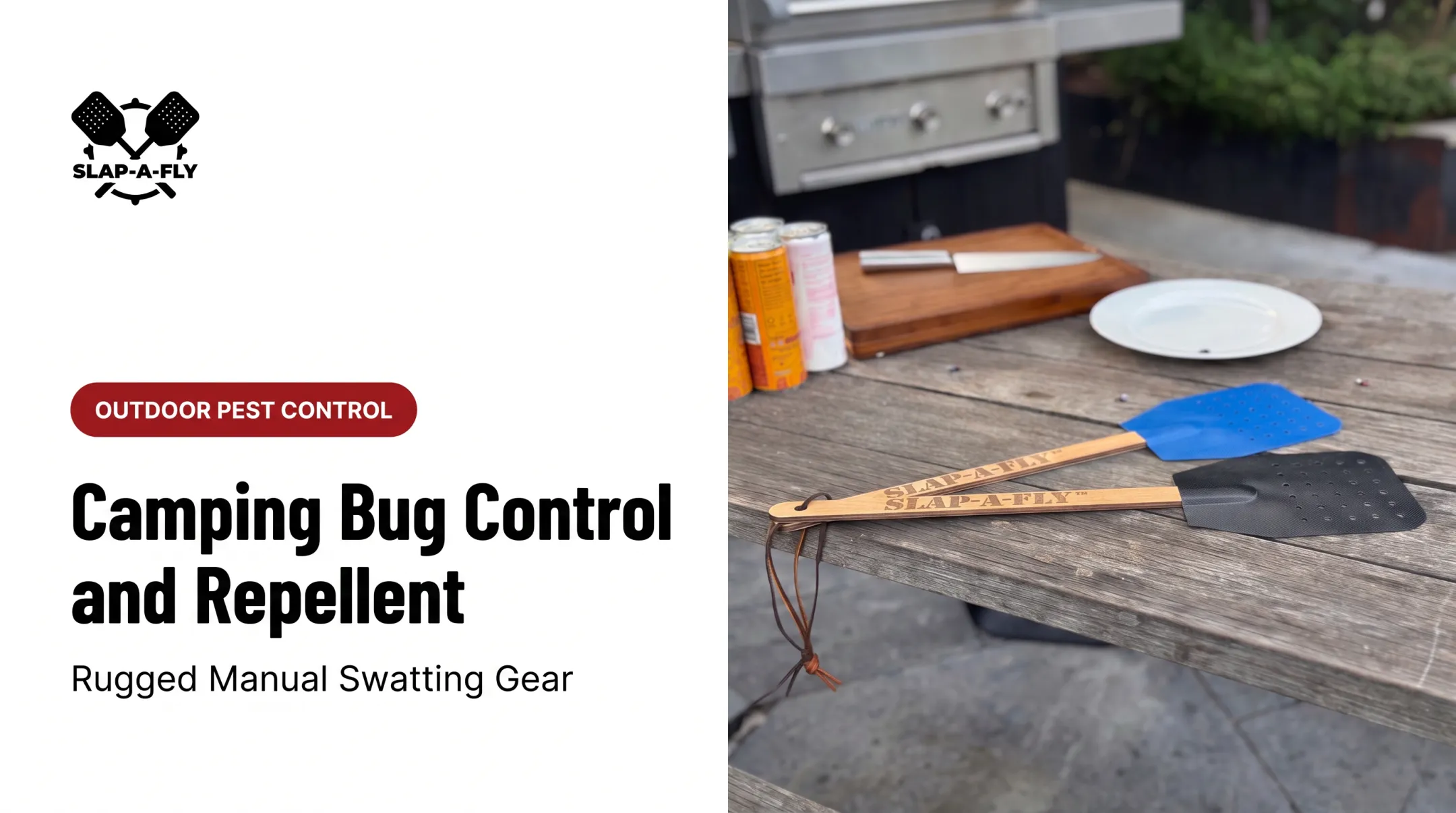
Once a black fly is on skin or a surface, you need to eliminate it fast and cleanly. This is where Slap-a-Fly™ earns its place in the toolkit. Built with a MIL-SPEC Herculite 80 striking surface rated for 80 PSI of impact force - enough force for large tough bugs like cockroaches, wasps, and armored insects - not just flies - and a 5-ply aircraft spruce handle, it's built for single-strike elimination—not the floppy, low-tension mesh of a dollar-store swatter.
- Standard model ($19.99): built for common pests like flies, gnats, and small spiders — solid for kitchens, camp gear, and patios
- XL model ($24.99): extended handle and larger strike surface, better suited for reach around stinging insects like wasps and bees
- Exterminator 4-pack ($42.99): four swatters for stocking multiple rooms or outdoor areas at once The perforated head is designed to reduce air resistance during a swing, and the storage loop lets you hang it near a kitchen counter or entryway for quick access.

Netting and Barriers
Black flies are small and persistent. Fine mesh is often the only barrier that keeps them off skin and out of living space when swarms peak. Useful options include:
- Head nets for hiking, fishing, yard work, and camp chores
- Fine-mesh repairs on windows, doors, tents, and screen rooms
- Bug jackets or mesh hoods when you need hands free outdoors
- Screened porches or pop-up shelter walls for patios and cook sites They are relatively weak fliers indoors, so sealing gaps around screens and zippers cuts indoor pressure quickly. Pair netting with a solid swatter for the few that still get through.
Yard-Level Prevention
Because black flies breed off-property in streams, you can't wipe out the source. You can still reduce what draws them to the house:
- Eliminate standing water where you can control it
- Keep trash sealed and away from doorways
- Install or repair window and door screens
- Reduce excess moisture near the foundation On rural or farm properties near streams, prioritize sealed entry points and fine-mesh seating areas. Black flies travel from breeding sites to find hosts, so barriers at the house matter more than treating ground you don't control.

Treating and Soothing Black Fly Bites
Black fly bites often swell and itch for days. Quick care limits irritation and lowers infection risk.
First Response
- Wash the bite gently with soap and warm water
- Apply a cold, damp cloth or ice pack for 10-20 minutes
- Avoid scratching, which raises infection risk
Soothing the Itch
According to Mayo Clinic, effective options include:
- Calamine lotion or a baking-soda paste
- 0.5% or 1% hydrocortisone cream
- Oral antihistamines (cetirizine, fexofenadine, loratadine)
- Witch hazel or aloe vera for mild relief
When to Seek Help
Call 911 if you notice rapid swelling, hives, trouble breathing, or throat tightness. Those are signs of a possible severe allergic reaction—get help immediately.
Frequently Asked Questions
What is the best black fly killer?
A layered approach works best: EPA-registered picaridin or permethrin-treated clothing for prevention, paired with a durable swatter like Slap-a-Fly™ for flies that get through, plus reducing yard attractants so fewer linger near you.
When is black fly season?
Peak activity runs mid-May through early July across the northern US, though exact timing shifts with stream temperature and flow conditions in your area.
Does DEET work on black flies?
Its effectiveness is inconsistent. A field study found DEET alone dropped below 90% protection at 6 hours, while picaridin and permethrin-treated clothing generally perform more reliably.
Do black flies spread disease in the US?
No. US black fly species aren't known to transmit disease. That's different from certain tropical species linked to river blindness in parts of Africa and South America.
Why are black flies worse some years?
Stream flow and water conditions matter more than rainfall alone. Strong, sustained flow in breeding streams tends to produce bigger populations than a wet spring by itself.
How do I keep black flies out of my yard?
Wear light-colored clothing, skip scented products, and time outdoor work for calmer, less peak-activity periods. You can’t stop stream breeding nearby, but cutting attractants and keeping a durable swatter handy makes the yard far more usable.