More households are asking for non-toxic fly control that works in kitchens, yards, and even barns. The good news: natural methods can help, if you understand what they actually do.
This guide covers the scents that genuinely deter flies, DIY recipes worth trying, prevention steps that matter more than any spray, and a backup plan for when flies get through anyway.
Key Takeaways
- Essential oils and herbs can deter flies but rarely eliminate them entirely
- Sanitation and screens outperform any scent for long-term control
- Reapply natural sprays every few hours, not once a week
- Some "natural" oils are genuinely toxic to cats and dogs
- Keep a mechanical backup on hand for flies that slip past your defenses
Why Natural Fly Repellents Work
Flies navigate the world almost entirely through smell. Strong-scented oils and herbs overwhelm their receptors, masking the food odors that draw them in. That's the mechanism behind every natural repellent.
But there's a catch: repellents deter, they don't kill. A fly avoiding your basil plant today might land right on it tomorrow once the scent fades. Unlike synthetic pesticides that break down slowly, natural oils evaporate fast and need constant refreshing.
Persistence matters because flies reproduce so quickly. According to University of Florida IFAS Extension, adult house flies typically live 15-25 days, and a single female can lay up to 500 eggs. Under warm conditions, a complete life cycle takes just 7-10 days.

That means:
- Scaring off adult flies does nothing to eggs already laid
- New generations can appear within a week or two
- Repellents work best paired with sanitation, not as a standalone fix
Best Natural Scents & Plants That Repel Flies
Not all "fly-repelling" plants have equal evidence behind them. Some are backed by lab testing; others are folklore. Here's the honest breakdown.
Basil, Lavender, and the Kitchen Windowsill
Basil has some of the strongest lab support. A potted plant near your kitchen entry can help, though it won't match the concentration used in testing.
Lavender is more complicated. Some sources call its fragrance unpleasant to flies. A peer-reviewed olfactometer study found it neither repelled nor attracted them. Use it as a pleasant sachet by windows and doors, but don't count on it alone.
Peppermint and Eucalyptus Sprays
Both work well in diffusers and homemade sprays. Lab studies on peppermint oil showed strong repellency across multiple concentrations, making it one of the more reliable spray bases. Eucalyptus adds a sharp, clean scent that pairs easily with peppermint in the same mix.
The Clove-and-Citrus Table Trick
The classic move: stud a lemon or lime with whole cloves and set it on the counter or table. It's simple, looks tidy, and has some legitimate science behind clove oil's fly-repelling properties.
Cinnamon and the Garden Perimeter
Cinnamon doubles as an air freshener with fly-deterring potential, though results vary by study. A small bowl of sticks near a window is an easy indoor try.
For outdoor perimeter planting, consider:
- Mint – strong scent, though more proven against other pests
- Marigold – bright color, sharp smell
- Rosemary – dual-purpose for cooking and deterrence
None of these guarantee a fly-free yard. Think of them as one layer in a broader strategy.

DIY Natural Fly Spray & Trap Recipes
The Classic Spray
Mix 1 cup apple cider vinegar, 10–15 drops of essential oil (peppermint, clove, or eucalyptus), and 1 teaspoon dish soap in a spray bottle. Shake well before each use and spray around doorways, trash areas, and window sills.
Reapply every few hours — this isn't a set-it-and-forget-it solution like chemical sprays that last days.
The Vinegar Trap
For flies already inside:
- Fill a cup with apple cider vinegar and a drop of dish soap
- Cover with plastic wrap secured by a rubber band
- Poke several small holes in the top
- Set it near the problem area and let it work overnight
Flies enter through the holes, drawn by the vinegar, and can't easily escape once the soap breaks the surface tension.

A Pet Safety Warning You Shouldn't Skip
Before spraying anything with essential oils, check what's toxic to your pets. Many oils commonly recommended for fly control—including peppermint, cinnamon, clove, eucalyptus, and citrus—are known to cause poisoning in cats.
Research your specific oil and pet before using any recipe. Never assume "natural" means "safe," and keep pets off freshly treated surfaces until they dry.
Prevention: Stopping Flies Before They Start
No spray beats a closed door. Prevention is unglamorous but does more heavy lifting than any scent on this list.
Block physical entry:
- Repair torn window and door screens
- Keep screen doors latched, not just closed
- Seal gaps around vents and utility openings
Remove what attracts them:
- Cover or refrigerate exposed food immediately
- Empty trash before it overflows
- Clean up pet waste promptly
- Fix standing water and leaky faucets
Manage outdoor lighting: Flies head for bright lights at night:
- Turn off unnecessary outdoor lights
- Switch to yellow bug-resistant bulbs near doors and windows
When Repellents Aren't Enough: Backup Fly Control
Even with basil on the windowsill and screens fully repaired, some flies will get through. Backyard barbecues, camping trips, and busy kitchens create too many opportunities for a stray fly to slip past scent-based defenses.
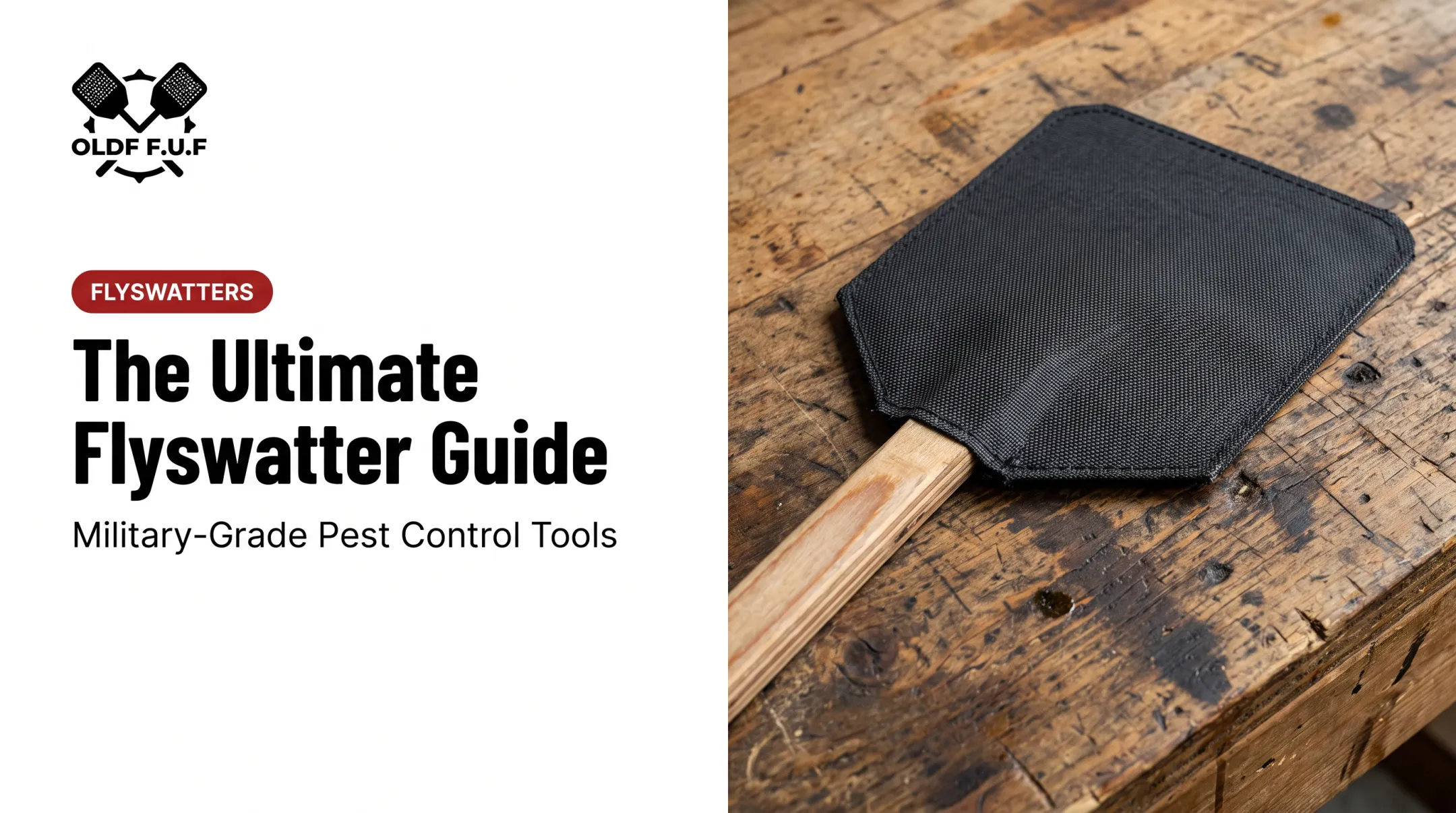
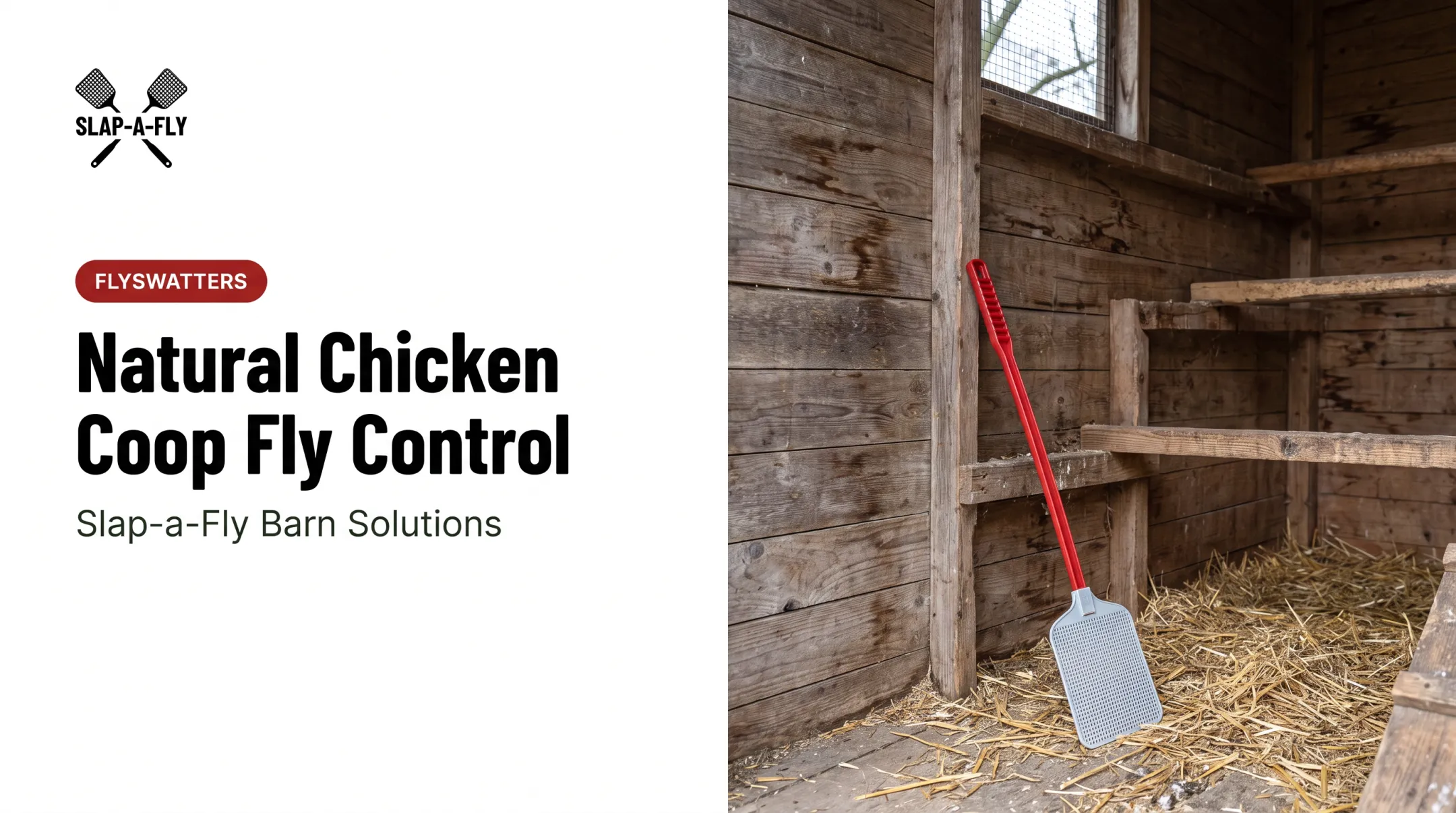
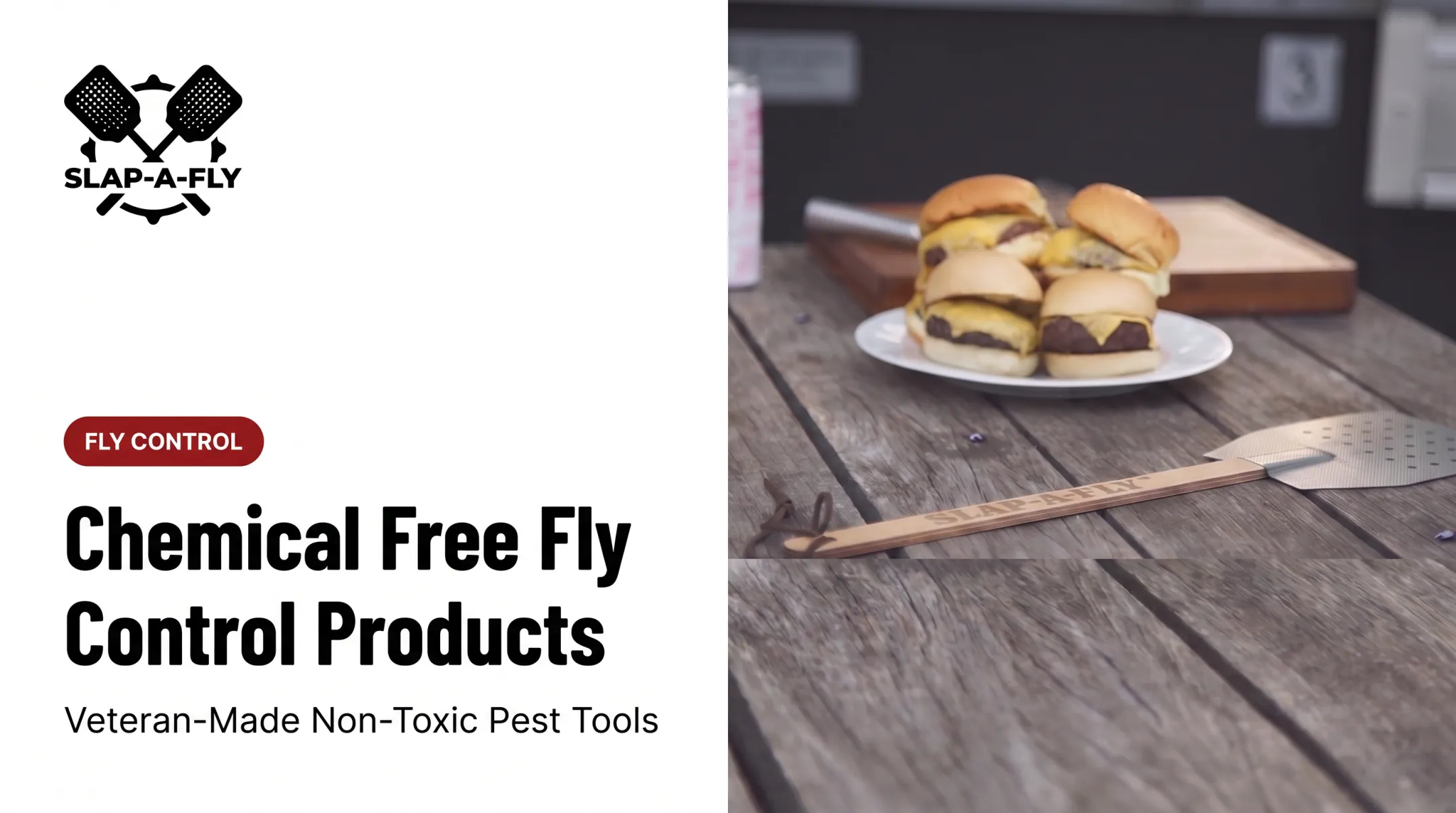
That's where a reliable mechanical backup earns its place. Slap-a-Fly's flyswatters offer a chemical-free way to handle the flies that make it past your natural perimeter.
The Standard model is built for everyday indoor and outdoor use:
- Herculite 80 striking surface — synthetic fabric built to military specifications for large tough bugs like cockroaches, wasps, and armored insects - not just flies
- 5-ply aircraft-spruce handle for balance and control
- Perforated head that reduces air resistance on the swing
- Rated to withstand thousands of strikes without breaking down
- 100% vegan military-grade Herculite-80 striking surface with no animal-based materials

For anyone dealing with more than just houseflies, the XL model offers an extended handle. That extra reach comes in handy when the pest is a wasp or another stinging insect you'd rather not get close to.
Both models pair cleanly with a natural-first routine: oils and herbs for everyday deterrence, and a swatter nearby for the flies that don't get the message.
Frequently Asked Questions
What smell makes flies go away naturally?
Basil, lavender, peppermint, cloves, and citrus are the strongest natural fly-repelling scents. Basil and clove have the strongest lab evidence behind them.
Do natural fly repellents actually work as well as chemical sprays?
Not quite. Natural options deter flies rather than kill them, and they need much more frequent reapplication than chemical alternatives.
How often should I reapply a homemade fly spray?
Most natural sprays lose potency within a few hours. Plan to reapply once or twice daily, especially in high-traffic areas like kitchens and patios.
Are essential oils safe to use around pets?
Not always. Peppermint, cinnamon, clove, and citrus oils are toxic to cats in particular, so research any oil before using it near pets.
What attracts flies to homes in the first place?
Exposed food, garbage, standing water, and pet waste are the main culprits. Moisture is especially important since fly larvae can't develop without it.
Can I use natural fly repellents outdoors for camping or barbecues?
Yes. Basil, lavender oil, and citronella candles all work well as portable, natural options for outdoor gatherings and campsites.