Manual ant control means using physical, non-toxic methods, tracing trails, sealing cracks, cleaning strategically, and applying natural deterrents, instead of reaching for chemicals near your food prep surfaces. This guide walks through how to identify what you're dealing with, remove ants by hand, deploy safe repellents, and stop them from coming back.
Key Takeaways
- Trace the ant trail to its entry point and food source before treating anything
- Soapy water, diatomaceous earth, and boric acid kill ants without leaving chemical residue near food
- Seal entry points and keep a nightly cleaning routine for the strongest long-term defense
- Persistent, multi-room infestations signal it's time to call a licensed professional
Identifying Kitchen Ants and Tracing Their Trail
Ants don't wander into your kitchen randomly. They follow pheromone trails laid down by scouts that found sugar, grease, or protein. Once a scout succeeds, dozens of workers follow the exact same path within minutes.
More than 16,000 ant species and subspecies have been described worldwide, according to a 2020 peer-reviewed entomology study. Only about 25 of those commonly invade U.S. homes, per the National Pest Management Association.
Three species show up in kitchens most often:
- Odorous house ants — nest indoors and out, form multiple colonies, and split by budding when threatened
- Pharaoh ants — nest indoors year-round in warm, moist spots like wall voids, requiring indoor-focused tactics
- Argentine ants — typically nest outdoors and forage inward, favoring moist areas near your kitchen's foundation

Species matters for treatment later. First, though, every kitchen invasion is solved the same way: trace the trail without breaking it.
The "Follow, Don't Squash" Method
Squashing scout ants triggers alarm pheromones that can scatter the trail. Instead, watch quietly for a few minutes. Note where the line thins out or disappears. That's usually your entry point.
Check these spots first:
- Window caulk lines and torn screens
- Foundation cracks near the kitchen's exterior wall
- Gaps around floor moldings
- Air vents and utility pipe penetrations
Manual and Physical Removal Techniques
Once you've traced the trail, it's time to physically deal with what's visible. None of these steps eliminate a colony on their own, but combined, they knock down numbers fast and buy you time to address the source.
Direct-contact wiping. Mix a few drops of dish soap with water and wipe down the entire visible trail. This breaks down the pheromone scent markers ants use to navigate, so stragglers get confused and turn back.
Oregon State University Extension's school IPM guidance recommends the same idea: vacuum trailing ants, then mop with a mild cleaning solution to disrupt the scent path.
Vacuum removal. For larger clusters, a vacuum with a sealed bag works well. Empty the bag outdoors immediately in a sealed trash bin. Otherwise, you're just relocating the problem to your garage.
Diatomaceous earth. This fine powder works mechanically: it absorbs the oils and fats on an ant's exoskeleton, causing it to dry out and die. It's not a spray or a poison, just an abrasive mineral dust, which makes it a reasonable option for cracks and baseboards away from food contact.
Boiling water for outdoor nests. If you can locate an exterior nest near the kitchen wall, pouring boiling water directly into it can kill ants and disrupt the colony structure, according to University of Nebraska Extension. Keep it away from garden beds or grass you want to keep.

A Complementary Tool for Multi-Pest Kitchens
Ant problems rarely show up alone. Fruit flies often follow the same food residue and moisture that draws ants.
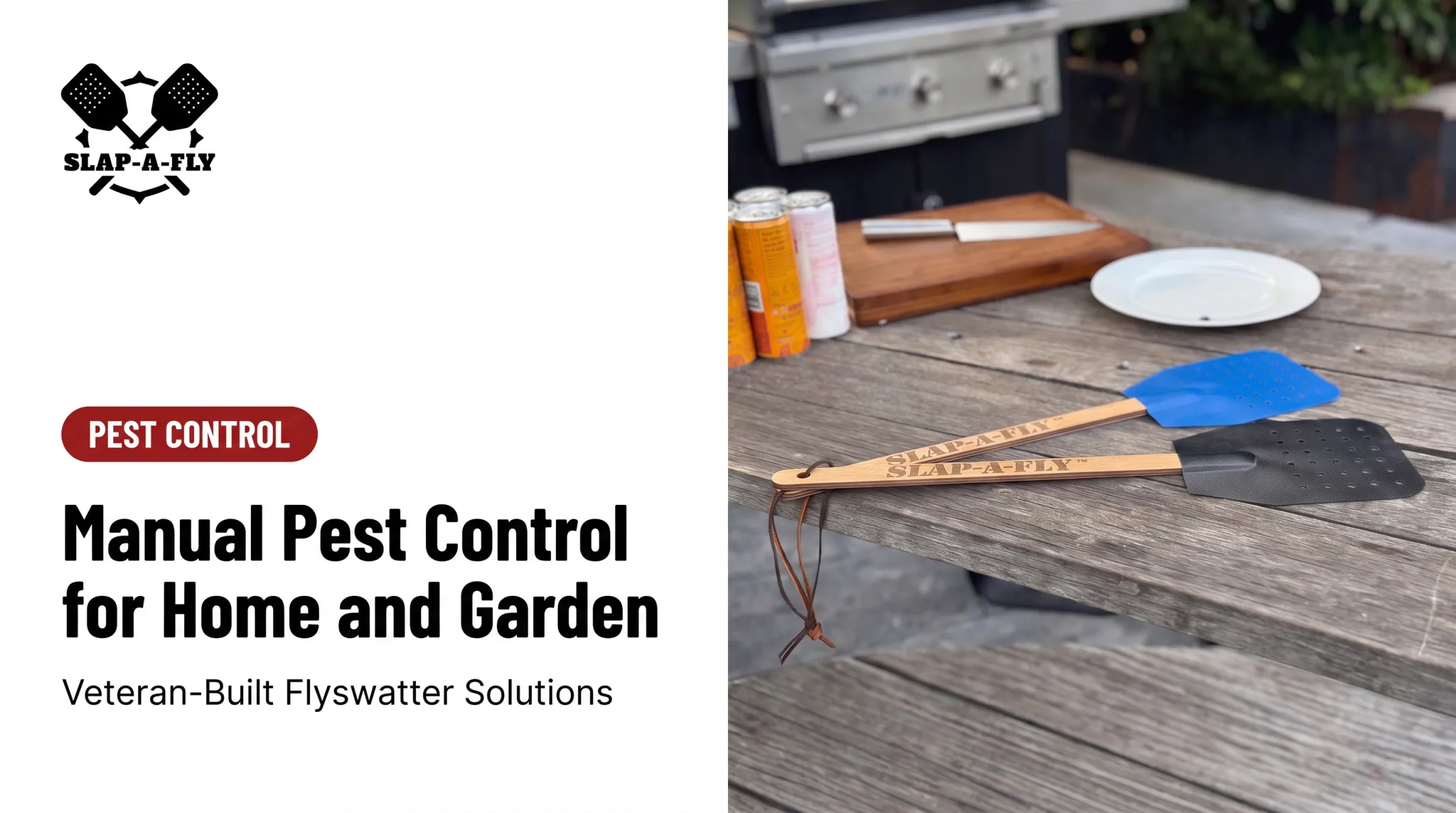
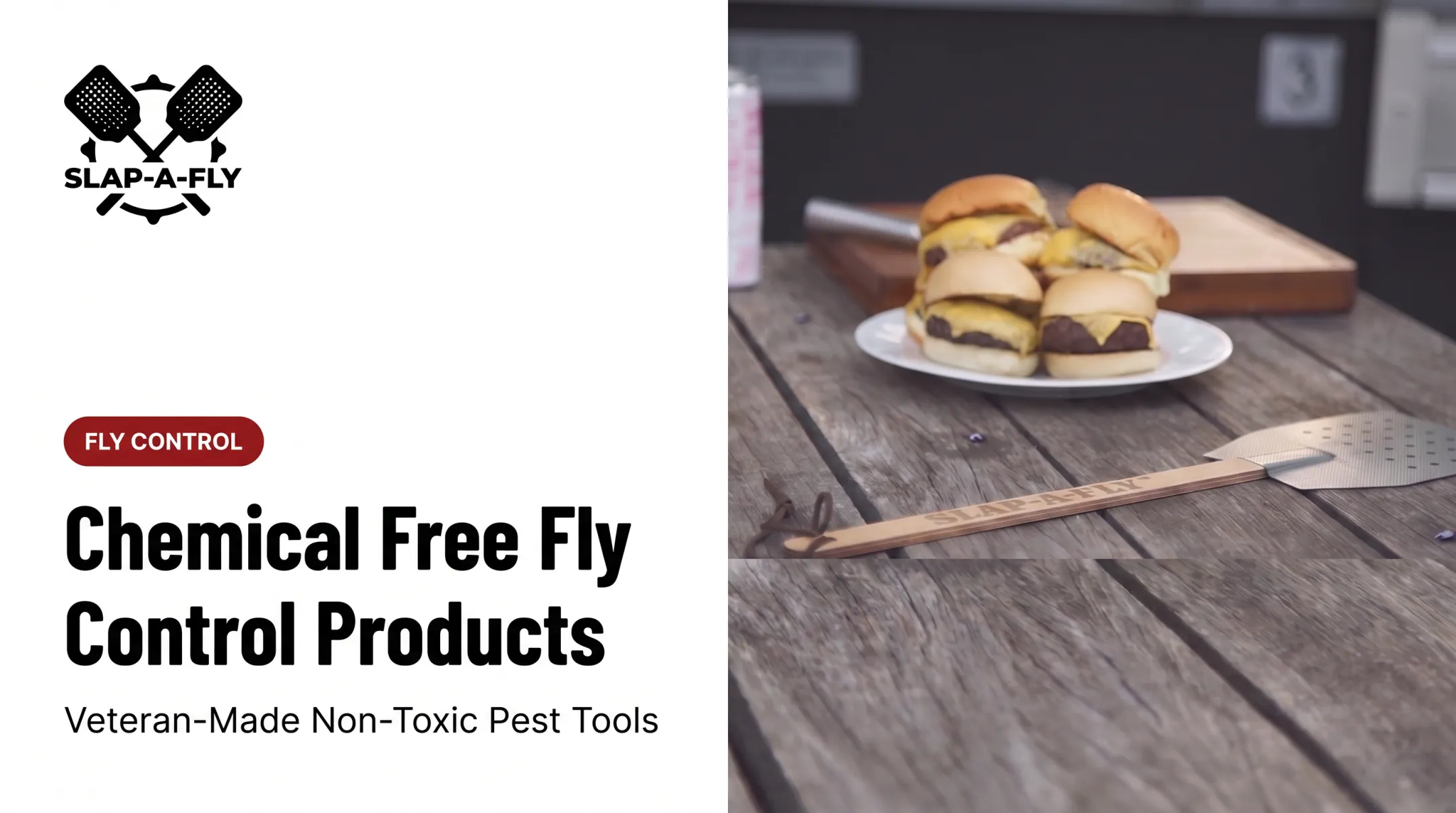
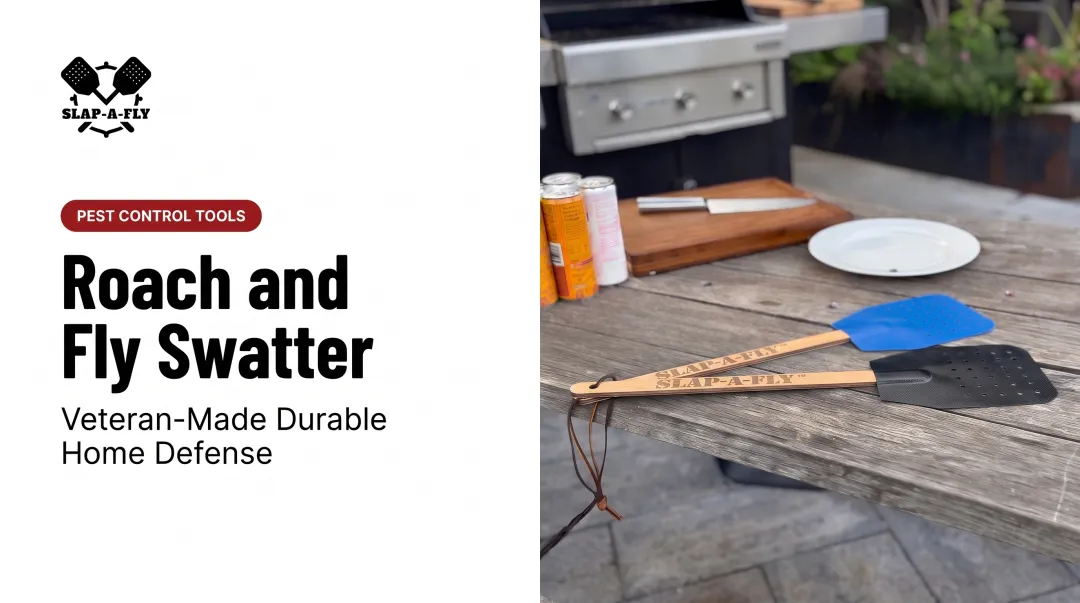
A Slap-a-Fly Standard flyswatter is a military-grade practical hand tool, engineered by U.S. Army veterans, for that visible-insect gap - fruit flies, gnats, and stray ants on hard surfaces:
- Perforated Herculite 80 strike surface rated at 80 PSI impact force - enough force for large tough bugs like cockroaches, wasps, and armored insects - not just flies
- 5-ply aircraft spruce handle built for repeated kitchen use
- Meant for what you can see, not for colony elimination

One important limit: wiping, vacuuming, and swatting only clear what you can see. Pair them with source elimination—covered next—or the colony and queen remain.
Natural, Non-Toxic Deterrents for the Kitchen
Several kitchen-safe substances can slow ants down or kill them without chemical sprays near your food.
- White vinegar spray: disrupts scent trails when wiped on counters and floors
- Cinnamon: repels ants in liquid form; a 2022 peer-reviewed study found cinnamon essential oil significantly repellent in lab tests
- Peppermint oil: a USDA study reported 89.8% ant mortality after 24 hours in controlled testing
- Black or red pepper: a traditional baseboard line, though direct evidence is limited For colony-level impact, borax or boric acid mixed with sugar water on cotton balls works as a slow bait. Ants carry it back to the nest, so it reaches the colony—not just the scouts on your counter. The EPA's National Pesticide Information Center rates boric acid low in acute toxicity, but low toxicity is not the same as safe to leave out in a kitchen.
Safety first: keep bait stations away from countertops, dishes, pet bowls, and anywhere kids can reach. Place them along baseboards or under cabinets, out of main kitchen traffic paths.

Sealing Entry Points to Stop Future Invasions
Once the visible colony is under control, sealing gaps prevents the next wave.
- Caulk cracks around windows, doors, and baseboards (standard IPM step per Penn State Extension).
- Check under sinks and behind appliances, where plumbing penetrations often leave gaps unnoticed.
- Trim vegetation and clear mulch touching exterior walls near the kitchen—branches and mulch act as bridges into the home.
Sealing alone won't hold if moisture problems remain nearby. Leaky pipes near an entry point undo the work fast.
Kitchen Cleanliness Habits That Prevent Ant Return
Sanitation stops kitchen ants more reliably than almost any other habit. UC Integrated Pest Management research ties kitchen ant activity to water and food access.
Build these into your nightly routine:
- Wash dishes and wipe counters before bed—don't leave them overnight
- Sweep or vacuum crumbs from floors and under appliances
- Store dry goods, pet food, and sweets in airtight containers
- Fix leaky faucets and dry the sink basin before bed
Standing water attracts ants almost as reliably as an open sugar bowl. If you've sealed entry points and cleaned diligently but still see activity, the problem may be bigger than surface habits.
When Manual Methods Aren't Enough
Sometimes the colony outpaces what manual methods can handle. Watch for these signs:
- Ants reappearing across multiple rooms, not just the kitchen
- Activity from wall voids or other hidden spaces you can't access
- Colony budding, where a treated nest splits into new subcolonies instead of dying off (common with pharaoh and odorous house ants)
- Trails that keep shifting entry points despite your sealing efforts

When you see these patterns, call a licensed pest control professional. The EPA recommends verifying a company's license with your state pesticide regulatory agency and getting multiple estimates before you commit.
Choose someone experienced with your specific ant species. Pharaoh ant treatment looks nothing like Argentine ant treatment.
Professional treatment doesn't replace your manual habits. Pair expert colony treatment with your nightly cleaning and sealing routine to keep kitchens ant-free for the long run.
Frequently Asked Questions
How do I get rid of ants in my kitchen fast?
Trace the trail to its entry point, wipe visible ants and the trail with soapy water to break the scent path, then seal the entry point immediately. This addresses what's visible while buying time for longer-term fixes.
What smell keeps ants out of the kitchen?
Vinegar, peppermint, and cinnamon are commonly used scents that disrupt ant trails or can repel ants in tests. Results vary by ant species, so treat these as deterrents, not guarantees.
Is it safe to use vinegar around food in the kitchen?
Yes. Diluted white vinegar is non-toxic and safe for wiping counters, cutting boards, and other food-prep surfaces. It won't leave the chemical residue a spray pesticide might.
Why do ants keep coming back to my kitchen even after cleaning?
Cleaning removes food access, but it won't fix an unsealed entry point or an untreated colony nearby. Check for hidden cracks, and consider whether the nest itself needs direct treatment.
Can I get rid of ants without chemical sprays?
Yes. Trail wiping, vacuuming, diatomaceous earth, boiling water on outdoor nests, and boric acid bait stations all work without spraying pesticides near your food prep areas.
When should I call an exterminator for kitchen ants?
Call one when ants persist across multiple rooms, keep shifting entry points, or show signs of splitting off into new colonies despite your efforts. A licensed professional can identify the species and target the nest directly.