Here's the hard truth: no single product solves this problem. Chemical sprays, sticky traps, and fly masks each handle one piece of the puzzle. Effective control requires layering sanitation, chemical treatment, physical barriers, and manual tools together.
This guide walks through fly identification, prevention, barn-wide control tactics, on-horse protection, and manual options you can use every day without reaching for a chemical sprayer.
Key Takeaways
- Stable and house flies breed in manure and wet bedding — sanitation is your biggest lever
- A layered "block, repel, reduce" strategy outperforms any single method alone
- Keep a heavy-duty flyswatter for feed, tack, and grooming spots where sprays aren't practical
Identifying the Flies That Target Horse Barns
Different flies breed in different places and respond to different tactics. Treat them all the same, and you'll waste time and money on the wrong fix.
Stable Flies and House Flies
- Stable flies: Painful piercing bite, usually on the front legs, that sets off stamping, kicking, and nonstop irritation. They breed in wet, decaying material such as soggy straw, manure-mixed hay, and rotting grass clippings.
- House flies: Non-biting; feed on secretions around the eyes, nostrils, and other moist areas, and can spread Habronema parasites. They prefer fresh, moist manure, often less than a day old.
Horn Flies, Face Flies, and Biting Midges
- Horn flies: Small blood-feeders that often originate in cattle manure nearby
- Face flies: Breed in fresh cow manure, persistently target the eyes and nose, and can transmit eyeworm
- Biting midges: Tiny but brutal; bites around the eyes can trigger sweet itch (insect-bite hypersensitivity) in sensitive horses
Horse Flies and Deer Flies
These are the toughest customers. Horse flies and deer flies breed in wetlands and pond margins, far from your barn, so chemical treatment barely touches them. Traps and avoiding peak activity times are the realistic options here, not sprays.

Sanitation and Manure Management: The Foundation of Fly Control
If you do nothing else, do this: remove manure daily. Fly eggs in fresh manure can hatch in as little as 12 hours, and manure under two weeks old is prime breeding real estate. Daily removal is the highest-impact step you can take to break the breeding cycle.
Storage matters too. Move manure piles away from stalls and congregation areas, onto high ground clear of runoff paths. Research does not set one universal setback distance, so site piles as far as you can manage while still hauling them consistently—and watch for fly and odor drift back toward the barn. During active fly season, empty manure dumpsters or storage bins at least weekly.
Feed, Water, and Perimeter Habits
- Store grain in sealed containers, not open bags
- Remove spilled feed daily — it ferments and attracts flies fast
- Discard damp or soiled hay instead of letting it pile up
- Eliminate standing water near waterers, hoses, and gutters
- Trim overgrown grass and weeds around the barn perimeter
Feed-Through Products
Feed-through insect growth regulators (IGRs) pass through the horse and disrupt fly larvae developing in manure. They work best started before fly season and fed through the first hard frost. One field study on cyromazine found a 97% reduction in adult stable flies emerging from treated hay-feeding sites. That work was on cattle sites, not horses, so treat it as supporting evidence rather than a guaranteed equine result.

Barn-Wide and Premise Fly Control Methods
Sanitation removes breeding grounds. Premise control handles the adult flies already flying around.
Residual sprays applied to walls, ceilings, and rafters where flies rest can stay effective for roughly 10 days, according to K-State's equine fly control guidance. Rain and strong sunlight break down the residue faster. Synthetic pyrethroids tend to outlast basic pyrethrins by several days.
Traps work best outside the barn:
- Sticky traps and bait stations near eaves, fence lines, and feed rooms
- UV light traps in shaded, low-traffic exterior areas
Keep traps out of stall interiors. Placing them deep inside draws flies toward horses, not away from them.
Screens and airflow help physically block entry. Screened feed rooms and tack rooms, paired with high-airflow fans, are particularly effective against weak-flying biting midges.
Timing matters for sprays. Apply area treatments early morning or evening, when flies aggregate in shaded resting spots. Fogging during peak activity only knocks down what's present, and more flies arrive within minutes.
A Nebraska mark-recapture study found that half of tagged stable flies dispersed more than a mile from where they hatched. That means your neighbor's messy manure pile can absolutely become your fly problem. Perimeter and neighboring-property sanitation genuinely matter.
On-Horse Fly Protection
Physical barriers protect the areas where horses can't defend themselves.
- Fly masks shield eyes and ears from face flies and midges
- Fly sheets cover the body, with snugger fits offering better midge protection for sweet-itch-prone horses
- Fly boots target the lower legs, exactly where stable flies prefer to feed
Topical repellents — sprays, roll-ons, wipes, and spot-ons — add another layer. For horses in work, look for sweat-resistant formulas, and always apply carefully around the face to avoid eyes and mucous membranes.
Pastured horses don't get sprayed daily in most cases, so longer-lasting spot-on treatments make more practical sense. Some equine spot-on products claim protection windows around two weeks per application, though label instructions should always guide reapplication timing, not a general rule of thumb.

Manual and Non-Chemical Fly Control for Barn Interiors
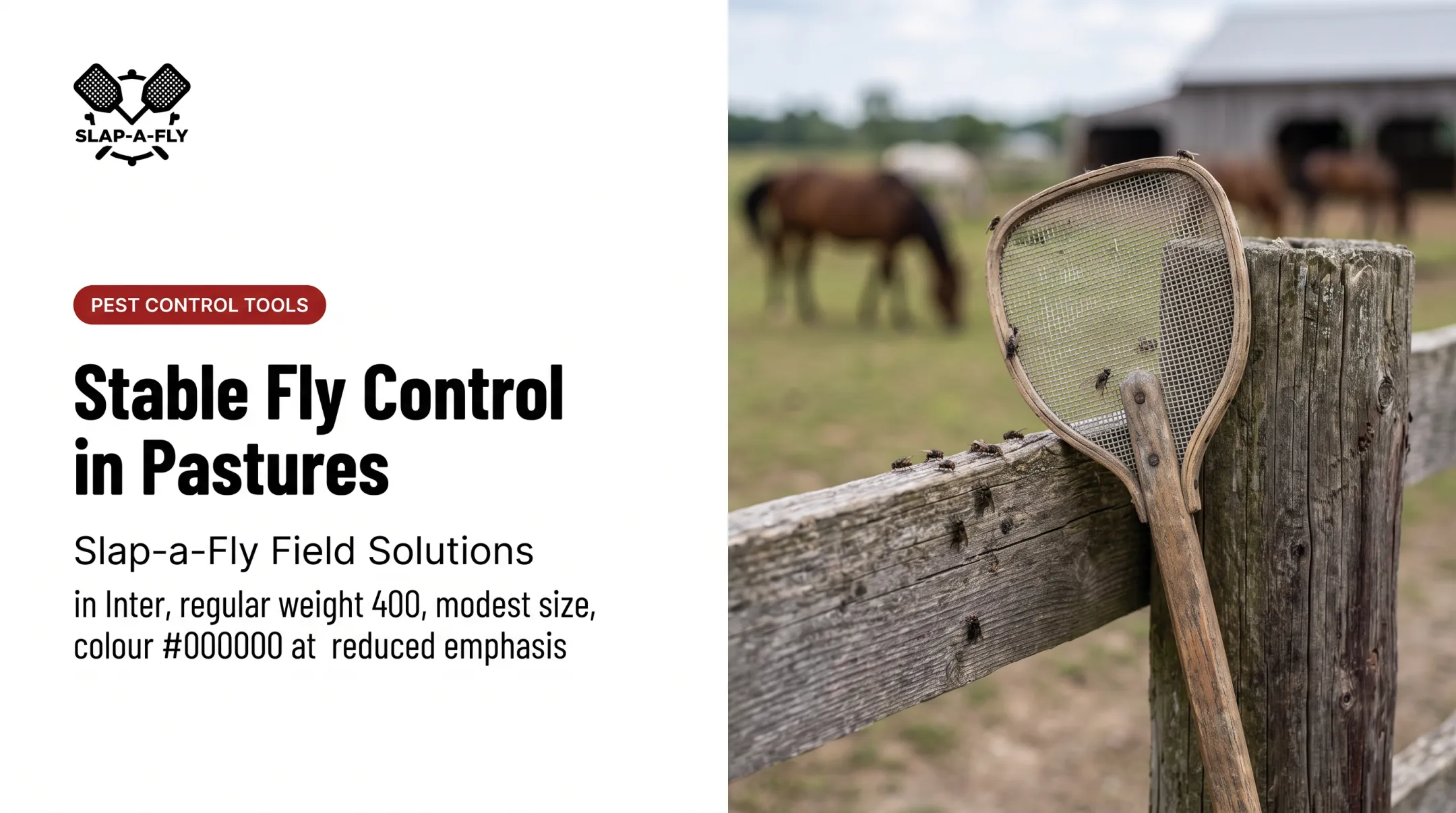
Not every corner of a barn is spray-friendly. Feed rooms, tack rooms, and grooming bays are places where many owners deliberately avoid heavy chemical use, which is exactly where manual tools earn their keep.
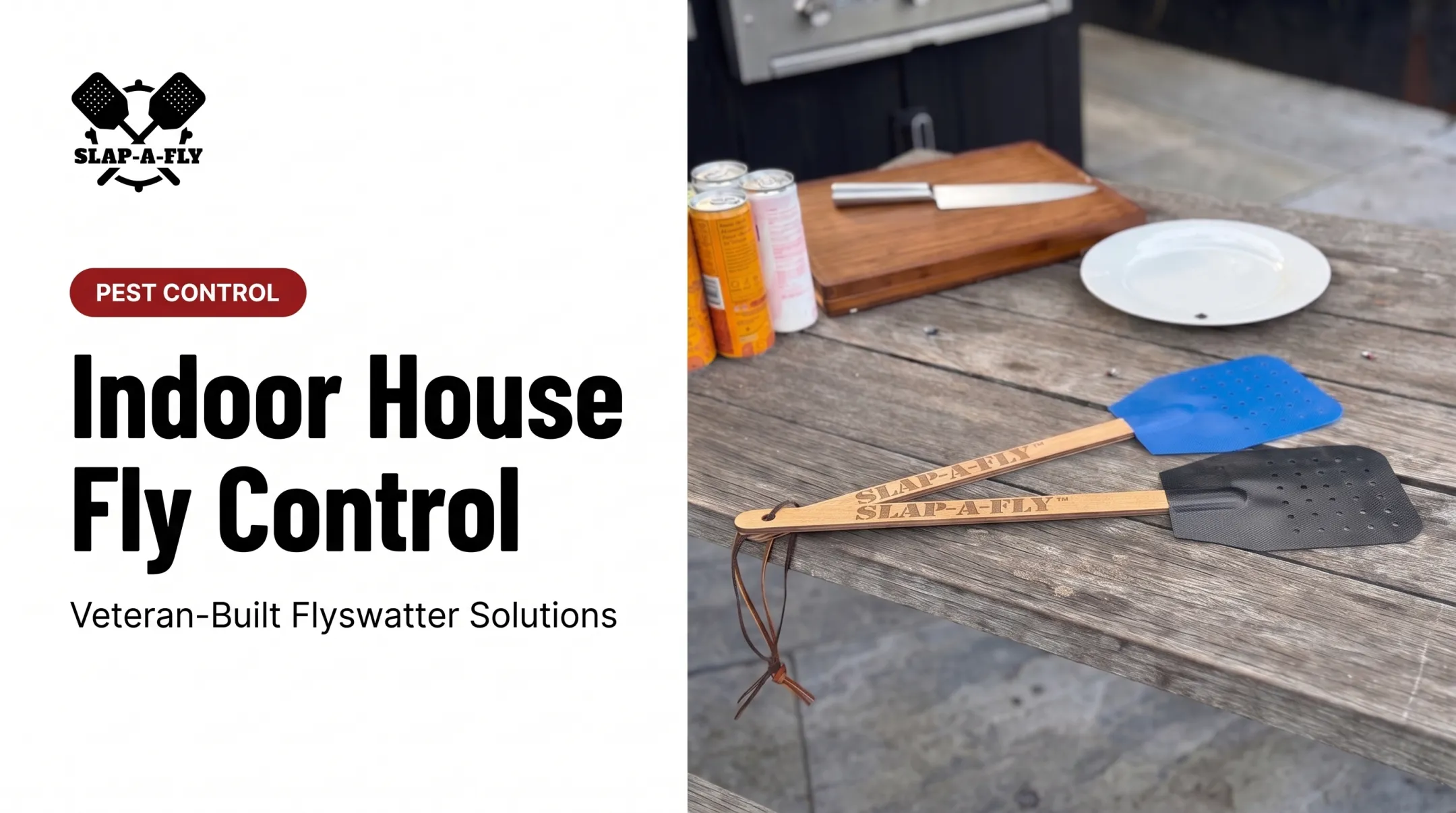
A durable, purpose-built flyswatter fills that gap. Slap-a-Fly™ was designed by U.S. Army veterans around a Herculite 80 MIL-SPEC synthetic striking surface rated for 80 PSI of impact force - enough force for large tough bugs like cockroaches, wasps, and armored insects - not just flies. A 5-ply aircraft spruce handle backs it up. It's built for repeated daily use in demanding barn conditions. A strike on a stall wall or feed bin doesn't wear it down the way a flimsy plastic swatter would.
A few practical notes for barn use:
- The XL model adds extended reach when wasps or hornets show up with the flies, including insects nesting in rafters
- The rugged synthetic strike surface holds up under hard use, unlike household swatters that snap or fray after one season
- A storage loop lets you hang it on a hook near the tack room or feed bin for quick access between chores
For barns with several fly hot spots, the Exterminator 4-pack (two black, two blue) lets you station a swatter in the feed room, tack room, wash stall, and aisle. You stop hunting for one every time a fly shows up.

Frequently Asked Questions
What is the best way to control flies in a horse barn?
Combine daily manure removal, sealed feed storage, residual sprays on resting surfaces, and traps placed outside the barn. No single tactic works alone. Layering is what actually reduces fly pressure.
What is the most effective fly repellent for horses?
It depends on the fly species and the horse's environment. Sweat-resistant sprays work well for horses in work, while longer-lasting spot-on treatments suit pastured horses better.
What is the best fly spray for stables?
Premise sprays containing residual synthetic pyrethroids, applied to walls and resting surfaces, generally perform best in stable environments. Always follow label directions near feed and water sources.
What is the best fly killer for barns?
Bait-based fly killers and residual insecticides handle chemical control. A heavy-duty flyswatter gives immediate, targeted kills near feed and tack with no chemicals required.