That instinct is older than modern pest control itself. Mechanical pest control, physical action instead of chemicals, has been the go-to method for centuries, and it's seeing renewed interest from households that want results without airborne residue near food or kids. This guide breaks down what mechanical pest control actually means, why the fly swatter remains its most practical tool, and what separates a swatter that works from one that ends up in the trash after a week.
Key Takeaways
- Mechanical pest control uses physical tools and actions—not chemicals—to trap, exclude, or eliminate pests
- Fly swatters deliver instant, chemical-free elimination of individual flying pests indoors or outdoors
- Strike-surface material, handle construction, and perforation design decide real-world swatter performance
- Pair swatting with basic sanitation (remove food sources and standing water) to keep flies from returning
What Is Mechanical Pest Control?
Mechanical pest control covers any physical, hands-on method that captures, excludes, or destroys a pest without applying a pesticide. Oklahoma State University Extension describes it as hands-on techniques and simple devices that put a barrier between pests and your space — traps, screens, netting, and tools like the fly swatter.
The category serves three core goals:
- Exclusion: keep pests out with screens and sealed entry points
- Removal: take pests out by hand-picking or vacuuming
- Destruction: eliminate pests on contact with swatters or traps
Households have used mechanical methods for generations, especially families with kids, pets, or chemical sensitivities. Some university extensions, like UC ANR, group "physical" and "mechanical" control together; others split them. For anyone swinging a swatter, the label barely matters.
Common Mechanical Pest Control Methods
Beyond swatters, mechanical control includes:
- Snap traps and glue boards for crawling pests
- Window and door screens that block entry
- Vacuuming for quick indoor pickup
- Manual tools like fly swatters
The upside is immediate, visible results: you see the fly, you swat it, and it's gone — no waiting days for a chemical treatment to kick in. The tradeoff is effort. Mechanical methods need active, repeated work, with no set-and-forget mode. You stay in control because you stay involved.

Why the Fly Swatter Is the Ultimate Mechanical Pest Control Tool
For a single fly buzzing around your kitchen, extension research consistently backs the swatter as the right call. Mississippi State University Extension notes that once flies get indoors, non-chemical controls, including swatters, are preferred over insecticides. Utah State University Extension gives the same straightforward advice: grab a swatter.
Why it beats the alternatives:
- Zero chemical residue near food-prep surfaces or dining areas
- No ongoing cost — unlike sprays, baits, or traps, you're not restocking consumables
- Works anywhere — kitchens, patios, barbecues, campsites, RVs
- Instant result — one strike, done, no waiting period
The problem most people run into isn't the concept, it's the tool. Dollar-store swatters bend under pressure, tear after a dozen strikes, or flex so much on contact that the fly escapes the hit entirely. That's usually why someone ends up chasing the same fly around a room five times.
This is the gap Slap-a-Fly was built to close. The company, founded by U.S. Army veterans, applies military-grade material standards to a tool most people never think twice about.
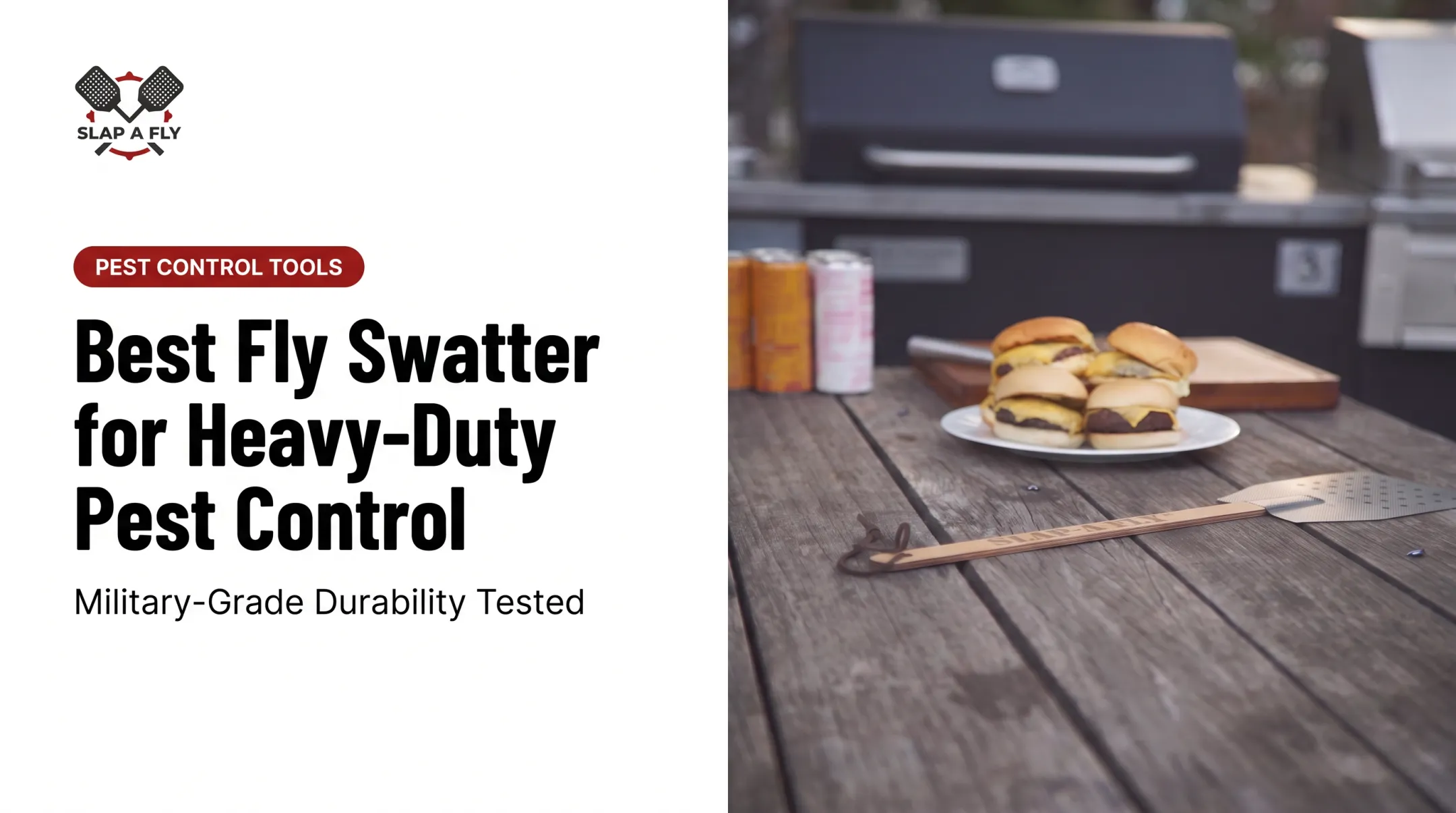
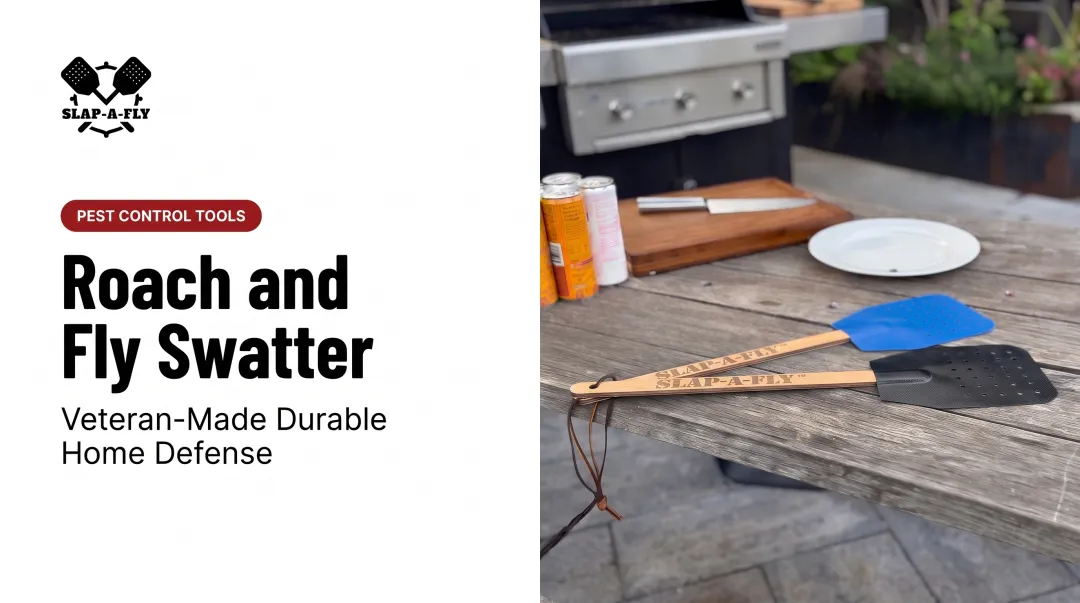
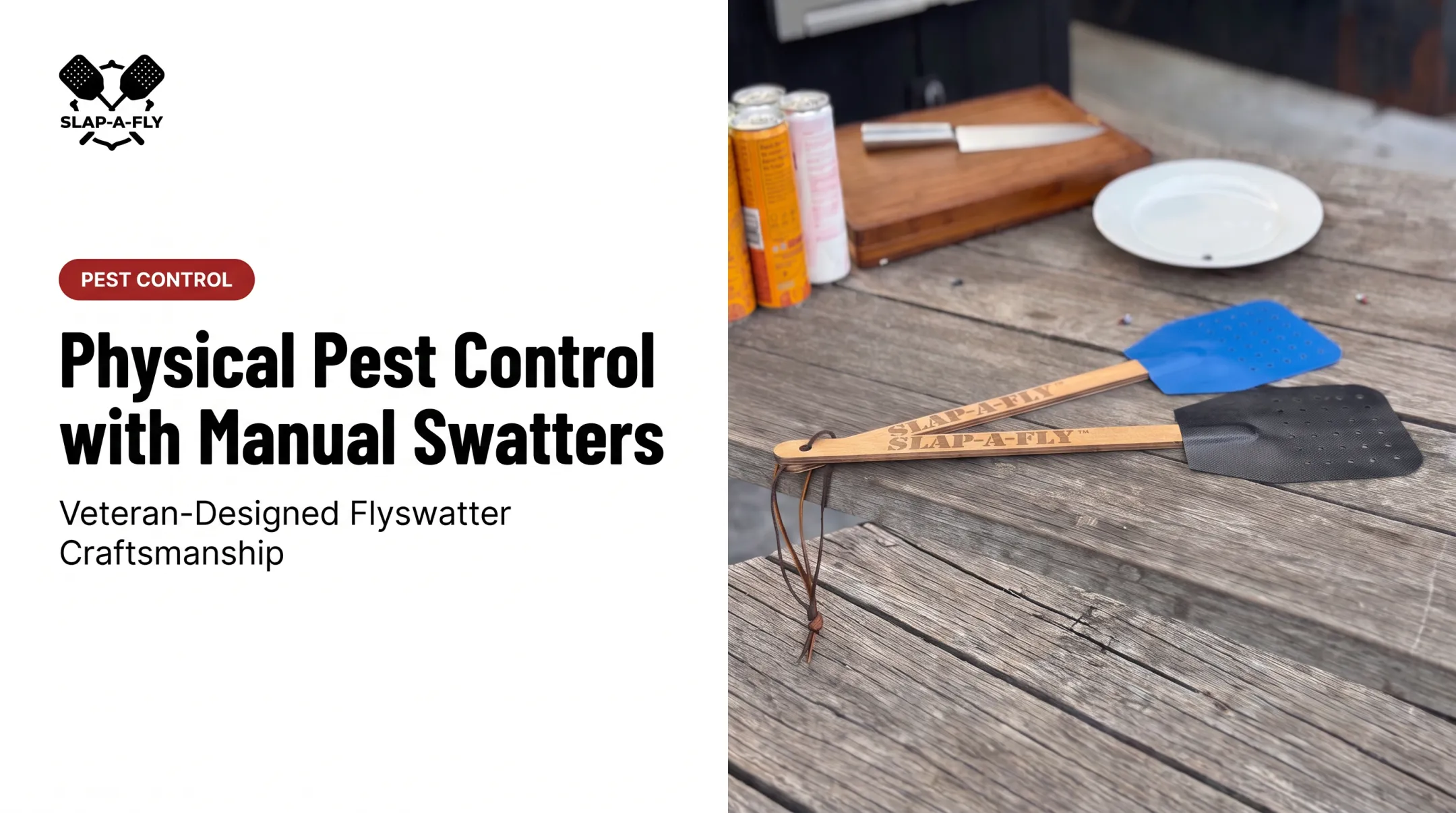
Its Standard model ($19.99), XL model ($24.99), and Exterminator 4-pack bundle ($42.99) all use the same core construction: a Herculite 80 synthetic strike surface and a 5-ply aircraft spruce handle, rather than the flimsy wire mesh most swatters ship with.

What to Look for in a High-Performance Fly Swatter
Cheap swatters fail the moment you need them. These are the features that separate a high-performance swatter from one that folds on contact.
Strike Surface Material
The mesh determines how much force transfers on contact, and whether the surface holds up over time. Slap-a-Fly uses Herculite 80, a synthetic fabric built to MIL-SPEC standards that delivers roughly 80 PSI of impact force - enough force for large tough bugs like cockroaches, wasps, and armored insects - not just flies. The fabric incorporates weft-inserted polyester scrims for tear resistance, meaning it's built to stay taut instead of sagging after repeated strikes.
Handle Construction and Balance
A flimsy handle undercuts even a great strike surface. Slap-a-Fly's handle uses 5-ply aircraft spruce, the same category of wood used in military cargo plane components, chosen for its strength-to-weight ratio. The result is a precision-balanced swatter that stays controlled through thousands of swings rather than warping or splitting.
Perforation and Airflow
A solid paddle pushes air ahead of it as it swings, which flies can sense and dodge. Perforated strike surfaces let air pass through, reducing that early warning. Slap-a-Fly's perforated head is built around this principle, pairing airflow with the Herculite 80 surface.
Extended Reach for Riskier Pests
For wasps, bees, or large cockroaches, distance matters. The XL model features a longer handle and larger strike surface, giving you extra reach so you're not swinging within stinging range.
Storage and Portability
Convenient storage keeps a swatter within reach when seconds count. A hanging loop at the base of the handle lets you hang it near a kitchen door, garage, or campsite instead of burying it in a drawer.
Slap-a-Fly builds each swatter in the USA with 100% vegan materials and the durability to outlast the dollar-store versions most people replace every season.

Mechanical vs. Other Pest Control Methods
Mechanical, chemical, and biological approaches solve different problems—and they differ most clearly in speed, effort, and best use case.
| Method | Speed | Effort Required | Best Use Case |
|---|---|---|---|
| Chemical | Fast | Low (once applied) | Larger infestations, requires safety precautions |
| Biological | Slow | Low | Long-term, eco-focused population control |
| Mechanical | Immediate | High (active use) | Individual pests, indoor entry points |
The EPA's Integrated Pest Management (IPM) framework treats these as complementary rather than competing. IPM prioritizes effective, lower-risk controls first.
That often means pairing mechanical tools like swatters with basic prevention, such as sealing entry points and improving sanitation. The combination outperforms any single method used alone.

Tips for Maximizing Your Fly Swatter's Effectiveness
A few adjustments make a real difference in your hit rate:
- Aim slightly ahead of the fly. Flies usually launch backward and upward when they sense motion, so swinging at where it sits now often means it's gone by the time you connect.
- Remove the attractants. Standing water, exposed food, and uncovered trash will keep drawing flies back no matter how good your swing is.
- Keep it within reach. Hang a swatter near your kitchen door, back porch, or grill so you're not scrambling when one shows up mid-meal.
None of this replaces basic sanitation. It supplements it. The swatter handles what's already inside; prevention keeps more from getting in.
Frequently Asked Questions
What are the mechanical methods of pest control?
Mechanical pest control uses physical devices and techniques such as traps, barriers, screening, and manual tools like fly swatters to capture or eliminate pests without chemicals.
Is a fly swatter considered pest control?
Yes. It's a classic form of mechanical pest control, delivering immediate, chemical-free elimination of individual flying pests.
What is the difference between mechanical and physical pest control?
Mechanical control relies on devices or manual action, like traps and swatters, while physical control modifies environmental conditions such as heat or humidity. Both avoid chemicals.
Are mechanical pest control methods safe for homes with kids and pets?
Yes, because no chemicals are involved. Still, keep any pest-control tool stored safely and away from food-contact surfaces.
What makes one fly swatter more effective than another?
Strike-surface tension, mesh perforation, and handle rigidity all affect strike speed, accuracy, and how long the swatter lasts under repeated use.
Can mechanical pest control fully replace chemical treatments?
For isolated pests like a stray fly, often yes. For larger infestations, mechanical methods work best paired with prevention or targeted treatments.