The good news? You don't need harsh chemicals near your chickens or your eggs. Natural fly control works, and it works well when you combine a few strategies instead of relying on just one.
The best approach layers three things: prevention (removing what attracts flies), biological control (using nature against them), and manual control (dealing with the flies that slip through). Here's how to build that system.
Key Takeaways
- Sanitation stops infestations at the source by cutting moisture, manure, and spilled feed
- Diatomaceous earth and fly predators cut populations best when used together, not alone
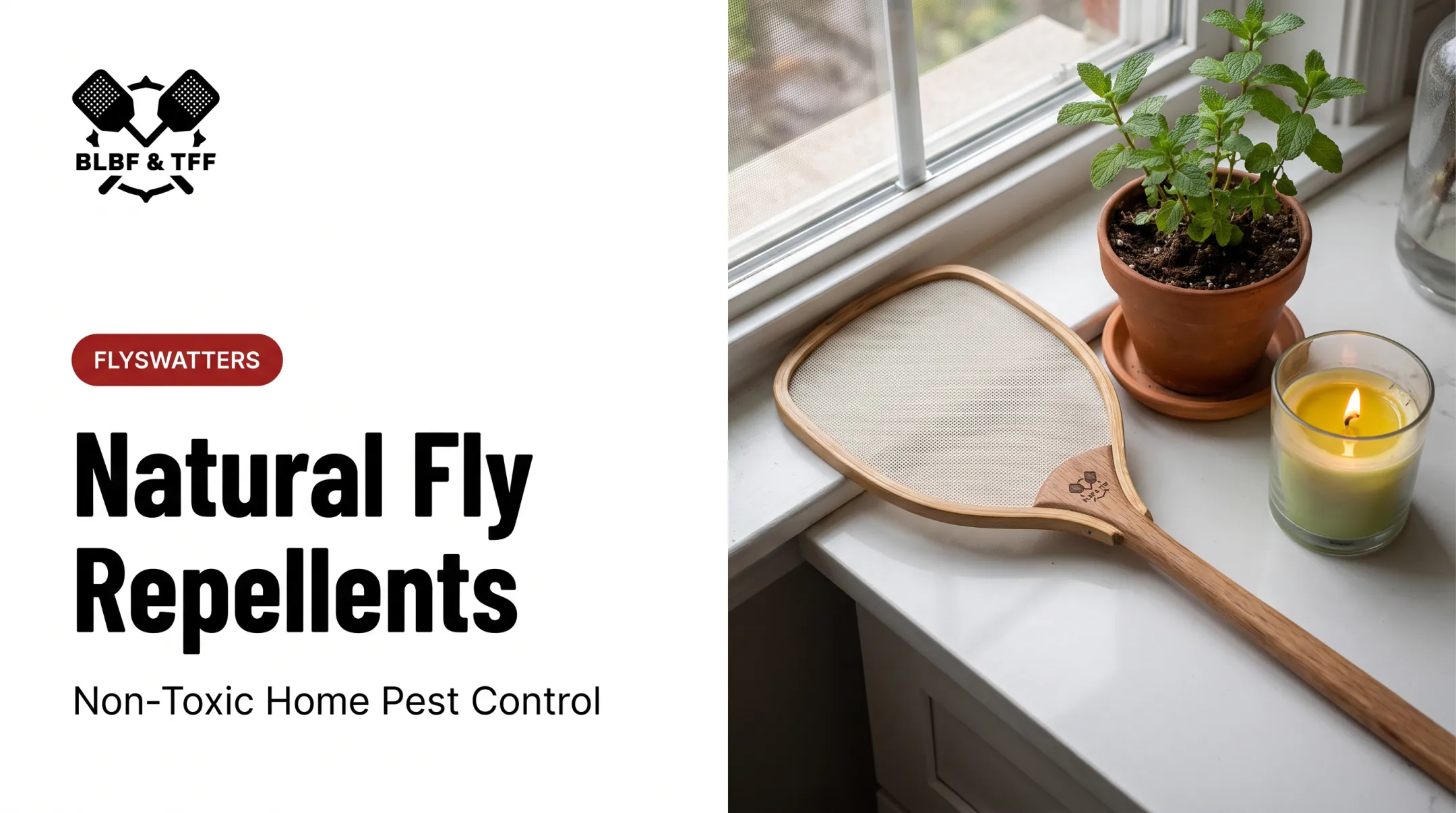
- Herbal sprays and hung fresh herbs offer a passive, chemical-free deterrent layer
- Keep a durable flyswatter ready for flies that get past prevention
Why Are the Flies So Bad in My Chicken Coop?
Flies aren't randomly showing up — they're responding to exactly the conditions a coop tends to provide. House flies breed in wet manure, spilled feed, and stagnant water. Add warmth and humidity, and you've built a fly nursery.
Temperature drives everything. According to Cornell and Penn State Extension poultry recommendations, house flies develop from egg to adult in about 10 days at 85°F, but that stretches to 21 days at 70°F. In poultry manure specifically, ideal conditions can produce a new adult fly in as little as 7–10 days.
Moisture is the real trigger. Fresh manure sits at roughly 75–80% moisture, which is exactly what fly larvae need. Cut that to 30% or less and breeding grinds to a halt.

Common Coop Conditions That Attract Flies
- Leaking nipple waterers or poorly adjusted feeders creating spillage and standing moisture
- Wet bedding under roosts, where manure and condensation collect overnight
- Straw or hay bedding that traps moisture instead of drying quickly
- Stagnant puddles near the coop entrance or run
Fix these conditions and you stop flies from breeding before they become a problem.
Sanitation: Your First Line of Defense
No spray, trap, or gadget outperforms basic sanitation. It isn't glamorous work, and it is still the difference between a fly-free coop and a constant battle. Start with manure removal. Extension guidance recommends removing manure at least twice weekly to break the fly breeding cycle before eggs hatch. Daily removal under roosts is even better: that's where waste concentrates overnight. Switch your bedding. Pine shavings dry faster and manage moisture better than straw or hay, which tends to mat and hold water. If you use sand, keep it stirred to prevent caking. A few more habits that pay off fast:
- Keep feed scraps outside the coop entirely, especially in summer heat
- Raise feeders and waterers to the correct height to cut down on spillage
- Check nipple waterers weekly for slow leaks
- Spread removed manure in thin layers outdoors so it dries instead of clumping A five-minute daily routine beats an hour-long deep clean every few weeks. Small, consistent effort keeps moisture and flies from ever building up.

Natural Repellents & Biological Fly Control
Once sanitation is dialed in, natural repellents and biological agents can knock down whatever population remains.
Diatomaceous Earth
Food-grade DE works mechanically : abrasive particles scratch insect exoskeletons and dry larvae out. It's a physical process, not a poison, so backyard keepers often prefer it over chemical dusts.
Application tips:
- Use food-grade DE only, and wear a dust mask; fine silica dust is hard on lungs for you and your birds
- Apply lightly to bedding and nesting areas; over-application creates unnecessary dust without added benefit
- Temporarily move chickens out during application, then let dust settle before they return
DE alone won't clear a heavy infestation. Pair it with sanitation and the biological controls below.
Fly Predators (Parasitic Wasps)
These tiny wasps target fly pupae in manure, laying eggs inside them so the larvae never become adult flies. They're harmless to humans and birds and don't bite or sting anything but fly pupae.
A Florida poultry-house study using Muscidifurax raptorellus and Spalangia cameroni found these wasps achieved 8.4% parasitism of sentinel fly pupae in release houses, a significantly higher rate than untreated control houses. Extension guidance also notes that suppression from a proper weekly release schedule can develop over 10–20 weeks.

Setup basics:
- Release near manure accumulation areas, away from where chickens can disturb them
- Keep manure slightly dry ; wet manure favors flies over the wasps
- Start releases before fly season ramps up, not after
Herbal Sprays and Hung Herbs
A simple DIY spray combines white vinegar, water, a splash of vanilla extract, and a few drops of lavender or peppermint essential oil. Spray it around the coop's exterior, entryways, and perches . Never spray it directly on birds.
Fresh herbs work as a passive deterrent too:
- Mint bundles hung near nesting boxes
- Rosemary tucked into bedding corners
- Basil near the coop entrance
A word of caution on essential oils: most common oils are fine in a diluted spray applied to surfaces, but they should never be applied directly to chickens' skin or feathers. Concentrated oils can irritate a bird's respiratory system.
Traps and Manual Control for Immediate Relief
Prevention and biological control handle the breeding source. But you still need something for the flies already buzzing around your coop right now.
Fly traps and strips work as attractants, but placement matters. Keep traps away from doors and windows: attractants can pull more flies toward the coop entrance if you place them wrong. Position them at the periphery instead, roughly six feet off the ground.
Homemade bottle traps (vinegar or sugar-water in a plastic bottle with a funnel top) are a cheap, disposable option. Store-bought sticky traps last longer and need less upkeep, but cost more over time. Neither clears flies already on birds, walls, or nesting boxes inside the coop.
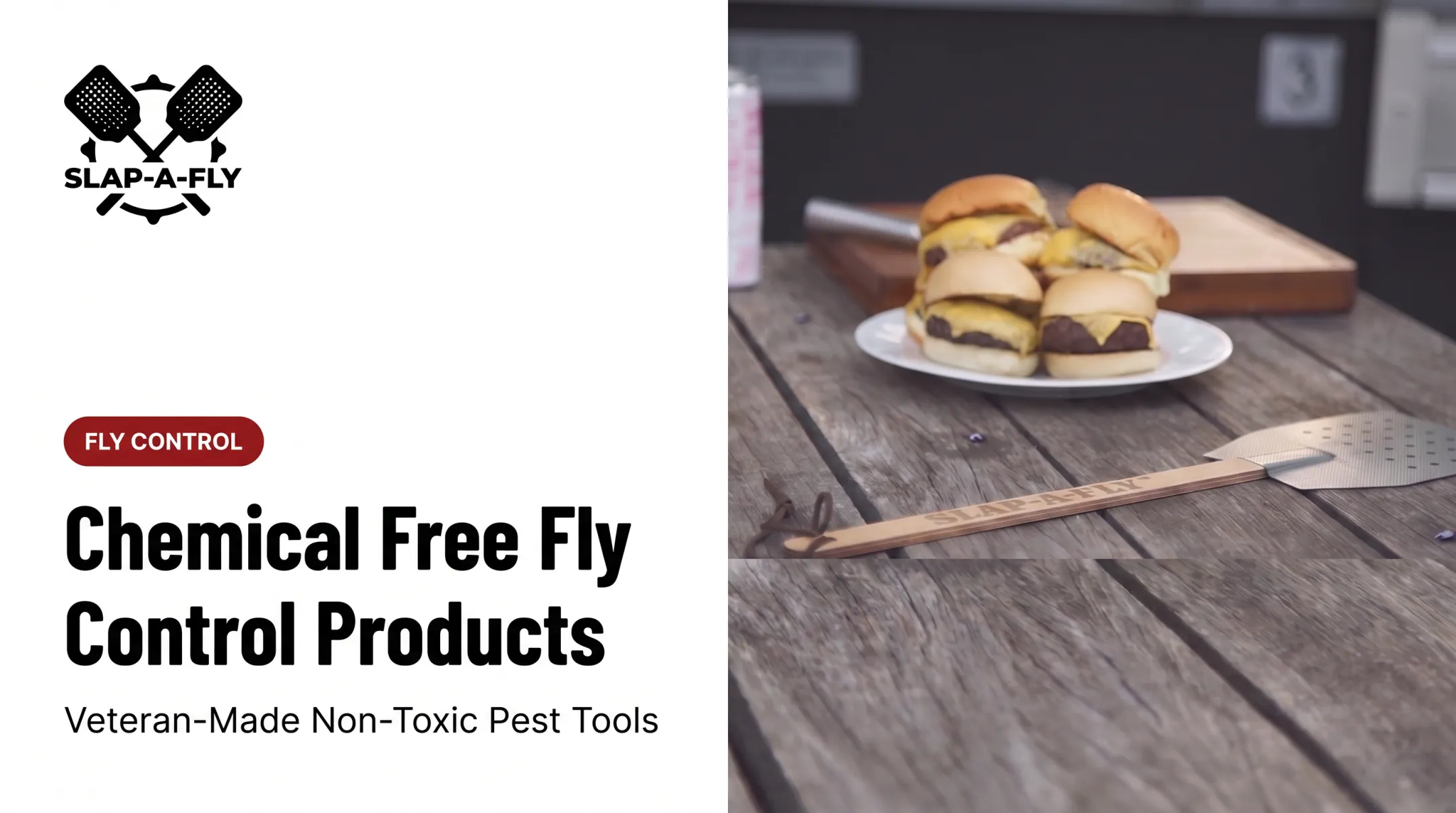
That's where a flyswatter earns its place. It's the only method here that gives you instant, chemical-free elimination the moment a fly lands.
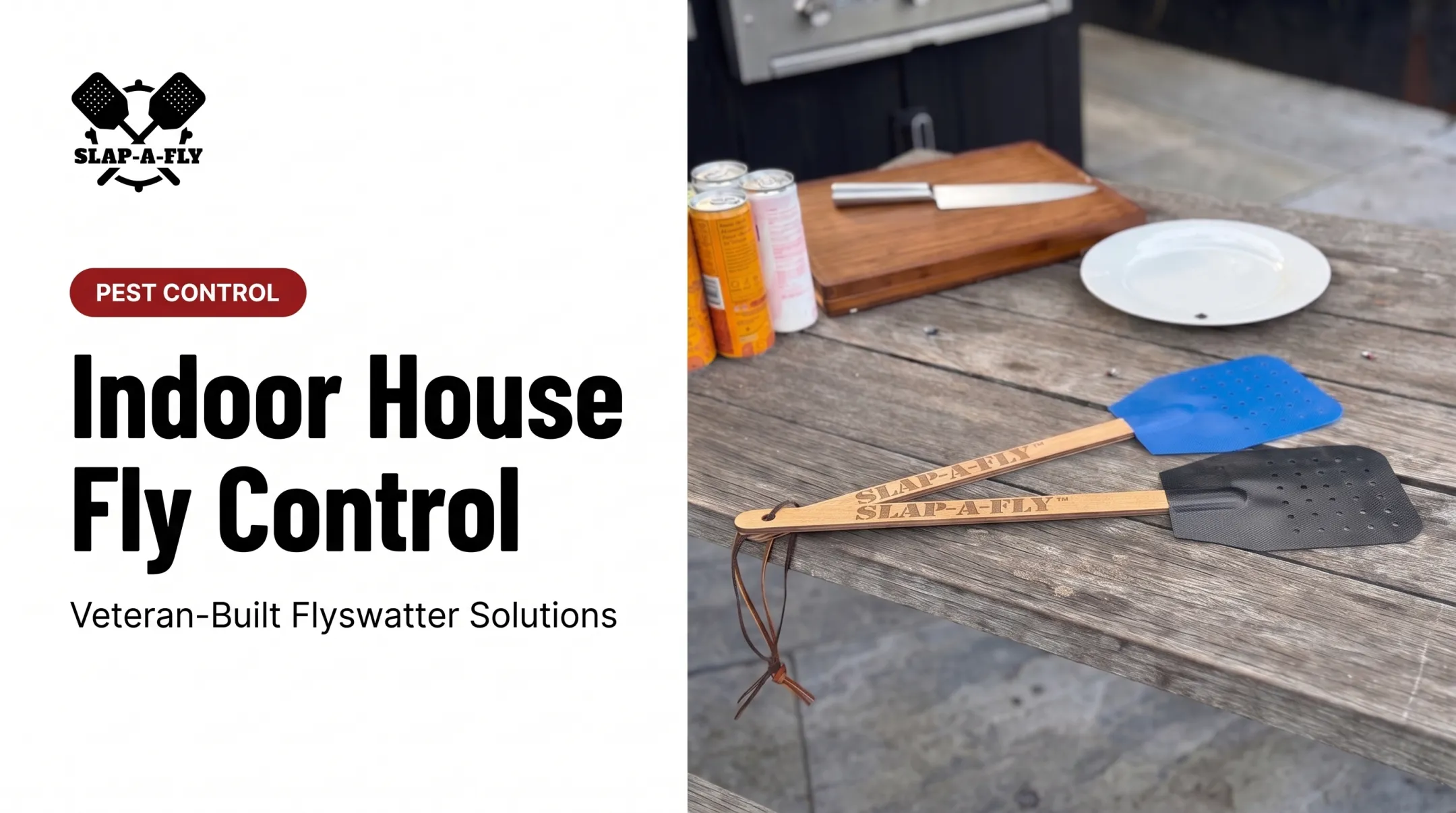
A cheap plastic swatter flexes, misses, and falls apart within a season of coop use. Slap-a-Fly's Herculite 80 striking surface is built to MIL-SPEC standards and delivers 80 PSI of impact force - enough force for large tough bugs like cockroaches, wasps, and armored insects - not just flies - for single-strike kills—no second chase around the coop.
The construction holds up where it counts:
- 5-ply aircraft spruce handle: aerospace-grade wood used in military cargo planes, rated for thousands of strikes
- Perforated strike surface: cuts air resistance for faster, more accurate swats
- 100% vegan materials with a storage loop for hanging by the coop door
Three options fit different coop setups:
| Model | Price | Best For |
|---|---|---|
| Standard | $19.99 | Routine coop and kitchen use |
| XL | $24.99 | Extra reach for wasps, bees, and larger pests |
| Exterminator 4-Pack | $42.99 | Multiple buildings: coop, barn, kitchen |

Whichever model you choose, keep it hanging by the coop door. When prevention and biological control still let a few flies through, a reliable swat beats a chemical spray every time.
Building a Consistent Fly Prevention Routine
Natural fly control works as a steady rhythm, not a one-time fix. Here's how the pieces fit together:
- Daily: Remove manure under roosts, check for wet spots, keep feeders filled and clean up spill zones
- Weekly: Apply a light dusting of food-grade DE to bedding, check waterers for leaks
- Seasonally: Release fly predators before fly season starts, then follow up weekly through summer
- As needed: Spot-treat with herbal spray, refresh hung herbs, and swat any flies that make it inside

Fly strike is the risk to watch most closely. Chickens with open wounds, diarrhea, or heavily soiled feathers are far more vulnerable to flies laying eggs on their skin. Check vulnerable birds daily in warm months, and treat any injury or soiling right away rather than waiting for the next full coop clean.
Frequently Asked Questions
Why are the flies so bad in my chicken coop?
Moisture, manure, warm weather, and spilled feed are the main drivers behind fly infestations. Addressing these root causes through sanitation is far more effective than reacting to flies after they've already multiplied.
Does diatomaceous earth really work for fly control?
It works as part of a broader strategy, not as a standalone fix. Use food-grade DE only, apply it carefully with a mask, and pair it with sanitation and other methods for real results.
How do fly predators work in a chicken coop?
Parasitic wasps lay eggs inside fly pupae found in manure, preventing them from ever hatching into adult flies. They're harmless to chickens and people and target only flies.
What smells keep flies away from chickens?
Vanilla, mint, lavender, and citronella are commonly used natural deterrents. They work best as part of a spray or hung-herb routine, not as a complete solution on their own.
Is it safe to use essential oils around chickens?
Most common oils are safe when diluted in a spray and applied to surfaces around the coop. Never apply essential oils directly to your chickens' skin or feathers.
What is the fastest way to get rid of flies already in the coop?
A sturdy, well-built flyswatter gives you instant elimination the moment a fly lands, no chemicals needed. Pair it with traps positioned outside the coop for ongoing control between swats.