Getting rid of them for good means attacking two fronts at once: the larvae breeding in your soil and the adults buzzing around your face. This guide covers the killers, the traps, the prevention steps, and one instant, chemical-free tool worth keeping on hand.
Key Takeaways
- Fungus gnats breed in damp soil and organic matter — moisture removal is the root fix
- You need to kill both soil-dwelling larvae and airborne adults, not just one stage
- Hydrogen peroxide drenches and BTI products (mosquito bits/dunks) are the most research-backed larvae killers
- Sticky traps catch adults but never reach the larvae causing the real damage
- A heavy-duty flyswatter delivers instant, chemical-free kills on individual adults, indoors or out
Understanding Fungus Gnats: Why They Won't Go Away
Fungus gnats look like tiny, dark mosquitoes and hover near soil. Fruit flies, by contrast, have red eyes and hover around ripe produce. Confusing the two leads to the wrong treatment.
The lifecycle explains why gnats seem impossible to eliminate:
- Egg: laid in clusters on moist soil, hatching in about 3 days at warm temperatures
- Larva: the real threat, feeding in soil for roughly 10 days and chewing on roots and organic matter
- Pupa: a brief transition stage before adults emerge
- Adult: emerges in about 4 days and starts the cycle again
At 75°F, a full female-to-female generation can complete in roughly 17 days, per UC IPM. Because all stages can exist indoors simultaneously, killing adults alone never breaks the cycle.

Common Breeding Grounds
Those unbroken cycles start wherever moisture and organic matter meet. Three sources account for most infestations:
- Damp potting soil: the top breeding site, especially with organic fertilizers or mulch mixed in
- Clogged drains: moist debris buildup can host larvae when a drain stays wet and dirty
- Moist organic debris: decomposing grass clippings, compost, or overwatered planters
A single female can lay more than 100 eggs in her first week alone (UNH Extension), which is why a "few gnats" becomes a swarm within days if you wait to act.
Best Fungus Gnat Killers for Fast Elimination
Soil treatments stop fungus gnats by killing eggs and larvae where they live. Pick one of these options when you want the population to collapse at the source.
Hydrogen Peroxide Drench
Mix 1 part 3% hydrogen peroxide with 4 parts water, then pour it directly over the soil. It fizzes on contact with larvae and kills them, and the soil dries out afterward, according to Cornell Cooperative Extension.
BTI Products (Mosquito Bits/Dunks)
These contain Bacillus thuringiensis israelensis, a biological larvicide. Bt spores damage a larva's gut once ingested.
Soak bits in water overnight to make a "tea," then water your plants with it. Expect repeat applications every 3–7 days, with noticeable population drops after 4–5 weeks. This is not a same-day fix.
Pyrethrin-Based Sprays
These attack an insect's nervous system, causing rapid paralysis. Useful for heavy infestations, but:
- Follow label directions exactly
- Ventilate the room during and after application
- Keep pets and kids away until spray dries
- Avoid outdoor use near water features; highly toxic to bees and fish
Diatomaceous Earth
A dry, abrasive powder that strips oils from an insect's exoskeleton, causing dehydration. It only works while dry and undisturbed on the soil surface, so it's a helpful adjunct rather than a full solution.

Killers target eggs and larvae in the soil. They do nothing for the adult gnats already flying around your kitchen. Use sticky traps or a quick swat on adults while soil treatments wipe out the next generation.
Best Fungus Gnat Traps for Long-Term Control
Traps only catch adult fungus gnats. For long-term control, pair them with a soil larvicide—traps never reach eggs, larvae, or pupae on their own.
Best options for adults:
- Yellow sticky traps: Cut into small squares and place near the soil surface. They catch adults as they emerge and help you track infestation severity.
- Plug-in light/UV sticky traps: Blue and UV light plus an adhesive cartridge pull flying insects across a whole room. Useful in kitchens and living areas when you want coverage without tending every pot.
- DIY apple cider vinegar traps: Skip these for fungus gnats. ACV, dish soap, and plastic wrap work for fruit flies, but Wisconsin Extension states vinegar traps don't work for monitoring fungus gnats.

No controlled study has published a hard sticky-trap-versus-spray capture rate, so ignore sites that quote a specific percentage. What the evidence supports: traps for adults, larvicides for the soil, and both together to break the lifecycle.
Instant Contact Kill: Why a Heavy-Duty Flyswatter Belongs in Your Arsenal
Traps and larvicides work over days or weeks. Sometimes you just want the gnat dead right now: hovering over your coffee, landing on a seedling, buzzing your face while you cook.
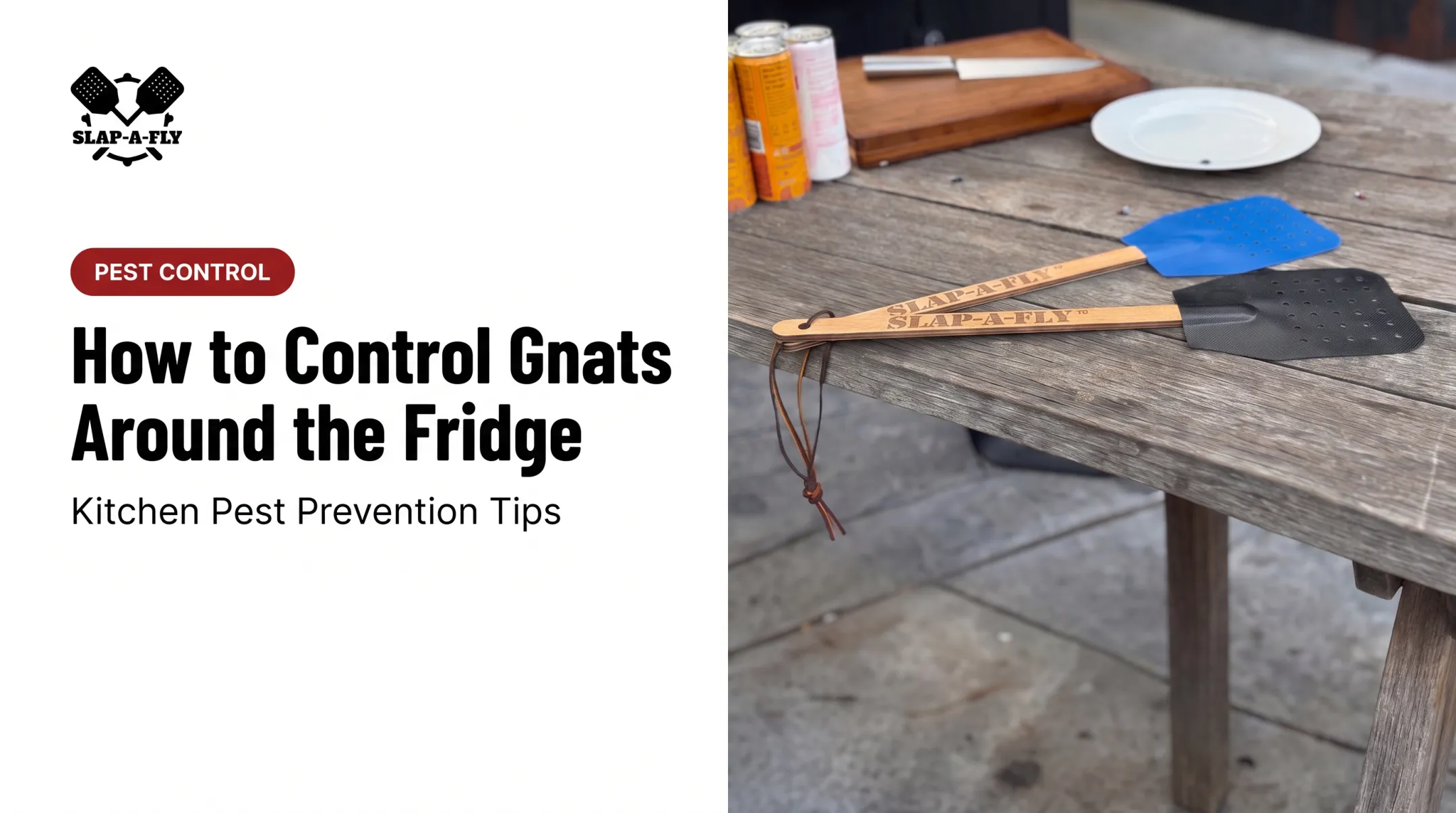
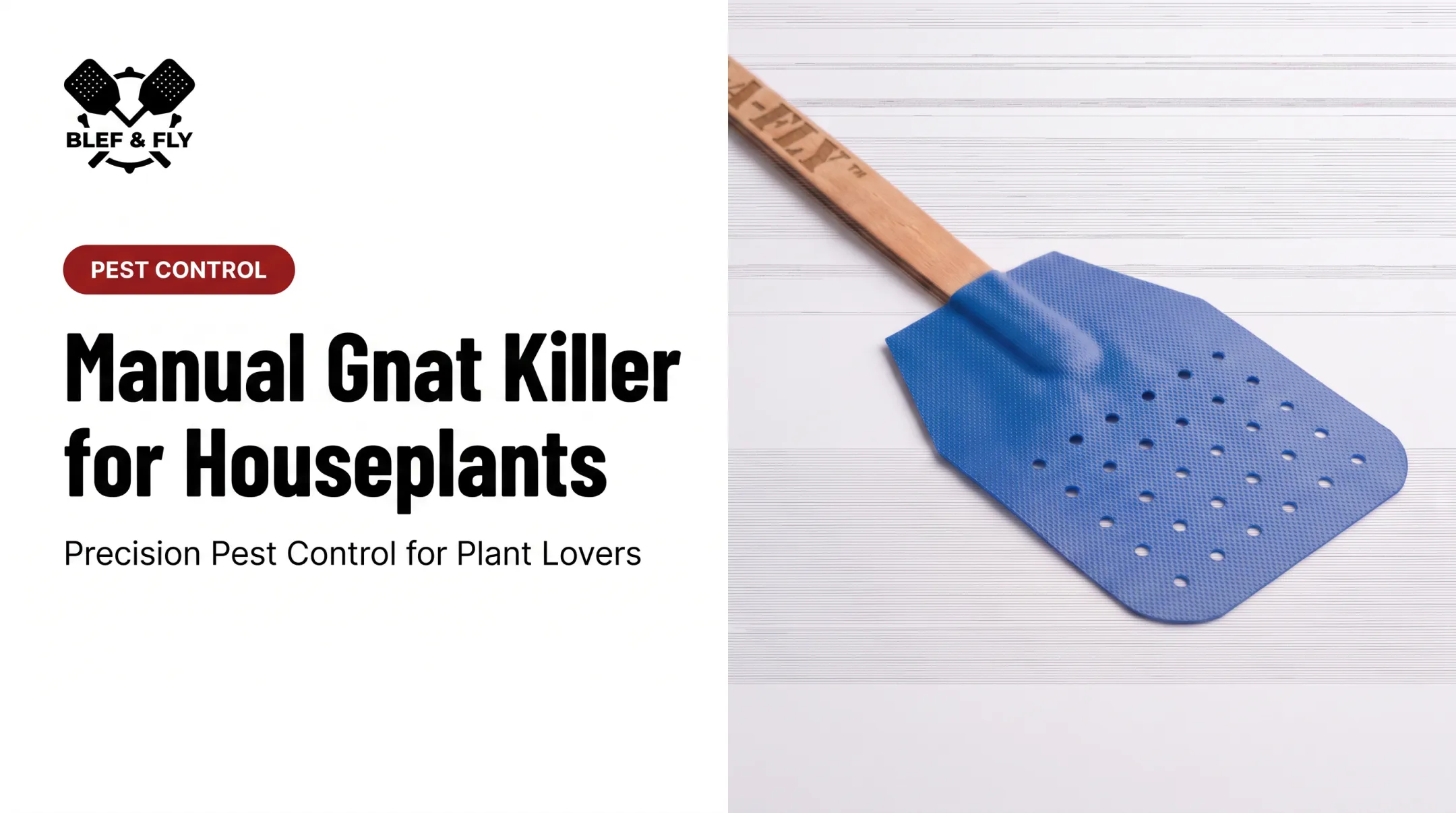
That's where a precision flyswatter earns its spot. Slap-a-Fly's Standard model uses Herculite 80, a MIL-SPEC synthetic fabric rated for 80 PSI impact force - enough force for large tough bugs like cockroaches, wasps, and armored insects - not just flies. The perforated head lets air pass through during the swing, cutting drag so you can react to a fast, erratic gnat before it darts away.
Why it fits into gnat control specifically:
- Kitchen-safe — no chemicals or spray drift near food prep and countertops
- Plant-safe — swing freely around houseplants without hitting leaves or treated soil
- Travel-ready — practical for camping and RVs when sprays aren't an option
- Built to last — Herculite 80 holds tension through thousands of strikes
The Standard model ($19.99, on sale from $35.99) is sized for kitchens and plant rooms. The XL version ($24.99, on sale from $35.99) adds reach for outdoor and camping use, including larger pests. The Exterminator bundle ($42.99) covers both jobs, so you're set for the kitchen and the patio.

Larvicides and traps handle the slow work in soil and air. Keep a heavy-duty swatter on the hook for the gnat that's already in your face.
Preventing a Fungus Gnat Comeback
Once you've broken the cycle, keep it broken:
- Quarantine new plants before bringing them indoors. Check the soil surface and root ball for larvae first.
- Bottom-water when possible, and let the top inch of soil dry out completely between waterings. Gnats can't breed in dry soil.
- Clean drains regularly and clear moist debris buildup where it collects.
- Take out trash and food debris promptly — decomposing organic matter anywhere in the house is a potential breeding ground, not just in pots.
Frequently Asked Questions
What is the best product for getting rid of gnats?
A combination approach works best: BTI soil treatments (like Mosquito Bits) for larvae, paired with yellow sticky traps for adults. Neither alone breaks the full lifecycle.
What kills gnats instantly on contact?
Hydrogen peroxide sprays kill larvae and eggs on contact in soil. For adults flying in the air, a heavy-duty flyswatter delivers an instant, chemical-free kill.
How do I know if I have fungus gnats or fruit flies?
Fungus gnats hover near soil and have slender, mosquito-like bodies with smoky wings. Fruit flies have red eyes and rounder bodies, and they cluster around ripe or rotting produce.
Do apple cider vinegar traps work on fungus gnats?
Not reliably. ACV traps are designed for fruit flies and only catch adults — they won't touch the larvae actually damaging your plants.
How long does it take to fully get rid of a fungus gnat infestation?
Plan for several weeks, not days. BTI treatments typically need repeat applications every 3-7 days, with real population drops showing up around week 4-5.
Can fungus gnats damage my houseplants?
Yes, especially in seedlings, cuttings, or already-stressed plants. Larvae feed on roots and organic matter, and heavy infestations can stunt growth or cause yellowing.