Camping bug problems range from mild annoyance to genuine health risk. The CDC tracked 642,602 cases of mosquito, tick, and flea-borne diseases in the US between 2004 and 2016, with tickborne illness more than doubling and accounting for 77% of that total. That's on top of the flies and wasps crashing your picnic table.
This guide covers what actually works: EPA-registered repellents, smart clothing choices, campsite setup, and the physical tools that reduce how much chemical spray you need in the first place.
Key Takeaways
- EPA-registered repellents (DEET, picaridin, oil of lemon eucalyptus) remain your most reliable bite prevention
- Physical barriers like nets, screens, and swatters cut chemical use, especially near food
- Campsite location and clothing choices prevent bites before repellent even matters
- Layering repellents, barriers, and habits beats relying on any single method
Understanding What You're Up Against at Camp
Not every camp pest behaves the same way, and treating them identically wastes effort.
The main offenders:
- Mosquitoes — bite day and night, but activity often spikes from dusk to dawn
- Ticks — lurk in tall grass and leaf litter, waiting to latch on
- Black flies — aggressive biters, worse near water
- Houseflies — a nuisance, not usually a health threat
- Wasps and bees — drawn to food, sting when provoked
- Gnats — swarm in humid, still air
Tickborne disease shows up throughout the continental US, but the CDC notes cases predominate in the eastern and Pacific Coast regions, with Lyme disease making up the bulk of reported cases.

Here's the split that matters for gear planning: mosquitoes and ticks are a health issue solved with repellent and clothing. Flies and wasps at your picnic table are a food-attraction problem—spraying chemicals next to dinner isn't the answer. That calls for a different toolkit.
Repellents That Actually Work
Skip the guesswork. EPA registration is the marker that separates proven products from wishful thinking. Registered repellents have been evaluated for both safety and effectiveness when used as directed. The EPA's repellent-finder tool lets you search by mosquito, tick, or both, and shows active ingredients and protection times.
DEET: The Benchmark
DEET protection ranges from 2-10 hours against ticks and 2-12 hours against mosquitoes, depending on concentration. The CDC Yellow Book notes that products under 10% DEET often protect for only 1-2 hours, while protection generally peaks around 50% DEET — going higher doesn't buy you much more time.
Picaridin: The Low-Odor Alternative
A field evaluation found a 10% picaridin lotion prevented more than 90% of bites in testing. At equivalent doses, it performs on par with DEET. If DEET's smell bothers you, this is your swap.
Oil of Lemon Eucalyptus and IR3535
Both are DEET-free options. IR3535 and picaridin carry no age restriction per CDC guidance, but oil of lemon eucalyptus generally isn't recommended for children under 3. Always check the specific product label; restrictions vary.
Permethrin: For Gear, Not Skin
Permethrin treats clothing and gear, not skin. Treated fabric stays effective through multiple washings, though the exact number depends on the product label. It's a smart layer for pants and hats, not a skin repellent substitute.

Natural and DIY Options
The CDC states plainly that non-EPA-registered repellent effectiveness is largely unknown. Plant oils evaporate fast, meaning protection can fade in minutes rather than hours. Treat them as a bonus, not your primary defense.
Clothing and Personal Habits That Reduce Bites
The old "long, light, loose" rule still holds up:
- Long sleeves and pants cover more skin and cut exposed bite zones
- Light colors attract fewer insects than dark ones
- Loose fits make it harder for mosquitoes to bite through fabric
A few habit tweaks help too. Tuck pants into socks in tick territory.
A 2023 study found mosquito attraction to scented soaps varied significantly by both product and person — clean sleeves saw 22.5% landing rates versus 50% on worn sleeves, with some soaps increasing attraction and others reducing it. Scent is unpredictable enough that proven repellents matter more than fragrance choices alone.
Stay hydrated, and if you can shift outdoor activity away from dusk and dawn, do it.
Campsite Setup and Physical Bug Control
Where you pitch your tent matters as much as what's in your dry bag.
Site selection basics:
- Avoid standing water, marshes, and swampy edges
- Steer clear of tall grass and leaf litter (tick hotspots)
- Pick elevated, breezy ground when possible
Screens, Nets, and Fans
Pop-up screen tents create a bug-free zone for eating and relaxing. Mosquito nets over hammocks and cots matter in heavy-pest areas, and head nets are worth packing for buggy backcountry trips.
Don't underestimate fans. Mosquitoes are weak fliers, and one field study found that a modest breeze (about 0.6 m/s) combined with a repellent barrier reduced mosquito landing by 75% compared to still air. An oscillating fan on your picnic table does real work here.
The Food-and-Wasp Problem
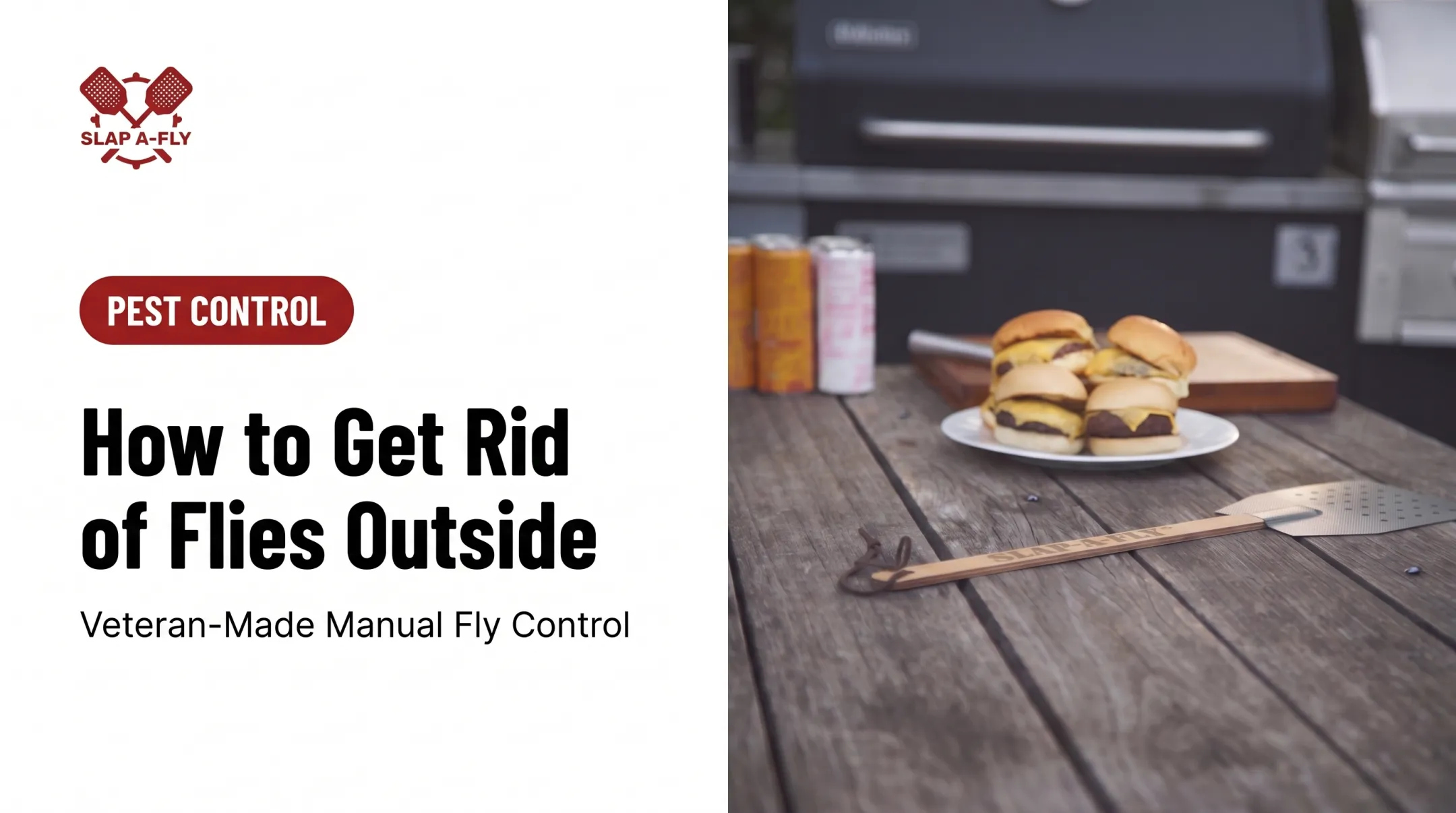
Flies and wasps are a different animal: they're chasing your food, not your blood. Spraying chemicals over your dinner isn't practical, and swatting with a flimsy dollar-store swatter usually just knocks the fly sideways.
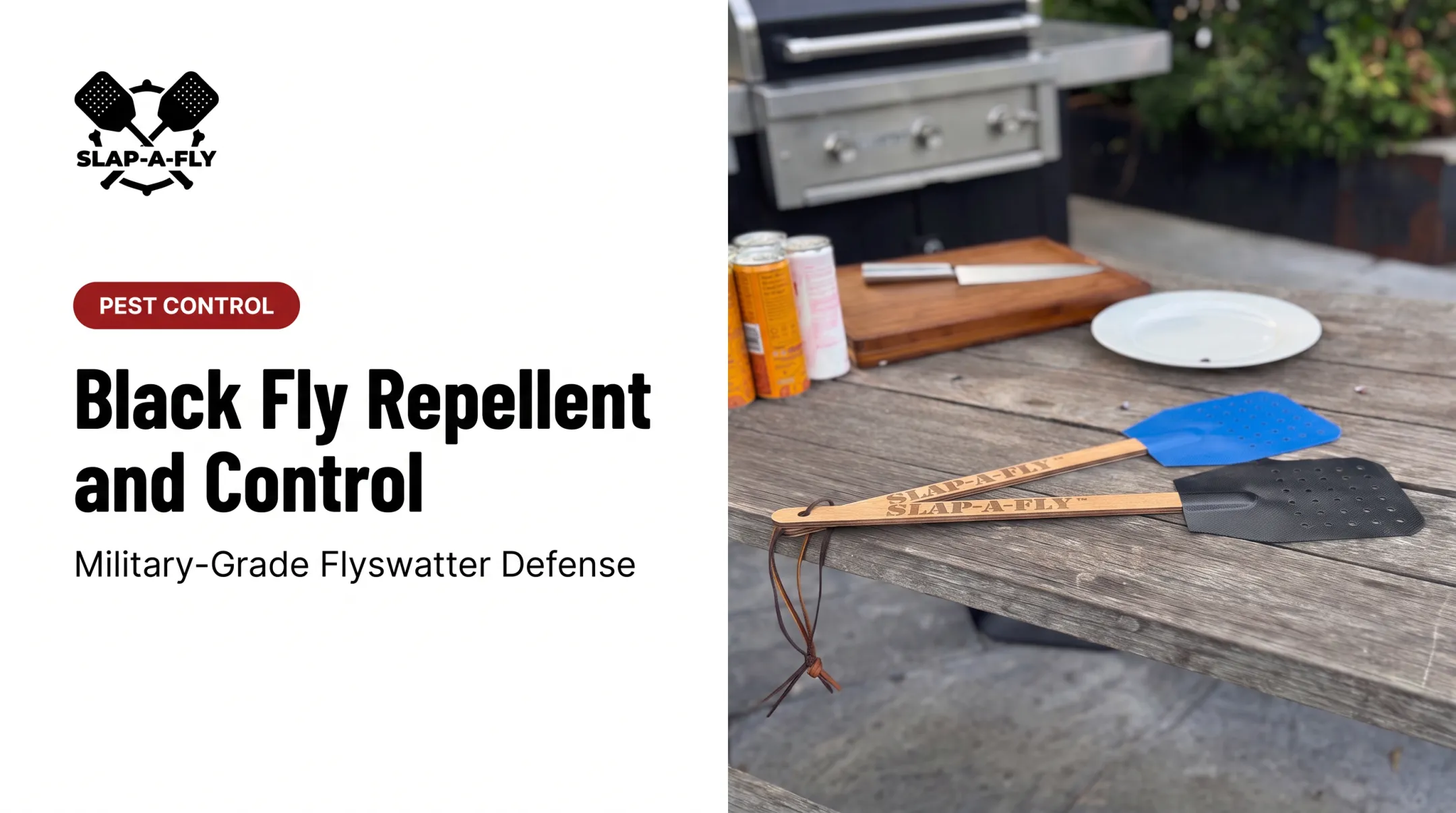
This is where a heavier tool earns its keep. Slap-a-Fly military-grade flyswatters use a Herculite 80 synthetic strike surface rated for 80 PSI of impact force - enough force for large tough bugs like cockroaches, wasps, and armored insects - not just flies, built to survive thousands of strikes without the mesh stretching out like cheaper models.
- XL model ($24.99): Extended handle and larger strike surface for reach, so you keep distance from wasps and bees instead of lunging with a short swatter
- Standard model ($19.99): Handles flies, mosquitoes, and gnats around the cooking area
Both use a 5-ply aircraft spruce handle for a light but sturdy swing, with a storage loop for hanging the swatter off a camp chair or pack when it's not in use.

Keep the site clean:
- Store food in sealed containers
- Wash dishes promptly instead of letting them sit
- Secure trash so it doesn't become a wasp buffet
Smoke, Scent, and Natural Deterrents
Campfire smoke genuinely repels flying insects. That much checks out. Field research on plant-material smoke found repellency effects ranging from 57% to 84% for some mosquito species, though results varied by species and weren't universal. Your fire helps, but only in its immediate radius, and it's not a guarantee.

Supplemental scent-based options:
- Citronella candles offer modest protection. One study found an outdoor citronella diffuser gave 22% protection at 6 meters, notably less than the same product used indoors
- Thermacell-style diffusers tend to outperform candles in controlled testing by holding a more consistent vapor zone in open air
- Burning sage or dried citrus peel adds a mild extra layer, but there's no solid research backing it as a standalone deterrent
None of these should replace an EPA-registered repellent. Think of smoke and scent as the supporting cast, not the lead.
Frequently Asked Questions
What is the best insect repellent for camping?
EPA-registered options like DEET, picaridin, and oil of lemon eucalyptus are the most reliable choices. Which you pick usually comes down to odor preference and how long you need protection.
How do I keep flies and bugs out of my tent while camping?
Zip your tent promptly every time you enter or exit, use mesh screens without holes, and never store food inside the sleeping area. Even a few open seconds let bugs in.
Are natural bug repellents effective for camping?
Essential oils and herbs offer mild, short-lasting protection since plant oils evaporate quickly. They're a fine supplement but shouldn't replace EPA-registered repellents for real protection.
What can I use instead of bug spray to keep bugs away while camping?
Physical barriers work well: mosquito nets, screen tents, and oscillating fans reduce mosquito exposure. For flies and wasps around food, a heavy-duty flyswatter handles direct elimination without any chemicals.
Does a campfire really keep mosquitoes away?
Yes, smoke does deter mosquitoes and other flying insects, and it can cut activity nearby. It's only effective close to the fire, though, so it won't protect your whole campsite.
How do I get rid of wasps and flies at my campsite without chemicals?
Keep the site clean with sealed food storage and prompt dish washing so pests aren't drawn in. For the ones that show up anyway, a durable swatter like the Slap-a-Fly XL gives you reach and reliable strikes without a single spray.