Many homeowners buy a mosquito trap expecting the problem to disappear. It won't — at least not completely. Even entomologists at the American Mosquito Control Association (AMCA) caution against relying on any single device as a complete control method.
This guide covers how indoor traps actually work, which types perform best, why source reduction matters more than gadgets, and a fast backup for mosquitoes that slip past everything else.
Key Takeaways
- Indoor traps lure mosquitoes with CO2, UV light, or heat, but only within a limited radius
- Removing standing water is the single most effective long-term prevention step
- No trap guarantees full elimination — layering methods work best
- A solid flyswatter is still the fastest way to kill a mosquito already inside your home
Why Indoor Mosquito Traps Alone Aren't a Complete Solution
Mosquito traps work by mimicking what makes you a target: your breath, your body heat, your scent. Devices release CO2 or heat to draw mosquitoes toward a net, adhesive card, or electric grid. The catch: they only capture insects within their immediate pull radius. A mosquito on the other side of the room may never notice the trap exists.
Research backs this up. The American Mosquito Control Association (AMCA) reviewed two commonly cited field studies (Collier et al., 2006; Henderson et al., 2006) and found neither demonstrated a meaningful reduction in biting pressure from commercial trap devices. In the Henderson study, a Mosquito Magnet Pro caught over 2 million mosquitoes across 94 trap nights in Winnipeg, yet researchers still couldn't confirm reduced biting activity at the tested sites.
Limited range isn't the only drawback:
- Placement near entry points can pull more mosquitoes toward your home before they're caught
- Regular upkeep is required: propane refills, net emptying, adhesive swaps, grid cleaning
- Skipped maintenance quickly turns a working trap into dead weight indoors
One more wrinkle: the CDC counts over 200 mosquito species across the U.S. and its territories. Different species respond to different attractants, which is exactly why a trap that works great for your neighbor might barely dent your problem.
Types of Indoor Mosquito Traps and How They Work
UV Light and Electric Grid Traps
These traps use UV light to draw insects toward an electric grid that zaps them on contact. The catch: mosquitoes aren't strongly drawn to visual light. They're drawn to CO2 and body heat.
American Mosquito Control Association (AMCA) FAQ data shows mosquitoes made up just 4.1% to 6.4% of daily catches in controlled studies, with no significant difference in mosquito numbers between yards with and without a zapper running. Most of what these traps kill are moths, beetles, and other harmless flying insects.

Plug-In Adhesive Traps
These indoor units combine light with an adhesive cartridge—some add scent or other attractants—and catch insects mess-free. Placement matters:
- Position near doors and dark corners where mosquitoes tend to rest
- Swap cartridges roughly every 30 days
- Clean the housing periodically to keep airflow and attraction consistent
DIY Bottle Traps
A classic DIY option: cut the top off a plastic bottle, invert it as a funnel, and bait it with sugar water and yeast. Fermentation produces CO2 that lures mosquitoes inside. It works, but upkeep is constant, and mosquitoes can sometimes climb back out.
Fan Traps
Fan traps vacuum insects into a mesh net instead of relying on a zap or sticky board. They catch modest volumes but run noisy, so they're a poor fit for a bedroom nightstand.

Source Reduction: The Most Effective Long-Term Strategy
Traps catch adult mosquitoes. Source reduction stops them from breeding in the first place. Mosquitoes lay eggs in standing water, and it doesn't take much — even a bottle cap's worth can support larvae within a few days.
Weekly checklist:
- Empty flower pot trays and saucers
- Clear debris from gutters
- Refresh pet water bowls
- Dump and scrub bird baths
- Check for water pooling in tarps, buckets, or toys left outside
For water features you can't drain — ponds, livestock troughs, rain barrels — mosquito dunks are worth adding. They dissolve slowly and release Bti, a naturally occurring bacterium that targets mosquito larvae without harming fish, pets, or people.
One more overlooked step: trim overgrown shrubs and dense landscaping near your home. Adult mosquitoes rest in shaded, humid vegetation during the day, and thick growth right against your siding gives them a staging ground before they slip indoors.

Fast, Chemical-Free Backup: Manual Mosquito Elimination Indoors
Traps and prevention still leave gaps. A door stays open two seconds too long, one slips through a torn screen, and now it's in your bedroom at 11 p.m.
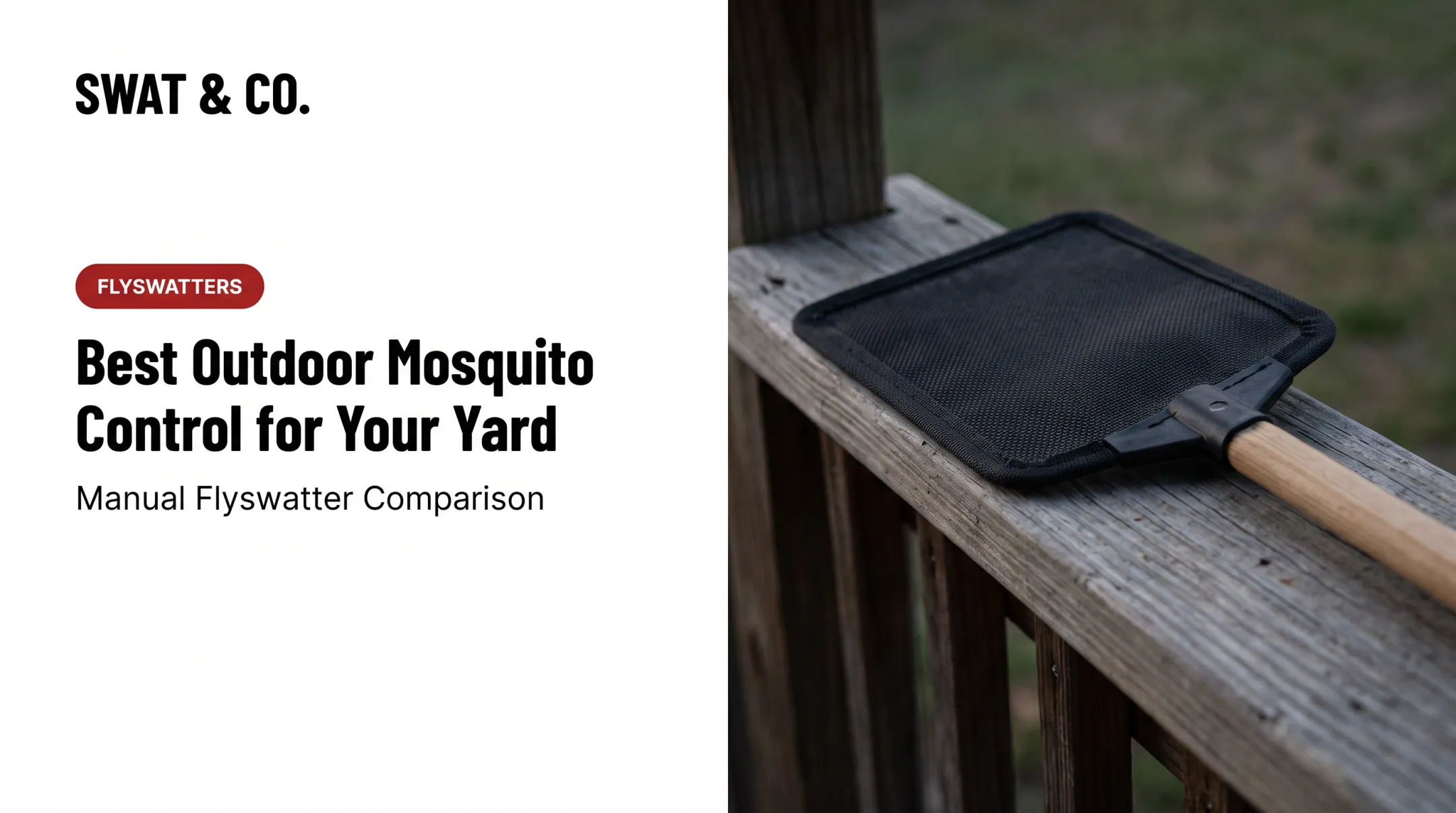
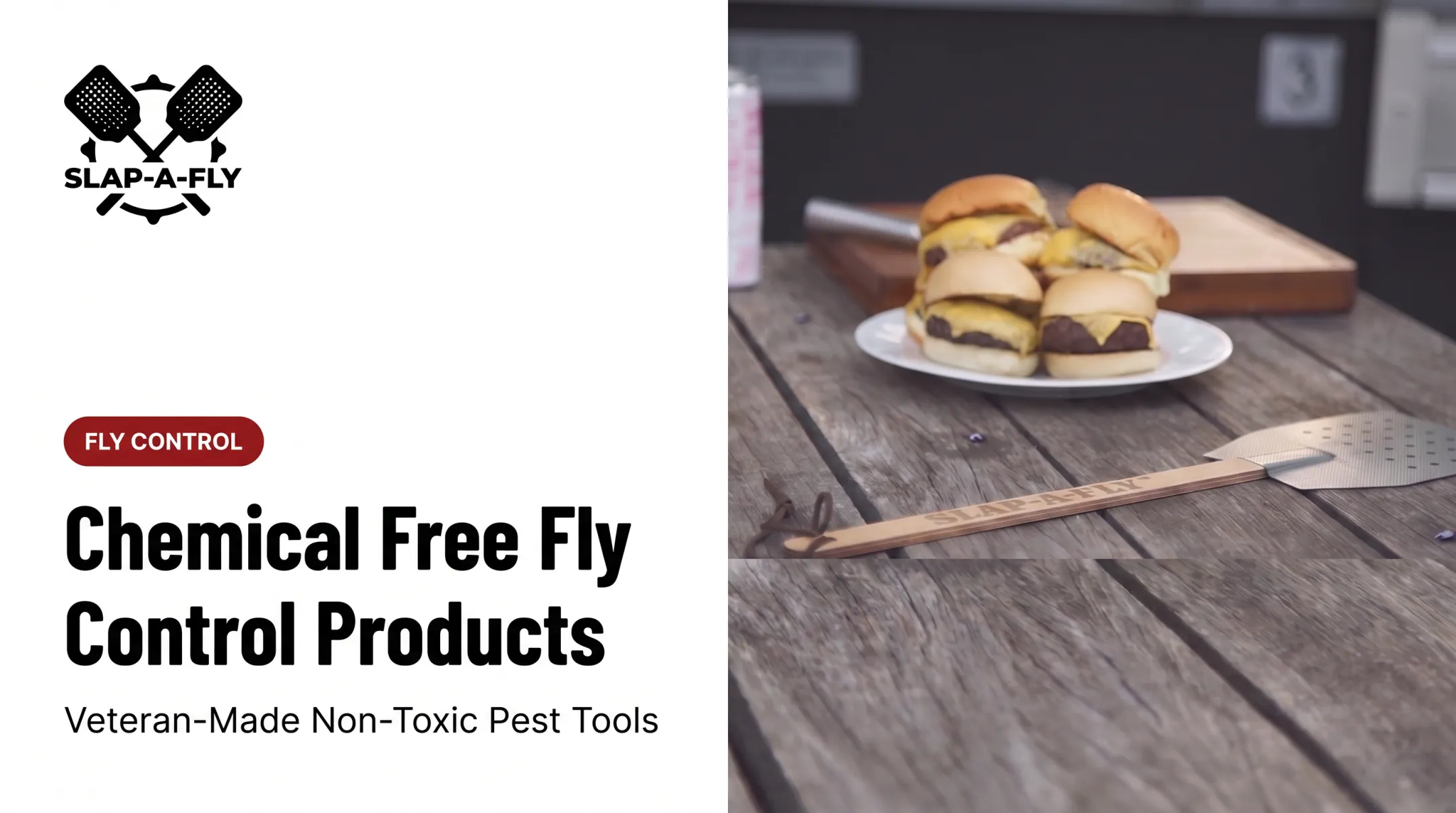
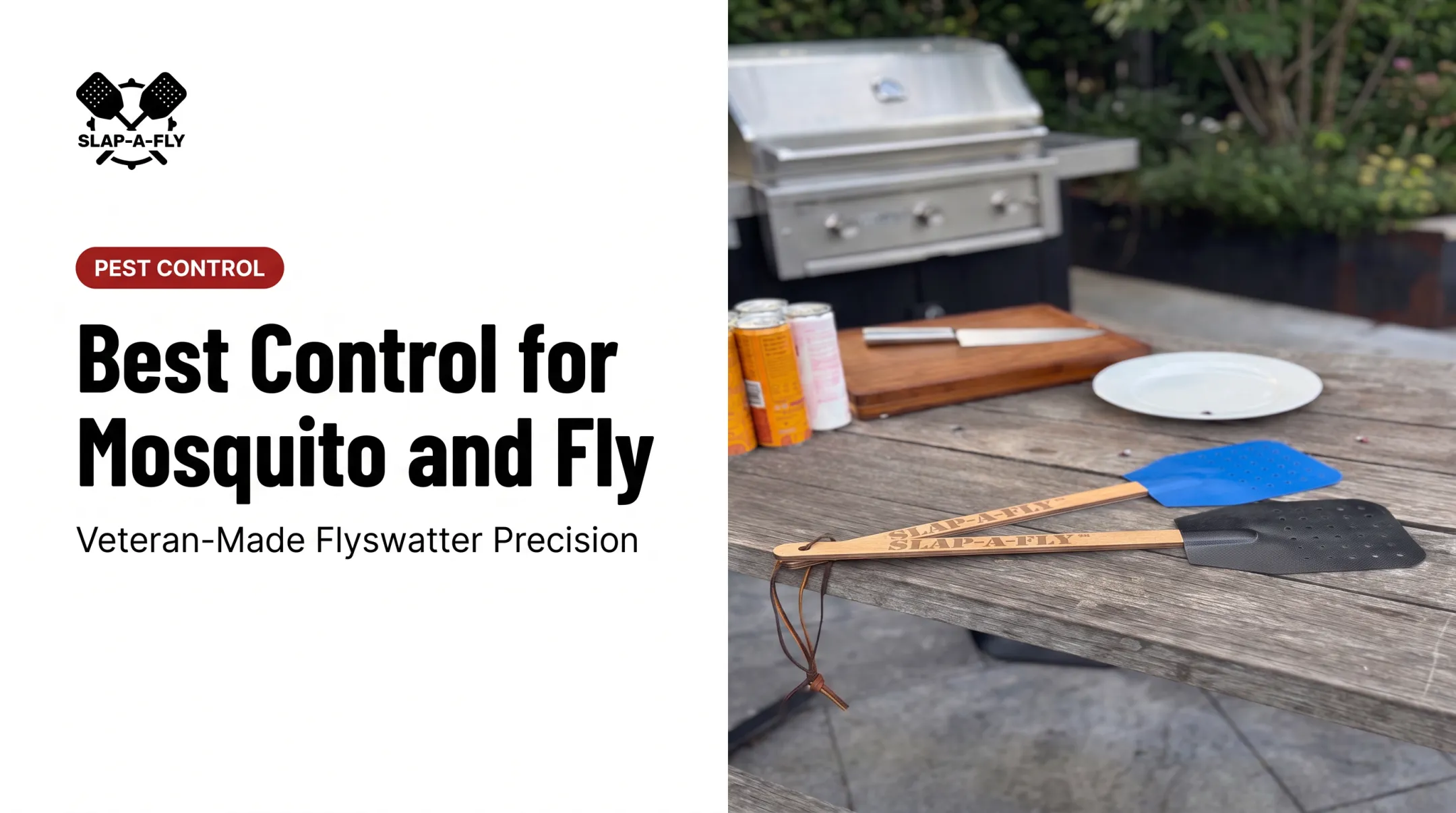
This is where a reliable flyswatter earns its place in your toolkit. Slap-a-Fly™ is military-grade and engineered by U.S. Army veterans for exactly this moment - the mosquito that made it past every device in the house and needs to go, now.
What makes it different:
- Herculite 80 military-spec fabric delivers 80 PSI impact - enough force for large tough bugs like cockroaches, wasps, and armored insects - not just flies - and holds tension for thousands of strikes without going floppy
- Perforated strike surface lets air pass mid-swing so you connect before the mosquito dodges
- 5-ply aircraft spruce handle — aerospace-grade wood used in military cargo planes — stays light with a shock-absorbing grip

For kitchens and bedrooms, pick the setup that matches how you cover the house:
- Standard model ($19.99) — everyday flying pests without extra bulk
- Exterminator 4-pack ($42.99) — two black and two blue swatters to station by the bed, kitchen, and other hot spots
Traps cover mosquitoes near the attractant zone. A swatter handles the one buzzing past your ear right now.
Combining Traps and Prevention for Best Results
Pest control experts and the American Mosquito Control Association (AMCA) agree: no single method wins alone. The strongest approach layers four things together:
- Surveillance: notice where mosquitoes are getting in and when activity spikes
- Source reduction: eliminate breeding water weekly
- Traps: reduce localized populations near entry points
- Manual removal: eliminate what makes it inside anyway
Mosquito activity shifts by season and by which species are locally active. Walk your property every few weeks during warm months and reassess trap placement as patterns change. Keep a swatter within reach in every room where mosquitoes have shown up before. What worked in early summer might need adjusting by August.
Frequently Asked Questions
What is the most effective way to get rid of mosquitoes indoors?
Eliminate standing water sources first, then add plug-in traps for ongoing reduction. Keep a flyswatter nearby for instant strikes on anything that slips through.
Do indoor mosquito traps actually work?
They reduce localized numbers but rarely eliminate an infestation. AMCA-cited field studies found no meaningful drop in overall biting pressure from commercial devices.
How often do I need to clean or replace mosquito trap parts?
Most plug-in cartridges need replacing roughly every 30 days. Nets, grids, and adhesive cards should be checked and cleaned regularly to maintain suction and attraction.
Can mosquito traps attract more mosquitoes into my home?
Yes, if placed too close to entry points. Keep traps deeper inside living areas so they catch mosquitoes already indoors instead of drawing more in from outside.
What smells or scents repel mosquitoes indoors?
Lavender, basil, and peppermint have shown mild repellent effects in controlled studies, but they're less reliable than EPA-registered repellents like DEET or picaridin.
Are DIY mosquito traps as effective as store-bought ones?
DIY bottle traps can catch mosquitoes using yeast-generated CO2, but they require more upkeep and lack the consistent attractant strength of commercial UV or plug-in traps.