The good news: manual methods knock out adult gnats almost instantly. The catch is that swatting and traps only handle what's flying. The real fix requires treating the soil too, since that's where the next generation is developing.
This guide walks through identification, manual kill techniques, soil treatments, and prevention, so you can stop the cycle for good.
Key Takeaways
- Swatters, vacuums, and sticky traps kill adult gnats on contact—but they don't stop new generations
- Larvae in the top inch of soil are the real root threat—and the reason adults keep returning
- Expect 4–8 weeks for full elimination because gnat generations overlap
- Combining a strike tool with soil treatment is the fastest path to a gnat-free plant shelf
Understanding Fungus Gnats Before You Fight Them
Adult fungus gnats look like miniature mosquitoes: dark, delicate, with long legs and weak flight. They're roughly 1/16 to 1/8 inch long, and if you look closely, Colorado State's extension guide notes a Y-shaped wing pattern that separates them from other tiny flies.
Larvae look nothing like the adults. They're legless, translucent worms with a shiny black head capsule, and they live in the top 2-3 inches of soil where moisture and organic matter collect.
Why they show up on your plants:
- Moist, organically rich potting soil is prime breeding ground
- Peat-heavy mixes are especially attractive to egg-laying females
- Carbon dioxide from your breath can draw adults in, which is why they hover near your face
Adults are harmless. They don't damage the plant itself. Larvae are the real problem: in heavy infestations they feed on root hairs and can stunt seedlings or young plants. Established mature plants usually shrug off light infestations without issue.

Manual Methods to Kill Adult Gnats On Contact
Because adult gnats hover right at eye level near plants and people, manual striking is the fastest way to see an immediate drop in numbers. You don’t wait on a trap or mix a solution—you kill on contact.
Precision Swatting
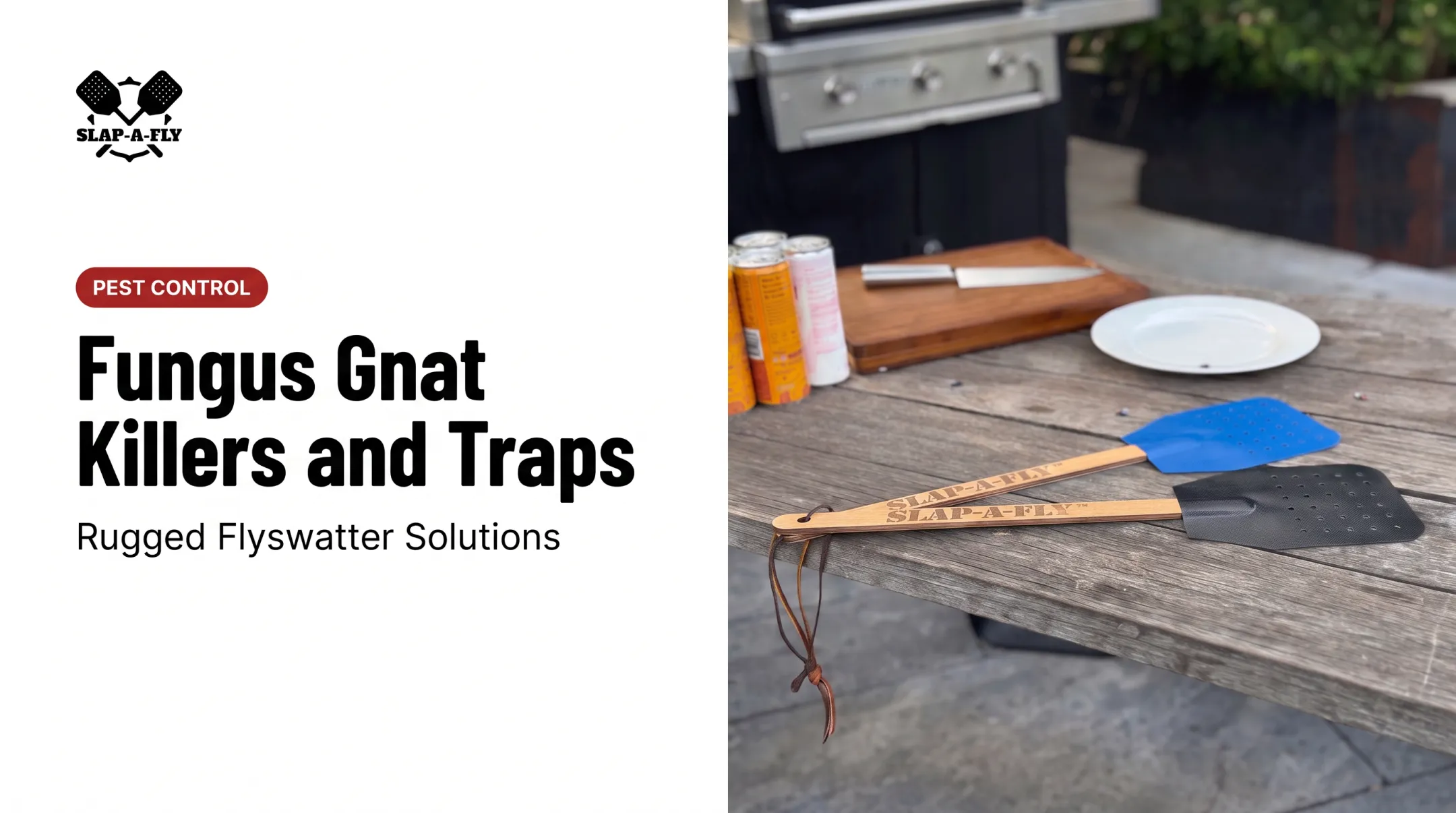
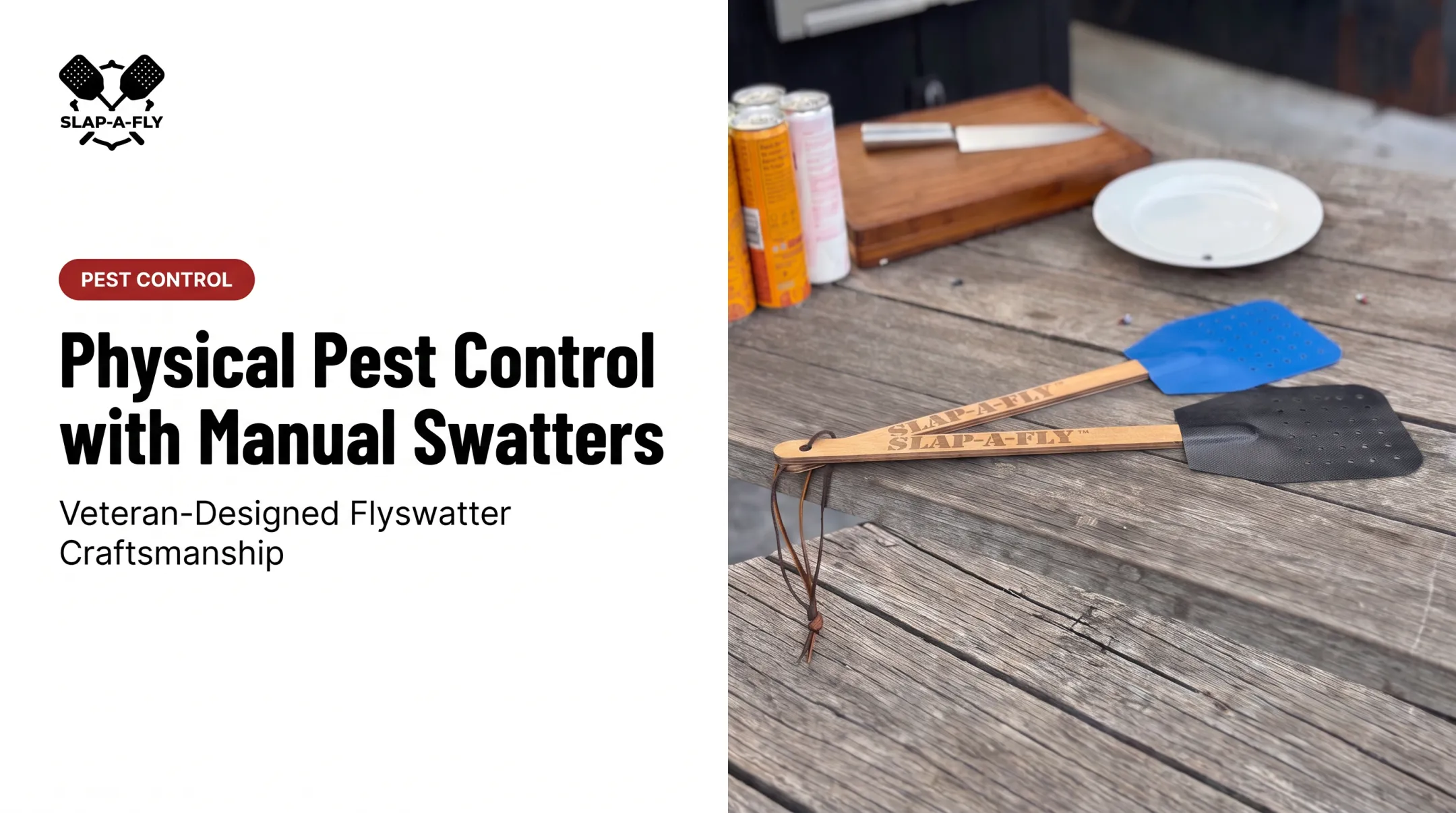
A flyswatter built for close-range accuracy makes a real difference indoors, where you're often striking near leaves, lamps, or furniture. The Slap-a-Fly Standard uses a perforated Herculite 80 strike surface that lets air pass through the head on the swing. Less drag means cleaner tracking on a slow, erratic flier—and far less chance of clipping your pothos on the follow-through.
Vacuum Method
Run a handheld vacuum briefly over foliage and the soil surface. It pulls adults (and some pupae near the surface) into the canister without any mess. Empty it outside afterward so nothing crawls back out.
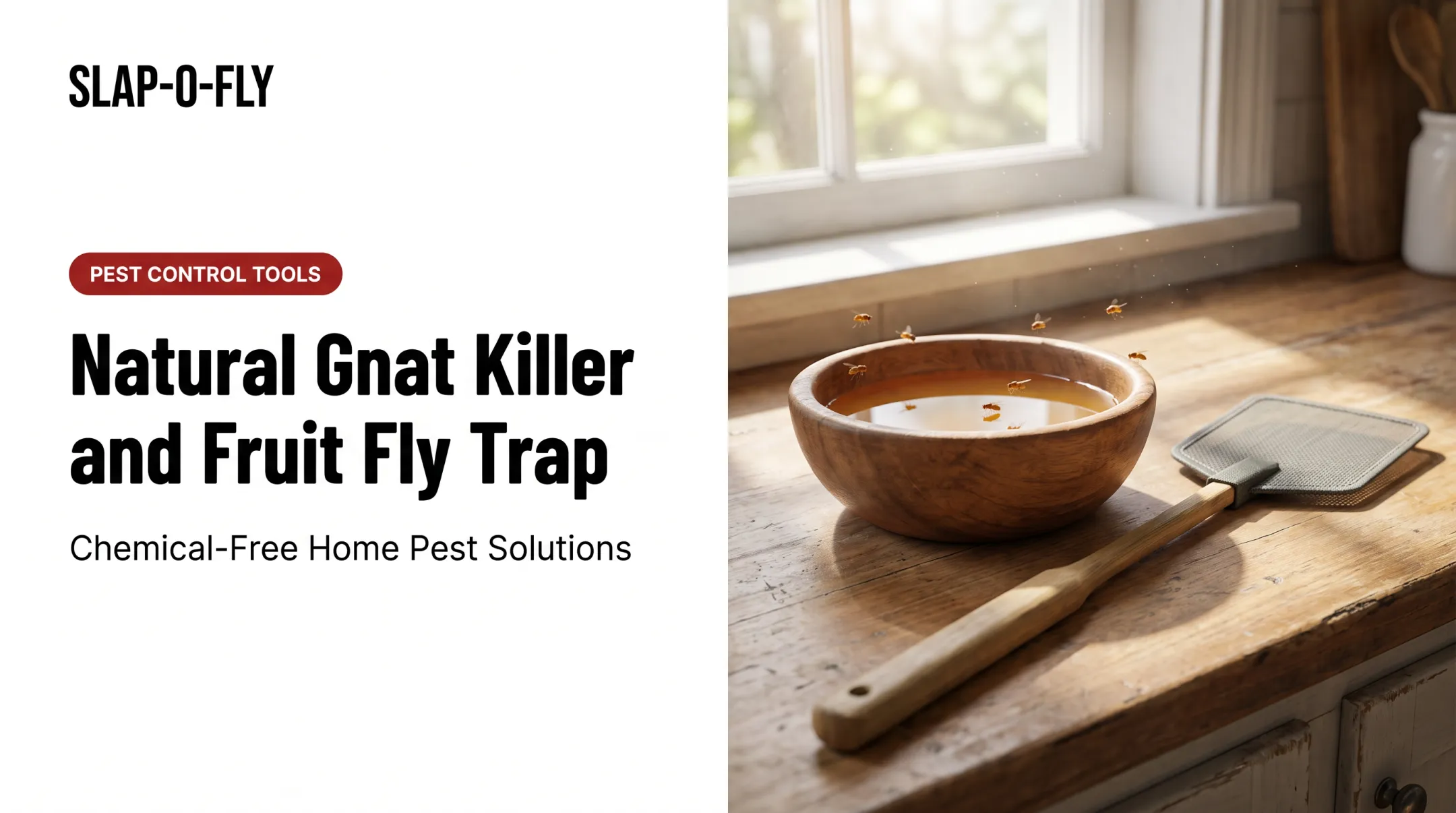
DIY Vinegar Trap (Passive Capture)
Use this alongside swatting when you want continuous capture overnight:
- Fill a small bowl with apple cider vinegar
- Add one drop of dish soap
- Set it near the affected plant
Vinegar draws adults in; soap breaks surface tension so they sink instead of escaping.
Sticky Traps (Monitoring + Capture)
Push yellow or green sticky cards directly into the soil, near the plant's base. They catch flying adults continuously over days or weeks, so you can track how heavy the infestation still is.

None of these methods reach eggs or larvae in the soil. Clear every visible adult today, and new ones will still emerge in a few days if the growing medium isn’t treated.
Treating the Soil to Stop the Larvae Cycle
Confirm the Infestation First
Cut a raw potato into quarter-inch slices and press them into the soil surface. Larvae migrate toward the potato to feed within 24-48 hours. Flip the slices over, check the underside, and remove them. It's a simple diagnostic that also physically removes some larvae.
Hydrogen Peroxide Drench
Cornell Cooperative Extension recommends mixing one part 3% hydrogen peroxide with four parts water, then pouring it over the soil. It fizzes on contact with larvae in the top layer and helps knock down populations. Let the soil dry out afterward. This isn't a treatment to repeat every day.
BTI (Mosquito Bits/Dunks)
Steep mosquito bits in water overnight to make "mosquito tea," then use it to water your plants. The bacteria (Bacillus thuringiensis israelensis) targets fly larvae specifically. Research on this bacteria's effect on fungus gnat larvae is mixed. One lab study found no measurable effect on later-stage larvae, so treat BTI as one tool among several—not a guaranteed fix.
Diatomaceous Earth
Food-grade DE sprinkled on the soil surface is a common suggestion. The strongest available research on it against fungus gnat larvae didn't find a measurable effect when mixed into growing media. If you use it, stick to food-grade only and wear a mask. The dust irritates airways even when it's the food-safe variety.
Why soil treatment can't be skipped: extension sources report a single female gnat can lay roughly 100 to 200 eggs in her short lifespan. Kill 50 adults today and ignore the soil, and you could still have hundreds of new gnats within two weeks.

Preventing Fungus Gnats From Coming Back
Moisture and hitchhiking eggs on new plants are how fungus gnats return. Cut off both paths with these habits:
- Let soil dry out. Allow the top 1-2 inches to dry between waterings. This one change prevents more gnats than any trap or spray.
- Quarantine new plants. Keep new arrivals separate for 2-4 weeks and put a sticky trap in the pot to catch early activity.
- Add a top-dressing. A layer of sand or fine gravel blocks adults from laying eggs in the soil. Use it with drier watering habits, not alone.
Building Your Complete Gnat Defense Kit
The fastest results come from pairing instant adult elimination with ongoing soil treatment. Swat what's flying today, drench the soil this week, and repeat both for a few weeks while the life cycle winds down.
Two-part routine:
- Swat adults daily around plant shelves, windowsills, and grow tents
- Drench soil weekly until new adults stop emerging
For daily patrol, a durable swatter earns its keep fast. The Slap-a-Fly Standard ($19.99) uses military-grade Herculite 80 fabric rated for 80 PSI of impact force - enough force for large tough bugs like cockroaches, wasps, and armored insects - not just flies - paired with a 5-ply aircraft spruce handle for balanced, repeatable strikes.
Unlike a sticky trap that fills up and gets tossed, this is built to handle thousands of strikes without losing performance.
If you're managing a bigger plant collection or dealing with larger pests alongside gnats, the Exterminator 4-pack ($42.99) works out to roughly $10.75 per swatter, so you can stash one in every room where plants live. The XL ($24.99) adds reach when fungus gnats share space with bigger fliers.
| Option | Price | Best for |
|---|---|---|
| Standard | $19.99 | Daily gnat patrol near plant shelves |
| XL | $24.99 | Extended reach for larger pests |
| Exterminator 4-pack | $42.99 | Multi-room coverage |

A reusable swatter costs more upfront than a pack of sticky cards, but it never runs out.
Frequently Asked Questions
Do fungus gnats bite humans or pets?
No. Fungus gnats don't bite despite their mosquito-like appearance. They're a nuisance because they hover near faces and light sources, not because they pose any physical threat.
Are fungus gnats harmful to my houseplants?
Adults are harmless to plants. Larvae can damage roots in heavy infestations, particularly in seedlings and young plants, though mature houseplants usually tolerate light infestations fine.
What attracts gnats to indoor plants?
Moist soil, organic matter, and overwatering are the main draws. Peat-heavy potting mixes that stay damp for long periods create ideal breeding conditions.
How long does it take to get rid of fungus gnats completely?
Full elimination typically takes 4-8 weeks due to overlapping life cycle stages—eggs, larvae, pupae, and adults can all be present at once. Consistent soil treatment shortens the timeline.
Can I use a fly swatter to kill gnats?
Yes. A precision swatter like the Slap-a-Fly Standard works well for striking hovering adult gnats near plants, though it should be paired with soil treatment to address larvae.
Will fungus gnats go away on their own?
Rarely. Without intervention, they keep breeding in moist soil and populations tend to grow rather than disappear. Drying out the soil and treating for larvae is necessary to break the cycle.