Here's the twist: most "spring house flies" aren't house flies at all. They're cluster flies, a species that spent the entire winter hibernating inside your walls and attic. Misidentifying them means homeowners often treat the wrong problem entirely.
This guide breaks down what's actually causing your spring fly surge, the warning signs to watch for, and exactly how to stop it, plus what to do about the flies that inevitably slip through anyway.
TL;DR
- Spring fly surges usually come from overwintering cluster flies, not fresh infestations
- Sealing cracks, screens, and vents is your best long-term fix
- Removing food and moisture sources stops breeding flies before they start
- A reliable flyswatter handles the ones that get in anyway
- Fall and spring inspections, not one-time treatments, keep flies out for good
Why House Flies Appear in Spring
What looks like a house fly invasion is often Pollenia rudis, the cluster fly. According to Penn State Extension, these flies lay eggs near earthworm burrows in summer, and their larvae actually develop inside earthworms before pupating in soil.
The last generation each fall searches for winter shelter. University of New Hampshire Extension notes they favor attics, wall voids, and spaces around windows, often congregating on the sunny sides of houses before slipping inside through tiny gaps.
Once spring arrives and temperatures warm, Penn State confirms cluster flies become active and crawl out of the wall voids and attics where they've been hiding all winter. They're not breeding indoors. They're just waking up.

Overwintering insects explain a lot of spring sightings, but they aren't the only reason flies show up when temperatures rise.
Cause 1: Overwintering Cluster Flies
Homeowners typically notice dozens of sluggish flies clustered on windows during sunny afternoons. They fly poorly, move slowly, and seem to appear out of nowhere—they've been tucked in wall voids since fall.
Cause 2: Unsealed Entry Points
Cracks around window and door trim, torn screens, and unscreened attic vents work both ways. They let flies in during fall and let them emerge into living spaces come spring.
Common trouble spots, according to Texas A&M AgriLife Extension:
- Gaps around utility pipes and chimneys
- Unscreened eave and attic vents
- Loose siding and fascia boards
- Ill-fitting door and window frames

Cause 3: Indoor Breeding Sites (True House Flies & Fruit Flies)
Unlike cluster flies, true house flies and fruit flies do breed indoors once conditions are right. Texas A&M identifies decaying organic matter, garbage, and fermenting produce as prime breeding material.
Typical scenario: flies swarming a kitchen trash bin or a fruit bowl with an overripe banana nobody got around to eating.
Cause 4: Moisture Buildup
Fly larvae can't develop without water. The University of Kentucky Department of Entomology points to drains, garbage disposals, and damp cleaning rags as common breeding reservoirs that homeowners overlook.
If flies keep appearing near a sink despite spotless counters, check the drain, not the countertop.
What Happens If Spring Fly Problems Are Ignored
Ignoring entry points and breeding sites does not end with one bad week. Flies reuse the same wall voids, attics, and siding gaps year after year, so unsealed homes often see the same spring surge return.
Swarms at windows and fly carcasses on sills are the obvious nuisance. The larger risk is food safety: flies move between garbage and prep surfaces, spreading bacteria in kitchens that never address breeding sites.

Warning Signs of an Upcoming Fly Surge
Watch for these before the problem escalates:
- Slow-flying flies clustering at windows on sunny days
- Small dark specks (fly excrement) on windowsills or walls
- Sudden fly activity near attic access points, eave vents, or ceiling fixtures
How to Prevent House Flies in Spring
Effective prevention combines two strategies: exclusion (sealing openings) and sanitation (removing what attracts flies in the first place). Skip either one and you're only solving half the problem.
Prevention Measure 1: Seal Entry Points
Caulk cracks around windows, doors, and utility pipes. Repair torn screens. Screen attic and eave vents with wire mesh, and make sure doors and windows close tightly.
This is best done in early spring, before flies reactivate, and again in late summer before the next generation starts looking for winter shelter.
Prevention Measure 2: Eliminate Food and Moisture Sources
Make this a weekly habit, not a spring-cleaning afterthought:
- Take out trash regularly and keep bins sealed
- Wash dishes promptly instead of letting them sit
- Toss overripe produce instead of leaving it on the counter
- Clean drains and garbage disposals where organic residue builds up
- Fix leaking pipes and dry out damp mops and rags

Prevention Measure 3: Treat Exterior Warm Spots
Cluster flies gather on sun-facing exterior walls before working their way inside. Colorado State University Extension recommends inspecting sunny walls, upper siding, and eave vents in fall and early spring, then sealing or screening whatever openings you find.
Cut the outdoor clusters and you cut how many make it indoors.
Prevention Measure 4: Keep a Reliable Swat Tool on Hand for Breakthroughs
Even a tightly sealed, well-maintained home will see the occasional fly ride in on a jacket or slip through an open door for two seconds too long. That's just reality.
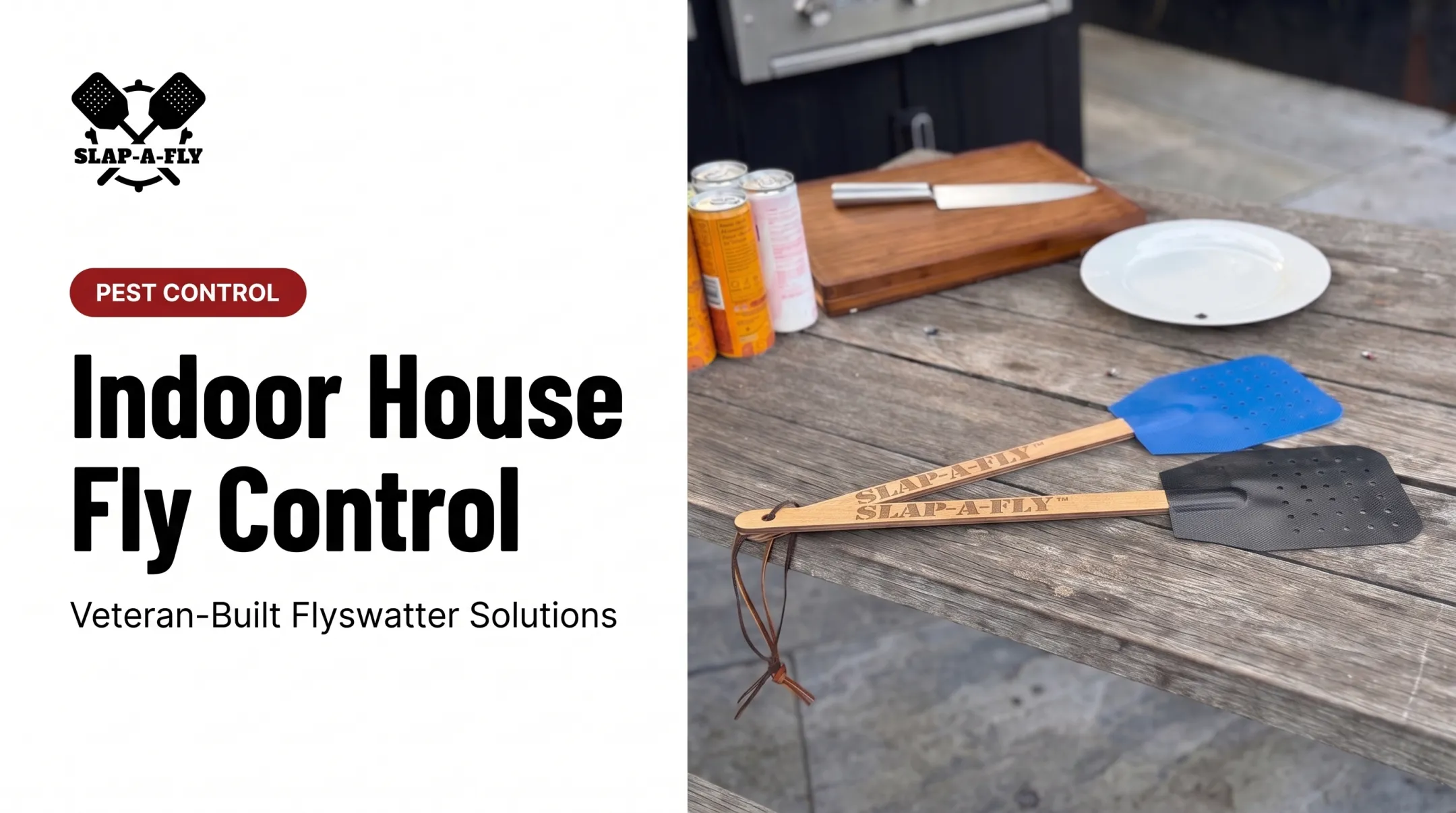
For those moments, keep a Slap-a-Fly near entryways and the kitchen so you're not stuck with a rolled-up magazine. It's built for a clean, single-strike hit:
- Herculite 80 MIL-SPEC striking surface rated for about 80 PSI of impact force
- Durable enough for thousands of strikes without breaking down
- 5-ply aircraft spruce handle for control and balance

If wasps or bees show up near windows too, the XL model adds reach and a larger strike surface so you can handle them from a safer distance—no sprays required.
Tips for Long-Term Fly Prevention and Control
Prevention isn't a one-time task. Build these habits into your annual routine:
- Inspect screens, eaves, and window frames every spring and fall so small gaps don’t become open invitations
- Maintain screens and vent covers year-round, not just when flies show up
- Track recurring problem spots, like a problem window, vent, or trash area that draws flies every year, and prioritize sealing or cleanup there
- Keep a durable swatter handy in kitchens and other high-traffic rooms so stragglers get handled the moment they appear
- Call a pro if populations stay heavy after you’ve sealed entry points and removed breeding sites
Conclusion
Spring house flies, mostly cluster flies fresh out of hibernation, have identifiable, fixable causes: unsealed entry points, leftover food sources, and excess moisture. Consistent sealing, sanitation, and exterior checks stop most of these problems before they start.
But no home is airtight forever. Pair solid prevention with a dependable, veteran-engineered flyswatter so whatever sneaks through gets handled in one clean strike, without sprays or mess.
Frequently Asked Questions
Why are there so many flies in my house this spring?
Warming temperatures reactivate cluster flies that spent winter hiding in your attic or wall voids. They emerge and head toward sunny windows, creating a sudden swarm that looks like a fresh infestation but isn't.
What month are flies the worst?
March and April are usually worst indoors, when overwintering cluster flies wake up and head for sunny windows. A second wave hits in August and September as they hunt for winter shelter again.
How can I tell if it's a cluster fly or a regular house fly?
Cluster flies have a checkered gray-black body with golden hairs on the thorax, overlap their wings at rest, and fly noticeably slower and more sluggishly than typical house flies.
Do cluster flies bite or spread disease?
No. Cluster flies don't bite humans or pets and aren't known to transmit disease. They're a nuisance pest, though their excrement can leave dark specks on windows and walls.
Can I permanently stop cluster flies from returning?
Sealing entry points combined with annual fall and spring inspections greatly reduces recurrence. Full elimination in homes with large populations may require professional treatment.
What's the fastest way to deal with flies that get inside despite prevention?
Keep a durable flyswatter within reach. A Slap-a-Fly’s Herculite 80 surface delivers 80 PSI of impact - enough force for large tough bugs like cockroaches, wasps, and armored insects - not just flies - for instant, chemical-free kills while your sealing and sanitation work kick in.