DIY fly traps promise a cheap, five-minute fix using stuff already in your recycling bin. But here's what most guides skip: the container barely matters. Bait choice, hole size, and placement decide whether your trap fills up with flies or sits empty for a week.
This guide walks through exactly how to build a trap that works, the bait mistakes that sink most attempts, and when you should just put down the jar and pick up a flyswatter instead.
Key Takeaways
- Mason jar, soda bottle, and paper cone traps all take under 5 minutes to build
- Bait matters more than design: sweet or fermented for fruit flies, rotting protein for houseflies
- Add dish soap to liquid traps so flies drown instead of escaping on the surface
- Traps cover ongoing prevention; a swatter is still fastest for flies already in the kitchen
How to Make a DIY Fly Trap at Home
Step 1: Choose Your Container and Bait
Mason jars work well indoors. They're small, easy to place near a fruit bowl, and don't look terrible on a counter. A repurposed soda bottle is better suited for garages, patios, or anywhere outdoors.
Match your bait to your fly problem:
- Fruit flies: apple cider vinegar, ripe fruit, or leftover wine
- Houseflies: rotting meat, shrimp, or honey (yes, houseflies go for both sweet and stronger baits)
The University of Florida's IFAS Extension recommends apple cider vinegar with a drop of dish soap for the classic jar trap. That soap step isn't optional. Skip it and flies will just walk out.
Step 2: Build the Entry Mechanism
Pick one of three proven designs:
- Paper cone method: Roll a sheet of printer paper into a cone, tape the seam, and set it narrow-end-down into your jar so the tip hovers just above the bait.
- Soda bottle funnel: Cut the bottle in half, then invert the top half into the bottom so the neck acts as a funnel. Secure with tape or glue so it doesn't shift.
- Perforated lid method: Stretch plastic wrap over the jar, secure with a rubber band, then poke holes with a nail, toothpick, or fork.

For any of these, the entry point should be small enough to make it hard for flies to find their way back out, but large enough for them to actually get in.
Step 3: Position the Trap Correctly
Indoor traps go where the flies already are: near the fruit bowl, by the trash can, or close to houseplants (fungus gnats love damp soil).
Outdoor traps work a little differently. Place them slightly away from your patio or dining table, not right on top of it. You want the trap pulling flies toward it and away from your food, not adding more flies to the general vicinity of your burger.
Watch airflow, too. A jar of rotting shrimp two feet from where you're eating dinner is going to announce itself.
Step 4: Maintain and Refresh the Trap
- Empty dead flies every few days
- Refresh bait every 2-3 days, or daily for fast-fermenting options like fruit or wine
- Deep-clean the container if liquid bait sits too long, before it grows mold or maggots
Michigan State University Extension notes that paper-cone traps using juice or rotting fruit should have their bait replaced daily for best results. Let it sit longer than that and you're basically running a fly breeding program instead of a trap.

What You Need Before Making a DIY Fly Trap
Having the right materials on hand before you start means you're not scrambling mid-build with sticky vinegar hands.
Basic Supplies
- Mason jar or plastic bottle
- Scissors
- Paper or plastic wrap (for a simple funnel cover)
- Piercing tool (nail, toothpick, or fork)
- Rubber band or tape
Bait Ingredients
- Apple cider vinegar
- Sugar water (easy sweet bait)
- Overripe fruit (bananas and citrus work especially well)
- Honey
- Protein bait such as shrimp (best for stubborn outdoor flies)
Safety and Placement Considerations
A few placement rules keep traps effective without wrecking the cookout:
- Keep strong-smelling outdoor baits away from pets and wildlife
- Set traps well away from dining and gathering spots
- Use protein baits (like rotting shrimp) outdoors only — they smell as bad as they sound
Bait and Design Factors That Affect Trap Success
Here's the part most DIY guides gloss over: most trap failures come down to bait, not construction. A perfectly built jar trap with the wrong bait catches nothing.
| Factor | Why It Matters | Impact on Results |
|---|---|---|
| Bait type | Fruit flies want sweet/fermented scents; houseflies and blowflies want stronger, rotting protein | Mismatched bait = an empty trap, no matter how good the build |
| Entry size | Openings need to fit the target fly | Too big and flies escape; too small and they never get in |
| Dish soap ratio | Breaks surface tension so flies sink and drown | Skipping soap tanks your kill rate, even with great bait |
| Placement | Distance from people affects both catch rate and odor complaints | Too close to seating draws flies toward you instead of away |
The science backs this up. A 2015 study on fruit flies found that attraction to vinegar depends heavily on concentration. Flies use smell to detect the acetic acid produced as fruit ferments, but too little or too much and they simply ignore it. This is why a weak, watered-down vinegar trap can underperform compared to a stronger, more pungent one.

Common Mistakes and Troubleshooting
Most trap complaints trace back to one of these:
- Using sweet bait for outdoor blowflies: they want rotting protein, not vinegar
- Skipping dish soap: flies land, don't drown, and fly right back out
- Sizing entry holes wrong: too large or too small for the fly type present
Trap Has Been Out for Days With No Flies
Likely cause: Wrong bait type, or bait that hasn't gotten pungent enough yet.
Fix: Let protein bait sit in the sun a little longer to intensify the smell, or switch to a stronger option.
Flies Enter but Escape Again
Likely cause: Missing dish soap, or entry holes too large.
Fix: Add soap to the liquid bait and resize your entry holes so they're snug enough to slow flies down.
Alternatives to DIY Fly Traps
Traps are a passive, ongoing strategy. They're not built for the fly that's currently circling your dinner plate right now.
Sticky Fly Strips
Quick to set up indoors with zero bait maintenance. The trade-off: they're visible (not exactly kitchen décor) and less effective against larger house flies compared to smaller species.
A Military-Grade Flyswatter
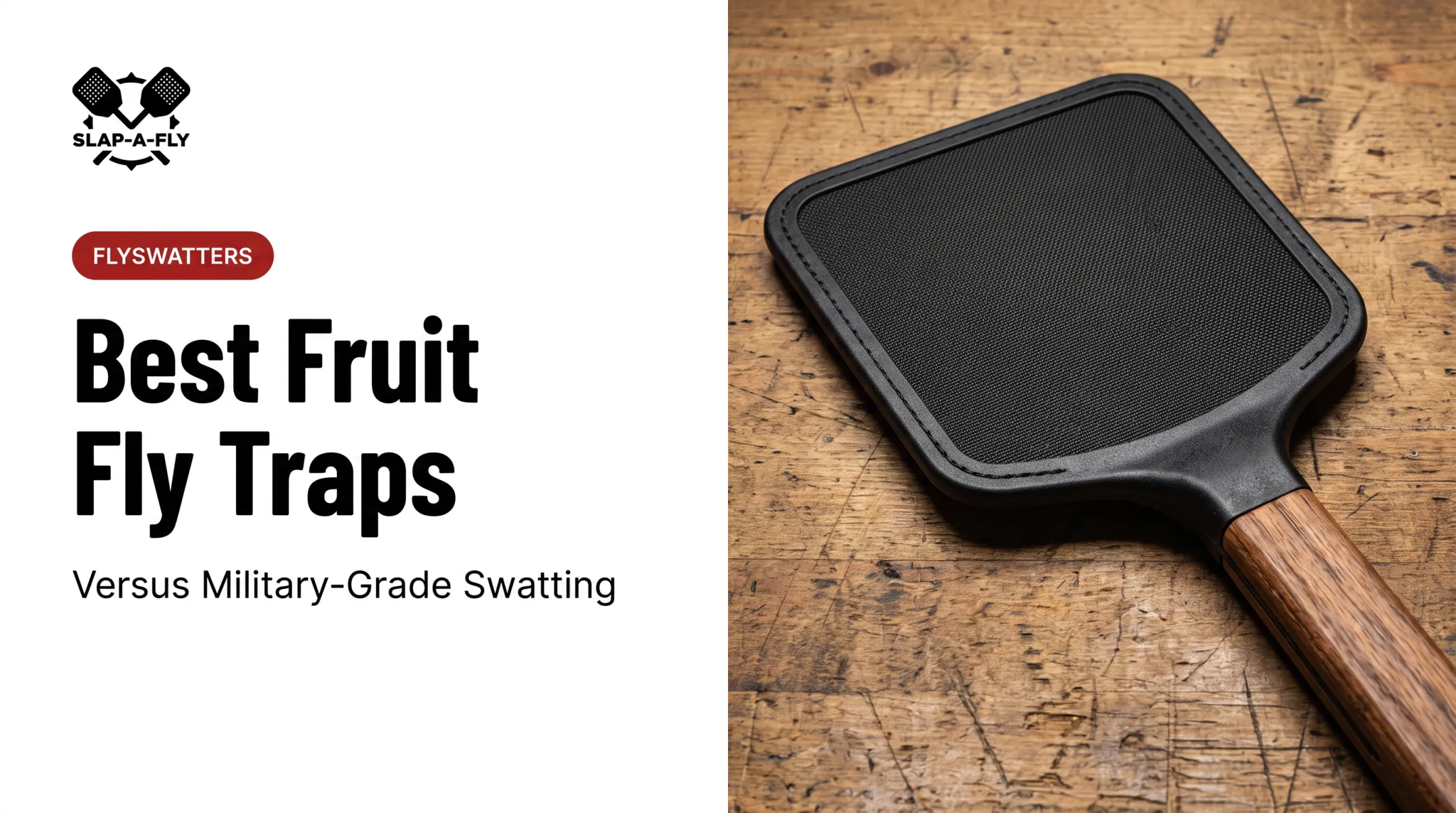
For the fly you can actually see, nothing beats direct action. A Slap-a-Fly™ flyswatter earns its place next to your bait traps rather than instead of them.
Designed by U.S. Army veterans, each swatter pairs a Herculite 80 striking surface (MIL-SPEC synthetic fabric rated for 80 PSI of impact force - enough force for large tough bugs like cockroaches, wasps, and armored insects - not just flies) with a 5-ply aircraft spruce handle for balance and control. It's built to take thousands of strikes without going floppy, unlike dollar-store mesh that stretches out after a few uses.

Choose the setup that fits the job:
- Standard model ($19.99) for everyday indoor and patio use
- XL model ($24.99) with a longer handle and larger surface so you're not swinging at wasps or bees within stinging distance
- Exterminator 4-pack ($42.99) with two black and two blue swatters for multi-room or commercial kitchen coverage
Swatting takes active effort, but it delivers instant results—no waiting days for bait to work.
Professional Pest Control
For severe or recurring infestations that DIY methods can't touch, professional pest control offers thorough, long-term results. It costs more, but it's the right call once flies are breeding somewhere you can't find.
Conclusion
A DIY fly trap's success comes down to bait and placement far more than clever container design. Get the bait right, add the soap, and put it in the right spot, and even a basic mason jar will do the job.
But traps take time. For flies already inside your house, pair your trap with a sturdy flyswatter for immediate elimination. That combination covers slow, hands-off catch and instant relief.
Match your method to your problem: patience for traps, precision for swatting.
Frequently Asked Questions
How do I get rid of the flies inside my house?
Eliminate attractants like trash, spills, and ripe fruit, then set bait traps near problem areas. Use a flyswatter for the flies you see right away.
What is the best homemade bait for a fly trap?
Apple cider vinegar with a drop of dish soap works well for fruit flies. For houseflies outdoors, rotting protein like shrimp is more effective.
Do soda bottle fly traps actually work?
The design itself works fine. Success depends almost entirely on using the right bait inside it. The bottle is just a delivery method.
How long does it take for a DIY fly trap to start working?
Most traps show results within a few days. Warm weather and stronger-smelling bait speed things up considerably.
Why do flies keep coming back even after I set traps?
Unaddressed attractants like trash, drains, or pet waste keep drawing in new flies regardless of how many traps you set out.
What smells naturally repel flies from the house?
Cinnamon, lavender, eucalyptus, peppermint, and lemongrass are scents flies tend to avoid. Results vary, and none guarantee full control on their own.