Here's the short answer: yes, a fly swatter can absolutely kill a bee. But whether you should is a different question entirely.
This article covers when swatting makes sense, when it doesn't, and what to do instead when a honey bee wanders somewhere it shouldn't.
Key Takeaways
- One accurate swat can kill a bee instantly—its exoskeleton is that fragile
- Honey bees support U.S. food crops and should be relocated, not killed, when possible
- Wasps and yellowjackets lack the same pollination role, so swatting them is reasonable
- An XL extended-reach swatter keeps your hand farther from the stinger
Can You Actually Kill a Bee with a Fly Swatter?
Bees have a lightweight exoskeleton. It protects them from everyday bumps and scrapes, but it's no match for a fast, well-placed strike. A direct hit with enough force will kill or stun a bee instantly.
The catch: "enough force" and "direct hit" are doing a lot of work in that sentence.
Landed vs. Mid-Air Strikes
wikiHow's guidance is blunt on this point: wait until the bee lands before swinging. A grounded bee is a stationary target. A flying one is not.
A rushed swing that only clips a wing tends to stun rather than kill.
That's actually the riskier outcome. A stunned, injured bee on the floor is far more likely to sting out of self-defense than a bee that never felt threatened in the first place.
Mid-air swatting is a bad trade: low odds of a clean kill, higher odds of provoking a sting.
Why Swatter Design Matters
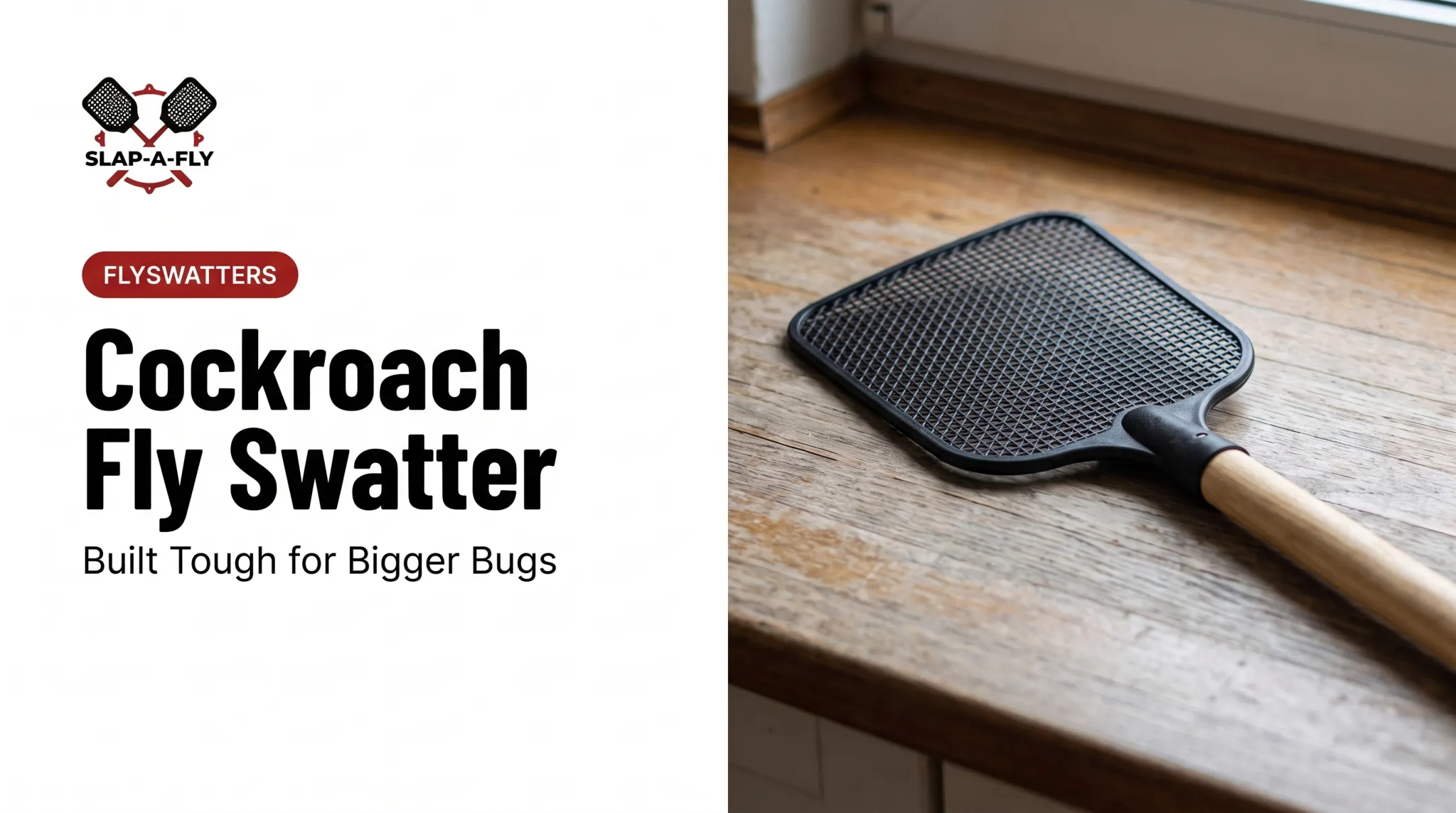
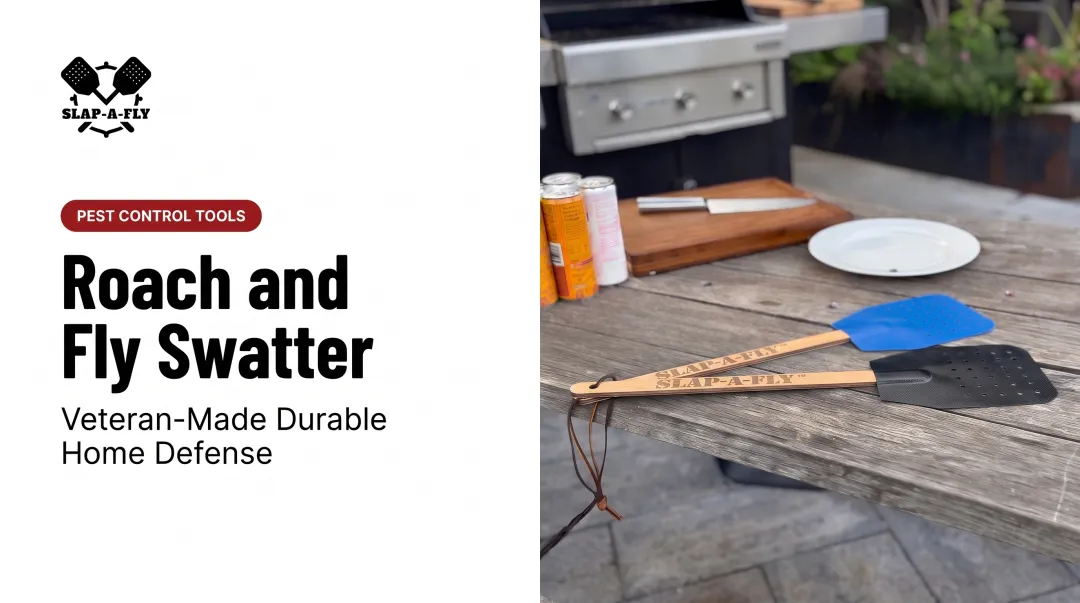
Not all swatters are built the same. Slap-a-Fly's swatters use Herculite 80, a perforated MIL-SPEC synthetic fabric rated for 80 PSI of impact force - enough force for large tough bugs like cockroaches, wasps, and armored insects - not just flies.
The perforations let air pass through the striking surface during the swing instead of pushing against it. You get less drag and a faster, more controlled strike than a flimsy plastic head that flexes on contact.
That precision matters more with stinging insects than with houseflies. A clean, decisive strike reduces the chance you're left dealing with an agitated, half-stunned bee at close range.

Why You Should Think Twice Before Killing a Honey Bee
Killing a honey bee isn't like swatting a fly. Honey bees do measurable work for the food system.
According to the EPA, pollination supports more than 1,200 food crops, and roughly one-third of the U.S. food supply depends on it. The USDA adds that honey bees alone pollinate crops worth an estimated $15 billion annually across more than 130 fruit, nut, and vegetable varieties.
Meanwhile, honey bee populations are under real strain. A preliminary U.S. Beekeeping Survey found a 55.6% managed-colony loss rate for the 2024–2025 season. Contributing factors include:
- Parasitic mites and associated viruses
- Poor nutrition and habitat loss
- Sublethal pesticide exposure
- Colony collapse disorder (exact cause still unproven)

Killing a honey bee that's just passing through your living room isn't doing anyone a favor. Most honey bees won't sting unless they feel cornered or crushed. Leave one alone near a window, and it will usually find its own way out.
How to Tell a Bee from a Wasp Before You Swat
Identification changes everything about how you should react. Getting it wrong in either direction has consequences: killing a pollinator you meant to spare, or tiptoeing around a wasp that doesn't need the courtesy.
Honey bees:
- Rounded, fuzzy body
- Generally docile unless directly threatened
- Wax comb nests in cavities
Wasps and yellowjackets:
- Smooth, slender body with a narrow "waist"
- More aggressive, can sting repeatedly
- Papery nests from chewed wood fiber

Wasps aren't ecological deadweight, though. A 2024 peer-reviewed study found they can carry pollen loads comparable to bees on certain plants. That doesn't mean you need to spare them. It just means "wasps are useless, kill freely" isn't quite right either. Honey bees still deserve more caution than wasps do.
Safer Alternatives to Killing a Bee Indoors
If you can avoid killing a honey bee, do it. A few options work well for a single bee that's wandered inside:
- Open a window or door and step back. Bees generally head toward light and fresh air on their own.
- Trap it in a jar or cup, slide a piece of stiff paper underneath, and release it outside.
- Freeze it as a last resort. If release isn't possible, seal the bee in a container and put it in the freezer overnight. That approach is more humane than crushing or spraying, but it's still a kill method, not a rescue.

Avoid DIY pesticide sprays indoors. They linger in the air and can affect anyone in the house, including kids and pets. EPA indoor air quality guidance recommends nonchemical methods first, and better ventilation if a spray is unavoidable.
When Swatting Is the Right Call (and How to Do It Safely)
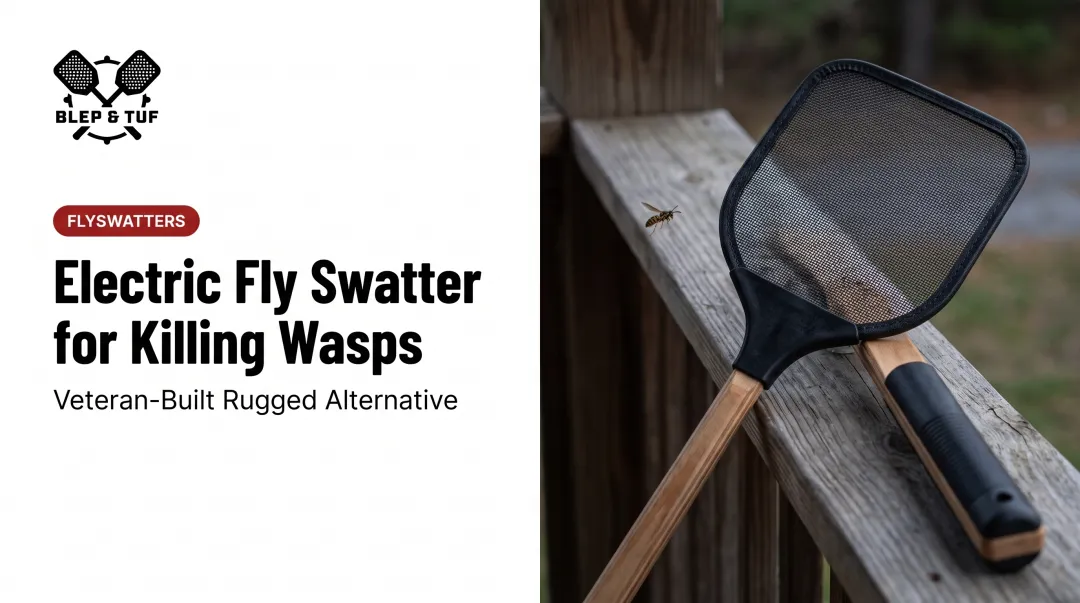
Sometimes swatting is the right move, especially with wasps, yellowjackets, or any stinging insect near someone with a known allergy. In those cases, speed and distance matter more than gentleness.
- Use an extended-reach swatter. Slap-a-Fly's XL model has a longer 5-ply aircraft spruce handle built to keep your hand farther from a stinger when the insect can sting more than once.
- Wait for it to land. Swinging at a flying target is a low-percentage move that raises your sting risk for little payoff.
- Choose a durable swatter. Herculite 80 withstands thousands of strikes without warping or tearing, unlike cheap plastic heads that crack after a few hits. That durability helps when more than one wasp shows up.
Frequently Asked Questions
Why should you never kill a bee?
Honey bees pollinate crops worth billions of dollars annually and are already dealing with steep population losses. Most won't sting unless provoked, so leaving them alone is usually safer for you and better for the hive.
Is it OK to kill a wasp with a fly swatter?
Yes. Wasps and yellow jackets don't carry the same pollinator importance as honey bees, so swatting them doesn't raise the same ecological concerns.
What is the most humane way to kill a bee?
Trap it in a sealed container and place it in the freezer overnight. Freezing is gentler than crushing, though releasing the bee outdoors is always the better first option.
How can I tell if I have bees or wasps in my house?
Bees are rounded and fuzzy; wasps and yellow jackets are smooth, slender, and more likely to be aggressive. Nest material also differs — waxy comb for bees, papery nests for wasps.
What should I do if I'm allergic to bee or wasp stings?
Let someone else handle removal if possible, keep your distance, and have an epinephrine auto-injector accessible at all times in case of an accidental sting.
Will a fly swatter work on a bee flying in the air?
Not reliably. Mid-flight swats often just stun the bee and increase your chance of getting stung. Wait for it to land before striking.