Here's the problem: most fly swatters aren't built to win that fight. Cheap plastic paddles bend mid-swing, push a wall of air the fly feels coming, and crack after a few months of use.
This guide breaks down what actually produces a clean "splat" — the physics behind it, the fly's own defenses against you, and what separates a real striking tool from a dollar-store throwaway.
Key Takeaways
- Perforated strike surfaces reduce air resistance, so flies sense the swing later
- Fly reaction speed beats human reflexes, so technique matters more than brute force
- Handle rigidity and balance affect accuracy as much as the strike surface does
- Materials like Herculite 80 fabric hold up through thousands of strikes; standard plastic doesn't
- The right swatter depends on your setting: kitchen, barn, or backyard
What Makes the Perfect "Splat"?
A fly swatter's job is simple: get close enough, fast enough, before the fly reacts. Everything about a swatter's design either helps or hurts that mission.
Mesh matters more than most people think. A 2024 study published in Physics of Fluids tested a commercial swatter head with over 480 small square holes. The research found that porosity pattern, not just total open area, determines whether air flow stalls abruptly or flows smoothly during a swing. A solid plastic paddle pushes a pressure wave ahead of it. Flies can feel that.
That's the whole point of ventilation: less air pushed forward means less warning.

Handle Balance and Feel
A heavy, stiff handle slows your swing and throws off aim. An overly flexible one absorbs force before it reaches the target. Neither gets you a splat.
The sweet spot looks like this:
- Enough rigidity to transfer force in a straight line
- Light enough weight for a quick, controlled snap
- Balance between the grip and the strike surface, so the head doesn't lag behind your hand
A 5-ply aircraft spruce handle is built for that mix: stiff enough to deliver force, light enough for a controlled snap.
Strike Surface and Reach
Rubber, wire mesh, and synthetic fabric all behave differently on impact:
- Synthetic fabric flexes and conforms on contact, closing the gap flies use to escape
- Wire mesh holds its shape but can scuff countertops
- Rubber hits hard but often pushes more air ahead of the swing
Military-spec synthetics such as Herculite 80 aim for fabric conform with enough toughness for repeated indoor and outdoor use.

Reach matters too, especially with wasps and bees. A longer handle keeps you outside stinging range.
Inside a Military-Grade "Splat": The Slap-a-Fly™ Difference
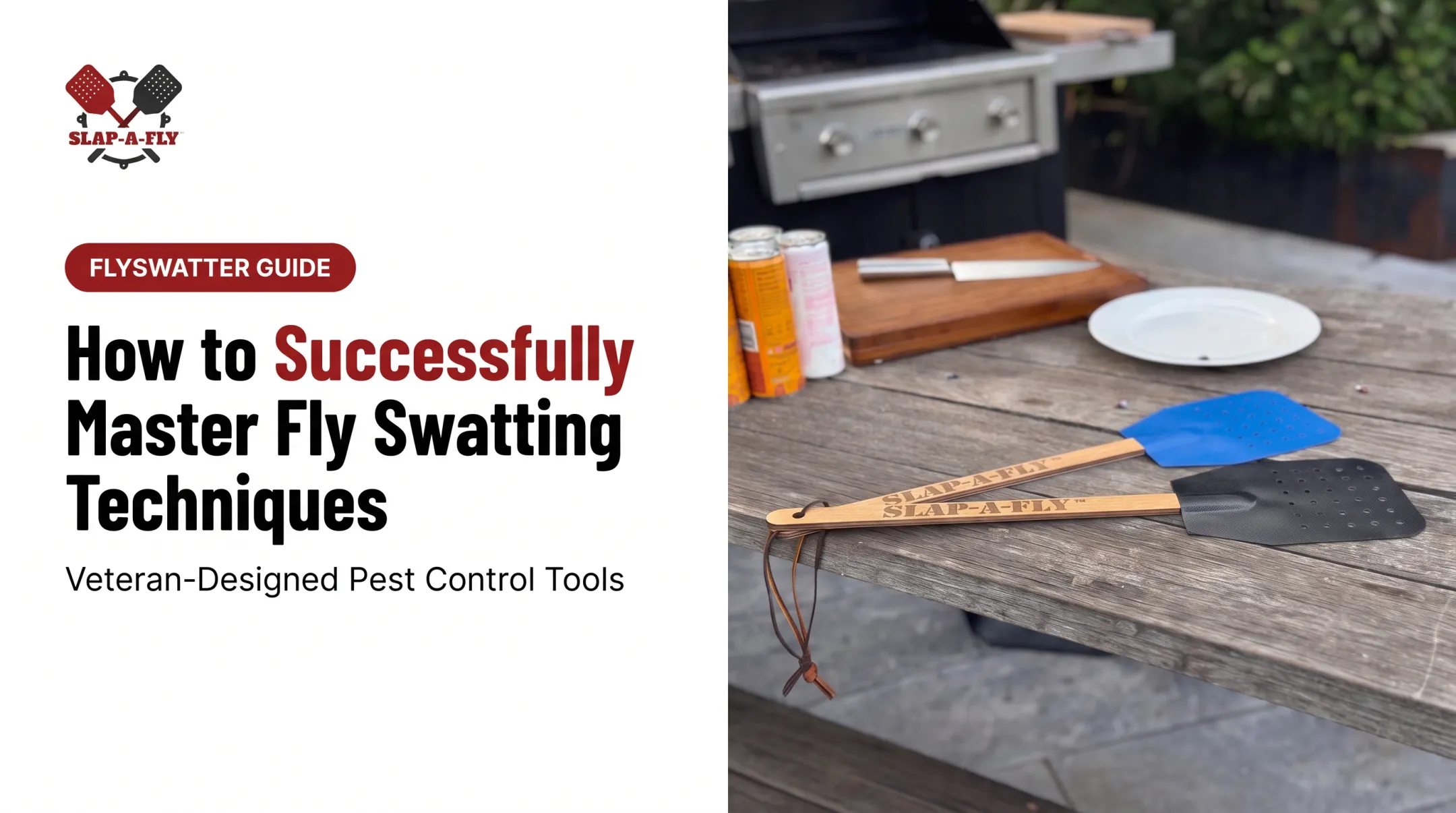
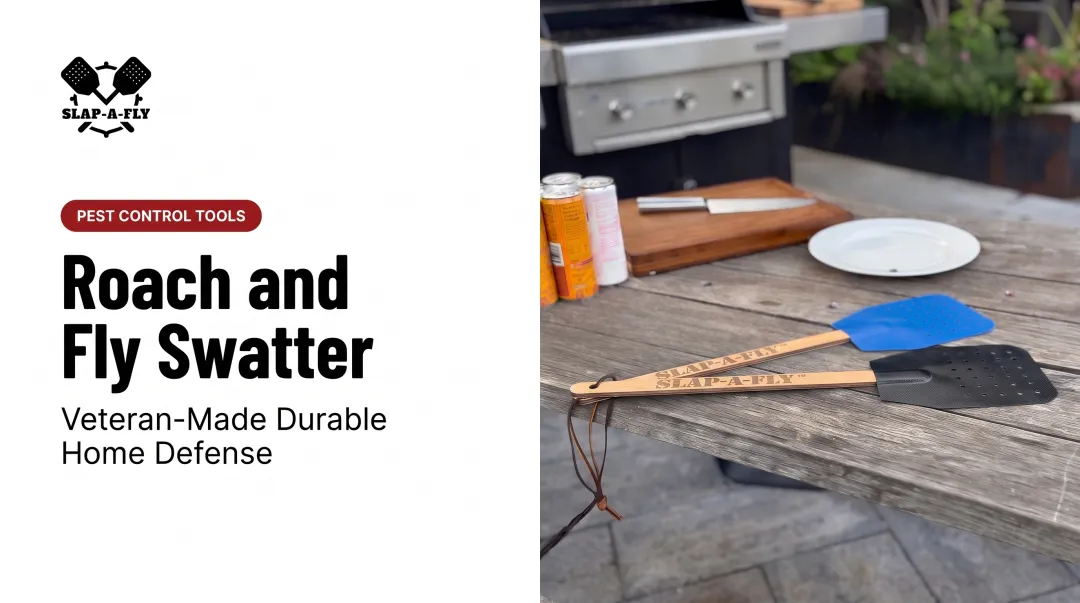
Slap-a-Fly™ is a veteran-owned, American-made brand started by U.S. Army veterans who came home unimpressed by the ordinary kitchen flyswatter. Flimsy plastic, handles that snap, strike surfaces that fold on contact: the standard tool was built to break. They engineered a swatter that isn’t.
Herculite 80 Fabric: The Strike Surface
The core of the design is a Herculite 80 synthetic fabric strike surface conforming to MIL-SPEC standards. It's rated to deliver up to 80 PSI of impact force - enough force for large tough bugs like cockroaches, wasps, and armored insects - not just flies - using weft-inserted polyester scrims for tear resistance under repeated stress.
The surface is perforated to cut air resistance, so the head doesn’t push a warning gust ahead of the strike.
The 5-Ply Aircraft Spruce Handle
Instead of hollow plastic, the handle is 5-ply aircraft spruce: five bonded layers of aerospace-grade wood, the same class of stock used in military cargo aircraft. That build delivers:
- High strength without extra weight
- Shock absorption on hard impact
- Balance that stays true through thousands of strikes

Vegan Materials, Practical Extras
The Herculite-80 surface is a 100% vegan military-grade synthetic strike surface - the same material used in jet fighters. Each swatter includes a matching storage loop for hanging by a door or tossing in a bag.
The lineup covers different jobs:
- Standard model (black or blue) — everyday flies, gnats, mosquitoes, and small spiders
- XL model — longer reach for wasps, bees, and larger pests
- Exterminator Bundle (four-pack) — multi-station coverage for commercial kitchens and heavy use
Do Flies Know When You're About to Swat?
Short answer: often, yes. Houseflies rely on compound eyes and tiny body hairs that pick up light changes and air pressure shifts. A 1991 study on housefly escape behavior found that an approaching dark shape triggers escape responses, while a receding one usually doesn't. Direction and contrast in your swing matter as much as speed.
Caltech work on fruit flies pushes that further: they plan an escape route in as little as 100 milliseconds after spotting a threat, and they adjust leg position based on whether the danger comes from the front, side, or behind.
Practical result: a slow, telescoping approach from above gives less visual warning than a fast side swing. Flies process visual motion so fast that stealth beats brute force almost every time.
How to Land the Perfect Splat: Technique Tips
Technique separates a clean kill from another missed swing. Try this sequence:
- Wait for the fly to land and settle. Chasing mid-flight rarely works. Flies are faster than your reflexes.
- Approach from slightly behind and above. Flies typically launch backward or upward on takeoff, so aim slightly ahead of where they're sitting, not directly at their current position.
- Keep the swatter low and close before striking. A wide, telegraphed swing gives the fly time to react.
- Use a short, quick snap rather than a big arc. Less air displacement, less warning.

Cambridge researchers note the same idea: minimize visible motion, or move slow enough that the fly doesn't register expanding edges, and your odds improve.
Choosing the Right Fly Swatter for Every Setting
Not every environment calls for the same tool.
| Setting | Priority | Best Fit |
|---|---|---|
| Kitchen / commercial food areas | Easy-clean, sanitary surface | Standard model |
| Farm / barn | Heavy-duty, long-lasting build | Standard or Exterminator Bundle |
| Camping / outdoor | Portable, storage-loop equipped | Standard or XL with loop |
| Wasps, bees, stinging pests | Extended safe reach | XL model |
| Restaurants / professional exterminators | Multiple swatters, mixed reach | Exterminator Bundle |
The "most effective" swatter isn't one-size-fits-all. It's a balance of mesh design, durability, and reach matched to where you're actually swatting. A dollar-store swatter might handle one summer. A military-grade build handles thousands of strikes without falling apart.
Frequently Asked Questions
What is the most effective fly swatter?
The most effective swatters combine a perforated strike surface for lower air resistance, a balanced rigid handle, and tough materials like Herculite 80 fabric. That mix delivers cleaner hits and holds up under repeated strikes.
Do flies know when you grab a fly swatter?
Yes, to some extent. Flies sense subtle air pressure and light changes as you move, which is why a quiet, controlled approach improves your odds of a clean splat.
How often should I replace a fly swatter?
Cheap plastic swatters crack or lose flexibility within months. Military-grade synthetic builds handle thousands of strikes without failure and can last for years with normal use.
Is a bigger fly swatter always better?
Not necessarily. Surface design and technique matter more than size. An XL model mainly helps by giving you safer distance from stinging pests like wasps and bees.
Can I use a fly swatter outdoors and for camping?
Yes. Durable, weather-resistant swatters with a storage loop are well suited for barbecues, camping trips, and patio use.
What makes a fly swatter "military-grade"?
Military-grade swatters use MIL-SPEC materials like Herculite 80 fabric and 5-ply aircraft spruce handles. That build delivers more strike force and durability than standard plastic designs.