This guide covers manual techniques for flying insects, crawling pests, and garden invaders. You'll get actionable methods plus tool recommendations, including heavy-duty manual tools built for reliable, repeatable results.
Key Takeaways
- Manual pest control avoids chemical exposure while staying effective against most common pests
- Prevention (sanitation, sealing, healthy soil) matters more than any single tool or trap
- Quality tools, traps, barriers, and swatters, make manual methods faster and more consistent
- Tough infestations often need layered methods, not one quick fix
What Is Manual Pest Control and Why Choose It
Manual pest control is physical or mechanical removal: trapping, hand-picking, barriers, and swatting. No sprays, no residue, no toxins. The University of California's IPM program lists water sprays, barriers, and traps among the core physical controls used in place of chemicals (UC IPM).
Home and garden payoffs:
- No toxic residue near food prep areas, kids, or pets
- Lower long-term cost with no repeat product purchases
- Works immediately, with visible results
- Doesn't disrupt beneficial insects in the garden
Limitations to Set Expectations
Manual methods need more consistency than spraying. You check traps, hand-pick pests, and repeat on a schedule instead of treating once and walking away. You trade one-and-done convenience for safety and control you can see.
Manual Pest Control for the Home: Flying and Crawling Insects
Flying Insects: Flies, Wasps, and Mosquitoes
Flies, wasps, and mosquitoes respond best to direct elimination combined with exclusion: screens on windows, sealed gaps under doors, no standing water near entry points.
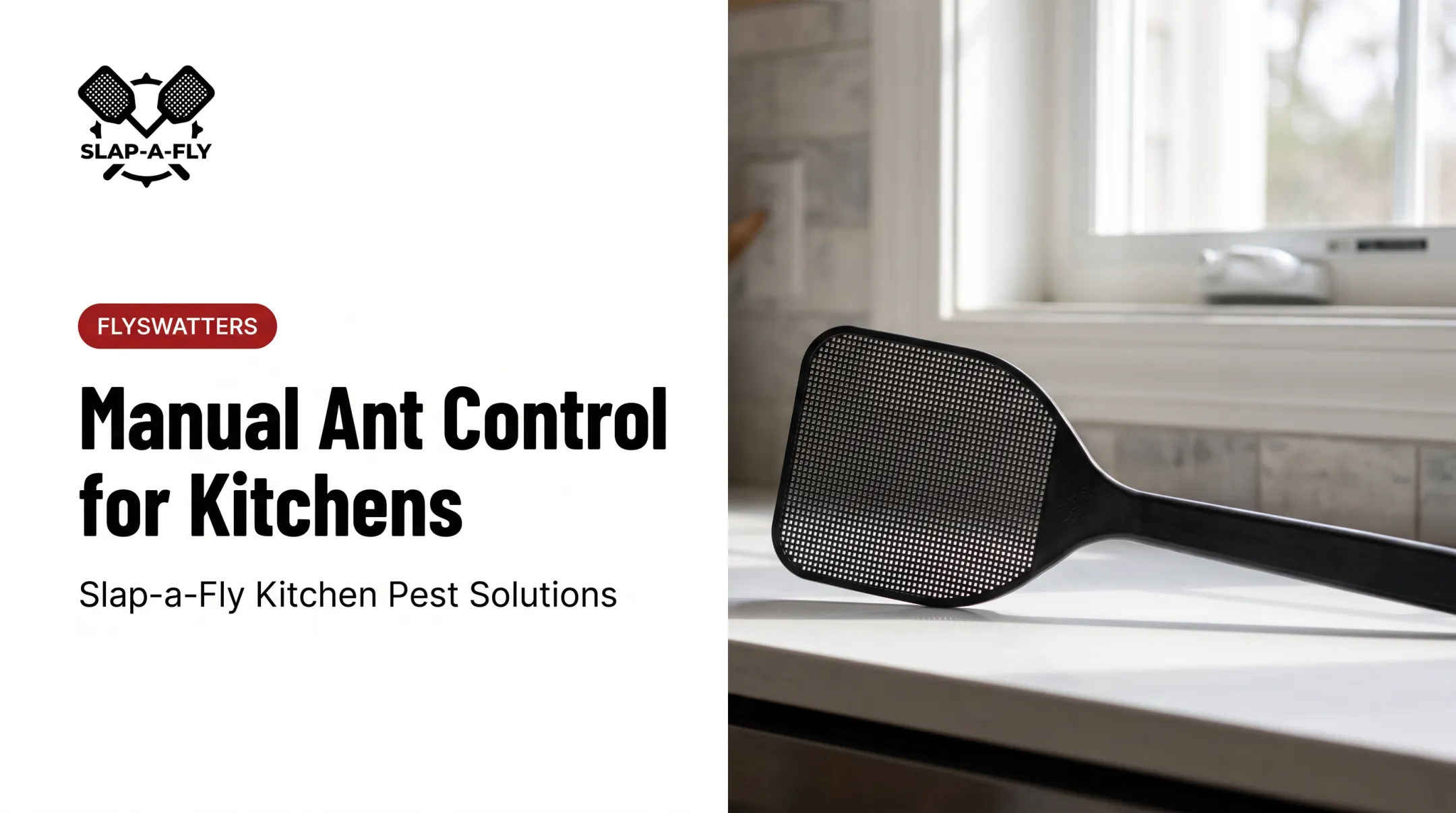
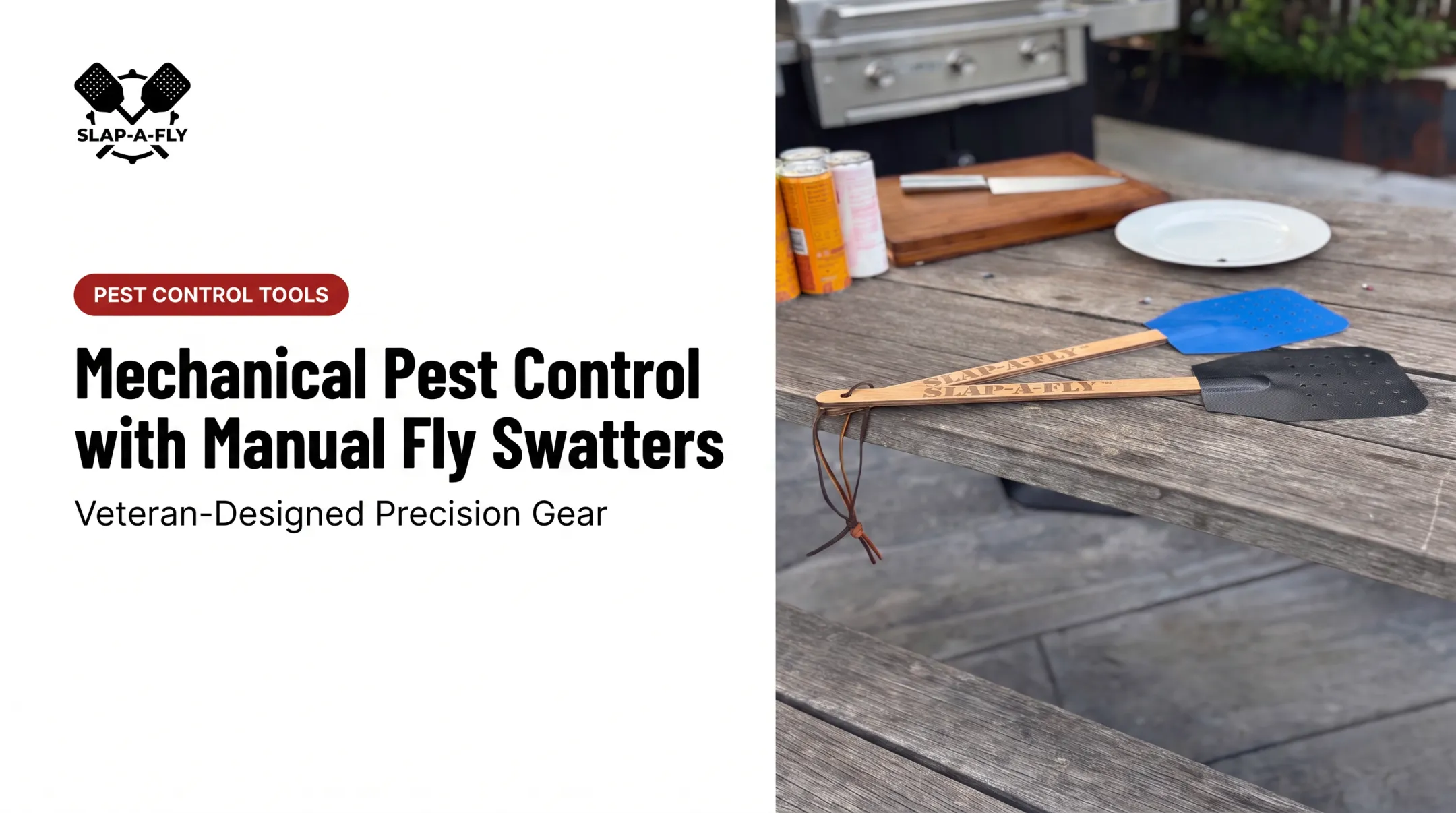
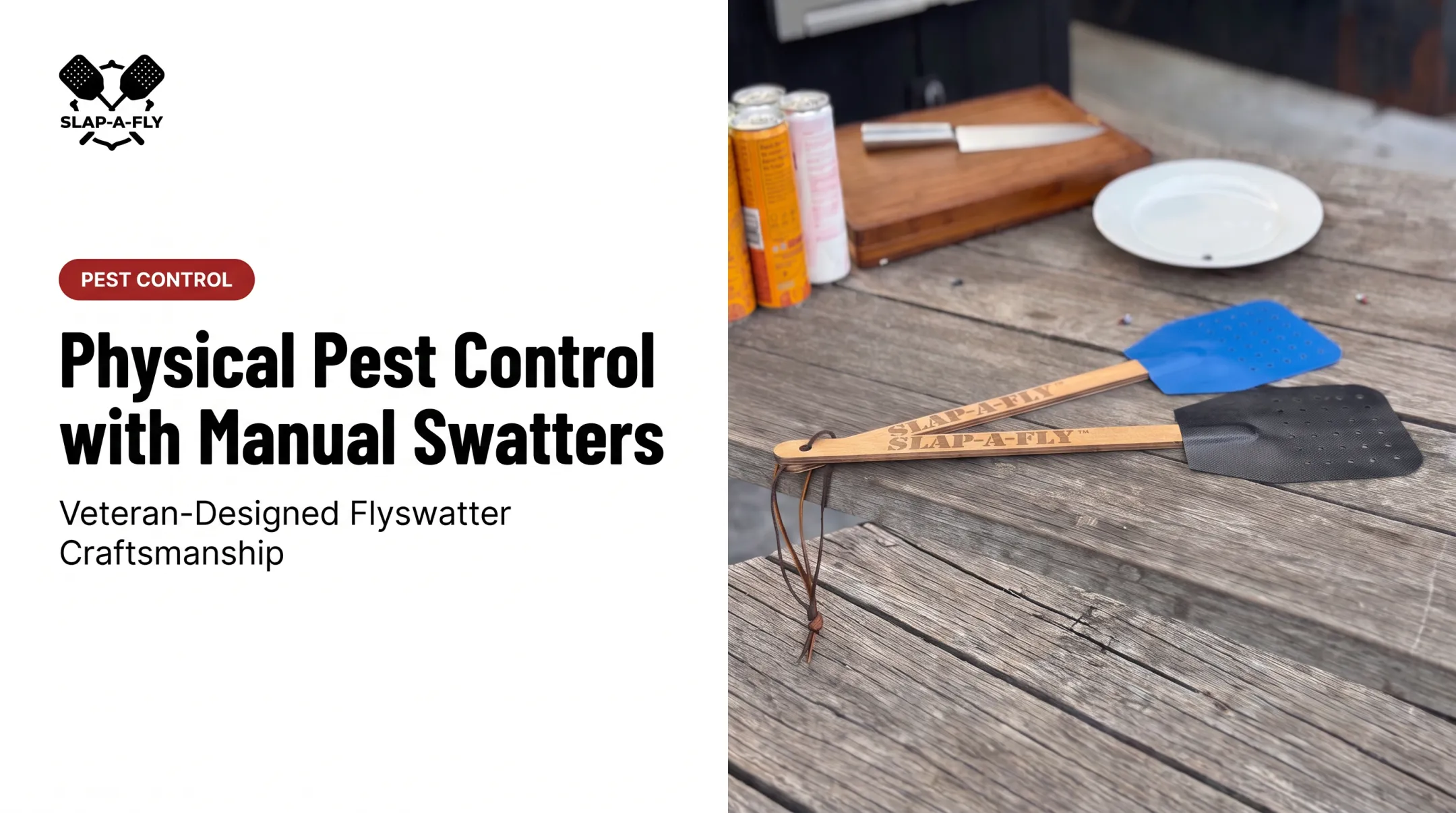
The flyswatter remains the fastest, most reliable indoor tool. Not all swatters are equal, though. Standard mesh swatters stretch and go floppy within days of regular use, barely stunning flies instead of finishing the job.
Slap-a-Fly's Standard and XL models use Herculite 80 fabric, a military-grade synthetic material delivering 80 PSI of impact force - enough force for large tough bugs like cockroaches, wasps, and armored insects - not just flies - and built to maintain tension through thousands of strikes. The XL model adds extended reach via a 5-ply aircraft spruce handle, useful for keeping distance from wasps and other stinging pests without sacrificing striking power.

Crawling Insects: Ants and Roaches
Manual control of crawling pests comes down to three habits:
- Seal food sources: airtight containers, wiped counters, no crumbs left overnight
- Place sticky traps in dark corners and under appliances to monitor activity
- Physically remove nests when located, rather than just killing visible scouts
Penn State Extension notes sticky traps work well for monitoring roach activity near pipe entries and dark voids. A 2021 review found traps alone often don't suppress populations, so pair them with exclusion and sanitation (Penn State Extension, 2024).
Diatomaceous earth (DE) offers a non-chemical option for soft- and hard-bodied insects indoors. DE particles attach to an insect's exoskeleton and cause death through dehydration and abrasion — a physical mode of action, not a neurotoxin (Zeni et al., Molecules, 2021). Apply lightly in cracks and voids; avoid inhaling the dust.

Bed Bugs and Pantry Pests
- Vacuum mattress seams, baseboards, and cracks regularly
- Steam treat fabric and furniture: EPA recommends steam reaching at least 130°F, applied without forceful airflow that can scatter bugs
- Inspect weekly during active infestations
Penn State found steam killed 90% of eggs, nymphs, and adults in bed sheets and sofa fabric after roughly 20 seconds of direct treatment per area (Penn State Extension, 2025).
Commercial kitchens and rural homes especially benefit from durable, reusable tools. A disposable plastic swatter that flops after a week isn't built for barns or high-fly-traffic dining areas. That's why many rural households and kitchen operators choose heavier-duty gear that survives thousands of strikes.
Manual Pest Control for the Garden: Hand-Removal and Barriers
Hand-Picking
Hand-picking is the most direct method for caterpillars, beetles, slugs, and hornworms. Purdue Extension notes that in small gardens, early detection lets you hand-pick and destroy these pests before damage spreads (Purdue Extension). Drop them into soapy water; it's quick and effective.
Physical Barriers
- Row covers, installed at planting time, block insects before they reach plants
- Netting protects fruiting plants from larger pests
- Collars around stems stop cutworms from girdling seedlings
Wisconsin Extension notes floating row covers must go on early and stay sealed at the edges. Flea beetles and root maggots can still find gaps if covers go on late (Wisconsin Horticulture).

Traps and Water Sprays
Sticky traps and pheromone traps help monitor and catch flying pests like aphids and whiteflies before populations explode.
For soft-bodied pests, skip the products entirely:
- Water spray dislodges aphids and spider mites from stems and leaves
- High-pressure water washes away spider mite webbing
Missouri Extension notes most dislodged aphids won't return to the same plant (Missouri Extension). Minnesota Extension guidance also supports high-pressure rinses for mite webbing.
Soil-Level Controls
- Potato-slice traps: bury slices to attract and collect wireworms
- Beer traps: sink shallow containers of beer and empty/refill daily for slug control (OSU Extension)
- Physical grub removal during soil turning or bed prep

Building a Pest-Resistant Home and Garden Through Prevention
Prevention beats reaction every time. Indoors, that means sealing cracks, repairing screens, and storing food in airtight containers. EPA housing guidance identifies exclusion and sealing as core prevention steps for keeping pests out in the first place (EPA).
The same prevention mindset applies outdoors:
- Build healthy soil through composting and proper drainage
- Rotate crops yearly to disrupt pest life cycles
- Remove weak or infested plants before problems spread to healthy ones
Daily observation is the most underrated pest control habit. A five-minute walk through the kitchen or garden catches small problems, a few aphids or one wasp nest starting under the eaves, before they become full infestations.
When to Combine Manual Methods with Other Approaches
Severe infestations sometimes need more than one manual tactic. When handpicking, trapping, or swatting alone stops cutting numbers — or pests rebound within a day or two — add a second method instead of quitting manual control.
Effective combinations include:
- Hand removal plus beneficial insects (ladybugs for aphids, for example)
- Daily swatting paired with sticky traps for flying pests
- Physical barriers with targeted organic treatments on hotspots only
Manual control works best as ongoing maintenance, not a one-time purge. Daily checks, weekly trap resets, and seasonal barriers keep populations from climbing back after you knock them down.
Frequently Asked Questions
What is the hardest pest to get rid of?
Bed bugs and German cockroaches top the list. Both need persistence, thorough steam or vacuum treatment, and several manual methods used together—not one trap or tool alone.
What are the three rules of pest control?
Identify the pest correctly, focus on prevention (removing food, water, and shelter), and use the least invasive method first. This mirrors the core IPM principle used by EPA and USDA programs.
What is the most common garden pest?
Aphids are one of the most widespread garden pests and show up on hundreds of plant species. Water spray and hand-picking control most infestations without any products.
Are manual pest control methods as effective as chemical pesticides?
For most home and garden pests, yes, when applied consistently. Severe or established infestations may need added measures, such as biological controls.
Can manual pest control be used safely around pets and children?
Yes. Since manual methods avoid toxic residues, they're well suited to kitchens, play areas, and gardens where families spend the most time.