Here's the uncomfortable part: house flies aren't just annoying. A 2018 systematic review found flies can carry more than 130 different pathogens, including bacteria linked to E. coli and Salmonella contamination in food settings.
This guide breaks down why flies get inside, how to prevent them, and which control methods actually work — including why a heavy-duty flyswatter still belongs in your toolkit.
Key Takeaways
- Food, moisture, and organic waste attract indoor flies — remove these first
- Layering sanitation, exclusion, traps, and a reliable swatter beats any single method
- Chemical-free tools like sticky traps and manual swatting are safest around food and kids
- Recurring infestations usually mean a hidden breeding site you haven't found yet
Why Do I Keep Getting So Many Flies in My House?
Flies don't wander in for no reason. They're chasing something specific: moisture and decaying organic matter to lay eggs in.
That detail is easy to overlook. A few flies indoors usually signal a breeding site somewhere close by.
Flies Multiply Faster Than You Think
House flies can go from egg to adult in as little as 7 to 10 days, according to Purdue Extension. A single female can lay 350 to 900 eggs over her lifetime, per UNH Extension.
That means two flies today can become dozens within two weeks if the breeding source stays put.
Common indoor attractants include:
- Rotting food or unsealed trash
- Pet waste left too long
- Damp, dirty drains
- Standing water in plant trays or humidifiers
- Overripe produce sitting on counters
Not All Small Flies Are the Same
Identifying the species helps you target the fix:
| Fly Type | What Attracts It |
|---|---|
| House flies | Garbage, pet waste, decaying matter |
| Fruit flies | Overripe produce, beverage residue |
| Drain flies | Slime buildup in sink and floor drains |
| Fungus gnats | Overwatered houseplant soil |

Breeding sites explain the population boom, but entry points matter too. Bright lights and open doors at night draw flies inside, and an unscreened window at dusk is an open invitation.
What Is the Best Way to Get Rid of Flies in My House?
The most reliable approach stacks several tactics together—no single product replaces the full sequence.
Step 1: Sanitation Comes First
Before any trap or tool works well, remove what's feeding the problem:
- Seal trash cans with tight-fitting lids
- Wipe counters and stovetops after every meal
- Clean drains regularly to eliminate slime buildup
- Pick up pet waste promptly
Purdue Extension puts it plainly: insecticides alone can't rid a home of flies if the breeding source stays in place.

Step 2: DIY Traps for Ongoing Capture
Once breeding sites are gone, two low-cost traps help with passive capture:
- Vinegar and dish soap trap — Fill a small dish with apple cider vinegar and a drop of dish soap. The vinegar attracts flies; the soap breaks surface tension so they can't escape.
- Soda bottle funnel trap — Cut the top off a plastic bottle, invert it into the base, and add bait inside. Flies fly in but struggle to find their way out.
Step 3: Store-Bought Passive Options
Sticky flypaper and UV light traps offer hands-off control, but each comes with trade-offs:
- Flypaper: Cheap and pesticide-free, but caught flies stay visible — not exactly a kitchen centerpiece
- UV light traps: Good for ambient control in larger spaces, though placement near food prep areas isn't ideal
Step 4: Instant Elimination for Flies Already Inside
Traps still leave you stuck when a fly is already circling the kitchen. A swatter wins on speed: no chemicals, no wait, no residue near food.
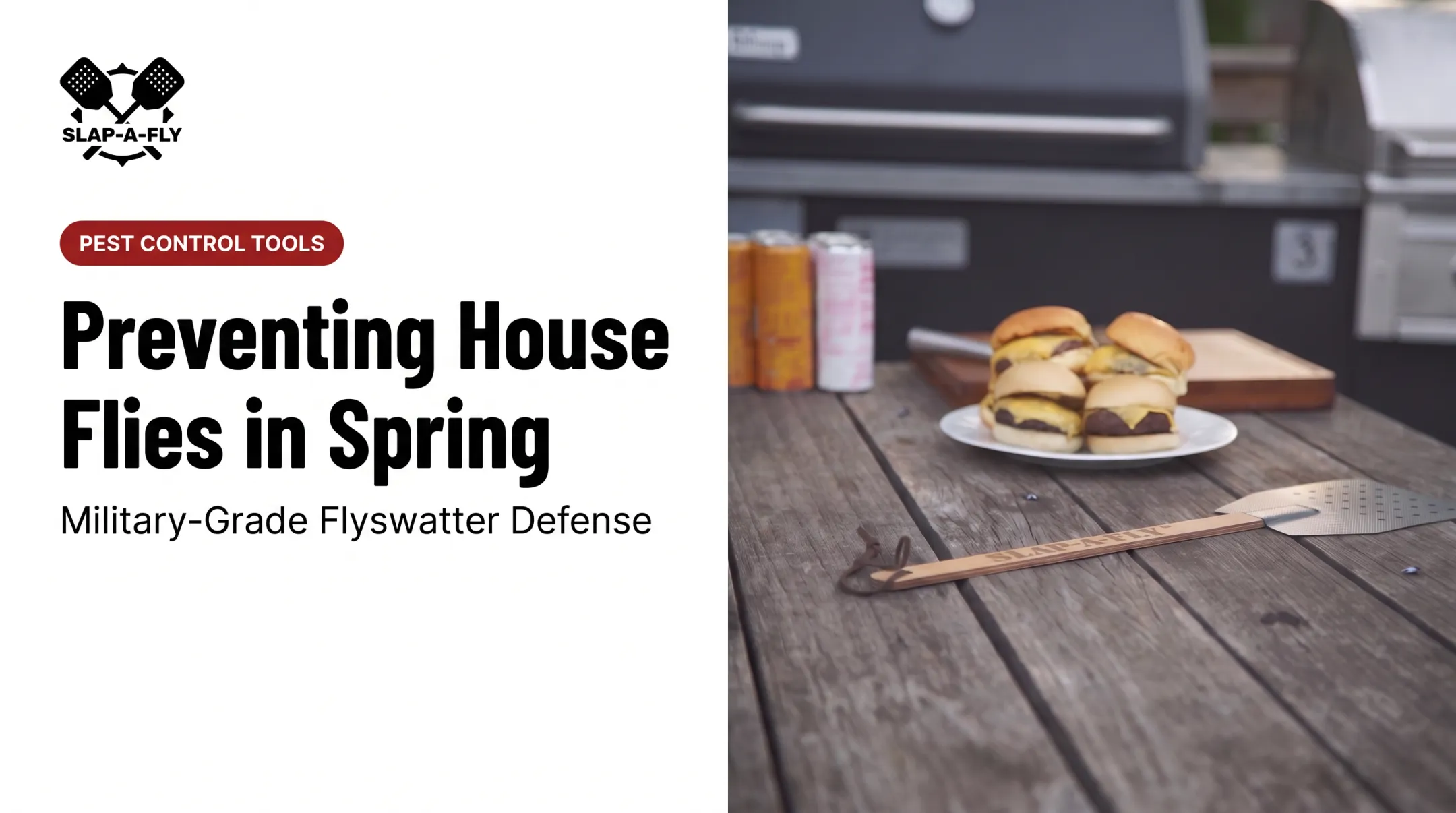
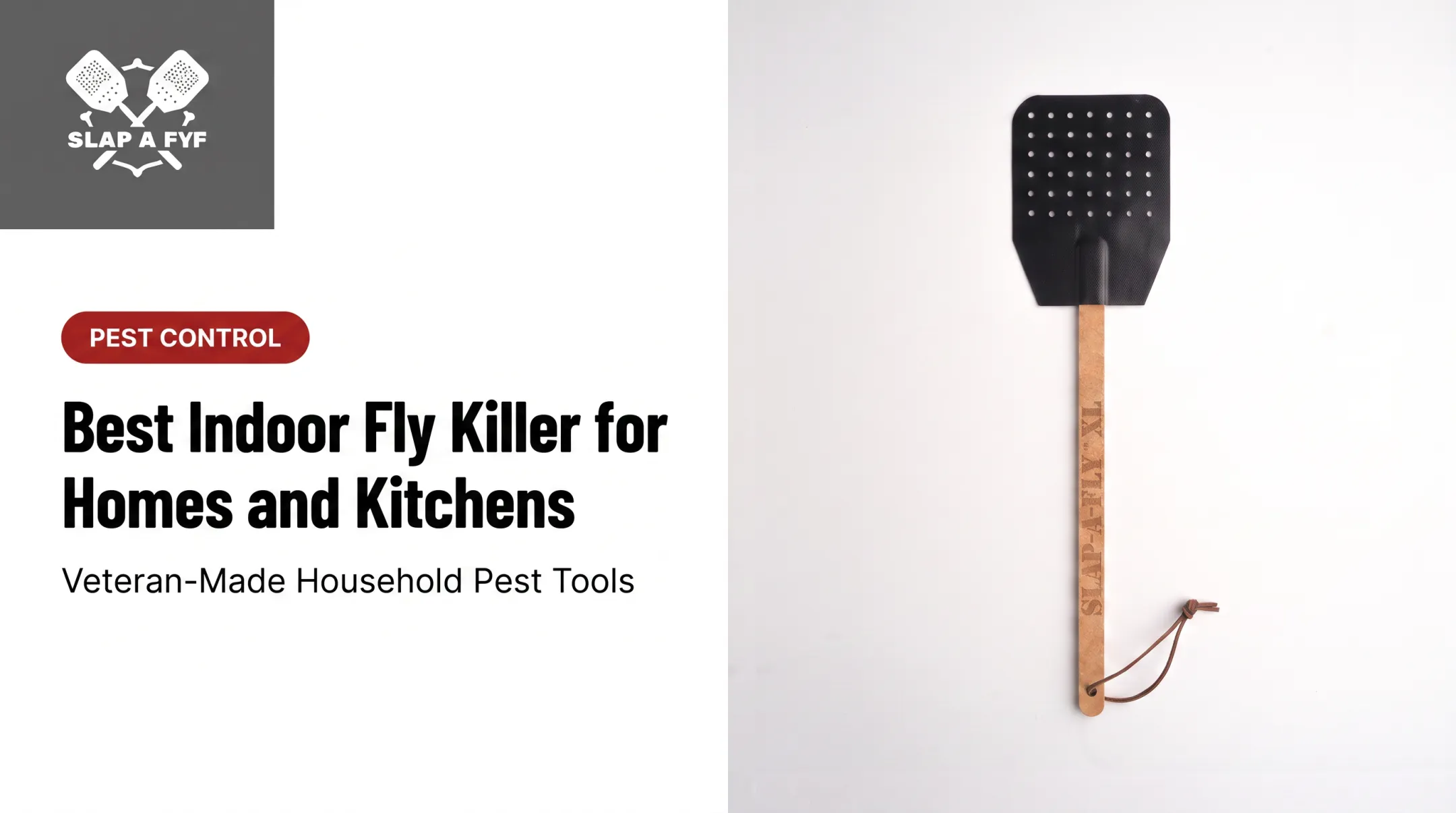
A durable swatter matters more than most people expect. Slap-a-Fly builds military-grade swatters engineered by U.S. Army veterans around a few concrete specs:
- Herculite 80 striking surface rated to about 80 PSI - enough force for large tough bugs like cockroaches, wasps, and armored insects - not just flies, built for repeated hits
- Perforated head that cuts air resistance so the first swing is less likely to push the fly aside
- 5-ply aircraft spruce handle for balance and shock absorption
One customer reported swatting a fly mid-air on the first try. That is the point: point, swing, done.

If a fly is buzzing around right now, a well-balanced swatter beats every other method on this list for speed. No 30-minute wait for a trap. No spray on the countertop. Just contact.
Insecticide sprays and baits can knock down larger numbers faster, but keep them off food-contact surfaces and away from kids and pets, and always follow the label.
What Is the Most Effective Indoor Fly Killer?
It depends on what you're dealing with: a single fly or a full-blown infestation.
Quick comparison:
- UV light traps — good for continuous ambient control in larger rooms
- Sticky traps — low-cost, passive, best for monitoring activity
- Sprays/baits — fast for large numbers, but chemical exposure near food is a concern
- Manual swatting — instant, zero chemicals, ideal for visible flies near food prep
For kitchens specifically, non-chemical solutions win. You don't want insecticide residue anywhere near a cutting board. A reliable swatter fills that gap.
Best results usually come from combining methods. Use a light trap for background control, paired with a swatter for anything that gets past it. One handles the ambient population; the other handles what's right in front of you.
How Can I Get Rid of Small Flies (Fruit Flies/Gnats) in My House?
Tiny flies buzzing around your fruit bowl or houseplants are almost always fruit flies or fungus gnats, not house flies. They're drawn to different things entirely.
Fruit flies target overripe produce, drain residue, and unwashed recycling. Fungus gnats breed in overly moist houseplant soil.
The Apple Cider Vinegar Trap
This remains the go-to DIY method for small flies:
- Fill a small cup with apple cider vinegar
- Add a drop of dish soap
- Cover with plastic wrap and poke a few small holes
- Set it near the problem area and leave overnight

The vinegar lures them in; the soap keeps them from flying back out.
Traps Won't Fix the Root Cause
Here's the catch: a trap catches adult flies, but it does nothing about eggs already laid in your fruit bowl, drain, or plant soil. You need to remove the source too:
- Refrigerate or toss overripe produce
- Clean drains thoroughly
- Let houseplant soil dry out between waterings
Skip that step, and you'll be refilling vinegar traps indefinitely.
What Can I Do to Prevent Flies From Coming in My House?
Prevention beats treatment every time. It's also the cheapest option.
Physical barriers:
- Repair torn window and door screens
- Seal gaps around pipes, vents, and window frames
- Keep exterior doors closed, especially at dusk when flies are drawn to indoor light
Sanitation habits:
- Use trash cans with tight-fitting lids
- Empty garbage regularly, not just when it's full
- Clean pet waste areas daily
Plant deterrents (optional): Basil, lavender, and mint near entry points are commonly suggested as natural deterrents. The strongest evidence comes from a 2014 study on horn flies and cattle, not indoor house flies — so treat it as a minor add-on, not your main defense.
Frequently Asked Questions
What is the fastest way to get rid of house flies?
Manually swatting visible flies gives instant results. Traps and baits work in the background, but they can take hours or days to show an effect.
What is the most effective indoor fly killer?
No single product handles every stage. Pair sanitation and traps or light traps for ambient control with a reliable swatter for quick individual kills.
Why do I keep getting so many flies in my house?
You likely have a hidden breeding site: a dirty drain, forgotten trash, or pet waste — that needs to be located and removed, not just masked.