That's the appeal of physical pest control, and it's why so many homeowners still reach for a swatter before they reach for a spray can. Yet most people default to chemicals anyway, not realizing that for everyday flying and crawling insects, a well-built manual tool is often faster and just as effective.
This guide breaks down what physical pest control actually means, how it stacks up against chemical alternatives, and what separates a swatter that works from one that just flails.
Key Takeaways
- Physical pest control relies on direct force, barriers, or temperature, with no chemicals involved
- Safer choice for homes with kids, pets, or food-prep surfaces
- Swatter material and design determine whether a strike lands or the pest escapes
- Pair physical tools with basic exclusion (sealed gaps, no standing water) for best results
What Is Physical Pest Control?
Physical pest control means manipulating the environment or applying direct force to kill, remove, or exclude pests. It's distinct from chemical control (pesticides) and biological control (natural predators).
Virginia Cooperative Extension's Gardener Handbook groups it under "mechanical" methods: hands-on techniques or simple equipment that directly remove or exclude pests, including traps, hand removal, and tight-fitting screens.
Here's where people get confused. "Mechanical" typically refers to devices such as traps, sticky boards, and bait stations. "Physical" often refers to environmental changes like heat, cold, or sealed structures. A flyswatter sits right at the intersection: it's a mechanical device, but the action is entirely physical—force applied by hand, no moving parts, no electronics.
Health-conscious households favor that simplicity:
- Leaves no toxins on countertops or high chairs
- Needs no evacuation time after use
- Creates no lingering odor in the kitchen
- Stays safe near food prep with nothing to contaminate
What Are the Methods of Physical Pest Control?
Physical pest control covers several distinct approaches, each suited to different pests and situations.
Manual and Mechanical Tools
Swatters, traps, and glue boards deliver the most immediate results. The EPA classifies flyswatters as "pesticide devices": tools that work through physical means alone, with no pesticidal substance required.
But not all swatters perform equally. A well-engineered one uses:
- A mesh or perforated strike surface that maintains tension
- A balanced handle for accurate, controlled swings
- Airflow-friendly design that reduces the pest's ability to sense the swing coming
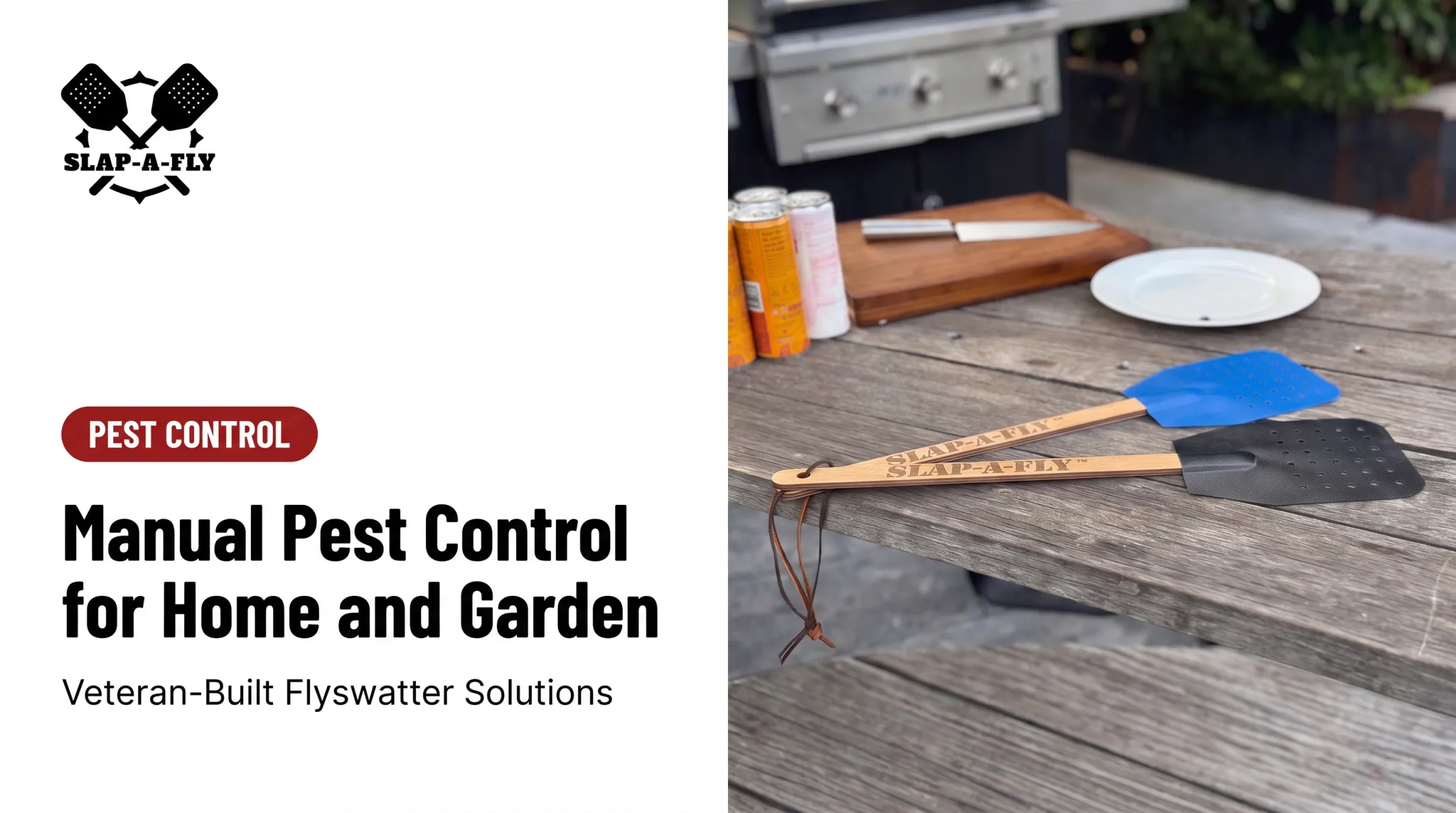
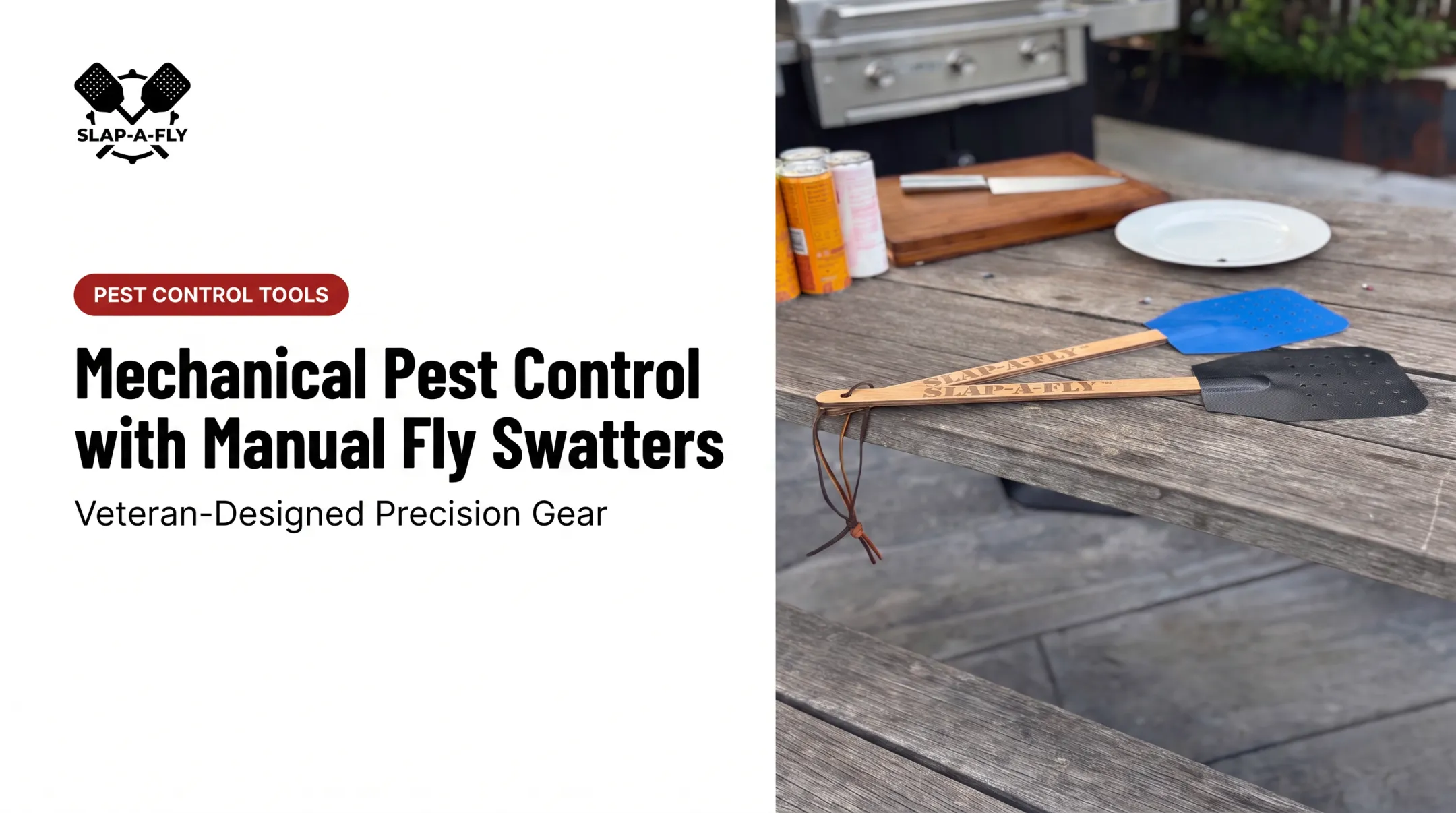
Flimsy dollar-store versions stretch and go floppy within days, and flies learn to dodge them. Slap-a-Fly builds around those failure points with a Herculite 80 perforated strike surface and a 5-ply aircraft spruce handle that hold shape under repeated use.

When the target is a wasp or bee, distance matters as much as accuracy. An extended-reach tool keeps your hand farther from the stinger and lowers the chance of getting hit mid-swing.
Barriers and Exclusion
Screens, door sweeps, and sealed entry points prevent pests from getting inside in the first place. The CDC notes that mice can squeeze through a hole just 1/4 inch in diameter, so sealing gaps with steel wool, caulk, or hardware cloth matters more than most homeowners assume.
A University of Florida housing study tracked 155 apartments and found that fixing screens, seals, and door sweeps cut entry-point problems by 35.8% over the course of the program.

Temperature-Based Control
Heat and cold treatments are specialized physical methods, used mostly by professionals for tough infestations like bed bugs. The EPA recommends heating infested items to at least 120°F for 90 minutes to kill eggs; regular washing alone is not enough.
Traps and Bait Stations
Snap traps, sticky traps, and monitoring stations offer passive physical control for rodents and crawling insects. They need regular checking, though a classic snap trap stays reusable where many disposable options do not.
Why Choose Physical Pest Control Over Chemical Methods?
Chemical sprays kill fast, but they come with tradeoffs physical tools simply don't have.
| Factor | Physical Control | Chemical Control |
|---|---|---|
| Safety around kids/pets | No residue risk | Requires ventilation, wait time |
| Speed | Instant (single strike) | Minutes to hours for full effect |
| Cost over time | One-time purchase, reusable | Recurring purchases |
| Environmental impact | No chemical runoff | Runoff and residual toxicity |

The resistance issue is real. The EPA warns that many pesticides have gradually lost effectiveness as pests develop reduced sensitivity to active ingredients over repeated exposure. Physical methods sidestep that problem entirely. A swatter doesn't lose potency, and a strike doesn't build up resistance.
That said, physical control has real limits. It takes more hands-on effort, and it isn't a primary fix for large-scale infestations. A termite colony or a serious rodent problem still needs professional or chemical intervention.
Choosing the Right Tools for DIY Physical Pest Control
Most swatters sold at drugstores are built to fail fast: thin plastic handles, mesh that stretches out within a week, strike surfaces that go limp.
A professional-grade swatter is different in three specific ways:
- Strike surface material – Slap-a-Fly uses Herculite 80, a MIL-SPEC synthetic fabric rated to deliver up to 80 PSI of impact force - enough force for large tough bugs like cockroaches, wasps, and armored insects - not just flies. It holds tension strike after strike instead of sagging like standard mesh.
- Handle durability – A 5-ply aircraft spruce handle, the same aerospace-grade wood used in military cargo plane components, provides the balance needed for accurate, repeatable swings.
- Airflow design – A perforated strike surface lets air pass through mid-swing, cutting drag so the swing lands before the pest reacts.
Built with these materials, the tool can take thousands of strikes without performance loss. That's the difference between buying a new swatter every season and buying one that, with reasonable care, lasts indefinitely.

Durability cuts waste too. A dollar-store swatter that bends or snaps after a few uses ends up in a landfill within weeks. A reusable one stays in service instead—better for your wallet and less plastic in the trash over time.
Combining Physical Control With Other Prevention Methods
A great swatter handles the pests that get in. Exclusion keeps them from getting in at all.
Pair manual tools with everyday prevention habits for a fuller defense:
- Seal food containers and clean crumbs promptly
- Remove standing water where insects breed
- Fix window screens and door sweeps
- Take out trash regularly
When to call a professional:
- Recurring infestations despite consistent swatting and sealing
- Visible structural damage from pests
- Termites or large rodent populations
Those cases need licensed treatment beyond what any manual tool or homeowner can handle alone.
Frequently Asked Questions
What are the methods of physical pest control?
Physical pest control includes manual tools like swatters and hand-picking, barriers and exclusion (screens, sealed gaps), temperature treatments (heat/cold for bed bugs), and traps or monitoring stations. Each targets different pests and situations.
Is physical pest control safe for homes with children and pets?
Generally, yes—there's no chemical residue to worry about. That said, sharp tools and traps still need careful placement and should be kept out of reach when not in use.
What's the difference between mechanical and physical pest control?
Mechanical control typically refers to devices like traps and swatters. Physical control often means changing environmental conditions, such as temperature or structural barriers. A flyswatter blends both.
Can physical pest control fully replace chemical treatments?
For everyday pests like houseflies, yes, it works well on its own. Severe infestations, such as termites or large rodent populations, usually still require professional or chemical treatment.
How do I choose a durable flyswatter for regular use?
Look for military-grade fabric instead of flimsy plastic mesh, a solid handle construction like aircraft spruce, and enough reach for the pests you're targeting. Cheap materials stretch and fail within weeks.
Are physical pest control methods effective outdoors, like during camping or barbecues?
Yes, manual tools work well outdoors and don't rely on power or batteries. For wasps or other stinging pests, an extended-reach swatter keeps your hand farther from the target while you swing.