Most fly-control advice stops at "light a candle" or "swat it." That's incomplete. Flies are persistent, and a single-method approach leaves gaps.
This guide covers what actually deters flies, whether fan-based repellents live up to the hype, and which flyswatter holds up when everything else fails. The short version: layer your defenses. Prevention, scent repellents, and a reliable swatter each cover a gap the others miss.
Key Takeaways
- Scent repellents plus a physical barrier outperform either method alone
- Motion-and-light fans repel flies without chemicals, though independent testing is limited
- A durable swatter is non-negotiable backup: cheap ones bend and break
- Picnics, kitchens, and barns each need a different combination of tools
What Will Keep Flies Away From Food?
Flies rely on smell and sight to find food fast, which is why prevention matters as much as repellents.
Scents flies tend to avoid:
- Citronella, clove, and eucalyptus oils: a 2018 lab study found these among oils that repelled more than 80% of houseflies at 15% concentration
- Menthol and menthone (peppermint-associated compounds), tested separately, showing up to 95.6% repellency in lab conditions
- Citronellic acid and eugenol, which repelled flies at higher concentrations in a 2024 olfactometer study
These are lab results, not dining-table field tests. Don't expect a diffuser to replicate a controlled lab environment.
Skip vinegar as a repellent. Research on dairy farms found vinegar plus brown sugar attracts houseflies. That mix works as bait, not a barrier.
Physical Barriers and Sanitation
Mesh food domes and covers remain the most reliable low-tech option for picnics and buffets. Beyond that, sanitation removes the reason flies show up in the first place:
- Seal trash bins and remove them from dining areas
- Wipe spills immediately to cut the scent trail and limit contamination
- Eliminate standing food waste, which acts as a breeding ground
Extension entomologists consistently rank sanitation as the primary fly-control method, ahead of any repellent or trap.

Best Fly Repellent Options for Dining Tables
Scent-based deterrents are a common first reach when flies show up at the table. Use the comparison below as a quick filter—not a promise of a no-fly zone.
| Option | Pros | Cons |
|---|---|---|
| Citronella candle | Long burn time (some rated ~70 hours) | Open flame; keep 12+ inches from anything flammable |
| Essential oil diffuser | Chemical-free, pleasant scent | Needs reapplication every 30 minutes to 2 hours; never let oil touch food |
| Commercial repellent sachet | Low-maintenance, no flame or liquid | Coverage and replacement schedule vary by brand |
None of these options has documented, standardized fly-specific range data. Treat them as convenience layers, not guaranteed shields.

Is There a Fan That Can Keep Flies Away From Food?
Yes — tabletop fly fans exist, and they work on a different principle than your box fan.
How they work: Battery-powered units spin blades fitted with holographic or reflective elements. The moving light patterns are thought to disorient flies, and the blades stop on contact rather than injuring anything. Manufacturer listings suggest one unit covers a table for one to two people.
Standing fan vs. fly-repellent fan:
- Standing fans move air broadly. They can push flies around, but they're not targeting a plate specifically.
- Fly-repellent fans target the immediate zone above food using light-based disruption, not just airflow.
One honest note: independent, peer-reviewed testing of holographic fly fans is thin. The entomological basis (flies reacting to visual stimuli) is real, but efficacy claims for these specific products come mostly from sellers, not labs.
Placement tip: Center the fan directly over the table, with the blade guard low and close to the food surface, for the best shot at disruption.

Best Fly Swatters for Tables: The Reliable Backup
Repellents and fans reduce fly traffic, but they don’t eliminate it. Something will always get through, and that's where a proper swatter earns its place near the table.
What makes a swatter table-friendly:
- Compact enough to keep within reach without cluttering place settings
- Fast snap action for close-range accuracy
- Wipeable surface — no fabric that traps residue
- A hanging loop so it's accessible but out of the way
Why Cheap Swatters Fail You Mid-Meal
Dollar-store swatters bend on the swing, miss more often than they connect, and snap after a season of use. When that happens mid-meal, the fly gets the win.
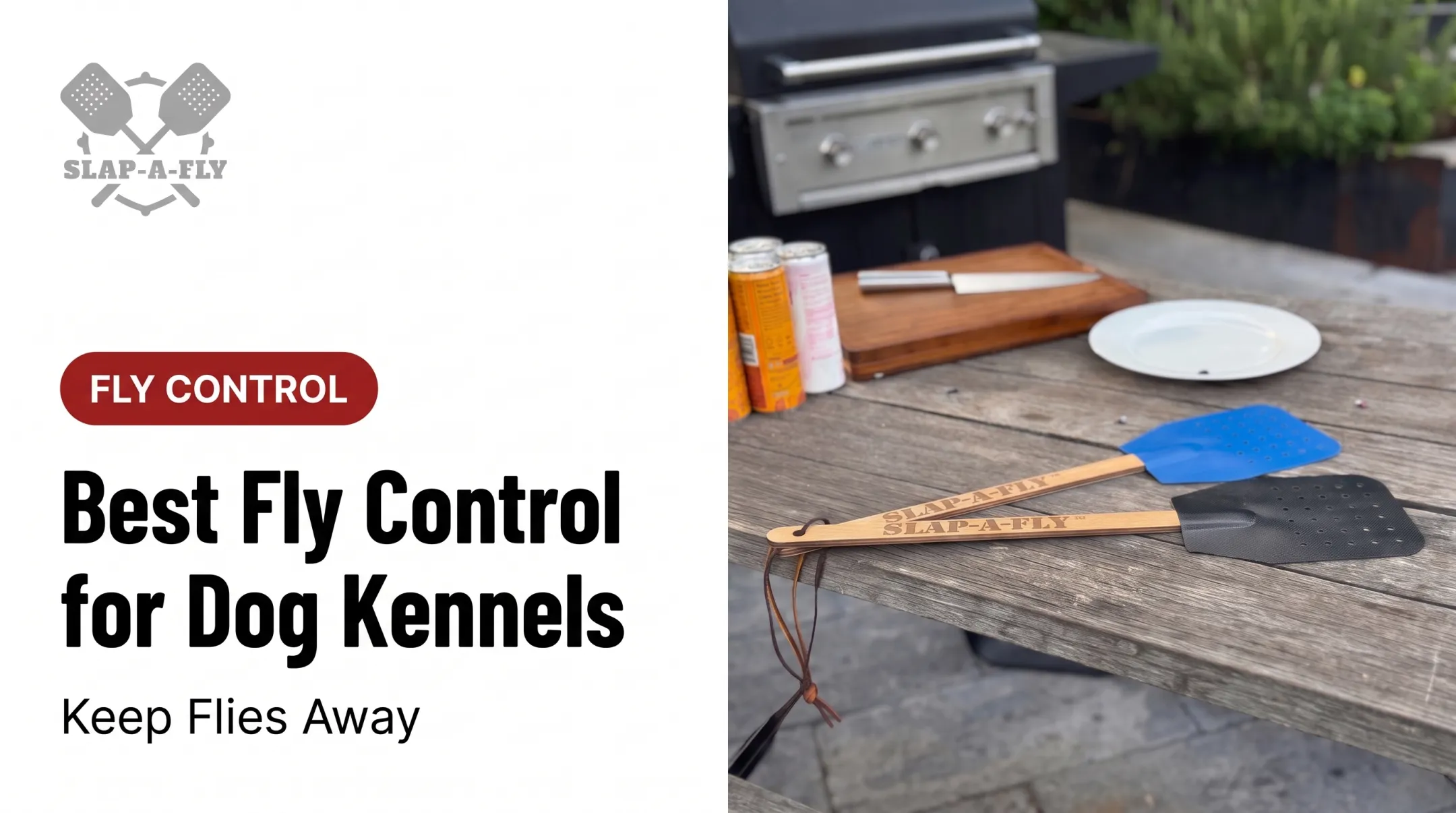
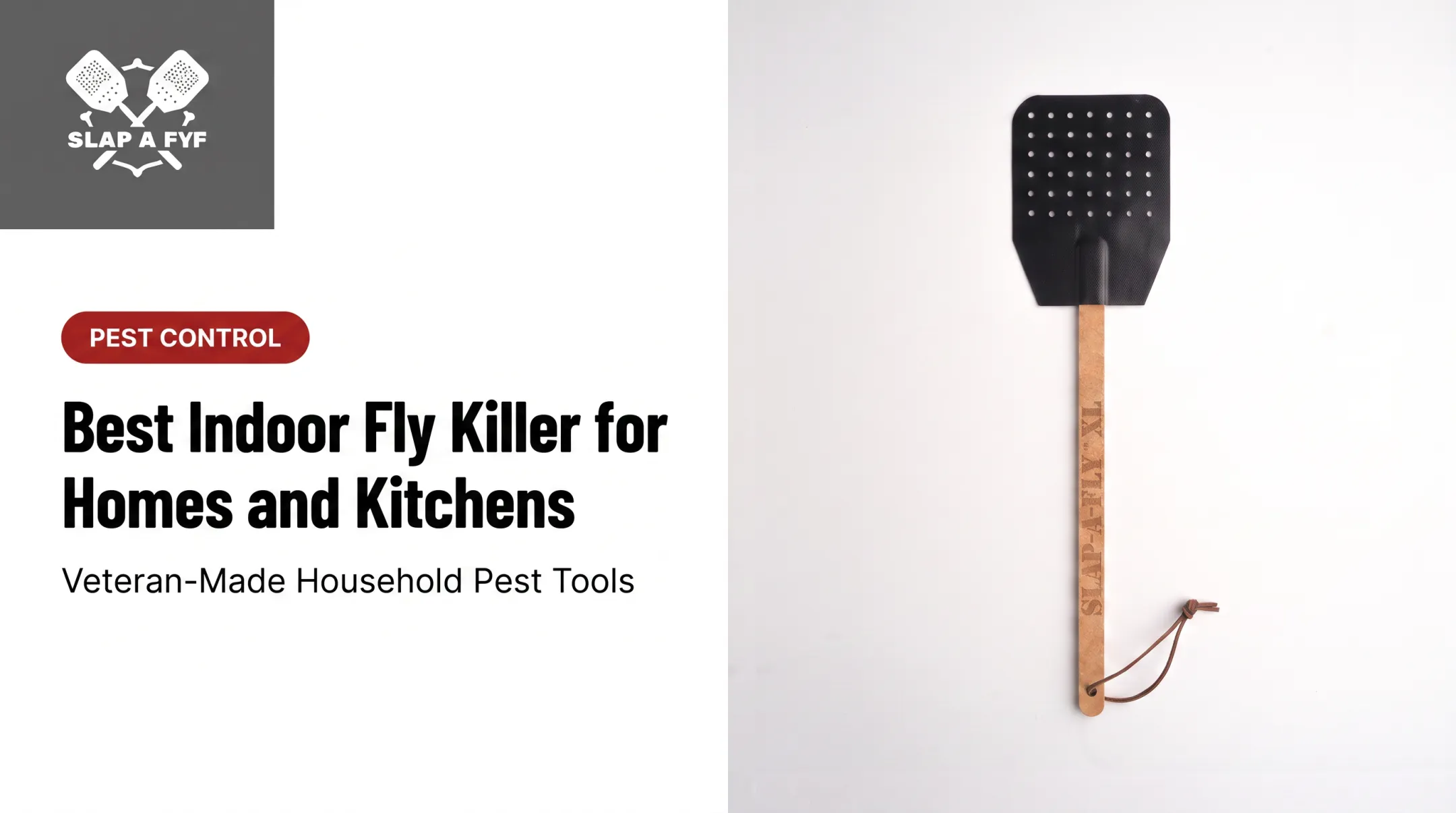
Slap-a-Fly builds for that moment instead of treating the swatter as disposable. The strike surface uses Herculite 80, a MIL-SPEC synthetic fabric rated for 80 PSI impact force - enough force for large tough bugs like cockroaches, wasps, and armored insects - not just flies, with polyester scrims that resist tearing under repeated hits. The perforated head cuts air resistance on the swing, so you get faster, more accurate strikes at table distance.
A 5-ply aircraft spruce handle—the same wood grade used in aircraft cargo construction—keeps the swing sturdy rather than springy or brittle. A storage loop on the handle end lets it hang near the dining area instead of sitting on the counter or disappearing into a drawer.

- Standard model: $19.99 (regularly $35.99) for everyday table and kitchen use
- XL model: $24.99 (regularly $35.99) for extended reach and a larger strike surface
- Exterminator 4-pack: $42.99 (regularly $54.98) for one in every room or entry point
One food-safety note: wipe the strike surface between uses and never swat directly over exposed food. Insect body parts can contaminate food, so hit flies in the air or on nearby surfaces, not on the plate itself.
Combining Methods: A Practical Fly Defense Setup
No single tool wins this fight. Here's how the layers stack up by setting:
- Picnics and outdoor buffets: Fly-repellent fan or mesh food covers as the first line, swatter as backup for anything that slips through
- Commercial kitchens: Sanitation protocols (sealed waste, no standing spills) paired with a durable swatter for spot elimination
- Backyard BBQs: Citronella candle at a safe distance from the table, plus a swatter kept on a hook nearby
- Rural and farm households: Barn flies are relentless, and sanitation alone won't stop them. Pair a heavy-duty swatter with a fan setup where breeding material is hard to eliminate fully.
The order matters less than the redundancy. Prevention lowers fly pressure, a repellent handles the ambient threat, and a swatter closes the gap when the first two layers aren't enough.

Frequently Asked Questions
What will keep flies away from food?
Essential oils like citronella, clove, and eucalyptus have shown lab-tested repellency, and mesh food covers add a physical barrier. Combined with sealed trash and quick spill cleanup, these cover most of the problem.
What is the best fly repellent for tables?
It depends on the setting: citronella candles for open-air dining, essential oil diffusers for enclosed patios, or a fan-based repellent for direct tabletop use. Each has different maintenance needs.
Is there a fan that can keep flies away from food?
Yes. Battery-powered fans with holographic or reflective blades use motion and light disruption to deter flies without chemicals. Independent lab testing on these specific products is still limited.
What are some good fly swatters for tables?
Look for a compact, durable option with a wipeable surface and a hanging loop. Slap-a-Fly's Herculite 80 swatters are built for repeated table-side use without bending or breaking.
How often should fly repellents be reapplied or replaced near food?
Essential oil diffusers typically need reapplication every 30 minutes to 2 hours. Candles and fans run longer between changes — some candles last around 70 hours per burn.
Can flyswatters be used safely around food without contamination?
Yes, with care. Wipe the strike surface between uses and avoid swatting directly over exposed food to prevent contact contamination from insect debris.