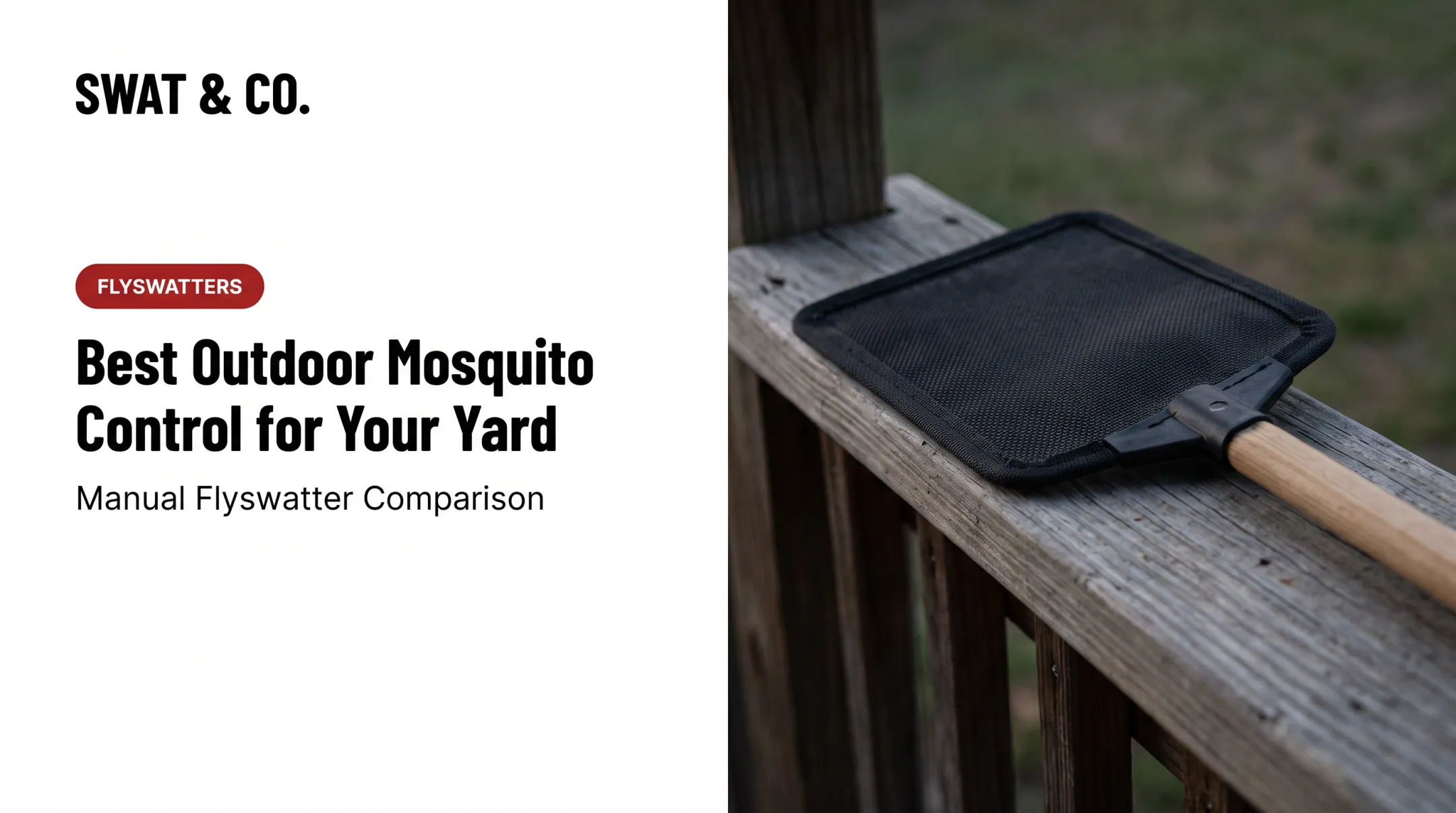
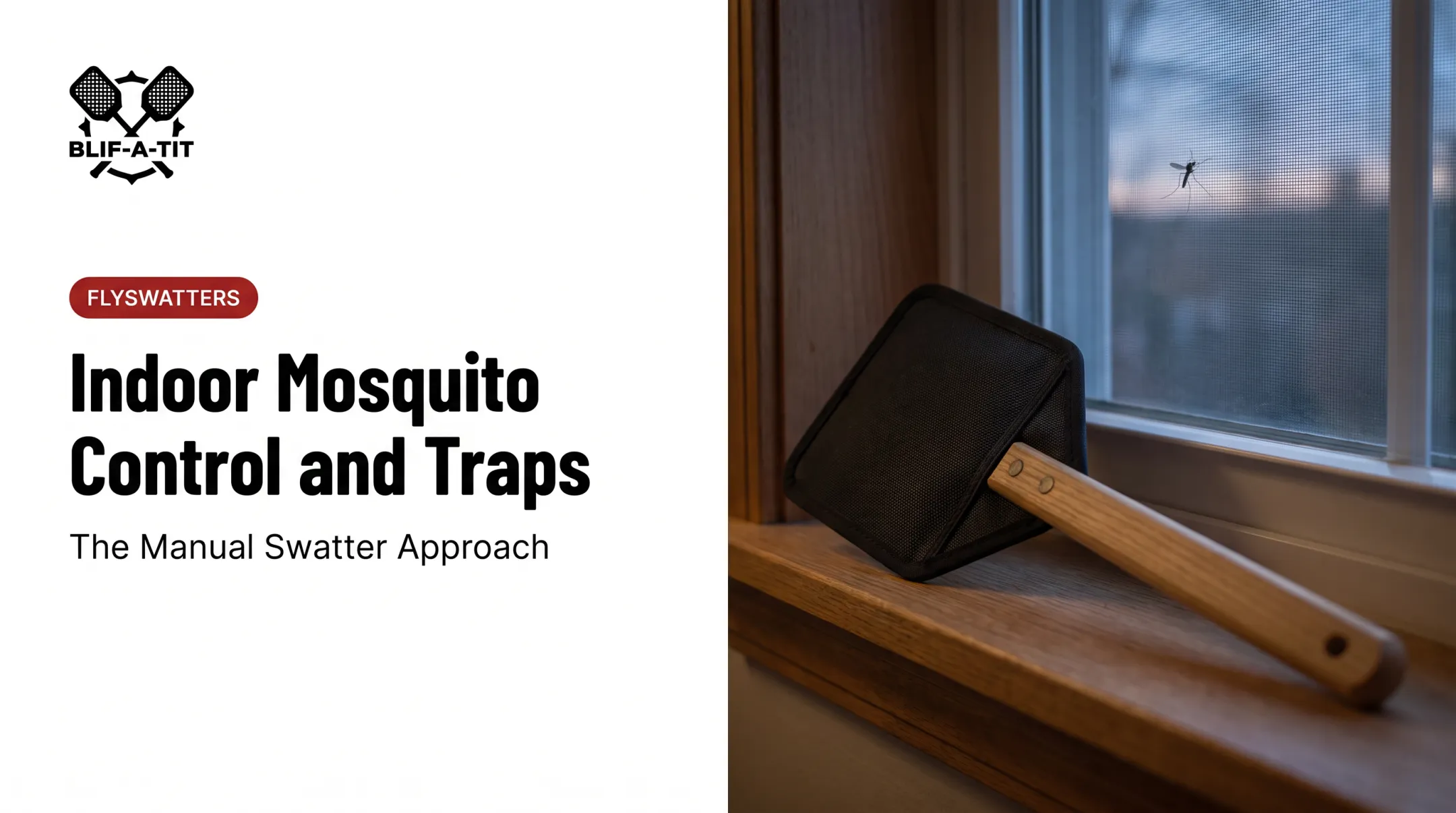
Not every control method works the same way. Some give instant relief. Others prevent problems weeks before they start. Some need batteries or propane; others just need your arm.
This guide breaks down the top mosquito and fly control options available to US homeowners right now, comparing traps, repellents, professional treatments, and the humble-but-mighty flyswatter.
TL;DR
- Combine three layers: standing-water removal, a trap or repellent system, and a reliable manual backup tool.
- Chemical options (sprays, misting systems) act fast but carry environmental and safety tradeoffs.
- Mechanical tools, like a heavy-duty flyswatter, offer zero-chemical control with no recurring cost.
- Match the method to the space: source control outdoors, traps at entry points, and a durable swatter for instant indoor kills.
Overview of Mosquito & Fly Control in the US Market
Mosquito and fly control covers a wide range of tools: CO2 traps, spatial repellent systems, on-body sprays, misting barriers, and manual swatters. Demand has grown with the outdoor living boom—more decks, fire pits, and backyard dinners mean more time spent where these pests thrive.
The broader US pest-control market reflects that growth. IBISWorld reports the industry at $29.7 billion in 2026, growing 1.8% that year with a 3.4% compound annual growth rate since 2021. That figure spans all pest categories, not mosquitoes and flies alone, but it signals how much households are spending to keep pests out.
Below are the main products and methods US households use for both pests, from a single patio problem to a whole-yard infestation.
Top / Best Mosquito and Fly Control Solutions in the US
Best Mosquito and Fly Control Solutions in the US
We evaluated each option on effectiveness, safety, ease of use, durability, and value for money.
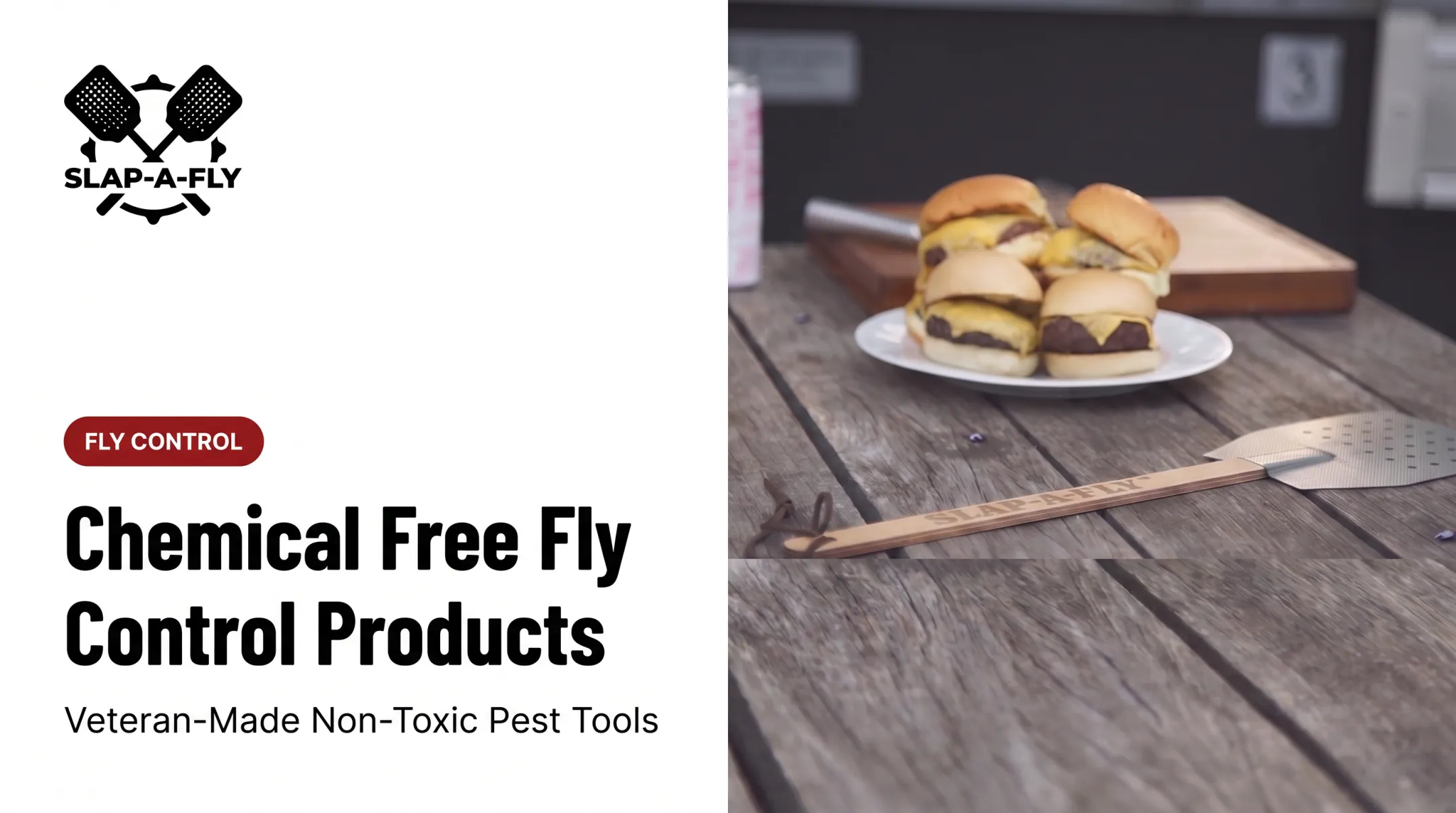
Slap-a-Fly™ Military-Grade Flyswatter
Slap-a-Fly is a veteran-owned, American-made brand built by U.S. Army veterans who applied military engineering standards to the everyday flyswatter. The Standard and XL models use Herculite 80 MIL-SPEC fabric, rated for 80 PSI of impact force - enough force for large tough bugs like cockroaches, wasps, and armored insects - not just flies - paired with a 5-ply aircraft spruce handle (the same wood used in military cargo planes).
Why it stands out:
- Zero chemicals — no sprays, no batteries, no cartridges to replace
- Built to withstand thousands of strikes without losing tension
- Perforated strike surface reduces drag for faster, more accurate swings
- XL model's extended handle keeps you at a safer distance from wasps and bees
- Storage loop for easy hanging in a kitchen or garage
It won't replace a trap or repellent system that covers your whole yard. Keep one handy for the fly that slips past your screen door or the mosquito that lands on your porch.
| Best For | Coverage | Price Range |
|---|---|---|
| Instant, chemical-free kills | Single-target, hand-operated | $19.99–$42.99 (one-time purchase, no refills) |

Thermacell LIV On-Demand Repellent System
This app-controlled spatial repellent system creates mosquito-free zones on patios and decks using metofluthrin, an EPA-registered active ingredient. You control it from your phone, and it doesn't blanket-spray your whole yard.
The current LIV 1.5 covers roughly a 20-foot zone (about 315 sq. ft.) per unit, priced at $319 for a single repeller. Thermacell's newer LIV 2.0, launched in 2026, claims up to 3,140 sq. ft. of coverage per hub with 10 repellers, at an MSRP around $1,746.
| Best For | Coverage | Price Range |
|---|---|---|
| Patio/deck zone protection | ~315 sq. ft. per unit (LIV 1.5) | $319–$1,746+ depending on configuration |
Mosquito Magnet® Traps (Patriot Plus / Executive)
These propane-powered CO2 traps lure mosquitoes with heat, moisture, and carbon dioxide, then vacuum them into a net using patented CounterFlow Technology. Trapped mosquitoes dehydrate and die inside.
The Patriot Plus lists at $399.99 (sale) or $505.99 (regular), claiming coverage up to one acre. Running continuously, a propane tank and attractant last about 21 days, and replacement nets run around $19.50.
| Best For | Coverage | Price Range |
|---|---|---|
| Whole-yard mosquito reduction | Up to 1 acre | $399.99+ plus recurring propane/net costs |

EPA-Registered Insect Repellent Sprays (DEET/Picaridin-based)
For personal protection while camping, hiking, or just sitting outside, on-body sprays remain the fastest option. Consumer Reports found 25%–30% DEET products delivered the most consistent protection, with top performers lasting 7 hours or longer. For those avoiding DEET, 20% picaridin performed comparably well.
| Best For | Coverage | Price Range |
|---|---|---|
| Personal skin protection | Individual use only | Under $15 |
Professional Yard Misting/Barrier Treatments
Licensed pest control companies apply targeted treatments to shrubs, tree lines, and standing-water zones. Mosquito Joe states its barrier sprays protect for up to 21 days and recommends reapplication roughly every three weeks during peak season.
This route works best for severe infestations, since technicians identify breeding spots you'd likely miss on your own.
| Best For | Coverage | Price Range |
|---|---|---|
| Severe yard infestations | Full property | Recurring service fees, higher long-term cost |

How We Chose the Best Mosquito & Fly Control Options
Two mistakes show up constantly in mosquito and fly control:
- Relying on bug zappers or ultrasonic devices. Notre Dame studies reviewed by the American Mosquito Control Association found mosquitoes were only 4.1% to 6.4% of zapper catches, with no measurable drop in yard mosquito counts. Just 0.13% of insects killed were biting females.
- Ignoring standing water. No trap or spray fully compensates for breeding sites left untreated in gutters, planters, or old tires.

We evaluated every option against:
- Proven effectiveness — EPA registration or independent testing, not marketing claims
- Safety — families and pets
- Cost versus coverage area — purchase price plus ongoing consumables
- Ease of maintenance — how much upkeep each method demands
Conclusion
No single product wins outright. The best approach layers three tactics:
- Remove standing water to cut breeding sites
- Use a proven trap or repellent system for zone or yard-wide coverage
- Keep a reliable manual backup for the stragglers that always slip through
Match the solution to your actual problem.
- Patio gatherings call for a Thermacell LIV
- A full acre with a serious mosquito issue points toward a Mosquito Magnet or professional service
- Camping trips need a DEET or picaridin spray in your bag
For the fly that dodges your screen door or the mosquito that outlasts your repellent zone, a military-grade Slap-a-Fly™ flyswatter earns its spot in the kitchen drawer or camping bin. No chemicals, no batteries, no expiration date.
Frequently Asked Questions
What is the most effective mosquito and fly repellent?
EPA-registered sprays with 25%–30% DEET test best for personal protection, per Consumer Reports. For zone coverage on a patio or deck, spatial systems like Thermacell LIV perform well without body application.
What insecticide is effective against both mosquitoes and flies?
Pyrethrin/permethrin-based insecticides, used in professional misting systems, target both pests effectively. These are toxic to all insects, including beneficial ones, so label instructions matter.
Do bug zappers actually work against mosquitoes?
Not really. Controlled studies cited by the American Mosquito Control Association found mosquitoes made up only 4.1%–6.4% of zapper catches, with no measurable drop in mosquito populations.
How can I get rid of mosquitoes and flies without chemicals?
Remove standing water, install screens, use fans to disrupt flight patterns, and keep a heavy-duty flyswatter on hand for anything that gets through.
When does mosquito and fly season start in the US?
Mosquitoes become active around 50°F; flies ramp up in the 60s. Both peak in summer humidity. Climate Central found the Southeast and South now see mosquito-favorable conditions over 50% of the year.
How often should professional mosquito treatments be applied?
Most companies recommend reapplication every three to four weeks during peak season, since barrier sprays typically protect for about 21 days before wearing off.