Flies aren't just a nuisance, either. They travel from garbage, manure, and decaying matter before landing on your food, carrying bacteria along the way. This guide breaks down why outdoor flies show up in the first place, how to prevent them, which DIY traps actually help, and what to do about the flies already crashing your party.
Key Takeaways
- Remove food and moisture sources first — sanitation is the foundation of outdoor fly control
- DIY traps and natural repellents cut fly numbers, but rarely wipe an outdoor problem out
- A heavy-duty flyswatter knocks down flies already buzzing around you right now
- Persistent or large infestations usually mean it’s time to call professional help
Why Are There So Many Flies Outside?
Unlike ants or bees, flies don't live in colonies tied to one nest. They're highly mobile, drifting in from neighboring yards, nearby farms, or the dumpster down the block, all searching for food and moisture. That's why you can clean your own yard thoroughly and still get swarmed: your neighbor's trash can is doing the damage.
Common attractants include:
- Uncovered garbage cans and dumpsters
- Pet waste left in the yard
- Compost piles and fallen fruit under trees
- Grill drippings and food scraps
- Standing water in gutters, buckets, or birdbaths
The reproduction math explains why populations explode so fast. A female house fly can lay 350 to 900 eggs over her lifetime, according to UNH Extension, often in batches of 75-150 at a time.
In warm weather, those eggs can mature into adults in as little as 7-10 days, per University of Florida research. That's why a mild population one week turns into a swarm the next: heat and humidity fast-forward the fly life cycle.

Common Outdoor Fly Species
Not every fly is the same, and identification changes how you fight back:
- House flies – Gray, four-striped, don't bite. Drawn to garbage and decaying matter.
- Blow flies – Metallic green or blue, attracted to carrion and rotting material. A cluster of these often means something dead is nearby.
- Biting flies (horse, deer, and stable flies) – Blood-feeders that breed near moist vegetation and manure. Only females bite among horse and deer flies; both sexes of stable flies bite, per Oxford Academic.

Prevention: Removing What Attracts Flies
You can't repel your way out of a fly problem if you're still feeding them. Prevention starts with cutting off their food and water supply.
Trash and compost management:
- Use bins with tight-fitting lids, not loose covers
- Rinse cans regularly to remove residue that flies smell from yards away
- Keep bins away from doors, patios, and seating areas
Pet waste and yard care:
- Pick up pet waste daily, not weekly
- Rake fallen fruit from under trees before it rots
- Clear grass clippings promptly after mowing
Moisture control: Flies breed in damp organic matter, so standing water is a nursery. Cut that habitat off:
- Clean out clogged gutters
- Fix leaky spigots
- Dump anything holding stagnant water
This single step often does more than any spray or trap combined.

DIY Traps and Natural Repellent Methods
DIY methods have a role, but they're a supplement to prevention, not a replacement for it.
Apple cider vinegar trap: Fill a jar with vinegar and a drop of dish soap, cover with plastic wrap, and poke small holes. Flies get lured in by the scent, land on the soapy surface, and drown.
University guidance on this trap centers mostly on fruit flies rather than outdoor house or blow flies. Treat it as a mild assist, not a guaranteed fix.
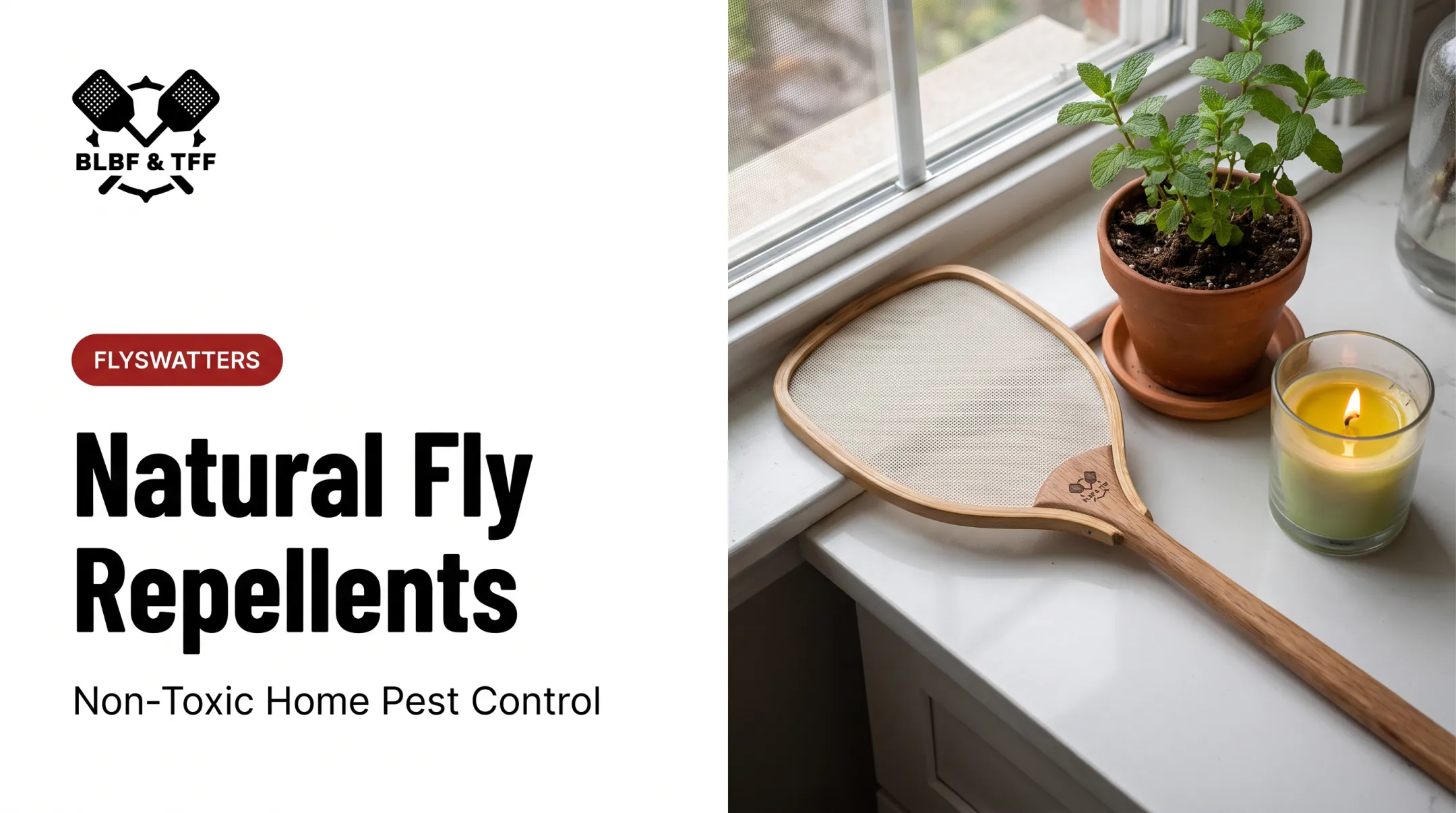
Essential oils and herbs: Citronella, peppermint, eucalyptus, and lavender are commonly cited as fly deterrents. Lab studies show some activity, but nothing that translates into reliable open-air protection.
Planting basil, mint, or marigold near seating areas may offer a light deterrent effect, though scent dissipates quickly outdoors.
Trap placement matters more than the trap itself:
- Place traps 20-30 feet from where people sit or eat
- Keep traps off the table — one next to diners pulls more flies toward your guests before they die in it
Box fans and the classic "penny in a bag of water" trick can offer short-term relief at the table, but the effect is limited and temporary.
Natural repellents reduce activity around the edges. They won't solve a genuine infestation on their own.
Instant Fly Elimination: Handling the Flies Already Around You
Traps and prevention work over time. They don't help when a fly is currently circling your burger. For that, you need direct, immediate action, and that's where a serious flyswatter earns its place on the patio table.
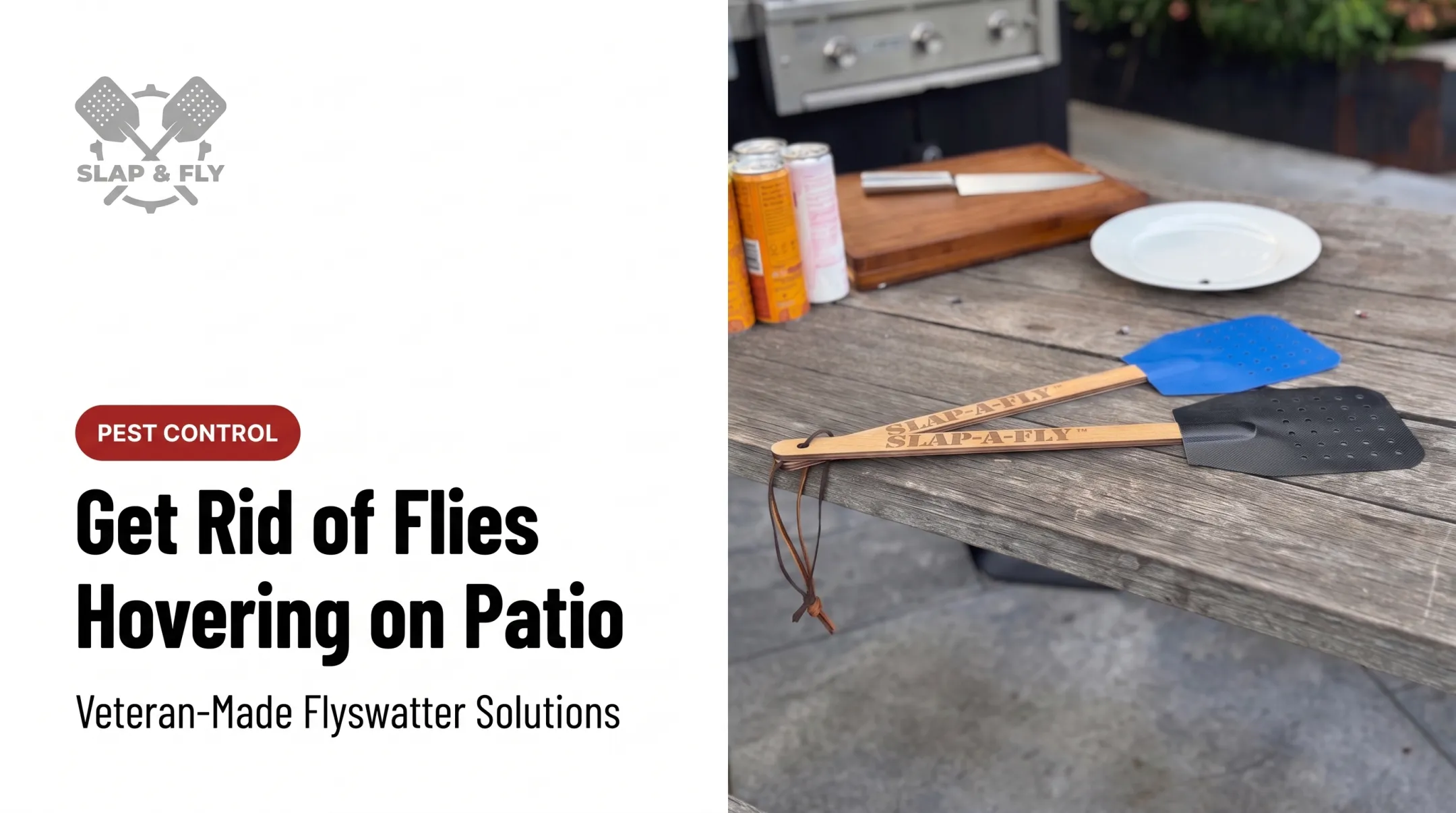
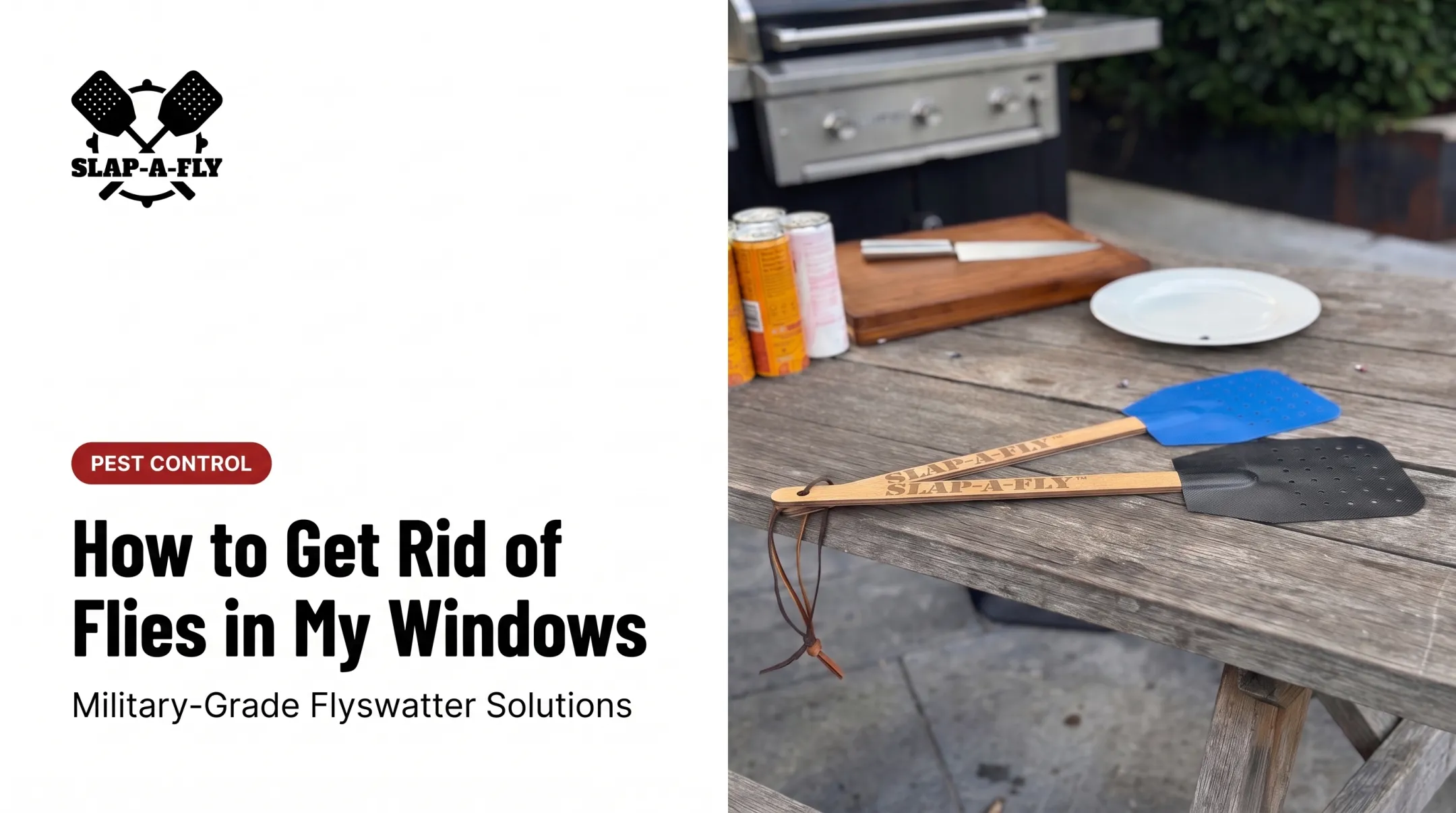
Slap-a-Fly™ is built by U.S. Army veterans tired of flimsy plastic swatters that bend, crack, or miss. It's constructed from:
- Herculite 80 MIL-SPEC fabric – military-grade synthetic delivering 80 PSI of impact force per strike - enough force for large tough bugs like cockroaches, wasps, and armored insects - not just flies - with weft-inserted polyester scrims for tear resistance
- 5-ply aircraft spruce handle – aerospace-grade wood used in military cargo planes, chosen for strength-to-weight ratio and shock absorption
- Perforated strike surface – cuts air resistance so the swatter moves faster and lands more accurately
- Storage loop – hangs near the grill or back door between uses

For bigger threats like wasps and bees at a backyard gathering, the XL model adds an extended handle and larger strike surface—more distance between your hand and anything that stings back.
Both models are built for the outdoor grind: BBQs, camping trips, patios, and rural properties where a dollar-store swatter falls apart after a week.
Current pricing:
- Standard: $19.99
- XL: $24.99
- Exterminator 4-pack: $42.99 for households or properties that need several on hand
When to Call a Professional
If you've sealed the trash, cleared the pet waste, fixed the moisture problems, and you're still swarmed, the issue is probably bigger than your yard. Recurring or large-scale infestations often traces back to a neighboring farm, a dumpster nearby, or a breeding site you can't access.
Professional outdoor fly control services typically:
- Evaluate fly travel patterns across the surrounding area
- Identify breeding sources you might not see, like a hidden dead animal or a neighbor's manure pile
- Set up traps and barriers away from your living and seating spaces
If DIY sanitation hasn't budged the problem after a few weeks of consistent effort, contact a licensed pest control provider. They can diagnose what's actually feeding the swarm.
Frequently Asked Questions
Why are there so many flies this year?
Warm, humid stretches speed up the fly breeding cycle, letting eggs mature into adults in as little as a week. New attractants nearby, like a neighbor's trash or fallen fruit, can also trigger sudden surges.
What smells keep flies away outside?
Citronella, peppermint, eucalyptus, and vinegar sprays offer mild, short-lived deterrent effects. They work best tableside, not as a yard-wide standalone fix.
Do outdoor fly traps really work?
They can, but placement is everything. Traps set 20-30 feet from your seating area lure flies away from guests; traps placed too close can actually draw more flies toward the table.
Do all outdoor flies bite?
No. House flies don't bite at all, but horse, deer, and stable flies do. These biting species tend to breed near moisture and decaying vegetation rather than garbage.
How long do flies live, and why do populations grow so fast?
Adult house flies typically live 15-25 days, but a single female can lay hundreds of eggs during that window. Combined with a fast egg-to-adult cycle, populations rebound quickly even after you've cleared out visible flies.