The good news: you probably have everything you need to fight back already sitting in a drawer. Leather scraps, an old window screen, even a plastic bottle can become a functional fly swatter in minutes. But there's a ceiling to what homemade tools can handle, especially in kitchens, barns, or campsites where fly pressure never lets up.
This guide covers DIY swatter designs, no-tool tricks, bait traps that actually work, and prevention habits that cut fly problems at the source.
Key Takeaways
- Homemade swatters from leather, mesh, or plastic bottles take under 15 minutes to build
- Aim slightly ahead of a fly's position — they detect air pressure changes and dodge before impact
- Protein-based bait (like raw shrimp) often outperforms sugar water for outdoor fly traps
- Combining swatting, trapping, and prevention delivers the best long-term results
Why Flies Are Hard to Catch (and How to Improve Your Odds)
Flies aren't just lucky. Their biology gives them a real edge over your swinging hand.
They see the world in slow motion. According to Florida International University research, some flies can resolve up to 250 flashes of light per second, compared to roughly 60 for humans. That means your fast swing looks sluggish and telegraphed to them.
They also sense danger before you even make contact. Caltech researchers found that fruit flies calculate an incoming threat's location and reposition their legs for takeoff in about 100 milliseconds. That's faster than you can finish the thought "got it."
Common swatting mistakes include:
- Using solid paddles that push a wave of air ahead of the strike, tipping the fly off early
- Aiming directly at the fly's body instead of its likely escape path
- Swinging from too far away, giving the fly extra time to react
Perforated surfaces work better. Flies use tiny body hairs to detect air currents, giving them a built-in early-warning system. A solid swatter head pushes a pressure wave ahead of itself. A slotted spatula or mesh swatter lets air pass through, so it arrives with far less warning.

Timing helps, too. Flies are noticeably more sluggish in cooler temperatures, so early morning or evening swats tend to land more often.
DIY Homemade Fly Swatter Ideas
You don't need a workshop. Here are five options using stuff you already own.
Leather Fly Swatter
Materials: Thick scrap leather, a leather punch, a wooden dowel, strong glue, and string.
- Cut leather into a paddle shape (roughly 4x6 inches)
- Punch small holes across the surface to cut air resistance
- Glue the paddle to the dowel and wrap with string for a secure grip
- Let dry overnight before use
This one's sturdy enough to hang by a hook and reuse for months.
Fabric or Mesh Swatter
Materials: Window screen or fine mesh, a ruler or thin stick, heavy tape or a fabric scrap, stapler (optional).
- Cut the mesh into a paddle shape
- Attach it to the handle with tape or a stapled fabric sleeve
Natural perforation keeps air resistance low, so this five-minute build connects more often than a solid paddle.
Plastic Bottle Swatter
Materials: Empty plastic bottle, scissors, a nail or hole punch.
- Flatten the bottle and cut it into a paddle shape
- Punch a grid of small holes across the surface
Lightweight, disposable, and free.

Rolled Newspaper or Magazine Swatter
Roll several sheets tightly and secure with tape or a rubber band. It's the fastest option on this list, ready in under a minute, though it lacks the perforation that improves strike odds.
Sticky Fly Paper (Non-Swatting Alternative)
Materials: Honey, sugar, water, and brown paper strips.
- Mix equal parts honey, sugar, and water
- Brush the mixture onto the strips
- Hang them near (not directly above) problem areas
This is a vegan, non-toxic alternative to old-school flypaper, which historically contained arsenic as a stickiness agent, according to a WIRED history piece.
No Swatter Handy? Household Alternatives That Work
Caught off guard? These tricks don't require any building at all.
- Clap-above technique: Cup your hands and clap slightly above the fly's landing spot. As it startles upward, it flies straight into your palms.
- Slotted spatula or damp dishtowel: A slotted spatula cuts air resistance for a faster swing; a damp towel adds weight and snap for more force than a dry cloth.
- Catch-and-release: Trap the fly under a cup, slide cardboard underneath, then release outside. A vacuum crevice attachment works too if you'd rather skip the mess.
DIY Fly Traps and Baits for Ongoing Control
Swatting handles one fly at a time. Traps work while you sleep.
Building a Basic Trap
Add bait to a mason jar or plastic soda bottle first. Roll paper into a cone and set it inside with the wide end up and the tip pointing down toward the bait. Flies follow the scent in through the narrow opening but can't navigate back out.

What Bait Actually Works
According to University of Florida IFAS Extension, match the bait to the pest:
- Sugar water or honey mixtures: reliable for common houseflies
- Raw shrimp or other protein: attracts blow flies and bottle flies drawn to decaying matter
- Fermenting fruit or cider vinegar: stronger draw for fruit flies
In liquid traps, a drop of dish soap breaks surface tension so flies can't stay afloat once they land.
Placement tip: Set outdoor traps well away from patios, doorways, and dining areas. You want to lure flies away from your living space, not closer to it.
Prevention Tips to Reduce Fly Problems Long-Term
Traps and swatters manage adult flies. Prevention stops new ones from showing up.
- Seal trash containers tightly and clean them out regularly
- Clean up pet waste promptly, since it's a major breeding attractant
- Clear produce and spills promptly, especially in warm weather
- Check for decaying organic matter near the home, including rodent activity, which can signal hidden breeding sites
- Weatherproof entry points with intact screens and door sweeps
Sanitation remains the strongest long-term fix—ahead of any trap or spray.
When DIY Isn't Enough: Choosing a Heavy-Duty Fly Swatter
Homemade swatters are great for occasional use, but mesh stretches, plastic cracks, and rolled newspaper falls apart after a few solid hits. In high-fly environments like farms, restaurant kitchens, or campsites, that's a problem you'll face weekly.
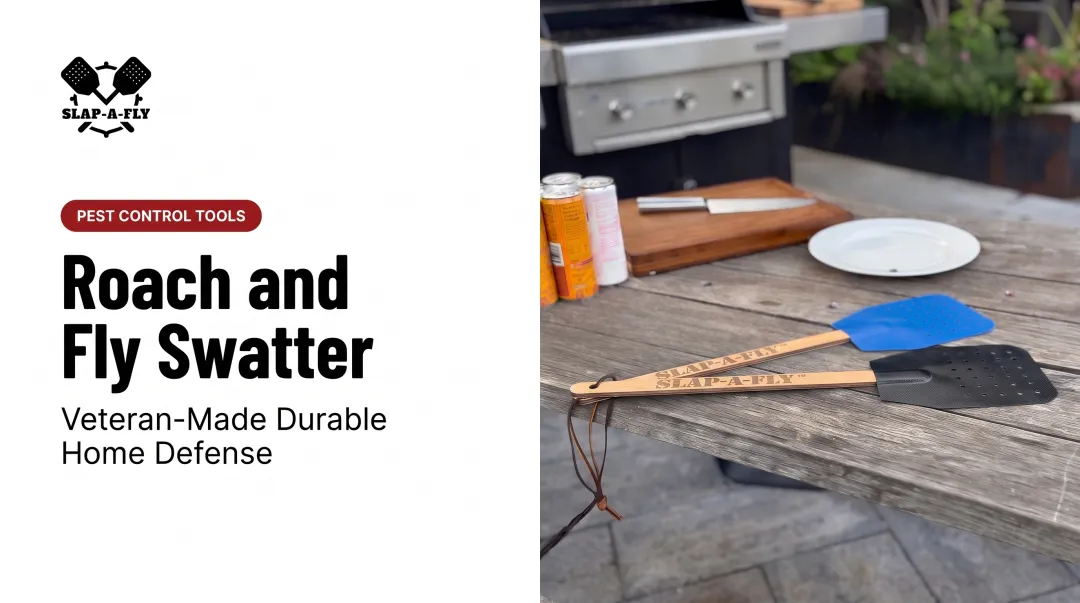
That's where Slap-a-Fly™ comes in. Designed by U.S. Army veterans, it uses military-grade Herculite 80 fabric, a perforated synthetic surface built with weft-inserted polyester scrims for tear resistance. It's rated for 80 PSI impact force - enough force for large tough bugs like cockroaches, wasps, and armored insects - not just flies - and paired with a 5-ply aircraft spruce handle, the same wood category used in cargo aircraft construction.
- Standard model ($19.99): Classic size for household and commercial pests like flies, gnats, and small spiders
- XL model ($24.99): Extended handle for safer distance when dealing with wasps, bees, and larger insects
- Exterminator 4-pack ($42.99): Four swatters for multi-room households, restaurants, or commercial kitchens

All three options include a storage loop for hanging near a back door or kitchen entry, so the swatter stays accessible instead of buried in a drawer. For farms, restaurants, and other high-fly spots, tear-resistant fabric and a solid handle mean you’re not rebuilding a homemade swatter every week.
Frequently Asked Questions
What is the best homemade fly repellent?
Eliminating food sources like rotting fruit or unwashed containers usually beats any repellent spray. Simple vinegar or essential oil sprays can offer mild deterrent effects near entry points.
What household item kills flies instantly?
A slotted spatula, rolled newspaper, or a firm clap aimed slightly above the fly all work well. Perforated or slotted surfaces reduce the air pressure that tips flies off before impact.
How do you make a homemade fly trap that actually works?
Insert a paper cone into a mason jar or bottle, then add a strong-smelling protein bait like raw shrimp or fermented fruit. The cone lets flies in but blocks their exit.
Can you make a fly swatter out of household materials?
Yes. Leather, window screen mesh, and flattened plastic bottles all work well as swatter paddles when punched with small holes and attached to a handle.
Why do flies avoid being swatted?
Flies process visual information much faster than humans and can sense air pressure changes from an incoming object. Both give them a head start on dodging.
How can I keep flies out of my house permanently?
Focus on sanitation: seal trash, clean up pet waste quickly, and manage spills. Pair that with sealed entry points, screens, and door sweeps for lasting results.