Most store-bought sprays promise a quick fix, but they come loaded with chemicals you'd rather not spray near your food or pets. The good news? Natural methods work — if you use the right combination.
This guide covers effective homemade traps, how to actually break the breeding cycle for good, prevention tactics, and why a reliable flyswatter still earns a spot in your pest-control routine for the strays traps miss.
Key Takeaways
- Vinegar and fruit traps catch adults but leave larvae breeding in soil and drains
- Permanent control means disrupting eggs and larvae, not just what's already flying
- Combining traps, larvicides, and prevention beats any single method alone
- A durable flyswatter handles the fast movers that traps take days to catch
What Are Gnats and Fruit Flies (And Why Are They in Your Home)
Not all tiny flying pests are the same insect, and knowing which one you've got changes your strategy.
Fungus gnats are small, dark, mosquito-like flies about 1/16 to 1/8 inch long with slender legs and long antennae. According to UC IPM research, eggs hatch in roughly 3 days at 75°F, and a full generation can complete in about 17 days.
Fruit flies (genus Drosophila) look similar in size but tend toward light-to-dark brown coloring, sometimes with red eyes. Their complete life cycle can wrap up in just 8 to 10 days, per University of Wisconsin Extension.
Drain flies are fuzzier and darker than gnats or fruit flies.
Where they breed matters more than how they look:
- Fungus gnats: moist potting soil, decaying plant matter, and standing water
- Fruit flies: fermenting or rotting produce, forgotten onions and potatoes, and trash residue
- Drain flies: gelatinous slime that builds up inside drains and traps
The adults you see flying around are annoying but harmless. The real problem is out of sight. Fungus gnat larvae feed on plant roots and stunt houseplant growth. Fruit fly larvae mean rotting food or organic buildup is hiding in your kitchen.
Natural Homemade Traps That Actually Work
Traps are your first line of defense against the adults you can see. Here's what works, and where to put it. Apple cider vinegar + dish soap trap
- Fill a small jar or cup with apple cider vinegar and add one drop of dish soap.
- Cover with plastic wrap, secure with a rubber band, and poke a few small holes.
- Set it where activity is heaviest, usually the kitchen counter. The vinegar scent pulls gnats in. Soap breaks surface tension so they can't take off once they land. DIY fruit fly trap Fruit flies lock onto overripe produce. Drop a piece of very ripe banana or melon into a jar, cover with plastic wrap, and poke pinholes the same way as the vinegar trap. Per University of Florida IFAS, baited jars like this are especially effective against fruit flies. Wine or beer trap For stubborn adult gnats, leftover wine or beer in a jar (funnel optional) offers another fermented-scent lure. It's a good rotation option if vinegar traps have stopped catching much. Yellow sticky traps For fungus gnats specifically, cut yellow sticky cards into small squares and place them directly on the soil surface near the base of your plant pots. Adults are strongly attracted to yellow, and mass-trapping females can reduce the next generation of larvae. Candle trap for passive killing In a dark room, set a shallow dish of sugar water or diluted syrup near a lit candle. Gnats drawn to the light often end up in the liquid. Never leave a flame unattended; snuff it before you sleep if you won't be in the room. Use these as a first pass, not a full fix. IFAS extension research notes DIY traps can match store-bought ones, though results vary with infestation level. Traps only catch adults. Eggs and larvae keep breeding until you remove the source.

What Kills Gnats Permanently: Targeting Larvae and Breeding Sites
If you've been trapping adults for a week and still seeing gnats, larvae are still hatching in the soil.
Female fungus gnats lay eggs in batches directly into moist soil, and those eggs keep hatching long after you've swatted the adults. Permanent elimination means going after the breeding site itself.
Mosquito dunks / BTI bits Bacillus thuringiensis israelensis (BTI) is a bacterial larvicide that specifically targets fly larvae without harming plants, pets, or people. You'll find it in products like Mosquito Dunks and Mosquito Bits. The EPA-approved label for Mosquito Bits directs:
- Mix 4 tablespoons per 1 gallon of water
- Let it soak for 30 minutes
- Skim off floating granules (or strain through a nylon stocking)
- Pour enough treated water to fully wet the soil surface
- Repeat weekly for three weeks, then again if gnats reappear

Hydrogen peroxide soil drench Cornell Cooperative Extension notes that a mild solution (1 part 3% hydrogen peroxide to 4 parts water) poured directly over soil can help kill fungus gnat larvae on contact. It fizzes on contact with organic matter but breaks down into water and oxygen, making it a plant-safe option.
Diatomaceous earth A thin layer of food-grade DE sprinkled over the soil surface creates a barrier that makes it harder for adults to lay eggs. According to Ask Extension, it can also help reduce larvae populations over time.
For fruit flies specifically: there's no larvicide step needed. Removing rotting produce, cleaning drains, and taking out trash eliminates the breeding ground entirely, since fruit fly eggs need decaying organic material to survive.
Realistic timeline: Combining BTI treatments with consistent trapping typically takes one to three weeks to fully break the cycle, since you're waiting out the remaining eggs and larvae already in the soil.
Prevention: Keeping Gnats From Coming Back
Once you've cleared an infestation, a few habit changes keep it from returning.
- Refrigerate ripe produce or keep it in sealed containers instead of open bowls on the counter
- Let the top 1-2 inches of potting soil dry between waterings so fungus gnats can't breed
- Use pots with drainage holes to avoid standing water that draws gnats
- Scrub sink and floor drains regularly to clear organic slime where drain flies breed
- Empty trash often so food scraps don't sit in the bin overnight
- Inspect new houseplants for gnat activity before placing them near your other plants

When Traps Aren't Enough: Backup for Fast-Moving Pests
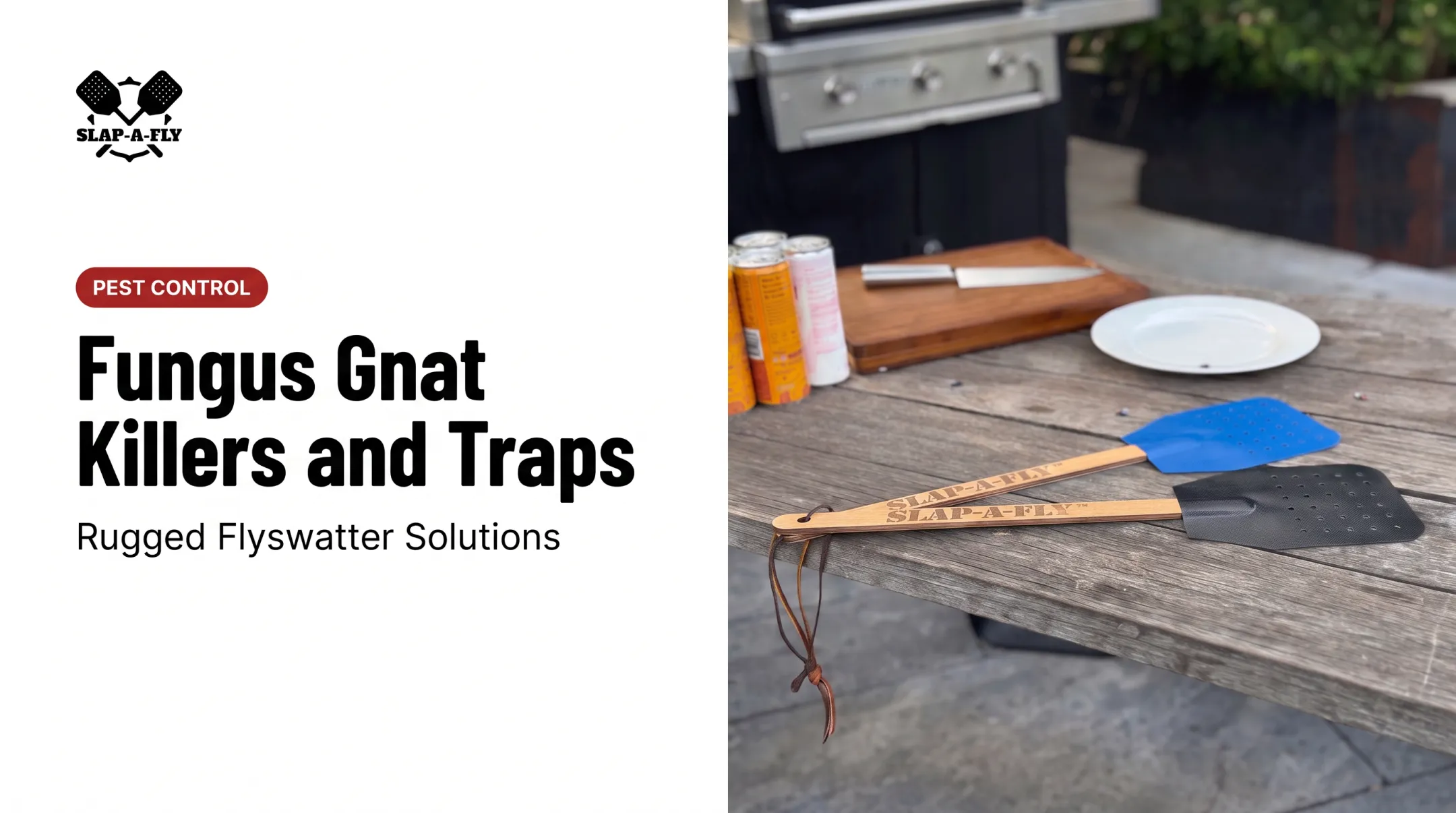
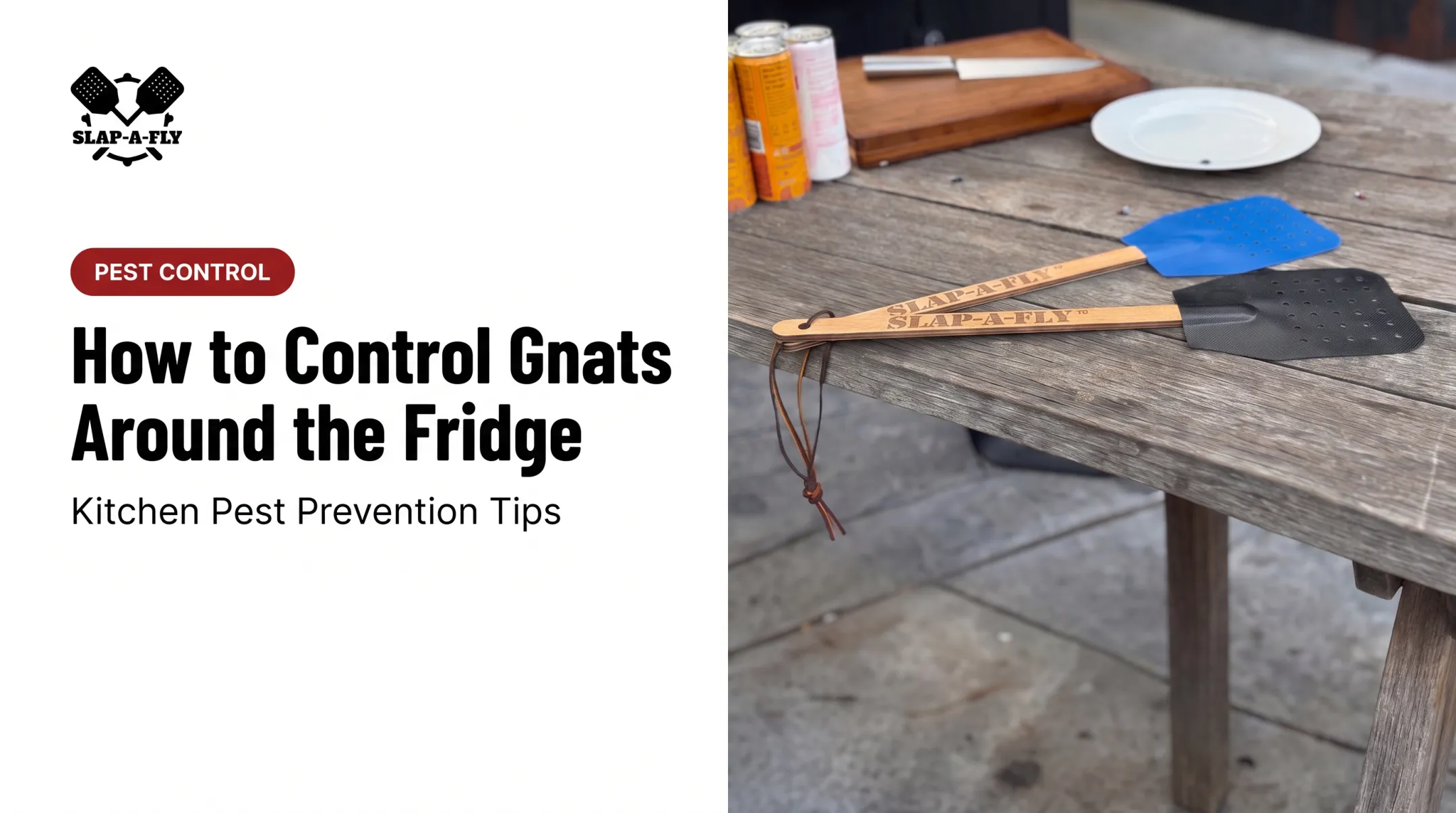
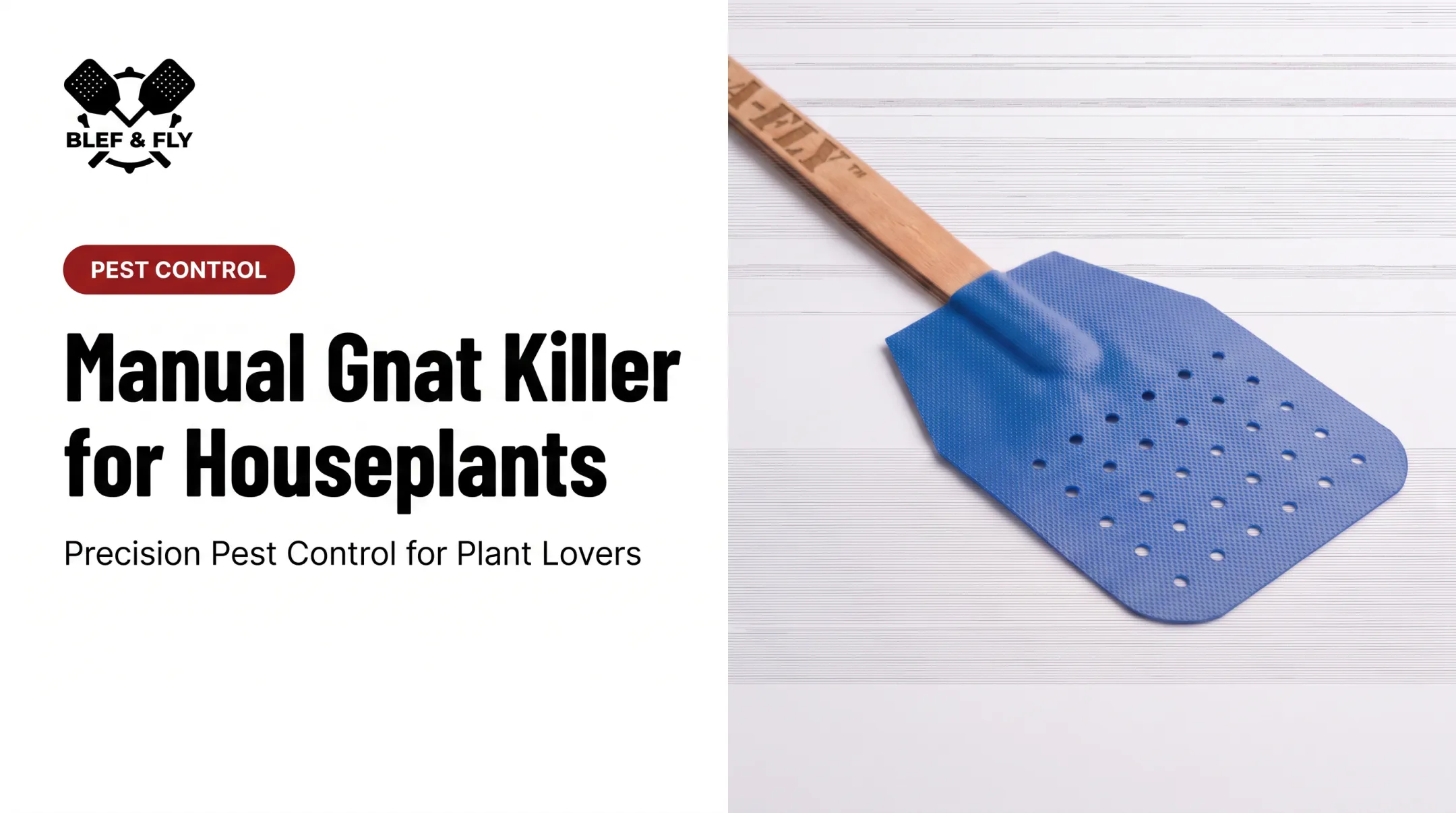
Here's the reality: natural traps take days to work. In the meantime, gnats and fruit flies are still buzzing around your kitchen while you're cooking dinner. That's where a flyswatter earns its place in your pest-control lineup. It's the only method that works instantly. Slap-a-Fly's standard model is built with gnats and fruit flies as core target pests. The striking surface uses Herculite 80 fabric, a military-spec synthetic material rated at 80 PSI of impact force - enough force for large tough bugs like cockroaches, wasps, and armored insects - not just flies - paired with a 5-ply aircraft spruce handle. That aerospace-grade wood is the same type used in military cargo planes for strength and shock absorption. What makes it useful against tiny, erratic fliers specifically:
- The perforated surface reduces air resistance during the swing, so it's easier to track fast, unpredictable movement
- The fabric holds tension instead of going floppy after a few uses, unlike typical mesh swatters
- It's rated to withstand thousands of strikes without losing shape It works well indoors in kitchens and dining areas during food prep, and outdoors at barbecues and patio meals—the same places fruit flies and gnats gather. Current sale pricing:
- Standard: $19.99
- XL (larger flying pests like wasps): $24.99
- Exterminator 4-pack (backup swatters for multiple rooms): $42.99 For a chemical-free household, the build is 100% vegan and made in the USA, designed by U.S. Army veterans. Keep one on hand so you can knock down stragglers the moment they appear, while your traps work over the following days.

Frequently Asked Questions
What kills gnats permanently?
Permanent elimination requires killing larvae with BTI-based products or hydrogen peroxide soil drenches, combined with removing moisture and rotting food sources. Trapping adults alone won't stop the breeding cycle.
How long does it take to get rid of a gnat infestation naturally?
Most natural methods take one to three weeks of consistent treatment, since you're waiting out the eggs and larvae already present in the soil or drains.
Do gnats bite humans?
Common household fungus gnats and fruit flies do not bite. Certain outdoor biting gnat species exist, but they're not the ones swarming your kitchen or houseplants.
Can apple cider vinegar traps get rid of gnats completely?
No. Vinegar traps catch adult gnats effectively but don't stop breeding in soil, drains, or food waste. Pair them with a larvicide like BTI for full control.
Why do I keep getting gnats even after cleaning?
Hidden breeding sites are the usual culprit — drain buildup, overwatered plant soil, or a forgotten piece of produce tucked behind other items in the pantry.
Is diatomaceous earth safe to use indoors around pets?
Food-grade DE is safe for indoor use when applied carefully. Wear a mask during application so you don't inhale the dust, and keep pets off treated areas until it settles.