Here's the good news: these bugs almost never mean your house is dirty. They're usually a sign of moisture, rotting produce, or damp soil somewhere nearby. Ignore the source, though, and the problem escalates quickly.
This guide walks through identification, root causes, a step-by-step elimination plan, and when it's time to stop DIY-ing and call in help.
TL;DR
- Four usual suspects: fruit flies, fungus gnats, drain flies, and phorid flies
- DIY works for most cases; professionals are needed for hidden or sewer-related sources
- Process: identify the species, remove the breeding source, trap/swat survivors, prevent return
- Call a pro if flies persist after cleaning or phorid flies suggest a broken drain line
What Are Those Little Flies in Your House?
"Little flies" isn't one species. The phrase covers several distinct bugs—fruit flies, drain flies, and fungus gnats—each with its own breeding habits. Treat them all the same way, and you'll likely fail.
These insects aren't random visitors. They're a symptom of an underlying moisture or organic-matter problem somewhere in your home. Fix that source and breeding stops; the remaining adults are then easy to clear.
Speed matters, too. Some of these flies can complete an entire life cycle in about a week under warm conditions, according to Oklahoma State University Extension. That's why a few stray flies today can become a swarm by next weekend.
Common Types of Little Flies (Identification Guide)
Treatment differs by species, so identification comes first. Here's how to tell them apart.
| Fly Type | Appearance | Common Breeding Site |
|---|---|---|
| Fruit fly | Tan/brown body, often red eyes, hovers near fruit bowls | Overripe produce, spilled juice, dirty recycling |
| Fungus gnat | Small, black, weak flier, near windows and houseplants | Overwatered potting soil |
| Drain fly | Fuzzy, moth-like wings, clings to walls near sinks/showers | Organic film buildup inside drains |
| Phorid fly | Dark, humpbacked, runs in erratic zig-zags | Decaying matter, broken sewer connections |
Fruit Flies
Pinhead-sized and tan to brown, often with bright red eyes. If they're orbiting a fruit bowl, open wine, or sticky recycling bin, you're dealing with fruit flies.
Fungus Gnats
Mosquito-like but they don't bite, and they're poor fliers. Clusters on potting soil or windowsills usually mean the soil stays too wet.
Drain Flies
Also called moth flies: fuzzy wings, tiny, and often sitting still on bathroom tile. They rarely dart the way fruit flies do.
Phorid Flies
Dark and humpbacked, with no red eyes. When you swat near them, they scurry in zig-zags more than they fly—common around trash, drains, or sewer-line issues.

Why Little Flies Keep Coming Back
Recurring flies almost always trace back to one of these conditions:
- Excess moisture — overwatered plants, leaky pipes, condensation trays
- Organic debris — rotting produce, garbage residue, dirty drains
- Entry points — torn screens, gaps around doors and windows
- Neglected cleaning — around appliances, under sinks, inside trash bins
Ignore any of these, and the population multiplies. Fruit flies alone can lay up to 500 eggs, mate within hours of emerging as adults, and start the cycle again about a day later, per Oklahoma State Extension.
That's how a handful of flies becomes a full-blown infestation in under two weeks.
How to Get Rid of Little Flies (Step-by-Step)
Spraying insecticide before finding the breeding source rarely fixes anything long-term. Follow this order instead.
Step 1: Identify the Exact Source
Walk through your kitchen, bathrooms, plant pots, and trash areas looking for moisture or decay. Note where flies cluster most: windows, sinks, or the fruit bowl usually tell you everything.
Drain check: Tape a piece of clear tape over a suspect drain overnight. Flies caught on the underside confirm it's breeding there.
Step 2: Confirm the Fly Type
Match what you're seeing to the identification table above. Rule out larger flies (house flies, blow flies) — they rarely breed indoors and need a different approach entirely. Don't reach for a spray until you've confirmed the source; guessing wrong just means repeat infestations.

Step 3: Eliminate the Infestation Based on the Cause
If it's a moisture/soil issue (fungus gnats):
- Let soil dry out completely between waterings
- Repot with fresh soil if the problem persists
- Use yellow sticky traps to catch adults
If it's a food/produce issue (fruit flies):
- Remove overripe fruit and clean recycling bins
- Set a vinegar-and-dish-soap trap
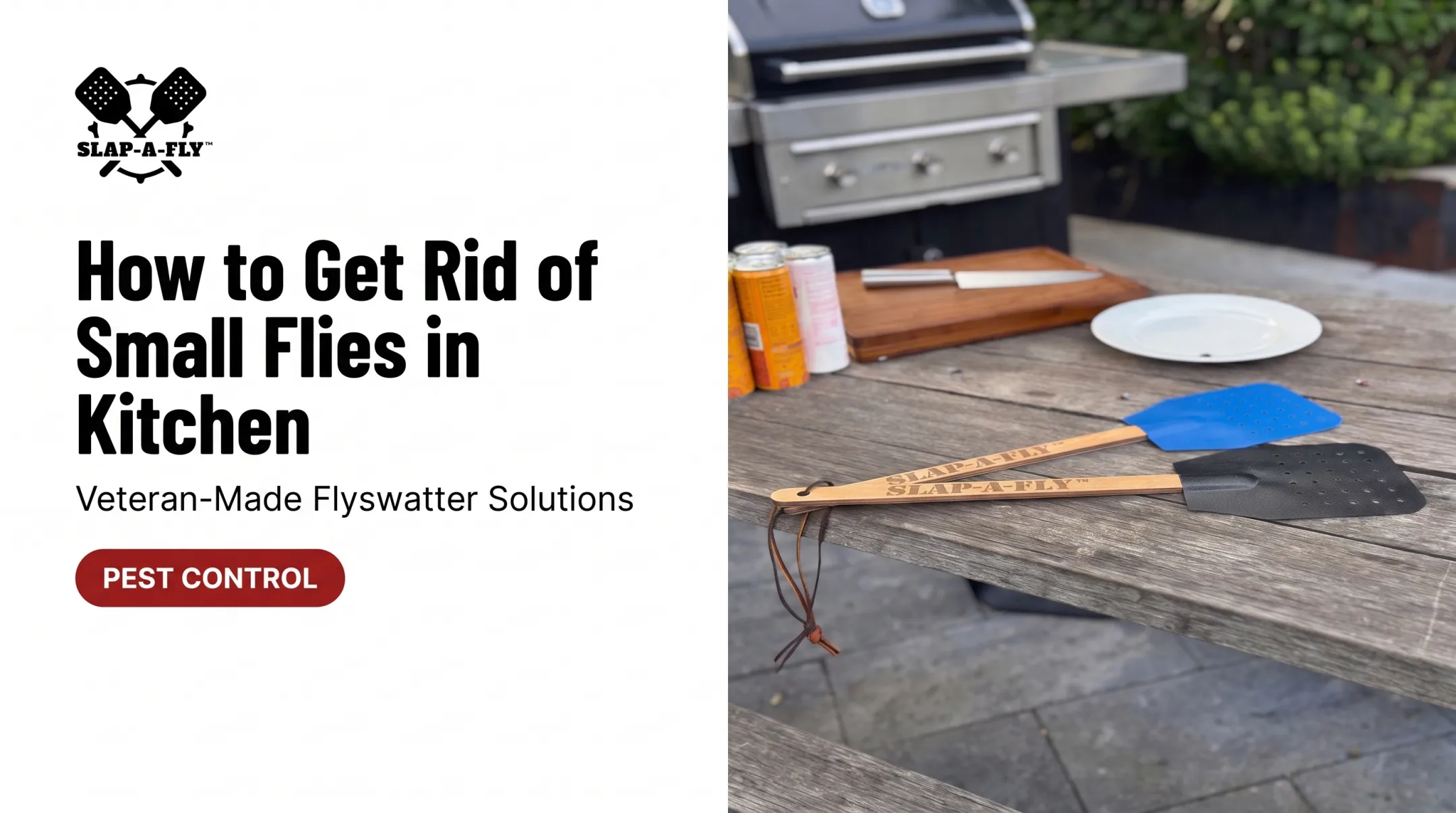
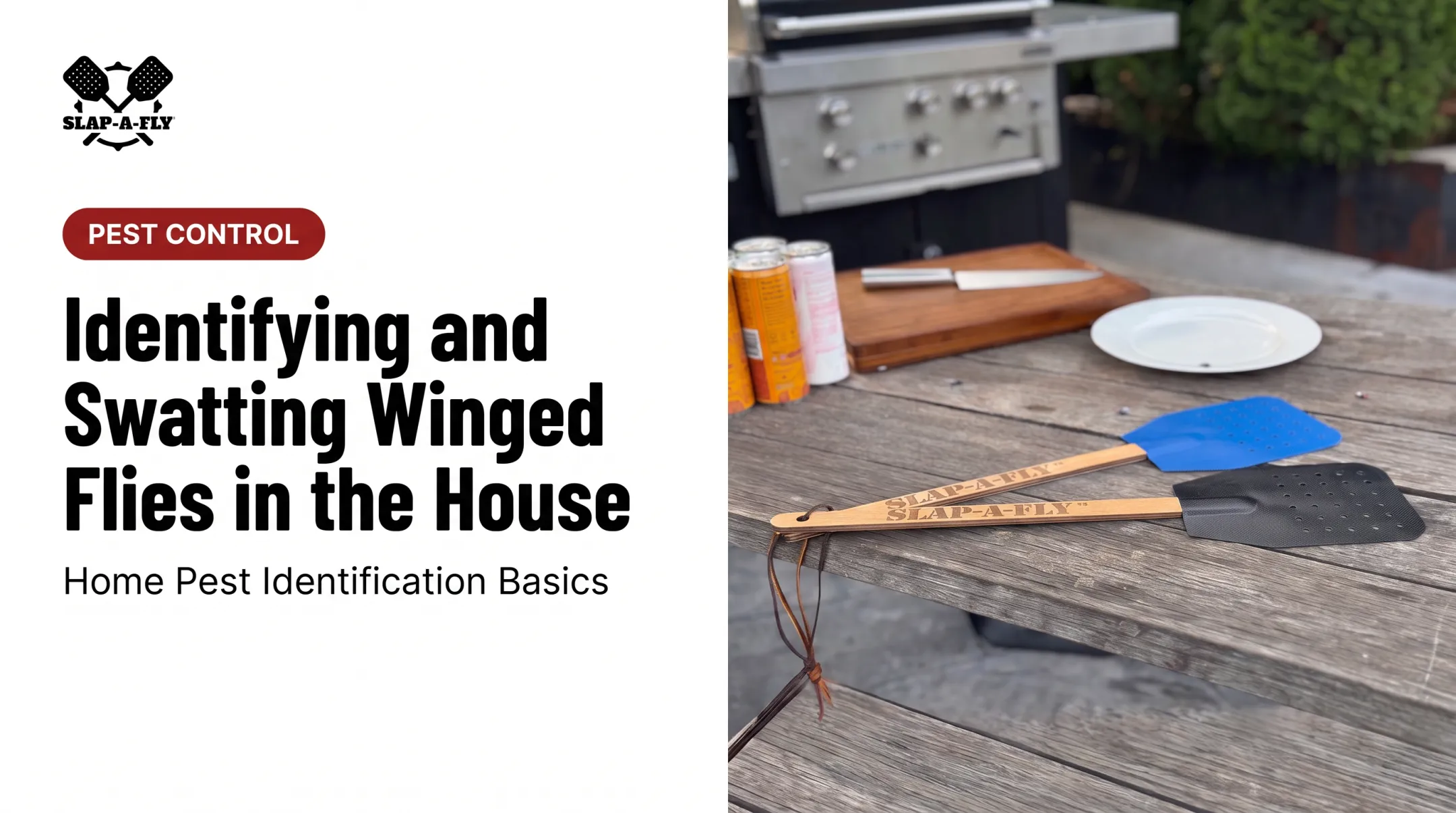
- Keep a Slap-a-Fly Standard on hand for stray adults while cleanup takes effect — one clean strike beats chasing them around the counter.
If it's a drain issue (drain/phorid flies):
- Scrub the drain with a stiff brush and flush with boiling water
- Try an enzyme-based drain treatment for stubborn buildup
- If phorid flies persist despite clean drains, check for a sewer line leak
Step 4: Trap, Swat, and Monitor
Deploy sticky or light traps for any remaining adults. A durable flyswatter earns its keep here too for quick, chemical-free strikes on stragglers while source cleanup finishes. Monitor the area for 1-2 weeks to confirm the breeding site is truly gone.
When to DIY vs. Call a Pest Control Professional
Most little-fly problems never need a service call. Match your response to how widespread the infestation is.
- Small, isolated infestation (one room, a few flies): Deep clean, set traps, and swat adults — DIY is usually enough
- Recurring infestation despite cleaning: Hunt for a hidden breeding site such as a broken drain trap; a plumber or pest pro can find what you can't
- Phorid flies with sewer odor: Call a pro to inspect for sewer line damage. Large first-floor numbers can signal a break beneath the structure, per University of Maryland Extension
- Large-scale, whole-house infestation: Licensed pest control can apply targeted insecticide or insect growth regulator (IGR) treatments beyond household products

Common Mistakes to Avoid
Good tactics still fail when these habits keep the breeding cycle alive. Avoid the missteps below:
- Spraying insecticide before you remove the breeding source (adults return fast)
- Overwatering plants to "wash out" gnats — wet soil makes the problem worse
- Ignoring drains just because you never see flies crawl out of them
- Relying on scented candles or store traps instead of fixing sanitation first
Preventive Measures to Keep Little Flies Away
Prevention beats repeat infestations every time. Build these habits into your routine:
- Empty trash regularly and rinse recycling containers before storing them
- Water houseplants only when the top inch of soil is dry
- Refrigerate ripe produce and wipe counters daily
- Seal cracks and repair torn window screens
- Keep a sturdy flyswatter hanging near the kitchen for any strays that sneak in
A storage loop, like the one on the Slap-a-Fly, makes it easy to hang one on a hook and grab it fast.
Conclusion
Most little fly problems are solvable once you identify the exact species and find the breeding source. Sprays and candles are band-aids; correct identification plus sanitation is what actually ends the cycle.
Pair source removal with a reliable tool for immediate relief:
- Standard Slap-a-Fly ($19.99) for everyday kitchen pests
- XL ($24.99) for extra reach on bigger bugs like wasps
- Exterminator four-pack ($42.99) to cover multiple rooms at once
Frequently Asked Questions
Why do I have tiny flies in my bedroom?
Bedroom gnats usually trace back to a houseplant, a forgotten drink or snack, or a nearby bathroom drain, rarely the bedroom itself. Check those spots first.
Is it okay to sleep with flies in your room?
Most tiny house flies don't bite or spread disease directly, but they're a hygiene nuisance. It's best to find and remove the source before bed rather than let them multiply overnight.
How long does it take to get rid of gnats or fruit flies?
Once you remove the breeding source, most infestations clear within 1-2 weeks as existing adults die off naturally.
Can little flies come from a clean house?
Yes. Even tidy homes can have hidden moisture in a plant pot or one overripe banana that's enough to trigger an infestation.
Do vinegar traps really work?
They work well for fruit flies specifically. They won't solve a fungus gnat problem tied to soil or a drain fly problem tied to plumbing. Different flies need different fixes.
What's the fastest way to kill flies without chemicals?
A quality flyswatter gives instant, spray-free elimination while your source cleanup takes effect. A Standard Slap-a-Fly - military-grade and engineered by U.S. Army veterans - takes out house flies, fruit flies, and gnats in a single strike, and the same heavy-duty build is made for large tough bugs like cockroaches, wasps, and armored insects - not just flies. No sprays required.