Indoor fly traps range from $3 sticky strips to $50 UV zappers to a jar of vinegar you already have in your pantry. Each solves a slightly different problem. This guide breaks down the best indoor fly trap types, how to pick the right one, and what to do when a fly trap simply isn't built for the pest you're facing.
TL;DR
- Chemical-free sticky traps work best on fruit flies and gnats in kitchens
- Larger rooms and ongoing infestations call for UV or electric traps
- DIY vinegar traps cost nothing, but need frequent refreshes and can smell
- Houseflies, wasps, or bees that wander indoors still need quick manual control—no trap replaces it
- Match the trap to fly species, room size, and how hands-off you want the fix to be
Overview of Indoor Fly Traps in the US Pest Control Market
An indoor fly trap is any device or bait designed to capture or kill flying insects inside a home or business. They generally fall into four categories:
- Adhesive/glue traps — sticky strips or cards
- UV/electric traps — light-based attraction plus a grid or sticky pad
- Bait/vinegar traps — DIY jars using fermentation scents
- Commercial pheromone traps — species-specific lures in disposable containers
Demand for these products spikes seasonally. The University of Maryland Extension notes that indoor fruit-fly populations peak in late summer and fall, when overripe produce and fermenting scraps are most common.
Texas A&M AgriLife also points out that most homes and businesses eventually deal with indoor flies at some point — especially kitchens, restaurants, and homes near gardens or farms.
The sections below compare each trap type on attraction method, cleanup, and where it works best indoors.
Best Indoor Fly Traps by Type
Selection comes down to four factors: safety, ease of use, effectiveness against the specific fly you're dealing with, and how much mess or maintenance you're willing to tolerate.
Sticky / Glue Fly Traps
These work through plain physical adhesion. A fly lands on the strip and gets stuck permanently. They're a top pick for kitchens and pantries because there's nothing to plug in, no chemicals, and no odor.
Why they stand out:
- Non-toxic and safe around food prep areas
- Pet and child safe when placed out of reach
- Disposable — just toss and replace
- Doubles as a monitoring tool for fungus gnats near houseplants
| Category | Details |
|---|---|
| Best For | Fruit flies, gnats, small houseflies in kitchens and near houseplants |
| Maintenance | Low — replace when full |
| Safety | No chemicals, safe around food and pets |
One caveat: research on fungus gnats confirms yellow sticky cards work well when placed under the plant canopy, but an unbaited strip alone may not solve a heavy fruit-fly infestation. Pair it with source control for best results.

UV Light / Electric Fly Traps
These use short-wavelength UV light to draw flies toward an electrified grid or a sticky retention pad. They work best in larger rooms or spaces with constant fly pressure, like garages, sunrooms, or commercial kitchens.
What sets them apart:
- Continuous, hands-off operation
- Higher capture capacity than a sticky strip
- Ideal for restaurants and commercial food-service settings
| Category | Details |
|---|---|
| Best For | Ongoing indoor infestations, restaurants, larger rooms |
| Maintenance | Periodic bulb or pad replacement |
| Safety | Keep away from food prep areas due to insect debris |
Placement matters. Extension guidance recommends mounting these units 4 to 6 feet above the floor. The FDA Food Code warns that insect-control devices near exposed food can let debris fall or scatter onto food-contact surfaces.
Choose a retained-capture model, not an open zapper, if it's going anywhere near a kitchen.

DIY Vinegar / Fruit Bait Traps
The classic method: apple cider vinegar and a drop of dish soap in a jar, covered with plastic wrap and a few pinholes. Flies fly in, the soap breaks surface tension, and they can't escape.
It's free and it works, but it's not zero-effort. You'll need to refresh the bait every few days or it starts smelling almost as bad as the fruit flies it's meant to catch.
Bait chemistry actually matters here. A controlled comparison found significant differences between vinegar-based lures, with some bacterial-culture formulations far outperforming plain synthetic vinegar in laboratory trapping tests. Sweet, fermented smells (vinegar, wine, overripe fruit) pull in fruit flies, while houseflies respond more to sugary liquids or stronger, rotting bait.
| Category | Details |
|---|---|
| Best For | Fruit flies, occasional houseflies, zero-cost solutions |
| Maintenance | High — needs frequent bait refresh and cleaning |
| Safety | Non-toxic but can smell and attract more insects if left too long |
Pheromone / Commercial Bait Traps
These use a scented, species-specific attractant to lure flies into a disposable bag or container. They're popular for heavier infestations near garbage cans, pet areas, or properties close to livestock.
Unlike vinegar, which is a general fermentation scent, commercial pheromone lures target one species. A lure built for houseflies won't necessarily pull in fruit flies, and vice versa.
| Category | Details |
|---|---|
| Best For | Heavy fly populations, homes near livestock or trash areas |
| Maintenance | Moderate — dispose of full bag/container |
| Safety | Strong odor, best used away from living spaces |

How to Choose the Right Indoor Fly Trap
Most people make the same three mistakes:
- Using the wrong bait for the fly species
- Placing the trap right where people eat or gather
- Ignoring the actual source of the problem
Match the trap to your space and the flies you actually have.
Weigh these factors before buying:
- Fly species present — fruit flies, gnats, and houseflies respond to different lures
- Room size — a sticky strip won't cut it in a large commercial kitchen
- Odor and mess tolerance — DIY bait smells; sticky traps don't
- Hands-off vs. active — UV traps run continuously; DIY bait needs babysitting
Source control matters more than the trap itself. Sealing food, rinsing recyclables, and cleaning drains address the root cause. Texas A&M lists spilled food, garbage liners, floor drains, and condensate trays as the usual culprits behind recurring indoor fly activity. A trap without source control just treats the symptom.
When Traps Aren't Enough: Dealing With Larger Flying Pests
Here's the thing traps don't advertise: they're built for small flies and gnats, not for the housefly that snuck in through the screen door, or the wasp that's now bouncing off your kitchen window.
For those situations, waiting on a trap wastes time. A precision flyswatter deals with the problem in one motion.
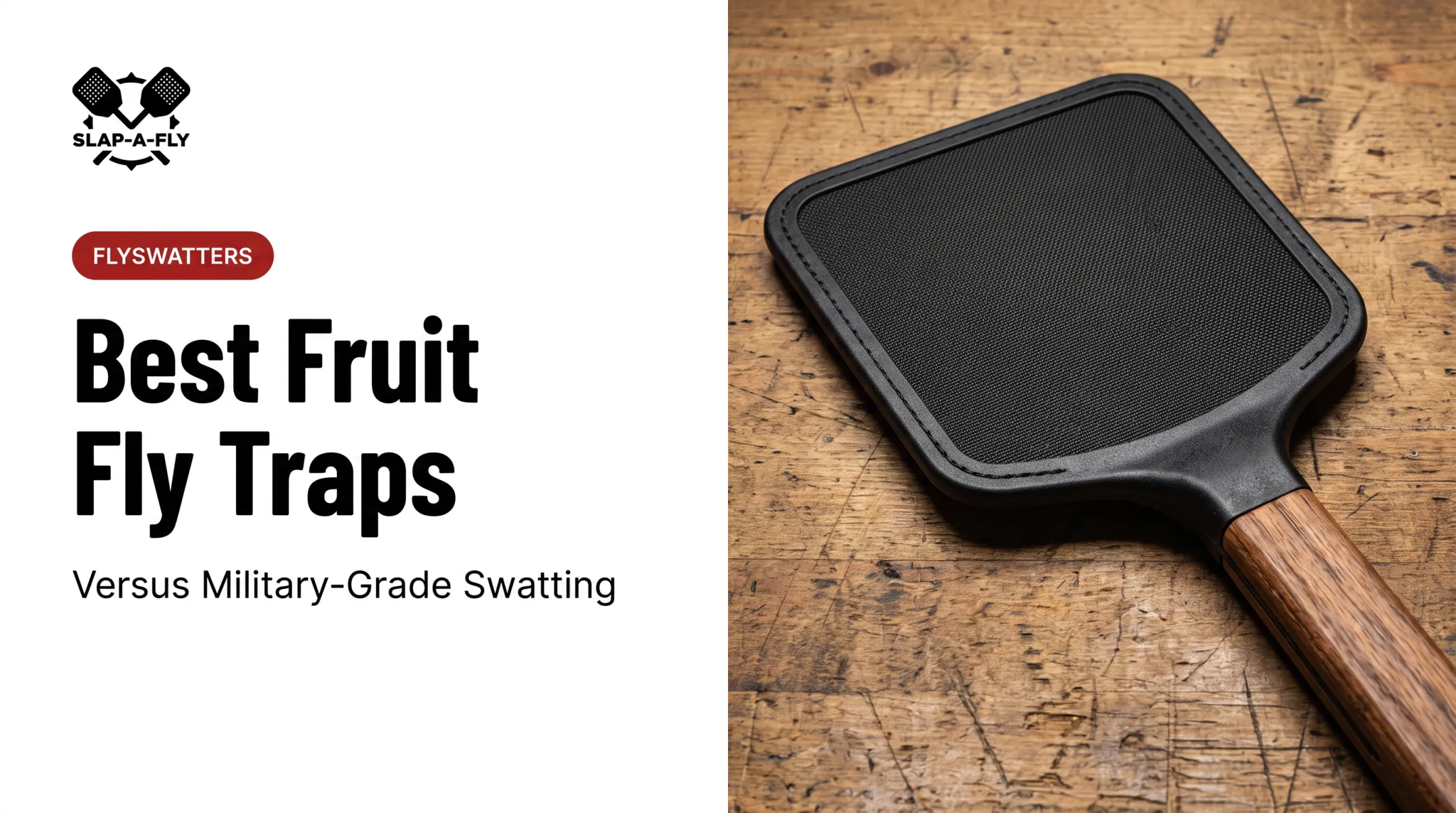
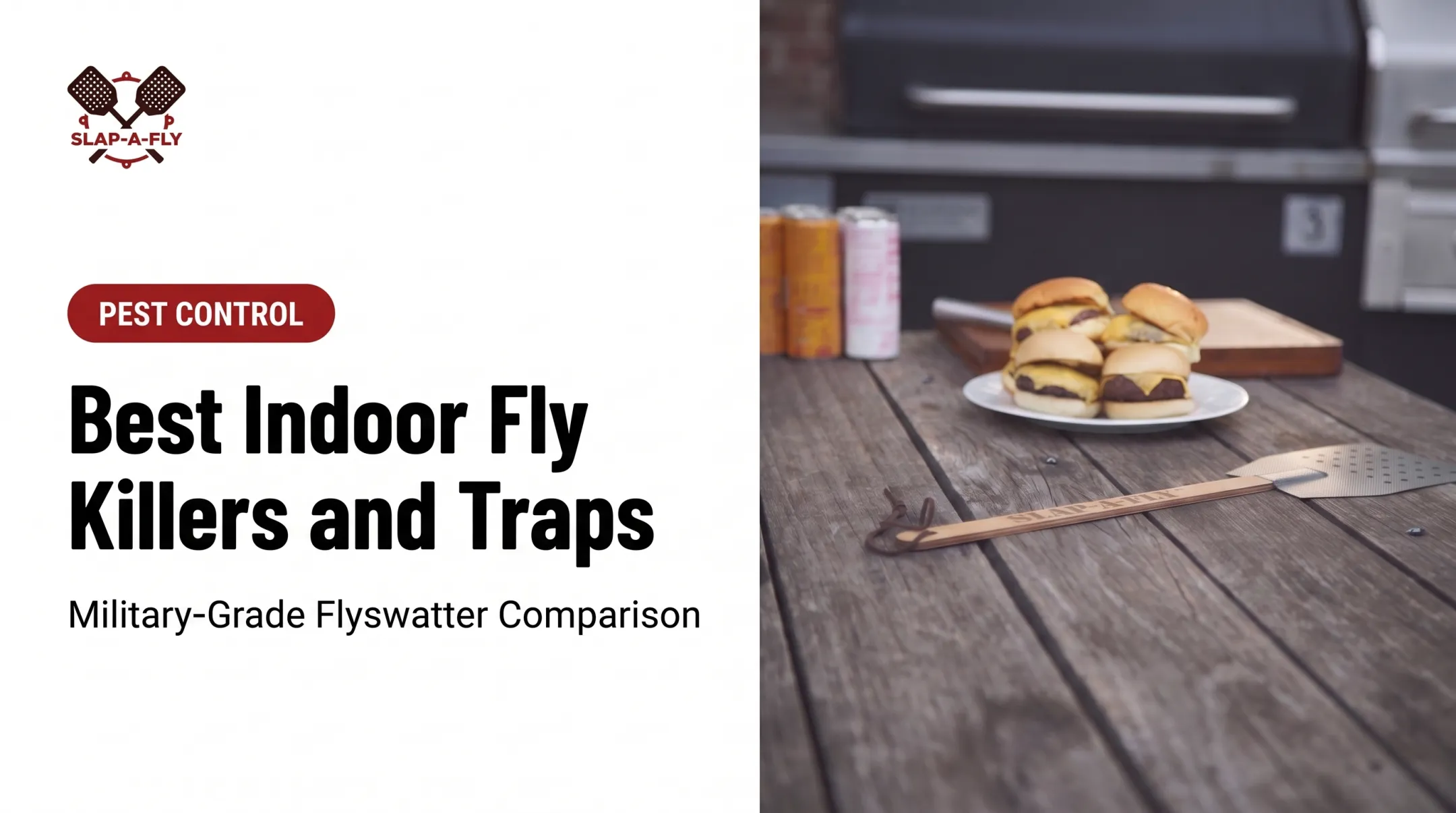
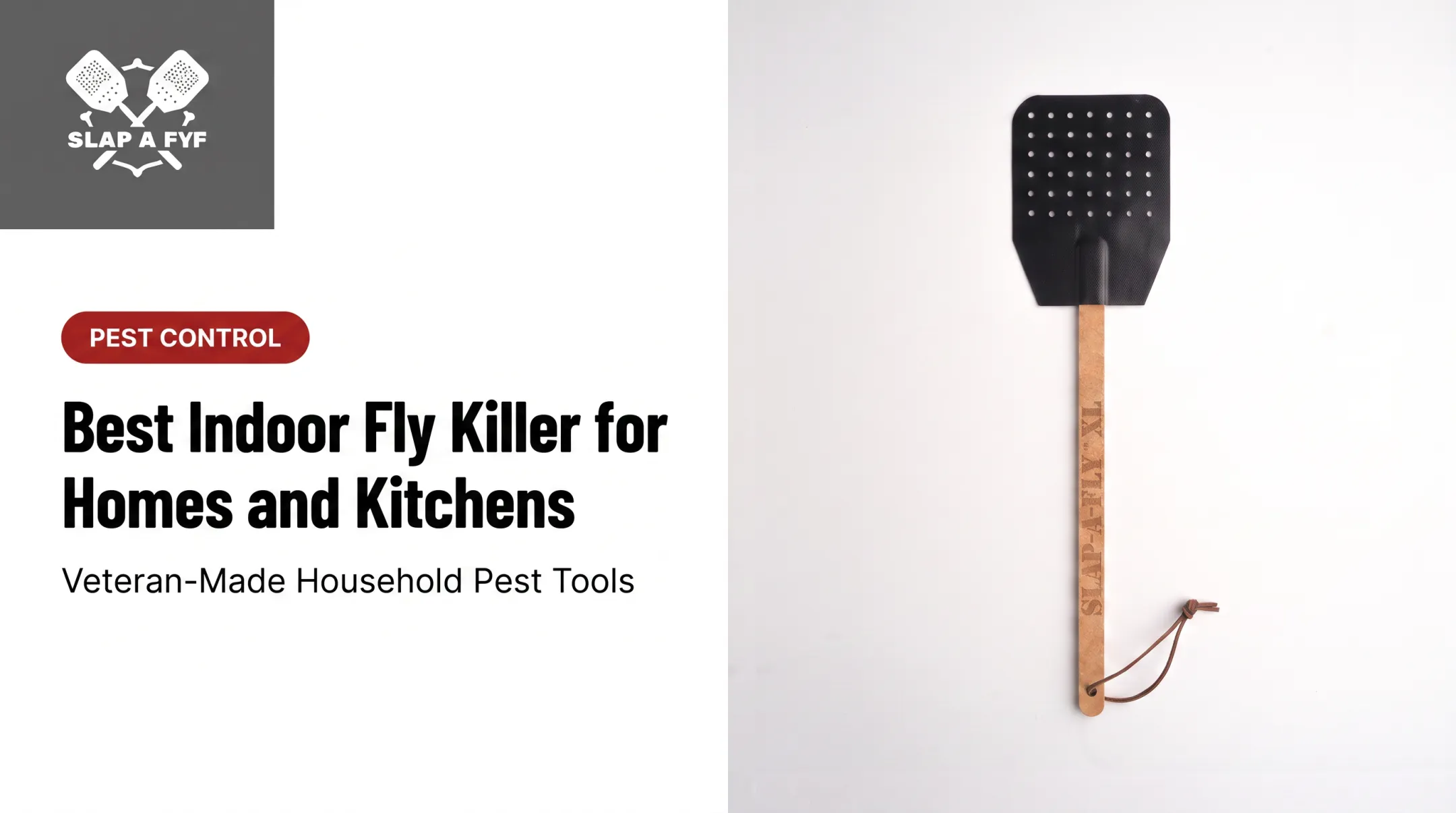
Slap-a-Fly's Standard and XL swatters are built for that job. Both use Herculite 80 fabric, a MIL-SPEC synthetic rated for 80 PSI of impact force - enough force for large tough bugs like cockroaches, wasps, and armored insects - not just flies - stretched over a five-ply aircraft spruce handle — the same aerospace-grade wood used in military cargo planes.

The construction holds its snap through thousands of strikes.
Why this matters for pests that traps can't catch:
- XL model: oversized strike surface and extended handle for more reach from wasps and bees
- Perforated Herculite 80 surface cuts air resistance so the swat lands faster
- 100% vegan military-grade Herculite-80 synthetic build with a storage loop for hanging by the door
Keep a swatter by the kitchen entry for the pests your traps were never meant to handle.
Conclusion
There's no single "best" indoor fly trap. The right pick depends on what's flying around your kitchen and how much maintenance you're willing to do.
- Sticky traps for fruit flies
- UV units for ongoing pressure in bigger spaces
- Vinegar jars if you want a free fix and don't mind the smell
Pair whichever trap you choose with basic sanitation: seal food, clean drains, and take out trash regularly. Keep a reliable flyswatter on hand for the occasional housefly, wasp, or bee that traps were never designed to handle.
For that last part, Slap-a-Fly makes a swatter built to finish the job in one strike, no waiting required.
Frequently Asked Questions
What is the best household fly trap?
Sticky/glue traps are best for everyday kitchen fruit flies and gnats thanks to their safety and ease of use. For larger, ongoing infestations, a UV trap covers more ground.
How do I get rid of flies indoors fast?
Combine source elimination (removing food and trash attractants) with a trap for ongoing prevention. For any fly you can already see, a flyswatter is faster than waiting on a trap.
What attracts flies the most for a DIY trap?
Sweet, fermented smells like apple cider vinegar and overripe fruit attract fruit flies best. Houseflies tend to respond more to stronger, rotting bait or sugary liquids.
Are indoor fly traps safe around pets and food?
Sticky traps and retained-capture UV traps are generally safe when placed out of reach. Bait and vinegar traps should stay away from curious pets and food prep surfaces.
How often should I replace a fly trap?
Replace sticky traps once they're full, and refresh DIY vinegar bait every few days to prevent odor and keep it effective.
Can fly traps catch wasps or bees indoors?
No. Standard fly traps aren't designed for wasps or bees. A durable flyswatter, ideally an XL model for extra reach, is the safer, faster option for these pests.