It's frustrating, but it's also incredibly common. Food residue, trash, pet waste, and warm weather create the exact conditions flies need to thrive. This article covers why flies gather on patios in the first place, proven removal methods, prevention tips, and when the problem is bigger than a DIY fix.
TL;DR
- Flies gather on food, trash, pet waste, and standing water, and can drift in from next door
- Most patio fly problems are DIY-fixable with cleanup, traps, and airflow
- Pair source removal, traps away from seats, and a reliable flyswatter for direct hits
- Persistent swarms, biting flies, or dead-animal smells mean call a pro
Why Do I Have So Many Flies on My Patio?
Flies find your patio through scent, not sight. Food residue, garbage, pet waste, and standing water all send out chemical signals that flies track from surprising distances. According to University of Kentucky Entomology, house flies can easily travel 1 to 2 miles, and wind extends that range even further.
That means your spotless patio isn't immune. Your neighbor's uncovered trash can or a nearby compost pile can be the real source.
Warm weather makes things worse fast. Flies go through a complete life cycle (egg, larva, pupa, adult), and that cycle can finish in about two weeks during warm conditions. A female fly can lay 350 to 900 eggs over her lifetime, so a small problem escalates quickly.
Common attractants that bring flies to your patio:
- Uncovered or overflowing garbage cans
- Grills and outdoor kitchen surfaces with food residue
- Fallen fruit or decaying vegetation
- Compost piles
- Pet waste left in the yard
- Clogged gutters holding standing water

Cleaning your own space helps, but you still need to stop flies before they reach your guests.
Common Types of Flies Found on Patios
Not all patio flies are the same, and knowing which one you're dealing with helps you pick the right response.
House flies buzz around food and trash. They're dull gray, about 1/6 to 1/4 inch long, with sponging mouthparts that don't bite. Garbage and food waste are the usual cause.
Fruit flies hover near drinks, outdoor snacks, and compost. These are the tiny brown-yellow flies with red eyes, drawn to rotting produce and sugary residue.
Cluster flies move slowly and gather on warm, sunny surfaces, especially in fall. They're linked to seasonal migration rather than food sources, since their larvae develop inside earthworms in soil.
Biting flies such as stable flies and horse flies stand apart from the rest. Both sexes of stable flies bite, while only female horse flies do. They're drawn to moisture and standing water nearby, and their bites are genuinely painful — not just annoying.

How to Get Rid of Patio Flies (Step-by-Step)
Eliminating patio flies takes a layered approach: remove what's attracting them, intercept the ones still coming, and deal directly with any that get through.
Step 1: Remove Attractants and Clean the Area
This is the foundation. Skip it, and nothing else works as well.
- Seal garbage and recycling bins, and empty them regularly
- Clean grills and outdoor surfaces after every use
- Pick up pet waste and remove fallen fruit or decaying vegetation
- Fix moisture problems like clogged gutters or leaky spigots
Step 2: Use Traps and Repellents Strategically
Placement matters more than most people realize. A trap right next to your dinner table can actually pull flies toward your food instead of away from it.
- Position bait traps between the likely fly source and your seating area, away from garbage or other competing odors
- Try citronella candles or fly-repelling herbs like basil, lavender, and mint near the table for a short-term buffer
- Set up box fans around your dining space, since flies are weak fliers and struggle against moving air
Step 3: Take Direct Action Against Flies in the Moment
Traps and cleanup reduce overall numbers, but some flies will always slip past your defenses. That's where a solid flyswatter earns its place.
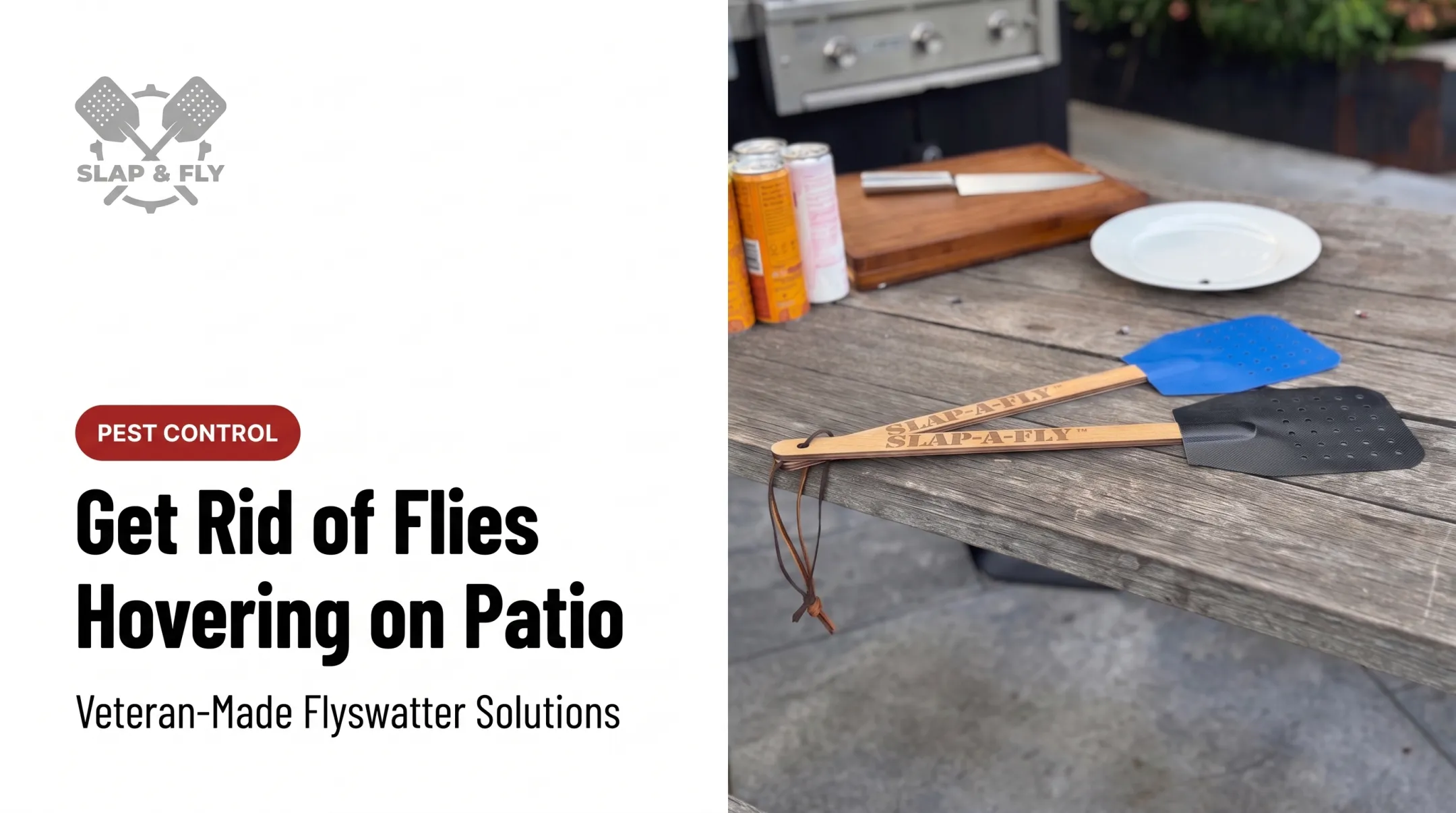
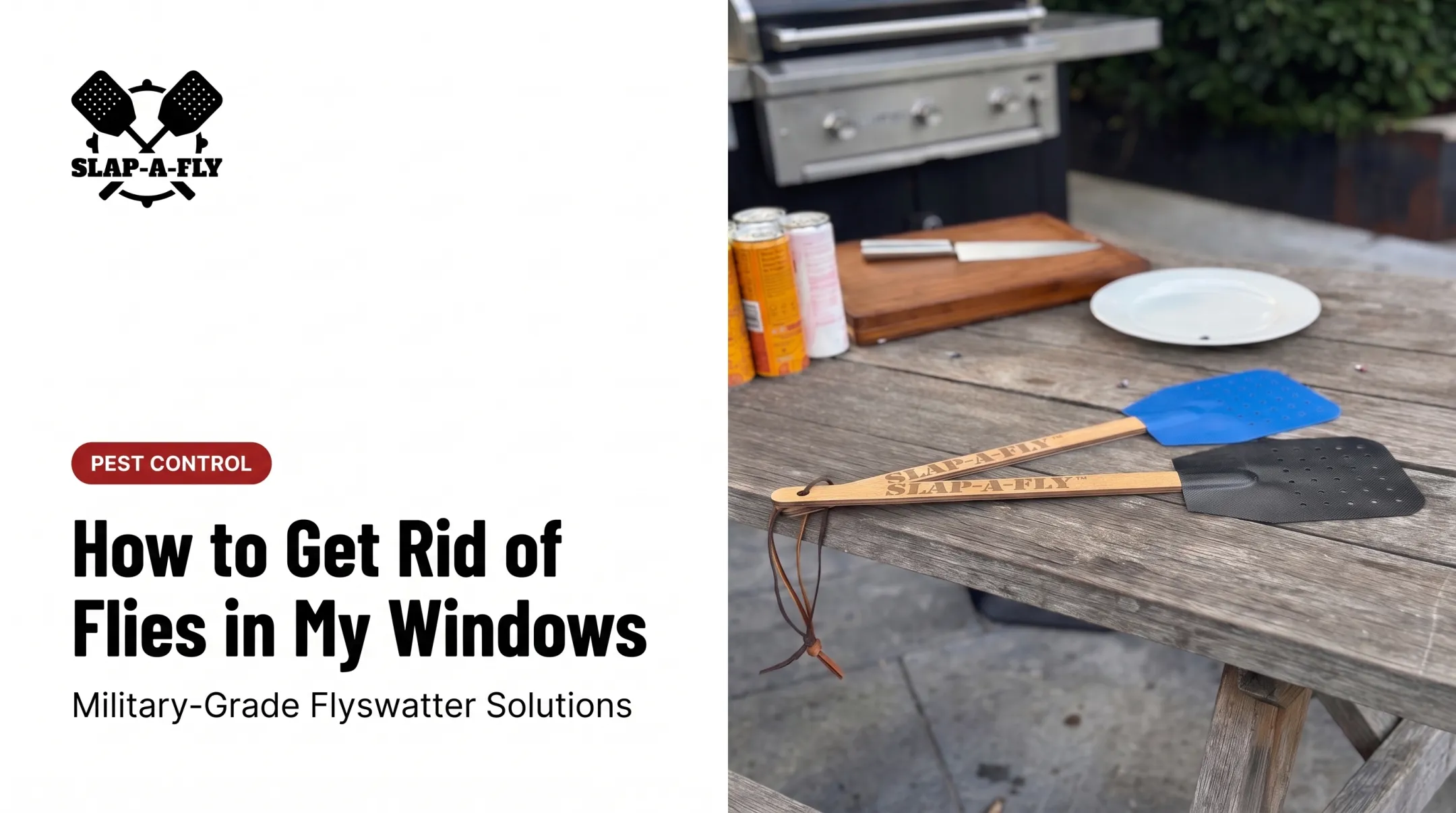
A Slap-a-Fly swatter is built for this job. Engineered by U.S. Army veterans, its Herculite 80 fabric is a military-grade synthetic surface rated for 80 PSI of impact force - enough force for large tough bugs like cockroaches, wasps, and armored insects - not just flies, so you get clean strikes without chemical sprays near food and drinks. The perforated head cuts air resistance on the swing, so you're not fighting drag against a fast-moving fly.
For biting flies like horse flies or stable flies, the XL model offers an extended handle and oversized striking surface. The extra reach helps when you want distance from a more aggressive pest.

Step 4: Monitor and Reassess
Fly pressure changes with weather and season, so check in periodically:
- Inspect trap placement every few days during peak season
- Watch for missed attractants: a fallen piece of fruit or forgotten pet waste can undo your progress
- Adjust tactics as activity shifts; what worked in June may need tweaking by August

DIY vs Professional Patio Fly Control
Most patio fly problems don't need a professional. But some do, and knowing the difference saves you time and frustration.
Occasional flies during a single gathering: DIY is enough:
- Clean up food and spills
- Place traps away from seating
- Run a fan across the area
- Keep a swatter within reach
Persistent daily swarms despite cleanup efforts: Reassess your attractants and moisture sources first. If the problem continues, a dedicated outdoor fly reduction service can help identify hidden breeding sources you might be missing.
Biting flies or a suspected dead animal nearby: DIY has limited effectiveness here. According to NC Cooperative Extension, an unusually large house fly population can point to a hidden source like a dead animal in a wall, attic, or crawlspace. Locating it is difficult without professional help.
Preventing Flies From Coming Back to Your Patio
Consistency beats any single fix. A few habits, kept up regularly, do more than an occasional deep clean.
- Keep garbage and recycling sealed and rinsed out
- Clean the grill and dining area after every outdoor meal, not just once a week
- Eliminate standing water and keep compost covered
- Keep a durable flyswatter handy as a chemical-free backup; Slap-a-Fly’s storage loop hangs easily by the back door or patio
None of this requires perfection. It just requires not giving flies an easy reason to stick around.
Frequently Asked Questions
Why do I have so many flies on my patio?
Flies are drawn by food residue, trash, pet waste, and moisture, and they can migrate in from neighboring properties. Even a clean patio can attract them if nearby sources exist.
Do outdoor fly traps actually work?
Yes, when placed between the fly source and your seating area rather than right next to guests. Avoid putting them near competing garbage odors.
What smells keep flies away outside?
Citronella, peppermint, lavender, and vinegar-based scents can offer short-term relief. They have limited range and lose effectiveness quickly outdoors, especially with any breeze.
Do flies bite on patios?
Common house flies don't bite. Painful bites usually come from stable, horse, or deer flies, which breed near moisture and need different control strategies.
How long does a fly infestation on a patio usually last?
Without intervention, flies can persist all season since new ones keep migrating in. Consistent cleanup and control cut active swarms short.
When should I call a pest control professional for patio flies?
Call a professional if swarms continue despite sanitation and trap efforts, or if you notice biting flies or a smell suggesting a dead animal nearby.