Small flies in the kitchen are common, and they're not random. Food waste, drain buildup, and excess moisture create the exact conditions these pests need to breed indoors. This guide covers how to identify what you're dealing with, why it's happening, and the step-by-step process to eliminate them for good, plus when the problem is bigger than a DIY fix.
TL;DR
- Three usual suspects: fruit flies, drain flies, and fungus gnats
- Most cases are DIY-fixable with cleaning, source removal, and traps
- Core process: remove the breeding source, clean drains, trap adults, then monitor
- Call a pro if flies persist for weeks despite thorough cleaning
What Are Those Tiny Flies in Your Kitchen?
"Small flies" in most kitchens means one of three pests, and telling them apart takes about ten seconds of watching them:
- Fruit flies: Tan or brown-black, about 1/8 inch long, with fast, erratic flight. They hover directly over produce, trash cans, and anything sticky or fermenting.
- Drain flies: Fuzzy, moth-like wings, dark brown bodies, weak fliers that hop rather than zip. You'll find them resting on walls near sinks.
- Fungus gnats: Slender, black, long-legged, with clear or gray wings. They show up near houseplants or windows more than food.
According to University of Kentucky Entomology, all three breed in moist organic matter, not just visible food. An infestation usually means something in your kitchen is giving them the moisture or debris they need to lay eggs.

Why You Suddenly Have Small Flies in the Kitchen
Infestations follow patterns. Once you know the pattern, the fix gets obvious.
Overripe or rotting produce left on counters
- Symptom: Flies swarming your fruit bowl specifically
- Cause: Sugars and fermentation gases draw egg-laying adults from outside or nearby breeding sites
Buildup of organic gunk in drains and disposals
- Symptom: Flies near the sink even after you've put food away
- Cause: Grease and food film lining the pipe walls gives drain flies the slime they need to breed
Standing water or leaks under sinks
- Symptom: Gnats keep appearing no matter how clean the counters are
- Cause: Arkansas Extension notes that moisture from leaks, condensation, or drip pans creates breeding conditions independent of food debris
Unemptied trash or recycling bins
- Symptom: Flies concentrated near bins, not spread through the kitchen
- Cause: Fermenting food residue and unrinsed containers act like a mini fruit-fly nursery

How to Get Rid of Small Flies in the Kitchen (Step-by-Step)
Here's the part that trips people up: killing the adults you can see does almost nothing if the breeding source is still active. New flies will keep emerging. You have to attack both.
Step 1: Identify the Breeding Source
- Inspect fruit bowls, trash bins, drains, and the garbage disposal for larvae, residue, or slime
- Run the overnight tape test: cover a suspected drain with clear tape and check for trapped flies by morning
- Watch behavior: hovering over produce points to fruit flies; clustering at the sink points to drain flies
Step 2: Remove Food and Moisture Sources
- Discard overripe produce, empty the trash, and wipe down sticky spill residue
- Fix leaky pipes or standing water under the sink
- Refrigerate ripe fruit instead of leaving it on the counter
Step 3: Clean and Treat Drains
Scrub the drain with a brush to physically remove the biofilm and slime that larvae feed on, then flush with hot water. University of Kentucky Entomology identifies thorough mechanical cleaning, not a single chemical flush, as the most effective control method.
- Use an enzymatic drain cleaner to break down residue without damaging pipes
- Run the disposal with ice and citrus peels to dislodge trapped debris

Step 4: Trap and Eliminate Remaining Adult Flies
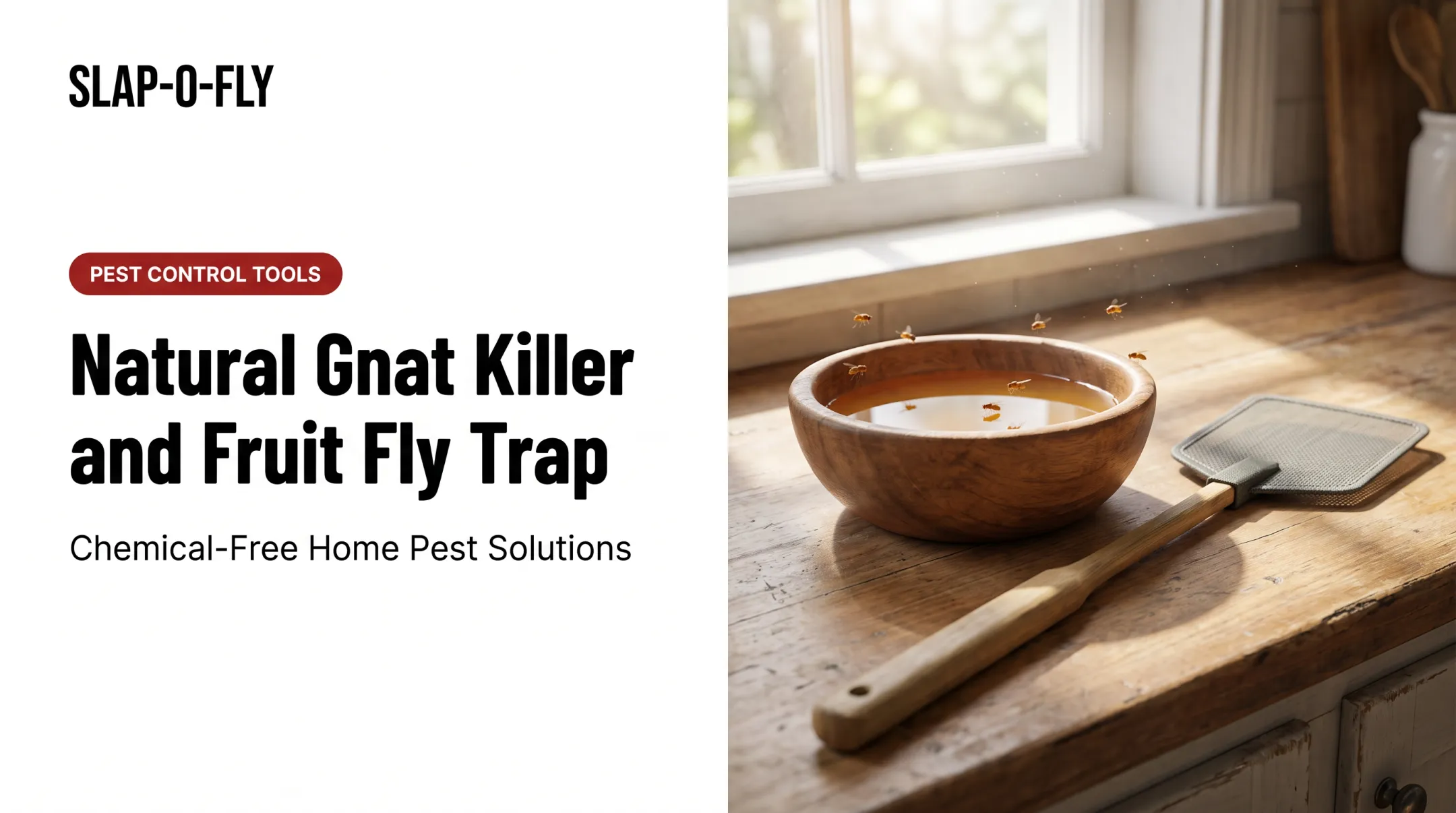
Set out an apple cider vinegar trap: a few drops of dish soap in vinegar, covered with plastic wrap poked full of small holes. Adults fly in and can't fly back out.
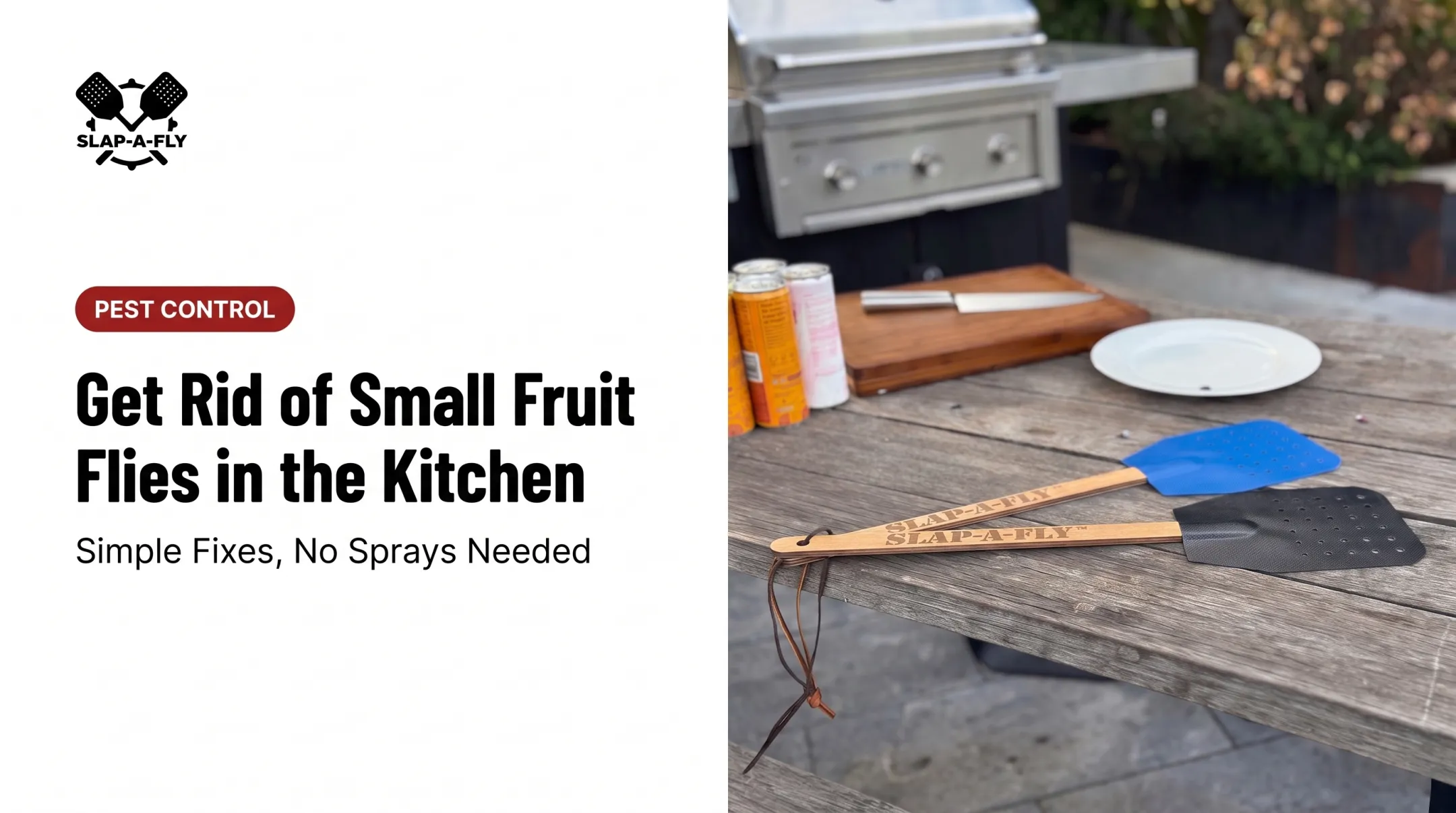
For flies already buzzing around your prep area, a flyswatter beats a can of spray. Aerosol insecticide near food surfaces isn't worth the risk, and a swatter gives you an instant, chemical-free kill with zero residue on your counters.
The Slap-a-Fly™ Standard fits this job well: a military-grade Herculite 80 striking surface and 5-ply aircraft spruce handle, engineered by U.S. Army veterans and sized for quick, accurate kitchen strikes without knocking over your dish rack. That 80 PSI strike is built for large tough bugs like cockroaches, wasps, and armored insects - not just flies.

A UV light or sticky trap can also help catch ongoing airborne activity while you finish cleaning.
Step 5: Monitor and Confirm the Infestation Is Resolved
Recheck drains and counters daily. Fruit flies can complete their life cycle in as little as 8-10 days under warm conditions, while drain flies may take 7-28 days depending on temperature, per University of Maryland Extension.
A few stray flies for several days after cleaning isn't unusual. Those are leftover larvae finishing their cycle, not a failed treatment. If flies are still active well past that window, repeat Steps 2 and 3.
When to DIY vs Call a Professional
| Situation | Best Approach |
|---|---|
| Isolated flies near fruit or trash | DIY — cleaning, refrigeration, and traps usually resolve it within days |
| Recurring flies near the sink despite cleaning | Plumber or drain specialist — hidden buildup or a leak may need hydro-jetting or pipe inspection |
| Flies persisting for weeks with no clear source | Pest control — hidden breeding sites like wall voids or grout cracks require professional inspection |
If you've scrubbed the drain, cleared the trash, and refrigerated everything, the problem should ease within days. When flies keep showing up two or three weeks later, the source is probably somewhere you can't reach on your own.
Preventing Small Flies From Coming Back
A few consistent habits keep the whole cycle from restarting:
- Wash produce and refrigerate ripe fruit promptly instead of leaving it on the counter
- Empty trash and recycling regularly, and rinse bins before they build up residue
- Run drains weekly with hot water or an enzymatic cleaner to prevent slime buildup
- Keep a flyswatter within reach for quick strikes before stray flies lay eggs
Hang a Slap-a-Fly near the sink by its storage loop so you're never scrambling for a rolled-up magazine.
Frequently Asked Questions
Why is my kitchen full of tiny flies?
Ripening produce, drain buildup, or standing moisture usually draws fruit flies, drain flies, or gnats indoors to breed. Check your fruit bowl and drains first.
Are drain flies harmful?
They're not dangerous to most people, but they can carry bacteria from the drain slime they breed in. Rare cases involve allergy or asthma symptoms from inhaling fly debris.
How long does it take to get rid of small flies in the kitchen?
Most infestations improve within about a week of consistent cleaning. Drain flies can take up to three weeks to fully clear, depending on how much buildup is in the pipes.
Can I use bug spray on kitchen flies?
Skip sprays near food prep surfaces. Traps, drain treatments, and a flyswatter handle the job without residue risk.
What attracts fruit flies besides fruit?
Spilled juice, empty cans, damp sponges, and trash residue all work just as well as an overripe banana.
Do I need a professional if home remedies don't work?
If flies persist beyond two weeks despite thorough cleaning and trapping, it's time to call a plumber or pest control professional to check for hidden buildup or leaks.