This guide covers why flies swarm outdoor spaces, the main categories of outdoor fly killers, natural and DIY methods worth trying, and one chemical-free tool that belongs in every outdoor kit regardless of setting.
The right combination depends on where you're fighting the battle. A backyard barbecue, a farm and barn setup, a campsite, and a restaurant patio each call for a different mix of sanitation, traps, and manual control.
Key Takeaways
- Flies gather around food waste, pet waste, and moisture, not just "dirty" yards
- Combining sanitation, traps, and manual tools beats any single method alone
- Natural repellents like herbs and vinegar traps only supplement primary control methods
- A heavy-duty flyswatter stops the flies that slip past every other defense, instantly and without chemicals
Why Do I Have So Many Flies in My Backyard?
Flies are far more mobile than most people assume. University of Kentucky Extension notes that house flies can easily travel 1-2 miles searching for food and breeding sites.
That means your fly problem might not even start in your yard. It could come from a neighbor's compost pile, a nearby dumpster, or a farm down the road.
Common attractants include:
- Garbage cans without tight lids
- Pet waste left in the yard
- Fallen fruit under trees
- Grills with leftover food residue
- Standing water or damp mulch
The population spike happens fast. UC IPM reports flies can go from egg to adult in as little as 7 days under optimal summer conditions. A handful of flies on Monday can become dozens by the weekend if a breeding source goes unaddressed.
Killing the adults you see doesn't touch the eggs, larvae, and pupae already developing in that moist organic material. You have to find and remove the source, not just swat what's visible.
Types of Outdoor Fly Killers: Which Works Best For You
Chemical & Bait-Based Options
Residual insecticide sprays and granular fly baits deliver fast knockdown on adult flies. They're useful for treating specific resting surfaces like fence posts or barn walls.
The tradeoff:
- Requires reapplication as effectiveness fades
- Leaves odor and residue near treated areas
- Must be kept away from food, children, and pets per label instructions
Trap-Based Options
Sticky traps, hanging bag traps, and UV light traps work passively once set up. The key is placement — put odor-based traps at your property's perimeter or near the actual breeding source, not next to your seating area.
Why placement matters: Odor lures flies toward the trap. Put it near your patio table, and you've just invited more flies to dinner.
Manual/Mechanical Options
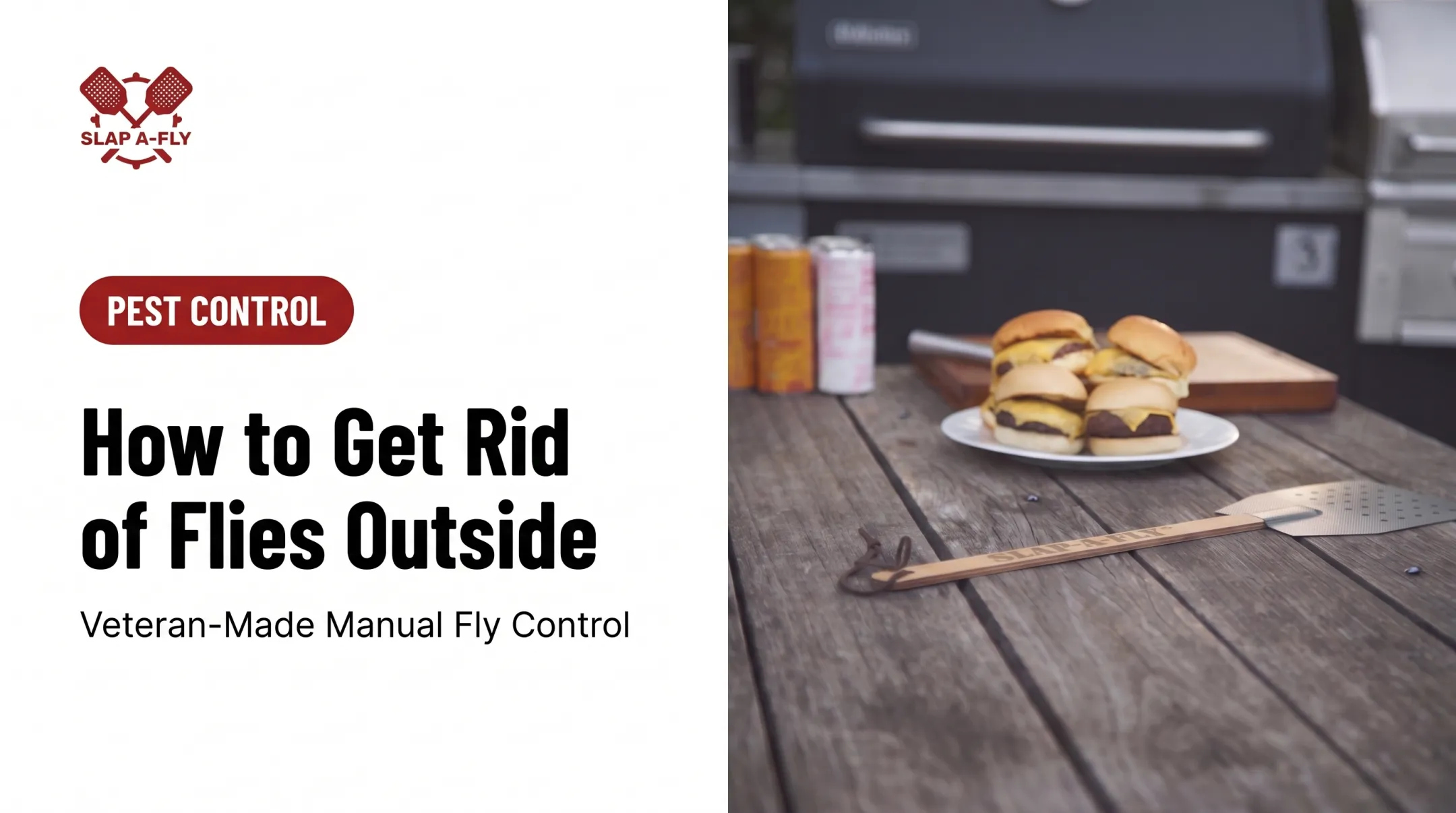
This is where the flyswatter earns its place. Zero chemicals, instant results, no reapplication schedule, no odor near your food. It's the only method on this list that works the instant a fly lands on your burger bun.
You only kill what you can reach, so pair table-side swatting with perimeter traps when yard pressure is high.
| Method | Coverage | Chemicals | Ongoing Cost |
|---|---|---|---|
| Chemical spray/bait | Broad | Yes | Recurring |
| Traps | Passive, perimeter | Minimal | Replacement |
| Manual swatting | Point-target | None | One-time |

For most patios and BBQs, swat at the table and trap the perimeter. Save sprays for non-food resting surfaces when fly pressure spikes.
Best Natural and DIY Ways to Keep Flies Away Outside
Pungent herbs like basil, lavender, and mint, along with citronella candles, are popular table-side additions to outdoor seating areas. They're worth trying, but temper your expectations.
A 2019 study in the Journal of Vector Ecology tested lavender and other oils against house flies and found none of them actually repelled adult flies in controlled tests. Scent-based repellents may offer a mild, short-lived effect in open air. Think of them as ambiance with a side benefit, not a fortress.
The apple cider vinegar trap is a classic DIY option:
- Fill a jar with apple cider vinegar and a drop of dish soap
- Cover with plastic wrap poked with small holes
- Set it near (not on) the dining table

This method is best documented for fruit flies, not the house flies buzzing around your grill. It still helps, just don't expect it to be your main defense.
On lighting: Research on house fly behavior found flies were attracted to white and blue light but not yellow. Swapping bright white porch bulbs for warm yellow ones is a reasonable, low-effort tweak — just don't count on it to solve the problem alone.
Why a Military-Grade Flyswatter Belongs in Every Outdoor Fly-Fighting Kit
Sprays fade. Traps sit at the perimeter. Herbs offer a faint whiff of protection. None of that helps when a single fly parks itself on your plate mid-meal. That's the exact moment a good flyswatter proves its worth.
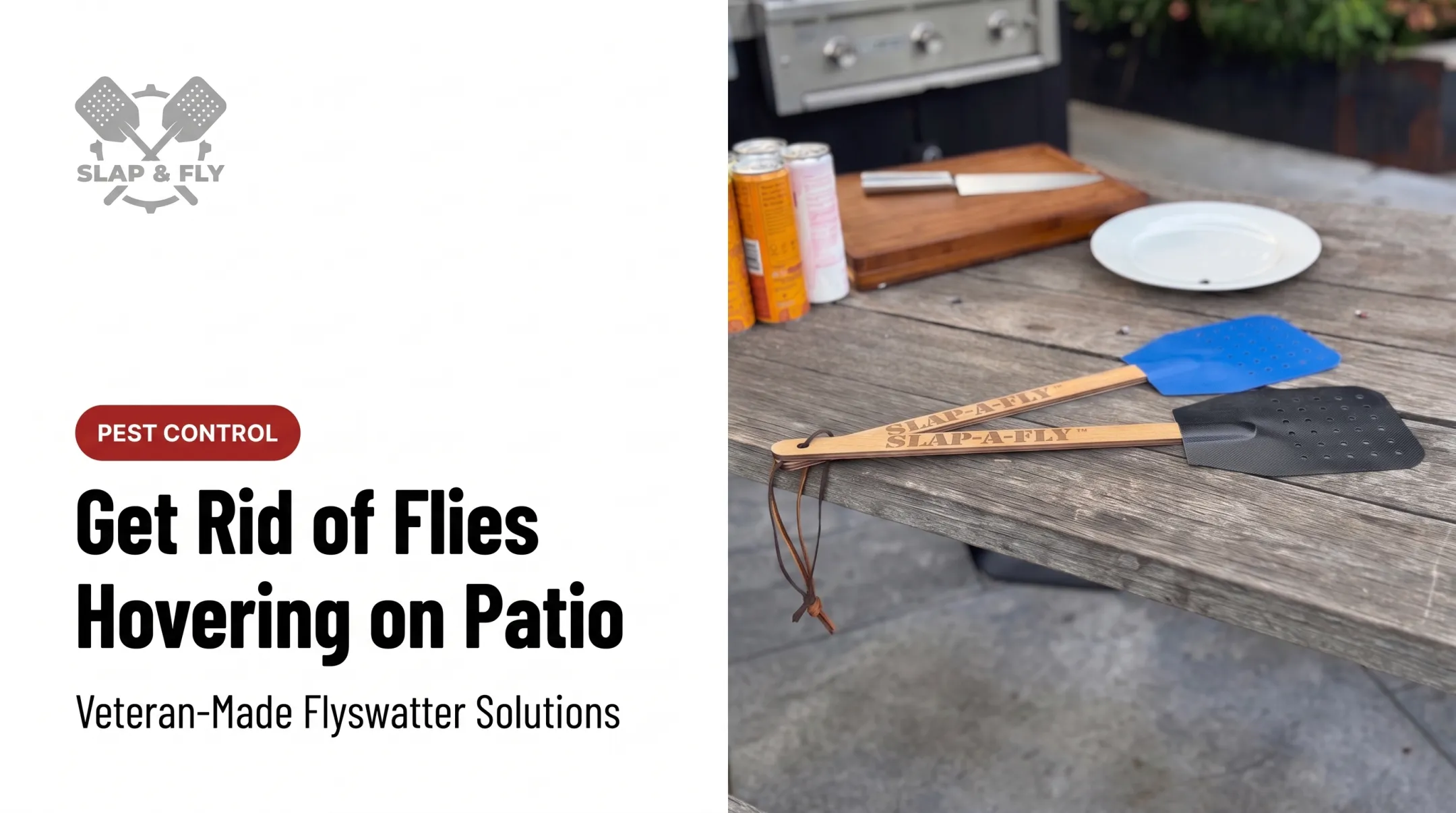
Slap-a-Fly builds its swatters around a Herculite 80 MIL-SPEC fabric striking surface, engineered by U.S. Army veterans to deliver 80 PSI of impact force in a single strike. No stalking the fly for three swings — one hit, done. That 80 PSI strike is built for large tough bugs like cockroaches, wasps, and armored insects - not just flies.

Why it fits every outdoor scenario:
- Backyard barbecues — no chemical smell drifting over the food
- RV and camping trips — compact, durable, works anywhere
- Farm and barn settings — built to withstand repeated daily use
- Restaurant patios — safe near diners with zero odor or residue
The XL model offers extended reach, useful for keeping a safer distance when a wasp or bee joins the fly party. Both models include a storage loop for hanging on a grill cart, porch post, or camping gear bag.
The perforated strike surface cuts air resistance on the swing. The 5-ply aircraft spruce handle, the same aerospace-grade wood used in military cargo planes, keeps the balance tight for accurate, repeatable strikes. It’s built to take thousands of hits without breaking down.
Long-Term Prevention: Keeping Flies From Coming Back
Sanitation habits matter more than any single product. Illinois public health guidance calls sanitation the key factor, noting that other controls are largely ineffective without it.
Build these into your routine:
- Seal trash cans with tight-fitting lids
- Rinse recycling before it sits outside
- Pick up pet waste daily, not weekly
- Clean grills right after use, not the next morning

Address moisture separately. Check gutters for standing water, fix leaky spigots, and avoid letting mulch stay soggy for days. Flies breed in moist organic material, so drying out these spots removes their nurseries before they start.
Finally, refresh your trap and repellent placements as seasons shift. Fly activity changes with temperature and food availability, so what worked in June might need repositioning by August.
Frequently Asked Questions
What is the best outdoor fly killer?
The best approach combines sanitation, correctly placed traps or bait, and a heavy-duty flyswatter for flies that slip past your other defenses.
How do I get rid of flies in my yard?
Remove attractants like food waste and standing water, intercept remaining flies with traps placed away from seating areas, and maintain that pressure consistently all season.
What's the best way to keep flies away outdoors?
Patio fans, citronella, and warm-colored bulbs make specific areas less comfortable for flies. For the stragglers that still show up, a heavy-duty flyswatter handles them instantly.
How can I permanently get rid of flies in my yard?
True permanence isn't realistic since flies migrate in from surrounding properties. Consistent sanitation and layered control keep the population pressure low instead.
Why do I have a lot of flies in my backyard?
Food waste, pet waste, and moisture attract flies from a wide radius, often well beyond your own property lines, not just from conditions in your yard alone.
What smells do flies hate the most outside?
Citronella, peppermint, lavender, and vinegar-based scents can deter flies briefly, but the effect fades fast in open air. Treat them as a supplement, not your main strategy.