Many households now hesitate to reach for chemical sprays indoors, especially with kids, pets, or open food nearby. That concern is valid. But chemical-free doesn't mean ineffective.
This guide covers prevention strategies, non-toxic traps, natural repellents, and mechanical tools, including the humble but underrated flyswatter, so you can build a fly-control plan that actually works without a single spray can.
Key Takeaways
- Start with sanitation and source removal—nothing else works if breeding sites stay put
- Heavy-duty flyswatters and traps deliver instant results with zero chemicals
- Mint, lavender, eucalyptus, and citronella deter flies but rarely end infestations alone
- Layer prevention, an active tool, and a repellent instead of relying on one product
Why Go Chemical-Free for Fly Control
More households are avoiding synthetic insecticides indoors, particularly in kitchens, RVs, and homes with sensitive family members. That preference is practical. Nobody wants pesticide residue near a cutting board or a crawling toddler.
EPA-registered insecticides can kill flies. Most people still don't want spray residue where they cook dinner.
Households usually go chemical-free when they need to:
- Keep pesticide residue off food-prep surfaces
- Protect kids, pets, and chemically sensitive family members
- Control flies in tight spaces like RVs and small kitchens
The health case goes beyond comfort. A 2018 systematic review found that house flies have been found carrying at least 130 different pathogens, including bacteria, fungi, viruses, and parasites.
That does not make every fly on your counter a health emergency. It does mean sanitation and physical removal matter for keeping flies off your food.
Prevention: The First Line of Chemical-Free Defense
Removing breeding sources beats any product you can buy. Trash, pet waste, rotting produce, and damp grass clippings are where flies actually come from. Traps and swatters handle what's already flying. Prevention stops the next generation before it hatches.
Sealing Entry Points
Flies can't multiply indoors if they can't get in.
- Repair or replace torn window screens
- Install door sweeps on exterior doors, including RV entry doors
- Seal cracks around windows, vents, and utility penetrations
- Keep doors and windows closed when not actively in use
Sanitation Habits That Matter
Small habits compound fast:
- Use trash cans with tight-fitting lids, indoors and out
- Wash dishes promptly instead of letting them sit
- Store food in airtight containers, not open bags
- Keep compost bins away from the house exterior
Outdoor & Farm-Specific Prevention
Rural households and barns face a bigger challenge: manure and organic waste. Dry, well-managed piles cut fly populations more than any spray applied after the fact.
- Compost manure with carbon-rich material like wood chips or sawdust to balance moisture
- Keep litter and manure dry
- Turn piles regularly
- Remove wet breeding pockets promptly

Best Chemical-Free Fly Control Products
Non-Toxic Traps
Sticky traps, ribbon traps, and baited jar traps use adhesive or attractant lures instead of pesticides. They work well outdoors and in barns, but they saturate quickly in high-fly environments and lose effectiveness in dust or rain. Think of them as monitoring and light control, not a total solution.
Fly Lights & UV Traps
UV light traps attract flies mechanically and capture them on a glue board, no spraying involved. They're common in commercial kitchens and grocery stores. In heavy indoor fly pressure, units left on continuously usually outperform ones run only part of the day, though results still vary by room layout and sanitation.
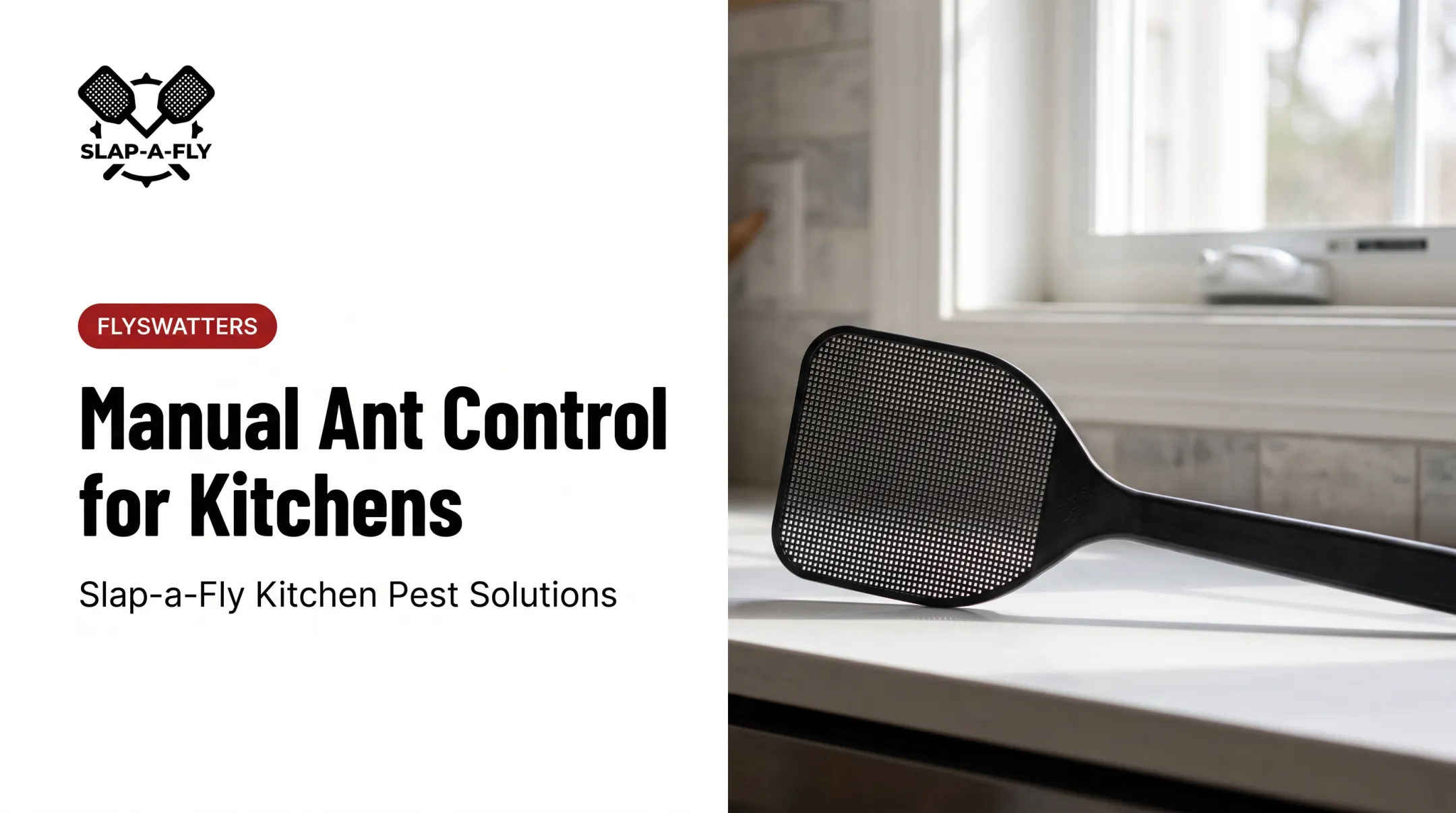
The Flyswatter: Simple, Chemical-Free Control
A flyswatter needs no reapplication, batteries, or ongoing cost. Swing, strike, done.
The problem is most swatters are junk. Flimsy plastic cracks after a few weeks. Wire mesh bends. That frustration is exactly what led two U.S. Army veterans to build Slap-a-Fly™.
Military gear can't fail, so they refused to treat a flyswatter as disposable. Slap-a-Fly™ is built from materials chosen for impact and longevity:
- Herculite 80 MIL-SPEC synthetic fabric (the class used in U.S. jet fighter interiors) delivers 80 PSI of impact force - enough force for large tough bugs like cockroaches, wasps, and armored insects - not just flies
- 5-ply aircraft spruce handle, the same aerospace-grade wood used in military cargo planes
- Perforated striking surface that cuts air resistance for faster, more accurate swings
- 100% vegan, tear-resistant military-grade Herculite-80 synthetic fabric built to survive thousands of strikes

The XL model adds an extended handle and a larger striking surface. The extra reach improves coverage and helps you keep a safer distance from wasps and bees when something can sting back.
In a kitchen, barn, or RV where flies show up every day, you get chemical-free control with no reapplication and a tool built to outlast the disposable swatter most people replace every season.
Biological Controls
On farms and homesteads, these options can lower outdoor fly pressure:
- Chickens may eat larvae, though research on population impact is inconclusive
- Guinea fowl graze on insects across the property
- Purple martins consume flying insects, though house flies aren't confirmed prey
- Parasitic wasps attack fly larvae in manure and are worth conserving, not disrupting
These work best as farm adjuncts alongside manure management, not as stand-alone fixes.
Natural Repellents & Scents That Work
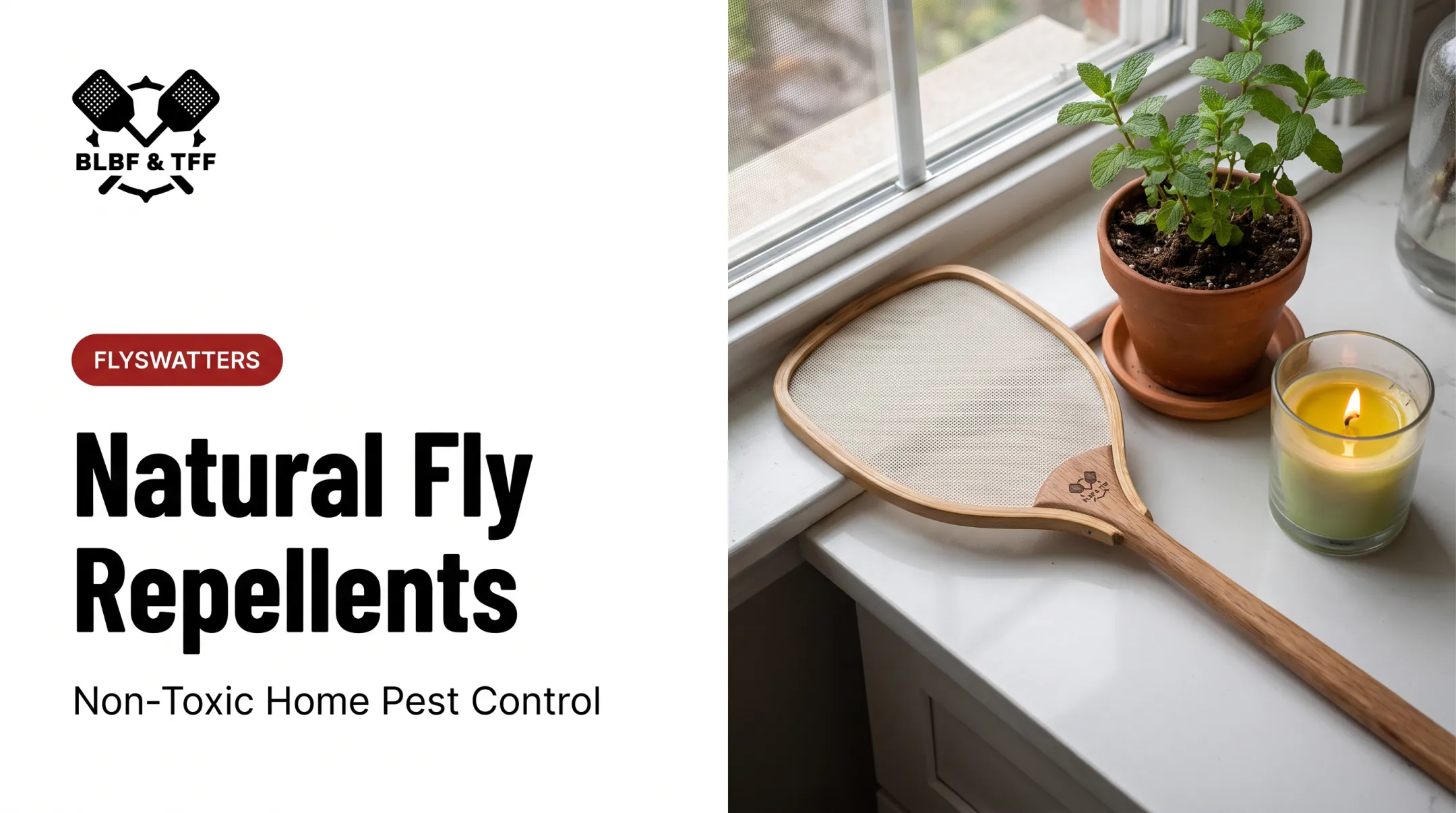
Essential oils and herbs can discourage flies, though results vary by oil and how you use them:
- Eucalyptus: real repellency in lab testing
- Lemongrass + peppermint blend: strong synergistic repellency reported in a 2024 study
- Lavender: weak against adult flies, though it caused mortality in enclosed exposure tests
- Citronella: only slight, non-significant effect on house flies specifically

When you want capture instead of mild deterrence, a simple attractant trap beats scent alone.
DIY vinegar trap: Mix apple cider vinegar with a few drops of dish soap in a shallow bowl. The vinegar draws flies in; the soap breaks surface tension so they sink. Vinegar attracts rather than repels—that's why the trap works.
Natural repellents need frequent reapplication and work best for mild deterrence. They won't solve a real infestation on their own.
Choosing the Right Chemical-Free Method for Your Situation
Different environments call for different combinations:
| Setting | Best Approach |
|---|---|
| Indoor kitchen | Sanitation, UV fly lights, a reliable swatter |
| Outdoor/farm | Manure management, traps, biological controls |
| RV/camping | Sealed entry points, portable swatter, essential oil spray |

When that mix includes a swatter, durability matters more than people expect. A cheap plastic swatter that snaps after two weeks isn't saving you money. Slap-a-Fly's Herculite 80 striking surface and aircraft spruce handle are built for thousands of strikes, which matters if you're dealing with flies every single day rather than once a season.
The best results come from layering: prevention, one active tool, and one repellent working together instead of pinning your hopes on a single product.
Frequently Asked Questions
What are the best chemical-free fly control methods?
Sanitation, sealing entry points, non-toxic traps, UV lights, and a durable flyswatter together form the strongest chemical-free approach. No single method covers every scenario.
Does vinegar or essential oil actually repel flies?
Vinegar attracts flies rather than repelling them, which makes it useful for traps, not deterrence. Oils like eucalyptus and lavender show some lab-tested repellent effect, though results vary by species and concentration.
Can natural remedies fully eliminate a fly infestation?
Natural methods help with mild issues but rarely solve severe infestations alone. Combining sanitation, trapping, and mechanical removal like swatting gets much better results.
Is a flyswatter still effective compared to modern fly killers?
Yes. A well-built flyswatter offers instant, chemical-free elimination with no reapplication and no ongoing cost, unlike sprays or bait traps that need constant replacing.
What attracts flies to homes and how can I prevent it?
Decaying organic matter, trash, pet waste, and sugary or spoiled food are the main attractants. Tight-lidded trash cans, prompt cleanup, and sealed food storage cut attractants fast.
When should I call a pest control professional instead of using DIY methods?
Call a pro if flies return despite sanitation and trapping, or you can't find the breeding source. Recurring problems often trace to hidden issues—like a leaking drain—that DIY methods miss.