It's not that simple. Electric rackets bring real tradeoffs: batteries die at the worst moment, mesh grids bend after a few solid hits, and you still have to get uncomfortably close to something that stings back.
This guide breaks down how electric swatters actually work, what separates a good one from a dangerous one, and why a well-built manual swatter might be the smarter, safer buy.
Key Takeaways
- Wasps often need a second strike — one mesh hit rarely drops them cold
- Reach beats raw zap power; wasps sting repeatedly if you miss up close
- Battery rackets fade fast — charge and mesh wear out after one heavy summer
- Manual heavy-duty swatters with extended reach remove battery failure from the equation
Why Wasps Require a Different Approach Than Flies
A fly bounces off your hand and buzzes away annoyed. A wasp remembers.
Wasps are territorial and drawn to protein and sugar, which is exactly what's on your picnic table. They're also capable of stinging multiple times in a single encounter, unlike bees.
The CDC recorded 1,109 deaths from hornet, wasp, and bee stings in the US between 2000 and 2017, an average of 62 per year, according to CDC QuickStats. Those figures reflect a real medical risk.
Wasps call for more caution than flies for a few reasons:
- They defend territory around food and nests
- One encounter can mean multiple stings
- Some species release a scent marker that recruits nestmates
- Sting allergies raise the stakes from painful to dangerous
University of Maryland Extension guidance notes that wasps generally leave people alone unless they feel threatened, and being swatted or handled counts as a threat.
If you're allergic to stings, extra distance isn't optional. It's the whole strategy.
How Electric Fly Swatters Work (and Their Limitations)
A battery charges a mesh grid. When an insect touches the electrified wires, it gets shocked or killed on contact. Most models add:
- A flexible or foldable head for storage
- A safety switch that cuts power when you release the button
- Rechargeable batteries (USB-C is now common) or disposable AA cells
Simple on paper — but the weak spots show up fast in peak wasp season.
Where Electric Rackets Fall Short
Three issues show up most often:
- Battery fade — A racket that felt strong in June can feel sluggish by August, right when wasp activity peaks
- Bent mesh — Hard-bodied wasps bend wires on repeated hits, weakening the shock and opening gaps insects slip through
- Proximity risk — Wirecutter's testing found electric rackets work well mid-air but struggle on stationary targets. You still have to swing close enough to connect — a tough ask when the insect can sting back

Safety is another real concern. The CPSC issued a 2025 recall on a rechargeable bug-zapper racket that could catch fire during extended use — about 29,000 Amazon units. Battery failure isn't hypothetical.
What to Look for When Buying an Electric Fly Swatter for Wasps
Not all rackets are built the same. If you're set on an electric model, prioritize these features:
- Voltage/shock strength — Higher voltage is marketed for instant knockdown, but there's no universal standard to compare models
- Handle length — Longer handles keep your hand farther from the business end of an angry wasp
- Build quality — Rigid mesh holds up better than flexible mesh after repeated impacts
- Safety features — Protective guards, a momentary (not locking) power button, and a visible charge indicator
- Power source — Rechargeables must last peak wasp season; disposables are more predictable but cost more over time
- Maintenance — Wings, legs, and stingers clog the mesh—clean regularly or the grid weakens

Before buying any electric racket, check it against current CPSC recall listings. It's a five-minute search that could save you a burned-out battery or worse.
A Safer, Battery-Free Alternative: Military-Grade Manual Swatters
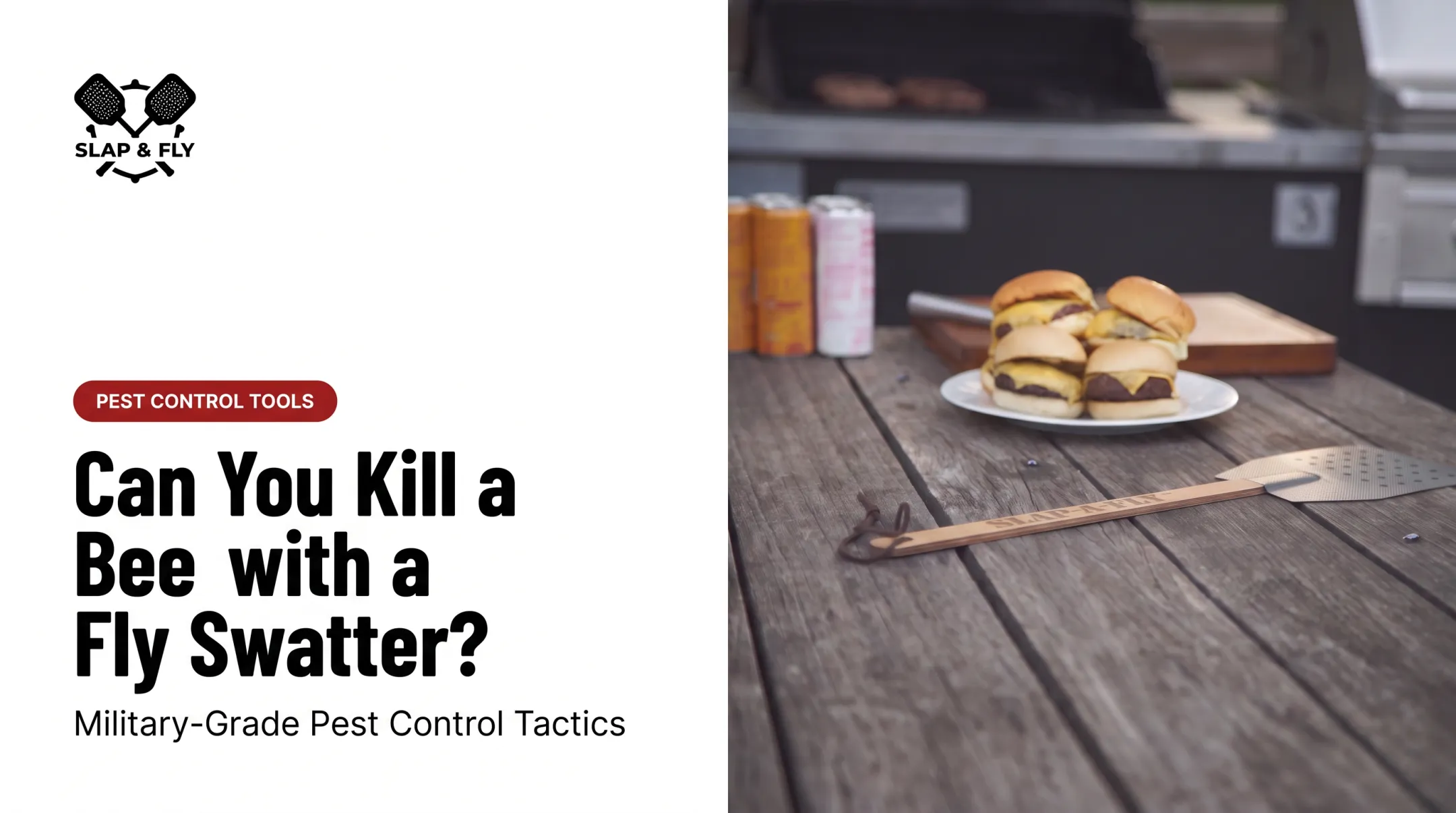
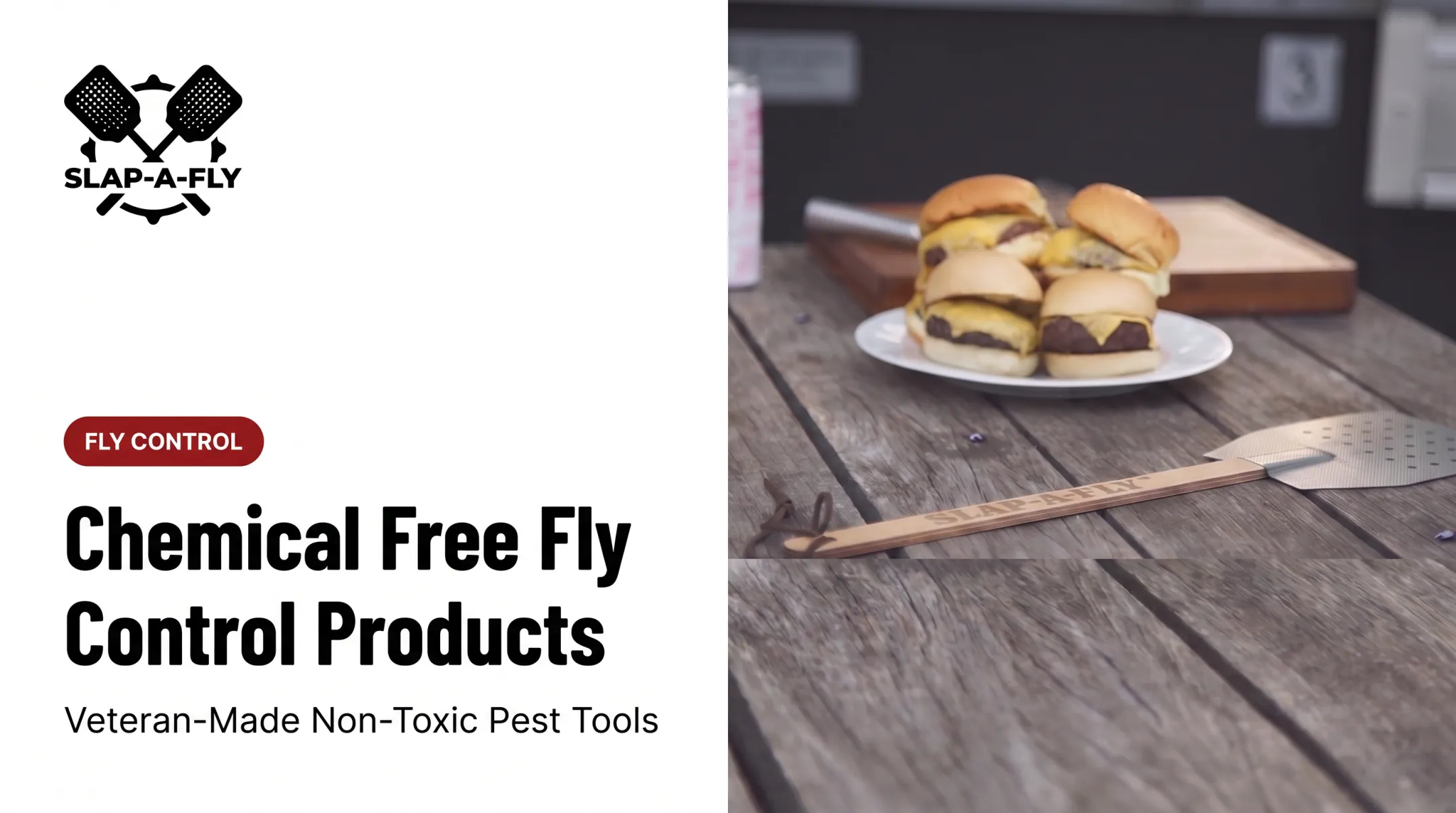
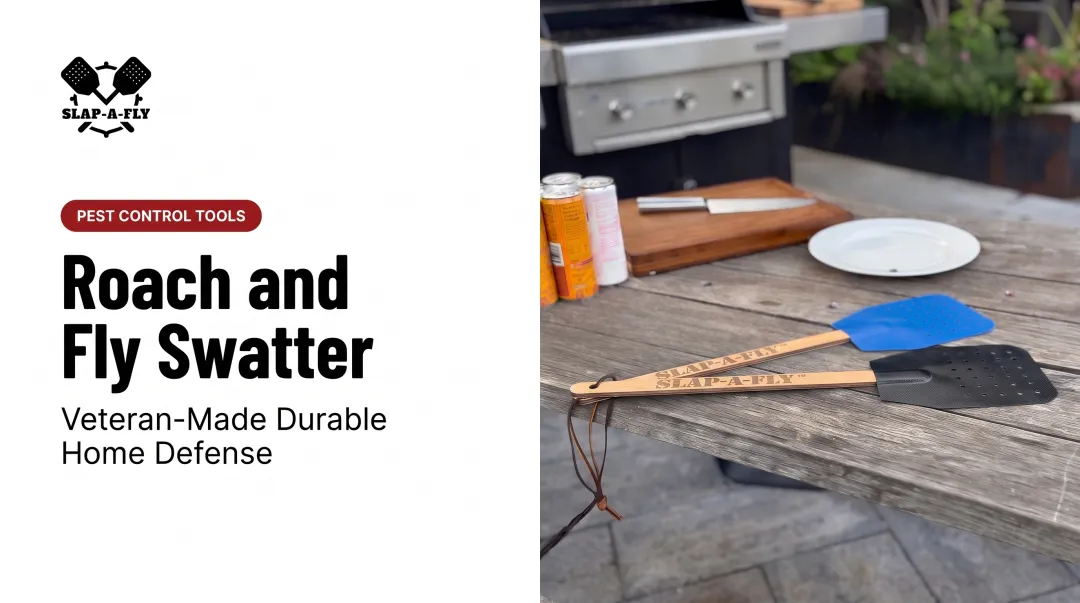
Here's the thing nobody selling electric rackets wants to admit: a manual swatter can't die mid-swing. No dead battery, no bent grid, no accidental shock to your palm. It's just fabric, wood, and force. Slap-a-Fly's XL model was built with exactly this tradeoff in mind. It uses an extended handle to put more distance between you and a wasp before contact, which matters far more than most people realize until they're standing three feet from a nest.
What's Actually in It
Three build choices separate it from a $20 zapper racket:
- Herculite 80 military-spec fabric, company-rated at 80 PSI - enough force for large tough bugs like cockroaches, wasps, and armored insects - not just flies - aimed at single-strike wasp kills (published spec, not an independent lab figure)
- 5-ply aircraft spruce handle—aerospace-grade wood in the same category used on military cargo planes; one buyer said it "didn't break after a big swing"
- Perforated head that cuts air resistance for a faster, cleaner strike a wasp has less time to dodge Plastic racket frames crack on a hard windowsill hit. This handle is built for repeated full swings, and the fabric is meant to take thousands of strikes without tearing. No batteries. No charging. No mesh to bend. Just a tool that works the same on strike one thousand as it did on strike one.

Safety Tips for Killing Wasps (Electric or Manual)
Regardless of which tool you choose, behavior matters more than gear.
- Never swing near an active nest. Disturbing a nest can trigger a swarm defense response that no swatter can outrun.
- Keep your distance. Penn State Extension recommends observing from 10-15 feet to identify a nest's flight path, then staying clear of that path entirely.
- Wear light-colored clothing. Dark colors and sudden movements can trigger defensive aggression in wasps.
- Clean your swatter promptly. Whether it's an electric grid or a fabric strike surface, leftover residue is unsanitary and can affect performance on the next strike.

A wasp away from its nest is usually just foraging and not looking for a fight, according to Penn State's extension guidance. Save swatting for isolated insects, not clusters near a nest entrance.
Frequently Asked Questions
Do electric fly swatters actually kill wasps?
Yes, if the voltage is strong enough to deliver a full shock on contact. Some wasps survive a weak first hit due to their tougher exoskeleton and require a second strike to finish the job.
Is it safe to use an electric fly swatter on wasps?
Yes, with an insulated handle and careful use. Keep distance from nests and avoid close-range swatting—a mistimed jolt or missed swing can put your hand in sting range.
What is the strongest way to kill a wasp instantly?
A strong electric shock or a solid, direct strike from a heavy-duty swatter both work. Impact force and precision on contact matter more than the method itself.
Can I use a regular fly swatter on wasps?
A heavy-duty manual swatter with a reinforced striking surface can be very effective, often outperforming flimsy electric models whose mesh bends after a few hard hits.
How do I get rid of wasps around my patio or kitchen without an electric zapper?
Use a manual swatter with extended reach, remove sugary drinks and food attractants, and seal gaps where wasps enter.
Are electric fly swatters durable enough for repeated wasp encounters?
Mesh grids can bend or wear out with repeated impacts against wasps' tougher bodies. Quality manual swatters with reinforced handles, like 5-ply aircraft spruce, tend to hold up longer under the same use.