Females can lay dozens of eggs a day, and eggs become adults in as little as 7-10 days, according to Michigan State University Extension. A handful of flies today can mean a real problem next week.
This guide covers why they show up, exactly how to eliminate them, how to keep them from coming back, and when a good flyswatter earns a permanent spot on your kitchen hook.
TL;DR
- Main causes: ripening produce, dirty drains, and residue in trash or recycling bins
- DIY clears most infestations when you remove breeding sites, not just the flies you see
- Steps: eliminate food sources → treat drains → trap adults → confirm they're gone
- Call a pro only if flies persist beyond 2–3 weeks of consistent cleaning
What Are Fruit Flies (and What's That Bug in My Kitchen)?
Fruit flies (Drosophila melanogaster) are small, tan-to-black insects with rounded bodies and distinctive red eyes. They feed on ripening and fermenting organic matter — fruit, vegetables, spilled juice, even a forgotten splash of wine.
Their life cycle is brutally efficient: egg to adult in roughly 7-10 days. That's why a fruit bowl left out over a long weekend can turn into a swarm.
A quick identification note: not every tiny fly in your kitchen is a fruit fly.
| Fly Type | Look | Where They Breed |
|---|---|---|
| Fruit fly | 1-3mm, red eyes, tan/black | Ripe or fermenting produce |
| Fungus gnat | ~3mm, black, long legs | Houseplant soil |
| Drain fly | Fuzzy, pale to dark | Gunk inside drains |

Killing the flies you can see doesn't solve anything if eggs are already laid in your fruit bowl or drain. You're treating symptoms, not the source.
Why Your Kitchen Attracts Fruit Flies
Even a clean kitchen can attract fruit flies. All they need is moisture plus fermenting sugar somewhere in the room, and that combination hides in more places than most people expect.
Common Breeding Sites
- Overripe bananas, tomatoes, or onions left on the counter
- Kitchen drains, garbage disposals, and drain traps
- Trash cans, compost bins, and recycling containers with sticky residue
- Spills under appliances, inside cabinets, or behind the fridge
Those sites get especially productive in late summer and early fall, when produce is abundant and ripening quickly, according to Nebraska Extension.
As for how fast things escalate: females can lay roughly 60-100 eggs per day under lab conditions, per a 2024 fecundity study. That number won't translate exactly to your kitchen, but it explains why a "small" problem rarely stays small for long.

How to Get Rid of Fruit Flies in the Kitchen (Step-by-Step)
Swatting the flies you see feels productive. Alone, it isn't. If eggs are already in a rotting potato or your drain trap, new adults keep emerging no matter how many you kill today.
Step 1: Eliminate Food Sources
- Toss overripe or damaged produce; refrigerate what's left
- Empty and rinse trash, recycling, and compost bins daily
- Wipe down counters, appliances, and cabinet interiors for spills and crumbs
Step 2: Treat Drains and Hidden Breeding Spots
- Clean garbage disposals and drains with a bio-cleaner, or flush with baking soda and vinegar
- Check under the fridge, inside cabinets, and around potted plants for hidden moisture
- Confirm drains are the source by covering one with plastic wrap overnight, then check for flies stuck underneath the next morning
Step 3: Trap and Kill Remaining Adult Flies
Once breeding sites are handled, you're left with adult flies still circling the kitchen. Trapping helps clear them out, and a fast, reliable swatter handles the ones that won't wait.
- DIY trap: apple cider vinegar in a small dish, a drop of dish soap, plastic wrap on top with tiny holes punched through
- Commercial traps: sticky, UV-light, or pheromone-based options for higher capture volume
- Backup tool: a durable flyswatter for the stray flies that dodge every trap you set

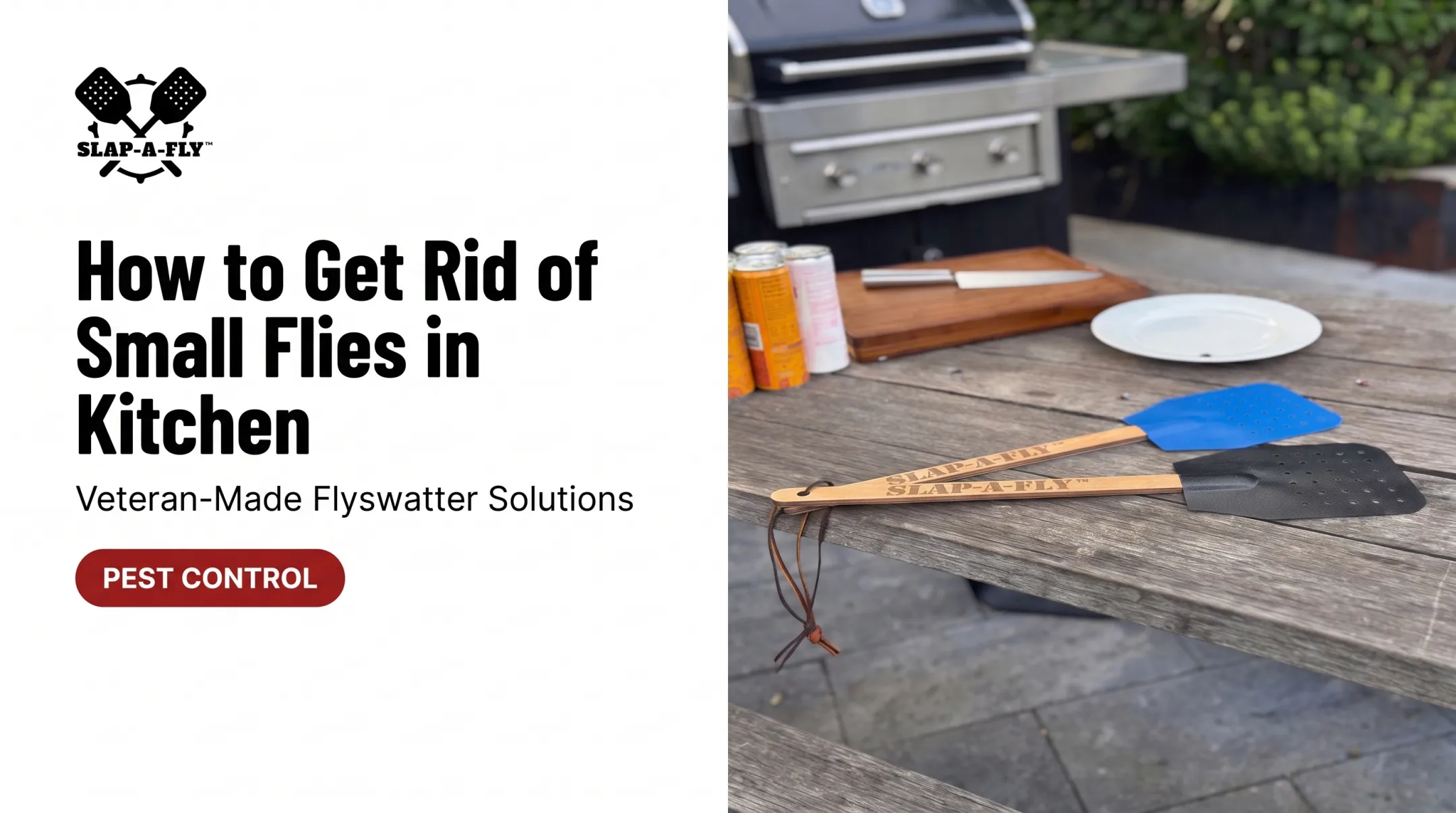
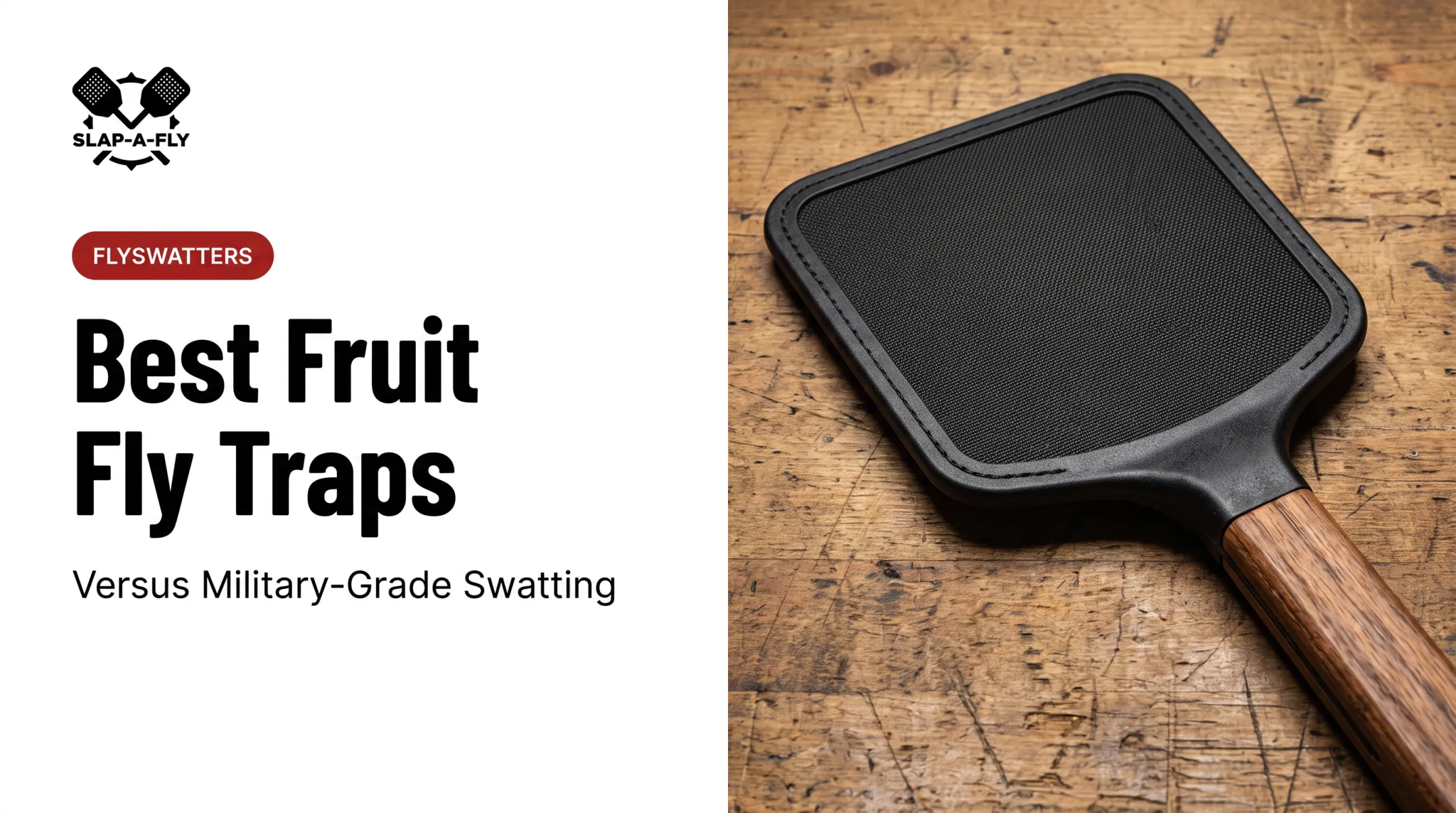
Traps take hours or days to work; a fly landing on your counter needs a response now. Slap-a-Fly's Standard Flyswatter ($19.99) earns its keep here: the military-grade Herculite 80 striking surface, engineered by U.S. Army veterans, holds tension far longer than typical mesh, so you're not swinging a swatter that's already gone slack. That 80 PSI strike is built for large tough bugs like cockroaches, wasps, and armored insects - not just flies.
For bigger kitchens or heavier pest pressure, the XL model ($24.99) adds reach and coverage. The Exterminator Bundle ($42.99) keeps spares on hand so one worn-out swatter never leaves you empty-handed.

Step 4: Confirm the Infestation Is Resolved
- Monitor daily for new flies over the following week
- Recheck drains, produce storage, and bins if flies reappear
- Give it time. Nebraska Extension notes that even after sources are removed, remaining adults can take a couple of weeks to die off naturally
Preventing Future Fruit Fly Infestations
Prevention is mostly maintenance, not a one-time deep clean.
- Wash produce when you bring it home; store ripening fruit in the fridge, not on the counter
- Keep trash, recycling, and compost sealed and emptied often
- Clean drains and disposals on a schedule — not just after flies show up
- Keep a flyswatter within reach for the occasional stray fly before it becomes a colony
For most kitchens, the Slap-a-Fly Standard is the practical daily-use pick — sized for fruit flies, gnats, and mosquitoes. If outdoor spillover brings in wasps or larger flies, the Slap-a-Fly XL adds reach and a bigger strike zone.
Hang it by the storage loop near the sink so it's there the second you need it, not buried in a drawer.
Common Mistakes to Avoid
A solid cleanup still fails when one of these slips through:
- Spraying insecticide before removing breeding sites — adults die, but eggs keep hatching
- Assuming every tiny fly is a fruit fly — check potting soil for fungus gnats and drains for drain flies
- Skipping hidden spots — drain pans, behind appliances, and under the fridge get missed often
- Giving up on traps too early — vinegar traps usually need several days of steady use before counts drop
Frequently Asked Questions
Why does my kitchen have so many tiny flies?
Usually it's ripening produce, a drain, or trash providing moisture and fermenting food. Once eggs are laid, populations grow fast.
How long does it take to get rid of fruit flies completely?
Most infestations clear in about one to two weeks with consistent sanitation and trapping. Untreated breeding sites can drag the cycle out longer.
Do fruit flies bite or spread disease?
They don't bite, but they can carry bacteria from decaying matter on their bodies. Good sanitation matters for food safety, not just annoyance control.
What is the fastest way to kill fruit flies already in my kitchen?
Swat the flies you can see for instant results, then set vinegar or sticky traps to catch the rest. Traps work more slowly, so swatting clears what’s already in the air.
Can fruit flies come back after I get rid of them?
Yes, quickly — new produce, spills, or drain residue can reintroduce breeding conditions. Ongoing prevention matters more than a one-time cleanout.
Are homemade vinegar traps as effective as store-bought traps?
Vinegar traps work reasonably well for light infestations. Larger outbreaks may need commercial traps or, in persistent cases, professional treatment.