If you've ever chased a fly with a spray bottle only to watch it dodge every shot, you know the frustration. Sprays leave residue near food. Traps take hours to work. Sometimes you just need something fast, safe, and reliable.
This guide breaks down the best indoor fly killers, how to pick the right one for your kitchen, and prevention tips that keep flies from coming back.
TL;DR
- Indoor fly killers include swatters, electric zappers, sticky traps, bait stations, and sprays
- Kitchens are high-risk zones because flies breed near garbage, moisture, and exposed food
- Manual swatters offer instant, chemical-free kills with zero food-safety concerns
- Sprays require ventilation and food removal, making them a poor fit near prep areas
- Choose based on kill speed, safety around food, reusability, and cost
Overview of Indoor Fly Killers for Homes and Kitchens
Indoor fly killers range from electric zappers and sticky traps to sprays and heavy-duty flyswatters. Each suits a different infestation level and living situation—especially kitchens, where food prep makes sprays and open traps less appealing.
House flies are among the most common pests in American homes, according to the National Pest Management Association. A single female can lay 350-900 eggs in her lifetime.
Breeding cycles can finish in as little as 7-10 days in warm conditions. That means a small fly problem can snowball into a full infestation within weeks.
Below, we rank the top options based on effectiveness, safety around food, and overall value.
Best Indoor Fly Killers for Homes and Kitchens
The best indoor fly killer for your home or kitchen depends on four factors:
- Kill speed
- Safety near food prep
- Reusability
- Cost over time
Here is how the main options compare—and where each one falls short around food.
Slap-a-Fly™ Military-Grade Flyswatter
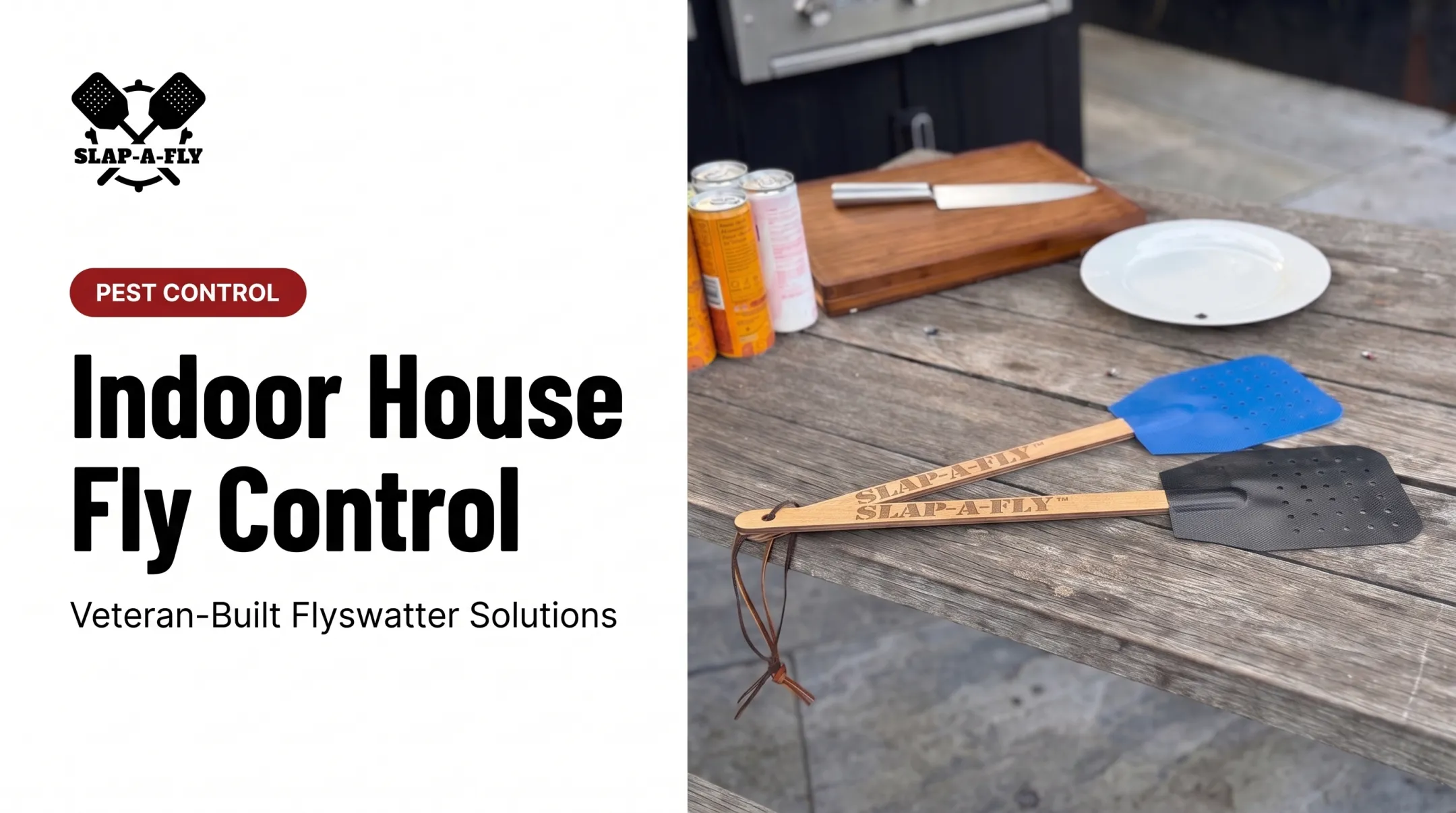
Slap-a-Fly is a veteran-owned, U.S.-made flyswatter built with military-grade materials. It was designed for households and commercial kitchens that want an instant kill without chemicals near food.
What sets it apart:
- Herculite 80 MIL-SPEC fabric delivers up to 80 PSI of impact force - enough force for large tough bugs like cockroaches, wasps, and armored insects - not just flies
- 5-ply aircraft spruce handle for balance and control
- No sprays, residue, or fumes near food prep surfaces
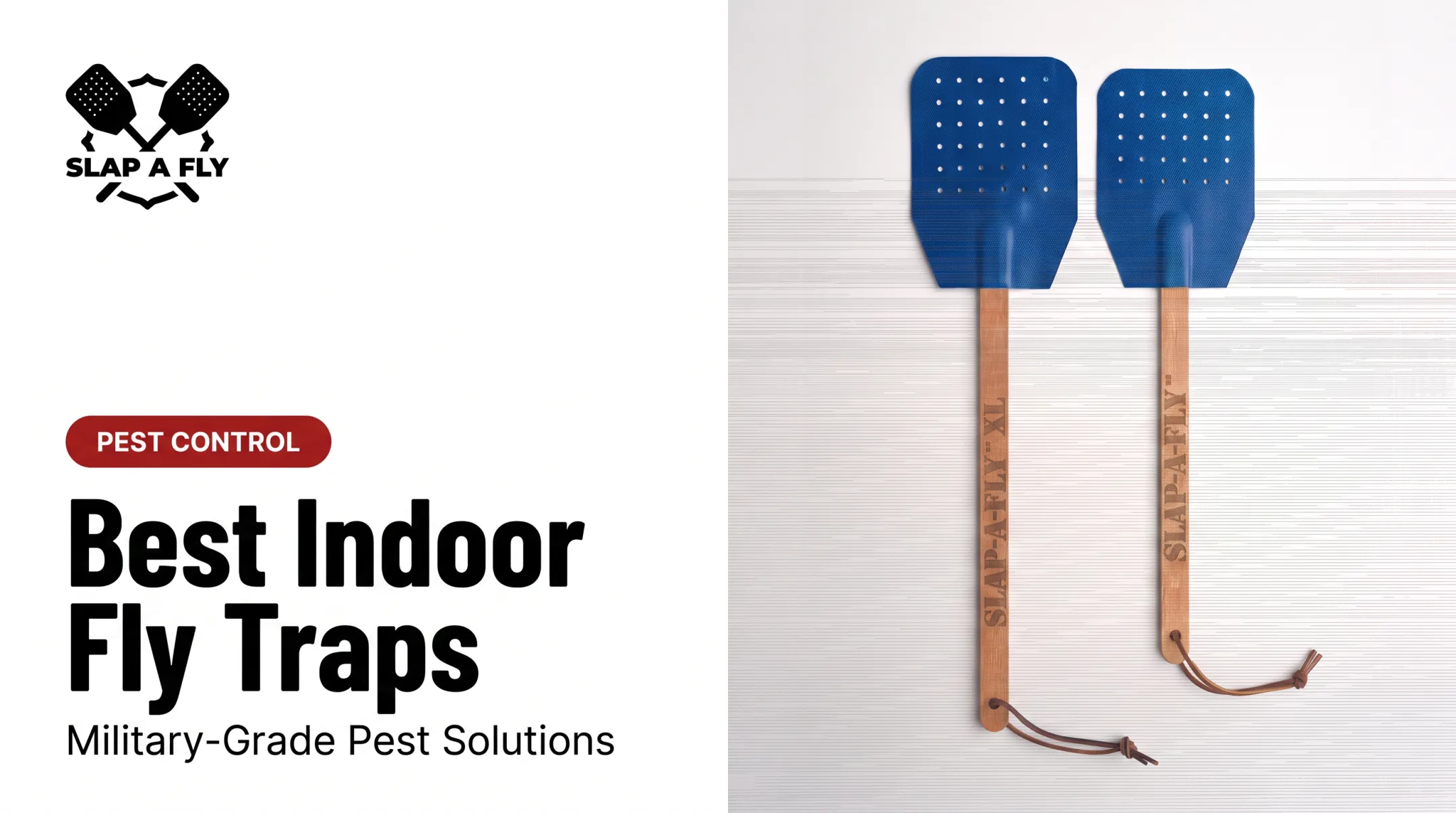
- XL model offers extended reach, useful for keeping distance from bees or wasps
- 100% vegan materials and construction built to withstand thousands of strikes
| Kill Method | Materials | Best For |
|---|---|---|
| Manual strike, instant | Herculite 80 fabric, aircraft spruce handle | Kitchens, dining areas, chemical-sensitive households |
The Standard model ($19.99 on sale) is built for everyday kitchen use against flies, gnats, and small pests. The XL ($24.99 on sale) adds a larger strike surface and longer reach for commercial kitchens or bigger, faster insects.

Electric Bug Zapper
Electric zappers use UV light to attract flies, then electrocute them on contact with a charged metal grid. They're popular for larger infestations or bigger open spaces.
What to weigh before you buy:
- Coverage typically spans 300–800 sq ft depending on wattage
- Zap noise varies by model and can distract in quiet rooms
- Trays need regular emptying; bulbs need seasonal replacement
| Kill Method | Coverage Area | Maintenance Needs |
|---|---|---|
| UV attraction + electric grid | 300-800 sq ft depending on wattage | Regular tray cleaning, seasonal bulb replacement |
One consideration: placement matters. Guidance from Texas A&M's school IPM program recommends keeping electrocuting traps away from food-prep zones, since debris can scatter onto nearby surfaces.

Sticky Fly Traps / Flypaper
Flypaper works because house flies naturally rest on vertical surfaces, according to Colorado State University Extension. Hang strips near windows or garbage areas for passive, ongoing capture.
Why they still get used:
- Low effort once hung—no daily attention required
- Cheap per strip, though frequent replacement adds up
- Doubles as a monitor to gauge infestation severity
| Kill Method | Placement | Cost per Unit |
|---|---|---|
| Adhesive trapping | Windows, garbage areas (not near food prep) | Varies by brand |
Fly Bait Stations
Bait stations use attractant lures, often containing ingredients like Z-9-tricosene, to draw flies into an enclosed trap. They work well in pantries or utility areas.
What to know:
- Most enclosed designs keep mess and odor out of sight
- Some formulas add bittering agents to deter pets and kids
- Results build over days, not minutes—plan for a lag
| Kill Method | Safety Rating | Ideal Placement |
|---|---|---|
| Lure and trap | Keep away from food and areas accessible to pets/children | Pantries, utility rooms, near waste bins |
EPA product labels typically require stations to be secured at least 4 feet off the ground and kept away from food-contact surfaces.

Aerosol/Pyrethrin-Based Fly Spray
Sprays deliver immediate knockdown for visible flies but come with the most restrictions for kitchen use.
Trade-offs:
- Fast knockdown on flies you can see
- Food, dishes, and utensils must be covered or removed first
- Most labels require leaving the room and ventilating afterward
| Kill Method | Safety Precautions | Best Use Case |
|---|---|---|
| Chemical knockdown | Ventilate 2+ hours, cover food and surfaces | Non-food areas, occasional flare-ups |
The EPA advises increasing ventilation whenever pesticides are used indoors, and recommends nonchemical methods when possible, especially in food-prep zones.
How We Chose the Best Indoor Fly Killers
A common mistake is reaching for a spray in the kitchen or picking a disposable trap that needs constant replacing. Both can cost more over time than a single durable tool.
We scored each option on five practical household tests:
- Kill speed and reliability on contact
- Safety around food, kids, and pets
- Durability and reusability over disposable refills
- Everyday ease of use in kitchens and living areas
- Long-term value versus sprays and replaceable traps
Preventing Flies From Returning to Your Kitchen
Killing existing flies solves half the problem. Keeping new ones out matters just as much.
Seal entry points and manage waste:
- Fix gaps around doors, windows, and vents where flies sneak in
- Use tight-lidded trash cans and empty them every 4-5 days in summer, per Colorado State Extension
- Remove decaying organic material promptly—flies breed there first
Keep prep areas clean:
- Wipe counters and clean drains regularly
- Store food in airtight containers
- Manage pet food and litter areas, which also attract flies
Use natural repellents as a supplement:
- Basil and clove oil showed over 80% repellency at certain concentrations in lab testing
- Lavender has also shown repellent properties
- Treat oils as a complement to active fly control, not a replacement

Conclusion
The right indoor fly killer depends on your situation. Heavy infestations may call for a zapper or bait station. Occasional flies near food are better handled with something instant and chemical-free.
Weigh kill speed, safety, and reusability before you buy. A $5 trap you replace weekly often costs more over a year than one durable tool.
For households and kitchens that want a reliable, no-chemical option, the Slap-a-Fly™ Military-Grade Flyswatter delivers an instant strike without sprays, residue, or waiting for bait to work.
Frequently Asked Questions
What will kill house flies instantly?
A firm swatter strike kills flies on contact without chemicals. Zappers and pyrethrin sprays also work instantly, while traps and bait stations usually take hours.
How can I get rid of a fly infestation in my house?
Combine exclusion (sealing entry points), sanitation (removing breeding sites like garbage and food waste), and active killing methods like swatters, traps, or zappers for full control.
Are chemical fly sprays safe to use in kitchens?
Most sprays require covering food and ventilating the room for hours afterward. Non-chemical options like swatters are the safer choice near food prep.
How long do flies live indoors?
House flies typically live 15-25 days, though some can survive up to two months. Quick action prevents them from laying eggs and multiplying further.
Do ultrasonic or plug-in repellents actually work on flies?
Evidence is limited. A 2026 peer-reviewed review found no specific efficacy trials for ultrasonic devices against house flies. Physical traps or swatters remain more reliable.
What attracts flies to my kitchen the most?
Rotting food, garbage, moisture, and uncovered dishes are the primary attractants. Flies breed in decaying organic material, so cleanliness is your first line of defense.