Flies aren't just irritating. They land on garbage, drains, and pet waste, then walk across your countertops and food. That's a real sanitation issue, not just an annoyance.
This guide covers why flies suddenly show up, how to eliminate them fast, natural deterrents worth trying, and how to keep them out for good — including when a simple, mechanical tool beats a spray can.
Key Takeaways
- Find the breeding source first — sanitation beats any trap or spray long-term
- Combine methods: traps, sealing entry points, and manual removal work faster together
- Flies multiply explosively: eggs to adults in as little as 7–10 days
- Cheap flyswatters often fail on fast, erratic flies; a sturdier swatter lands more strikes
- Seal screens and gaps so new flies can’t replace the ones you clear out
Why Flies Suddenly Swarm Your House
Fly infestations feel sudden, but they're rarely random. Once conditions are right, populations explode.
The Math Behind the Swarm
House flies move through egg, larva, pupa, and adult stages. According to UNH Extension's house fly fact sheet, a female can lay 75-150 eggs per cluster, with up to 900 eggs over her lifetime.
In warm weather, Nebraska Extension notes egg-to-adult development can take about two weeks, sometimes faster.
That's how a handful of flies becomes a swarm while you're still deciding whether it's worth the effort to deal with them.

What's Attracting Them
Flies need food, moisture, and a place to lay eggs. Common culprits include:
- Rotting food or overfilled garbage cans
- Pet waste left in the yard or litter box
- Damp kitchen or bathroom drains
- Overripe fruit sitting on the counter
- Standing water or persistent moisture
They also sneak in through torn screens, gaps under doors, and vents, and indoor lighting pulls them in at night.
Killing the adults you see is only half the job. If the breeding source is still active, new flies keep replacing the ones you swat.
How to Get Rid of Lots of Flies in Your House Fast
Speed matters once flies get inside. Here's what actually works, broken down by fly type.
DIY Traps (Best for Fruit Flies)
If you're dealing with tiny flies hovering around ripe produce, that's likely fruit flies, not house flies. The classic vinegar trap targets them specifically:
- Fill a jar two-thirds with apple cider vinegar
- Add a drop or two of dish soap (breaks the surface tension)
- Leave uncovered near the source, or punch small holes in plastic wrap over the top

A red wine trap works on the same principle. Fruit flies are often drawn to fermenting odors more than plain vinegar.
Commercial Options for House Flies
House flies need different tactics. Options include:
- Sticky traps — pesticide-free, cheap, good for covered indoor placement
- UV glue-board traps — attract and capture without electrocution particles
- Pyrethrin aerosols — effective in enclosed spaces, but keep away from food prep surfaces
- Baited traps — best combined with other methods, rarely enough on their own
Swat First, Ask Questions Later
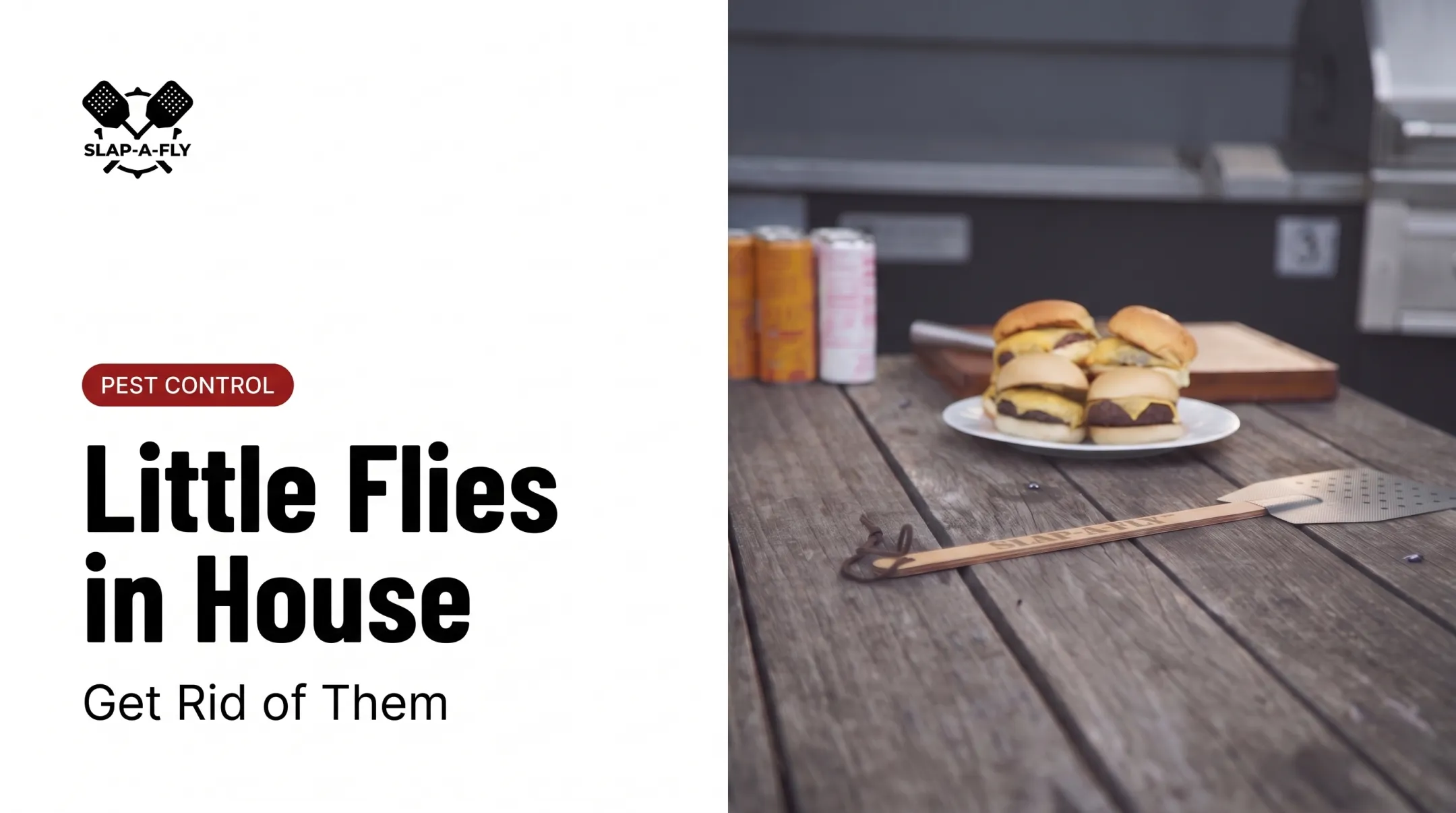
For flies buzzing around your kitchen right now, nothing beats immediate, chemical-free removal. That's where a solid flyswatter earns its keep: no residue near food, no waiting for bait to work.
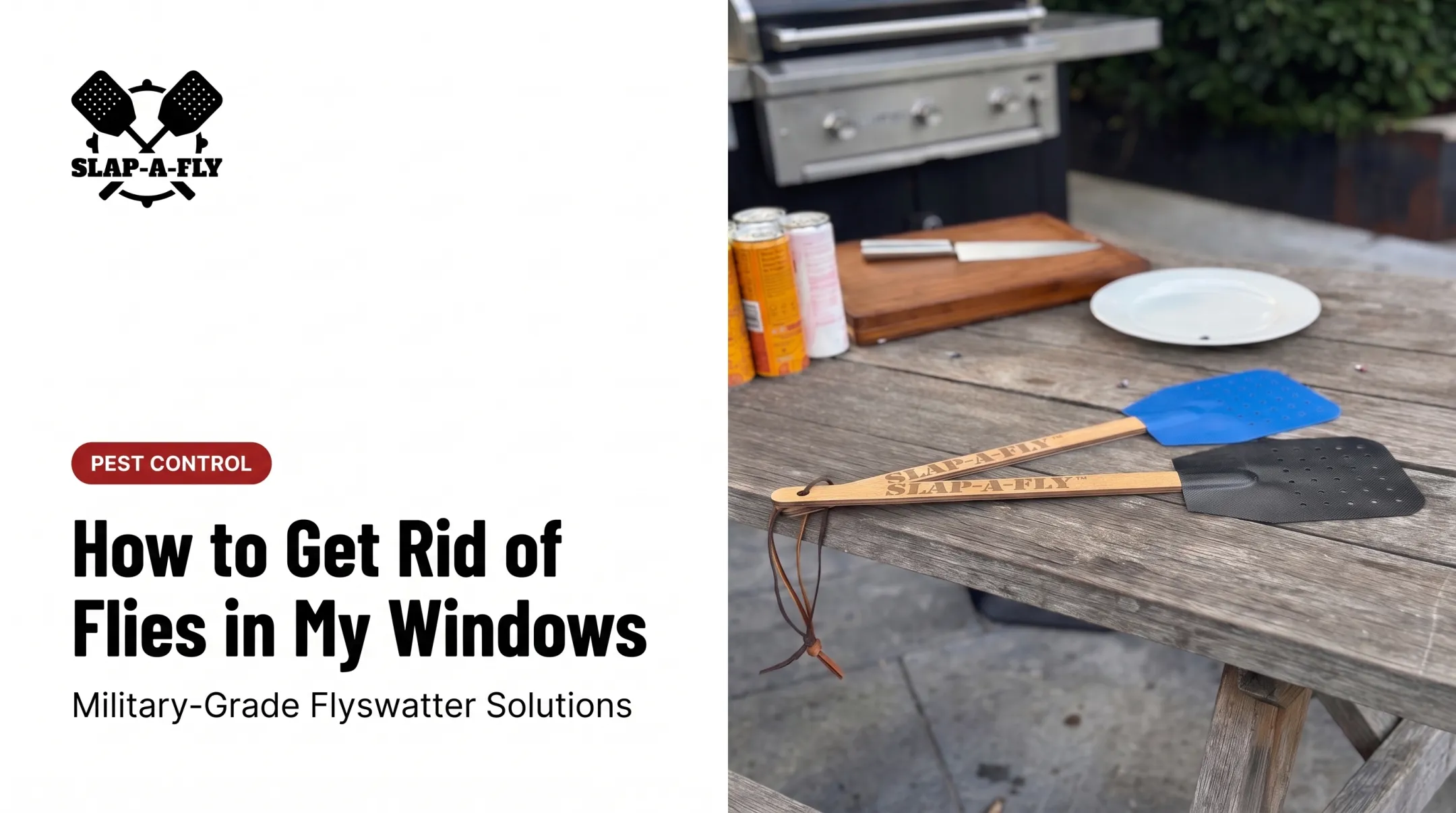
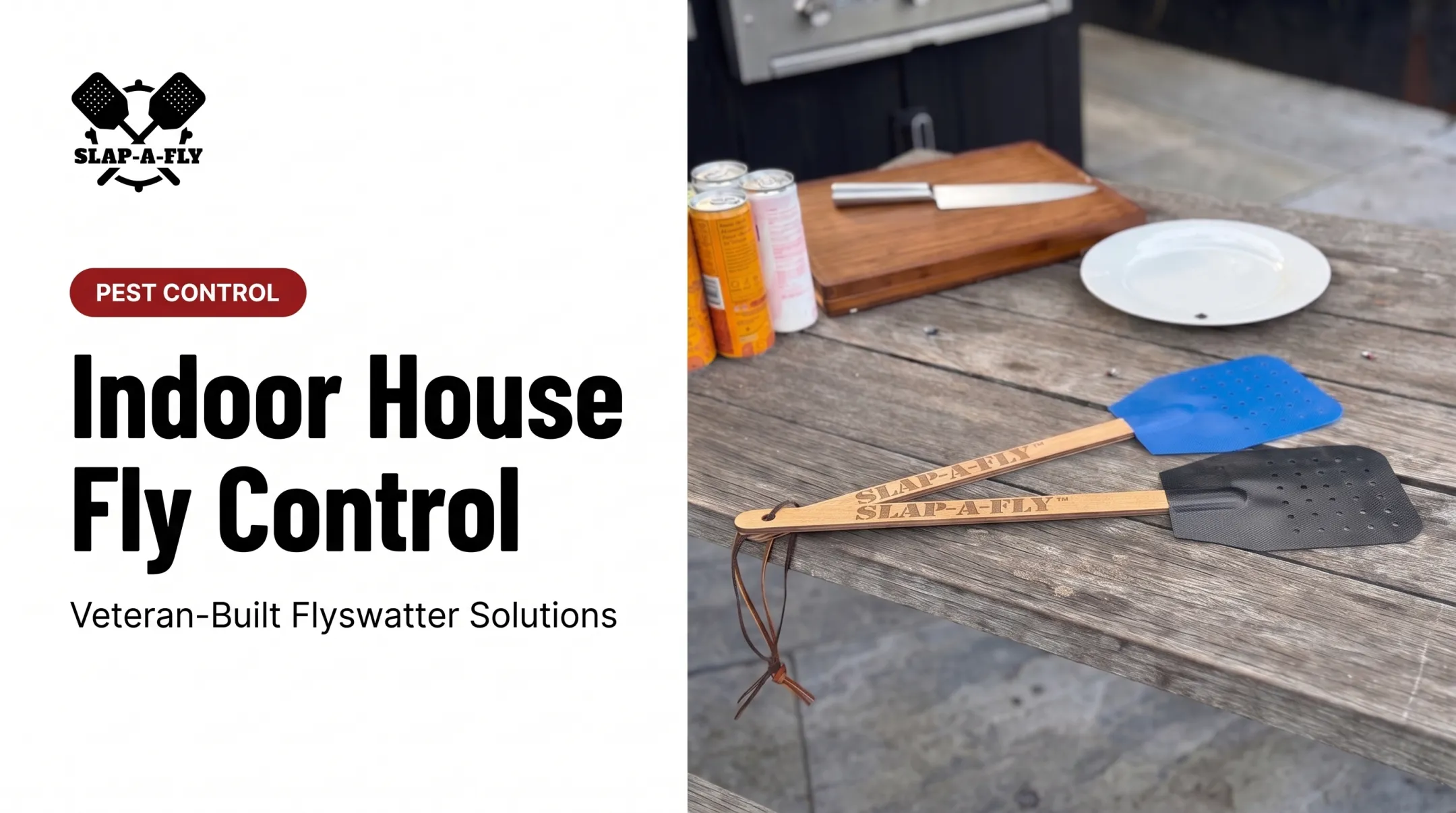
The Slap-a-Fly Standard flyswatter uses a Herculite 80 fabric strike surface (MIL-SPEC material built for military use) mounted on a 5-ply aircraft spruce handle. The perforated head cuts air resistance so your swing stays fast through contact. That 80 PSI strike is built for large tough bugs like cockroaches, wasps, and armored insects - not just flies.
House flies don't fly in straight lines. Their erratic, zig-zag pattern is why flimsy dollar-store swatters miss more than they hit. The wire mesh flexes, slows your swing, and throws off your aim. A rigid, well-balanced swatter lets you commit to the strike instead of second-guessing it mid-swing.

The fastest results come from doing both at once: swat the adults you see today while removing the breeding source that's creating tomorrow's batch. Skip either step and you're only buying temporary relief.
Natural Ways to Keep Flies Away
Natural remedies won't solve an active infestation, but they're worth adding to your prevention routine.
Herbs and Plants
Extension guidance points to these plants as mild deterrents near doors and windows:
- Basil: aroma may discourage flies and mosquitoes
- Lavender: fragrance reported as unpleasant to flies
- Rosemary: known to repel certain garden pests
- Mint: commonly grown near entry points as a general deterrent
Keep expectations realistic. University of Georgia Extension notes these plants won't make an area insect-free. Treat them as a minor assist at best.
Essential Oils and Low-Cost Tricks
- Clove, eucalyptus, citronella, or lemongrass oil on cloth strips near windows
- Jar of water with a few pennies near outdoor seating (mixed evidence, cheap to test)
- Citrus peels studded with cloves as sachets by entry points
None of these replace sanitation. Use them as a supplement, not a substitute.
Getting Rid of Flies in Your Backyard and Outdoor Spaces
Outdoor flies need outdoor-specific tactics.
Start With Sanitation
- Keep trash cans covered with tight-fitting lids
- Clean up pet waste promptly — it's a major breeding attractant
- Turn or manage compost bins so they don't stay wet and exposed
Traps, Candles, and Airflow
Place fly traps away from seating areas so you're not drawing flies toward your guests. Citronella candles help during gatherings.
Moving air matters more than most people expect. Flies avoid strong airflow and prefer still air, so a simple fan aimed across your patio table during a barbecue can keep them off the food and away from guests.

When Bigger Bugs Show Up
Backyard gatherings sometimes bring bigger problems than house flies: wasps, horseflies, and other aggressive insects. An XL-reach flyswatter belongs in the yard bag for those moments. The extended aircraft-spruce handle and larger Herculite 80 strike surface put more distance between you and stinging insects before you swing, which helps when you'd rather not get within arm's reach of a wasp.
Long-Term Prevention Tips
Once you've cleared the current problem, keep it that way.
- Seal entry points: repair torn screens, add weather-stripping to doors, and screen vents
- Store food properly: sealed containers, no overripe fruit sitting out
- Remove trash regularly: don't let cans sit full for days
- Clean drains: scrub soap scum and organic sludge from tubs and sinks so drain flies can't breed

Drain fly problems often need three weeks or longer of consistent scrubbing before they fully clear.
Even with all this in place, the occasional stray fly still finds its way in. Keep a durable flyswatter within reach—no setup, no chemicals near your food, just quick action when you spot one.
Slap-a-Fly swatters use a MIL-SPEC strike surface built to withstand thousands of strikes, so one earns a permanent spot in the kitchen drawer instead of falling apart after a few weeks.
Frequently Asked Questions
How do I get rid of lots of flies in my house?
Locate and remove the breeding source first—garbage, pet waste, or a damp drain. Then clear adults still in the room with sticky traps or baits plus a sturdy flyswatter.
How can I get rid of lots of flies quickly?
Swat every visible fly on sight, then set vinegar traps for fruit flies or commercial baits and sticky traps for house flies the same day. You knock down the swarm now while traps catch what you miss.
What is the best way to get rid of flies?
Eliminate breeding sites, trap remaining adults, and swat the strays. Skip source removal and new flies simply replace the ones you kill.
How do I get rid of flies in my backyard?
Cover trash cans, clean up pet waste promptly, and manage compost so it doesn't stay wet. Add outdoor traps away from seating, use fans or citronella candles during gatherings, and keep an XL flyswatter handy for larger pests.
What is the best way to keep flies away?
Seal entry points, stay on top of sanitation, and optionally place basil or lavender near doors. No single step means zero flies, but together they cut repeat problems sharply.