A single house fly can lay 75-150 eggs per cluster and up to 900 eggs over her lifetime. That's why swift, targeted control matters more than waiting it out.
This guide compares the best indoor fly killers and traps on the market, from electric UV zappers to sticky traps to the reliable flyswatter, so you can pick the right tool for your specific fly problem.
TL;DR
- Indoor fly killers fall into four categories: electric/UV traps, sticky traps, baited liquid traps, and manual tools like flyswatters
- Fly species matters — fruit flies, drain flies, and house flies each respond to different control methods
- UV light traps (Zevo, Katchy) work well for ongoing, low-grade infestations near kitchens
- A quality flyswatter remains the fastest, chemical-free option for individual flies near food prep areas
- Match your tool to infestation severity: prevention + traps + a reliable swatter beats any single solution
Understanding Indoor Fly Problems
Flies enter homes chasing food, moisture, and organic waste. Once inside, they multiply fast. Fungus gnats alone can lay 100-200 eggs within five days, and full development to adulthood can take as little as a week.
Common indoor fly types include:
- House flies — drawn to garbage, decaying matter, and animal waste
- Fruit flies — breed in fermenting produce, spills, and drains
- Drain flies — develop in stagnant water and pipe biofilm
- Fungus gnats — thrive in overwatered potting soil
Identifying which species you're dealing with determines which trap or killer will actually work. Match the product to the species, and control gets a lot simpler for US households.
Best Indoor Fly Killers and Traps
Selection depends on four factors:
- Effectiveness against your specific fly type
- Safety around food and pets
- Ease of use
- Value relative to your infestation level
Here's how the leading options stack up.
Slap-a-Fly™ Military-Grade Flyswatter
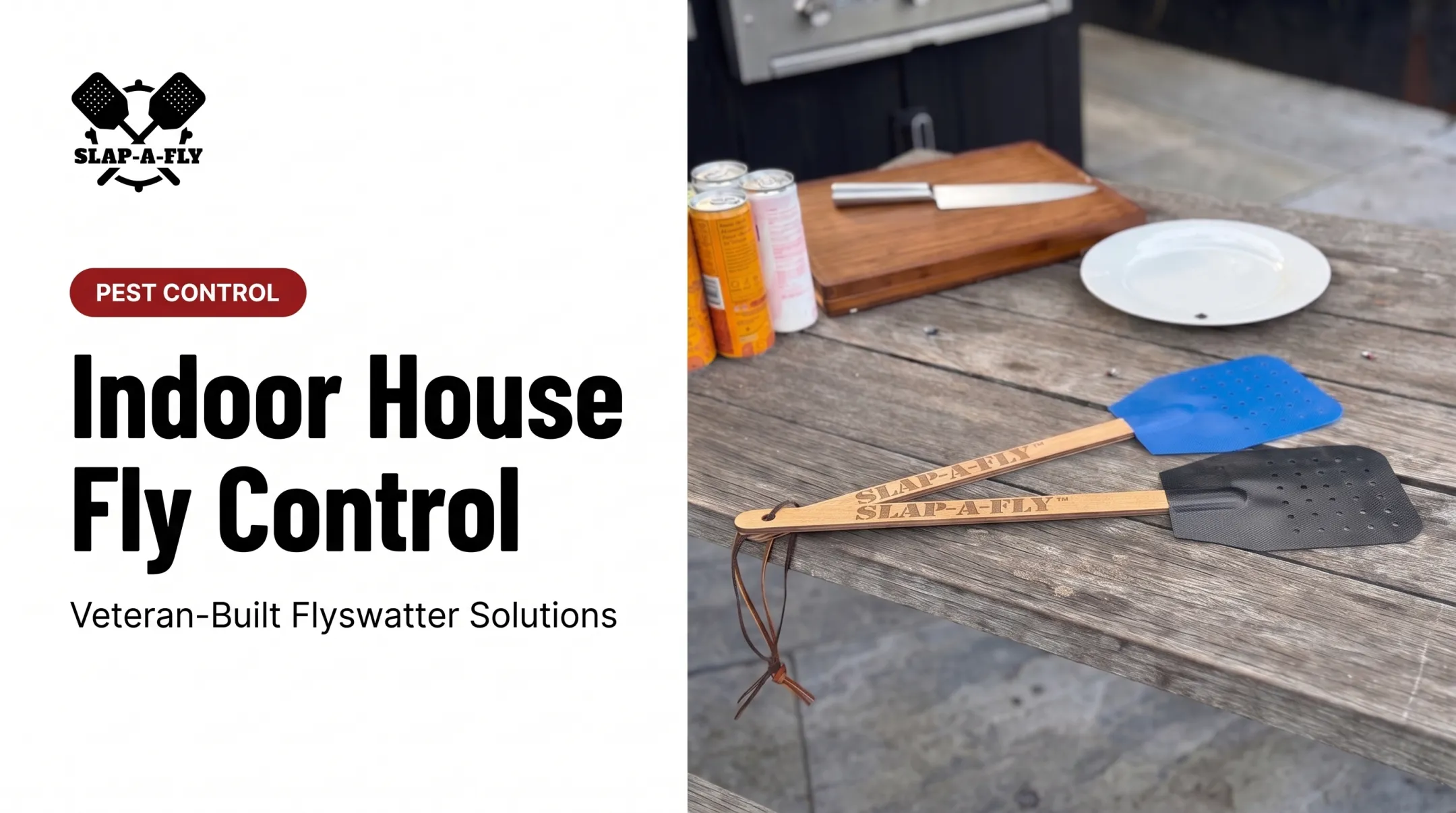
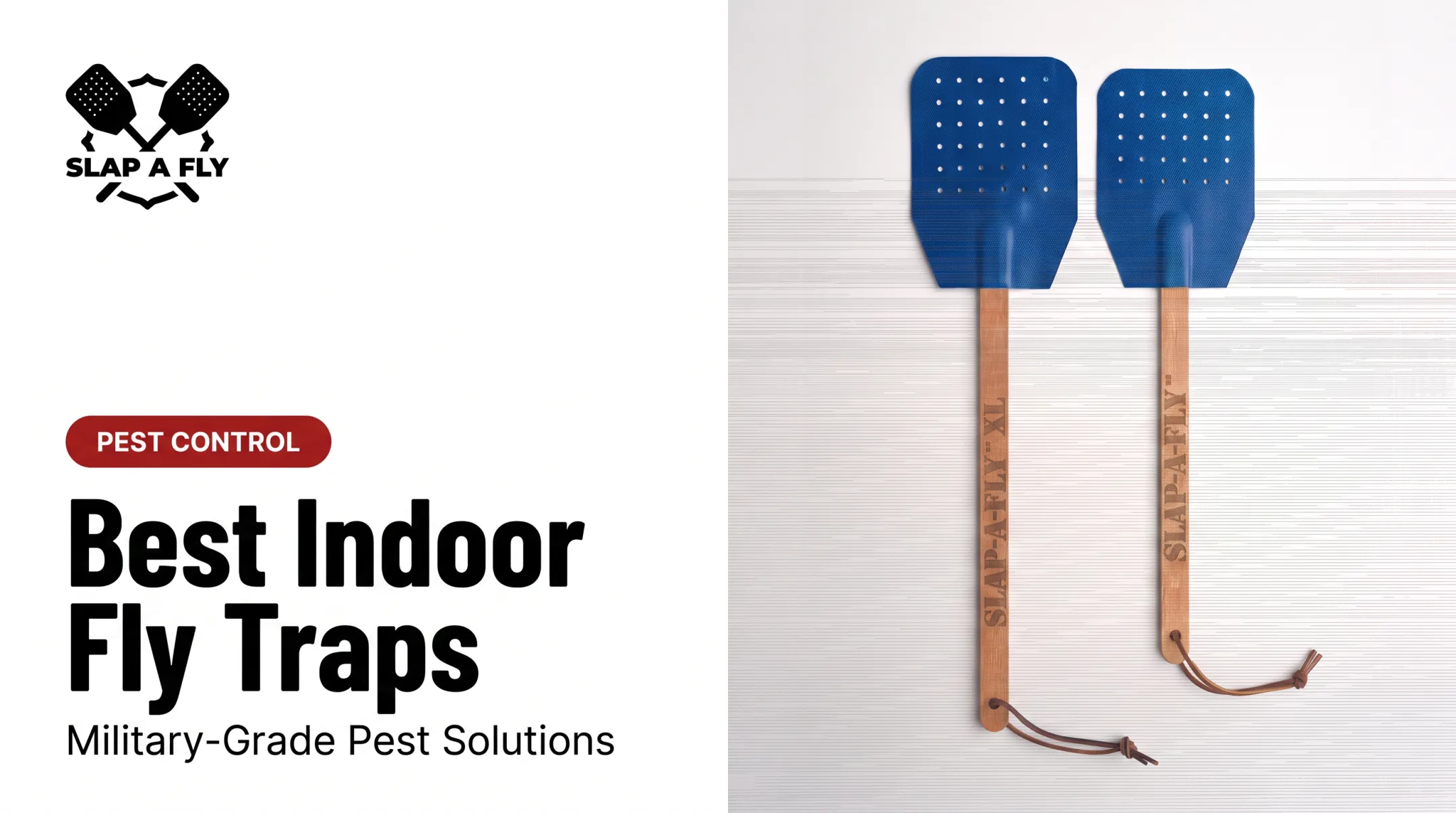
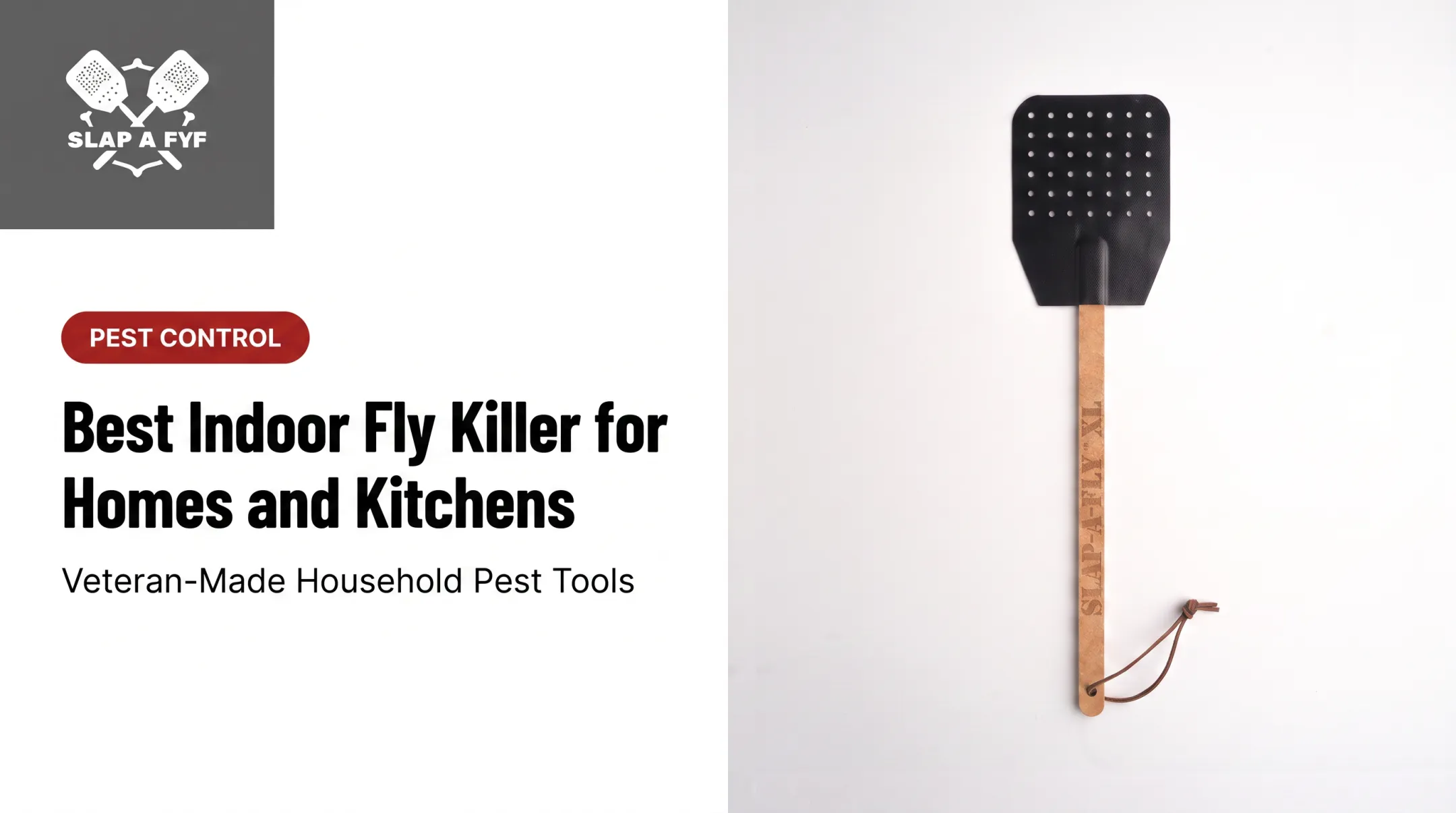
Built by U.S. Army veterans, the Slap-a-Fly™ swaps flimsy plastic mesh for a Herculite 80 MIL-SPEC synthetic fabric striking surface and a 5-ply aircraft spruce handle, the same wood grade used in military cargo planes.
The fabric's weft-inserted polyester scrims resist tearing and tension loss. That build delivers 80 PSI of impact force on strike after strike - enough force for large tough bugs like cockroaches, wasps, and armored insects - not just flies - without going floppy like cheap alternatives.
For kitchens and dining rooms where sprays feel out of place, this is a physical, no-residue tool for instant single-fly elimination. The XL model adds a longer handle and larger strike surface, giving extra reach for wasps or bees you'd rather not get close to.
| Feature | Detail |
|---|---|
| Key Features | Herculite 80 MIL-SPEC fabric, 5-ply aircraft spruce handle, 100% vegan materials |
| Best For | Kitchens, dining areas, quick single-fly kills, chemical-free households |
| Price Tier | Mid-range, one-time purchase ($19.99-$24.99) |

Electric UV Light Traps (Zevo, Katchy)
These plug-in devices use blue and UV light to lure flying insects toward an adhesive cartridge or glue pad, working quietly in the background around the clock. Zevo's official product page says the trap targets house flies, fruit flies, gnats, and mosquitoes using a curved shield design.
Katchy adds a small fan that pulls insects onto a glue board, though its own listing notes it isn't built for insects larger than 10mm or ones attracted mainly to food.
Wirecutter's 2025 hands-on test caught just two flies in 24 hours against roughly 30 still buzzing around the kitchen. Results vary by placement and infestation size.
| Feature | Detail |
|---|---|
| Key Features | UV/blue light lure, sticky cartridge or glue pad |
| Best For | Kitchens, ongoing gnat/fruit fly issues |
| Price Tier | Budget to mid-range |

Sticky/Glue Fly Traps
Yellow sticky cards work through color attraction rather than pheromones. UC IPM notes that yellow traps attract a wide range of pest insects and are useful for monitoring, especially for fungus gnats near potting soil.
These traps:
- Require no batteries or setup
- Stay odor-free and disposable
- Work best near windows or plant containers
- Suit renters who need low-maintenance, damage-free options
| Feature | Detail |
|---|---|
| Key Features | Color-based attraction, disposable adhesive |
| Best For | Renters, fungus gnat monitoring, low-maintenance use |
| Price Tier | Budget |
Baited Jar/Liquid Fly Traps (Terro, Aunt Fannie's)
These target fruit flies specifically, using vinegar or fermented-food scent as bait. Aunt Fannie's FlyPunch lists vinegar, sodium lauryl sulfate, and malic acid as active ingredients, and the brand states it's safe for use near food-prep areas when used as directed.
Terro's fruit fly trap uses a proprietary, food-based lure and claims flies can't escape once inside. Both brands recommend replacing traps roughly every 30 days.
| Feature | Detail |
|---|---|
| Key Features | Vinegar or fermented-food liquid lure |
| Best For | Fruit fly outbreaks near produce or drains |
| Price Tier | Budget |
Residual Insecticide Sprays
For severe or recurring infestations, contact sprays like PT 565 and residual concentrates like LambdaStar UltraCap offer fast knockdown. LambdaStar's label specifies 9.7% lambda-cyhalothrin and permits reapplication at 21-day intervals if needed. That figure is reapplication frequency, not a guaranteed residual window.
Important: these products require food-contact surfaces to be cleaned and rinsed before reuse, and label directions should always take priority over marketing claims.
| Feature | Detail |
|---|---|
| Key Features | Active chemical ingredient, contact + residual action |
| Best For | Heavy or recurring infestations |
| Price Tier | Mid-range |

How to Choose the Right Indoor Fly Killer
The most common mistake? Buying a trap that doesn't match the fly species present, or relying entirely on traps while ignoring the breeding source. A sticky card won't fix a drain fly problem rooted in pipe biofilm.
Weigh these factors before buying:
- Fly species — fruit flies need liquid lures; fungus gnats respond to yellow sticky cards
- Safety — households with kids or pets should lean toward non-toxic traps or a flyswatter over sprays
- Maintenance — UV traps need cartridge swaps; liquid traps need monthly replacement
- Speed — for one visible fly near your food, nothing beats a swatter for an instant, chemical-free kill
- Source control — clean drains, trash, and damp organic matter first, or traps only mask the problem
Signs of a Fly Infestation and Prevention Tips
Watch for these signs of an indoor fly problem:
- Clusters of flies near trash cans or drains
- Small dark spots on walls (fly droppings)
- Larvae near sinks and garbage liners
Drain flies, in particular, can take at least three weeks of consistent cleaning to fully clear, according to University of Arkansas Extension. Stopping new breeding sites is what keeps them from coming back.

Prevention basics:
- Seal entry points around doors and windows
- Clean drains and garbage liners weekly
- Remove standing water and overripe produce
- Avoid overwatering houseplants
Conclusion
No single tool solves every fly problem. The best approach combines source prevention, a trap matched to your specific fly species, and a dependable go-to for instant kills.
Match your choice to infestation severity and household needs, not just price. For the flies that get past your prevention efforts, a durable, chemical-free option like the Slap-a-Fly™ is worth keeping within reach on the counter.
Frequently Asked Questions
What is the most effective fly killer?
It depends on the fly type and setting. UV traps and residual sprays work best for ongoing infestations, while a quality flyswatter is the fastest option for single, visible flies.
What is the best fly killer for home use?
Non-toxic options work best for households with kids and pets: sticky traps, UV light traps, or a sturdy flyswatter for spot kills.
How can I get rid of flies in my house quickly?
Remove obvious attractants like exposed food or trash, swat visible flies immediately, and set traps to catch stragglers overnight.
How do I permanently get rid of flies in my house?
Permanent control means sanitation: seal entry points, clean drains and bins regularly, and eliminate breeding sources like standing water or rotting produce.
How can I get rid of flies in my kitchen?
Keep trash sealed, set out a fruit fly trap near produce, and keep a flyswatter on hand for quick strikes near prep areas.
Do plug-in fly killers work?
Yes, for continuous control of small flying insects, but placement matters. Keep them away from doorways so they don't pull in more flies from outside.